Blessed Henry Suso

Blessed Henry Suso (about 1295–1366) was a German Dominican friar and mystic, a disciple of Meister Eckhart, who called himself the Servant of Eternal Wisdom. He wrote the Little Book of Eternal Wisdom, one of the most widely read devotional books of the late Middle Ages. Pope Gregory XVI beatified him in 1831. The Dominicans keep his feast on January 23.
Who was Blessed Henry Suso?
Blessed Henry Suso was a German Dominican friar of the fourteenth century, a mystic, preacher and spiritual writer who called himself "the Servant of Eternal Wisdom." He was born on March 21, about 1295, by Lake Constance, and died at Ulm on January 25, 1366. Pope Gregory XVI beatified him in 1831, and the Dominicans keep his feast on January 23.
His father belonged to the noble family of Berg; his mother, a holy woman, to the family of Sus, and he took her name. At thirteen he entered the Dominican house at Constance. Later he studied at Cologne, where, as the Catholic Encyclopedia puts it, he "sat at the feet of Johann Eckhart, 'the Master'," and probably beside the mystic Johannes Tauler.

The Servant of Eternal Wisdom
For five years as a young friar Henry lived carelessly. At eighteen he was converted. He gave his heart to Eternal Wisdom, whom he understood as God himself and, in a concrete form, the Word made flesh, Jesus Christ. In his own account of his life he tells how a reading at table from the Book of Wisdom set his heart on fire: "As the lovely rose-tree is full of bloom... even so I am a blooming, fragrant, and pure love."
The name of Jesus over his heart
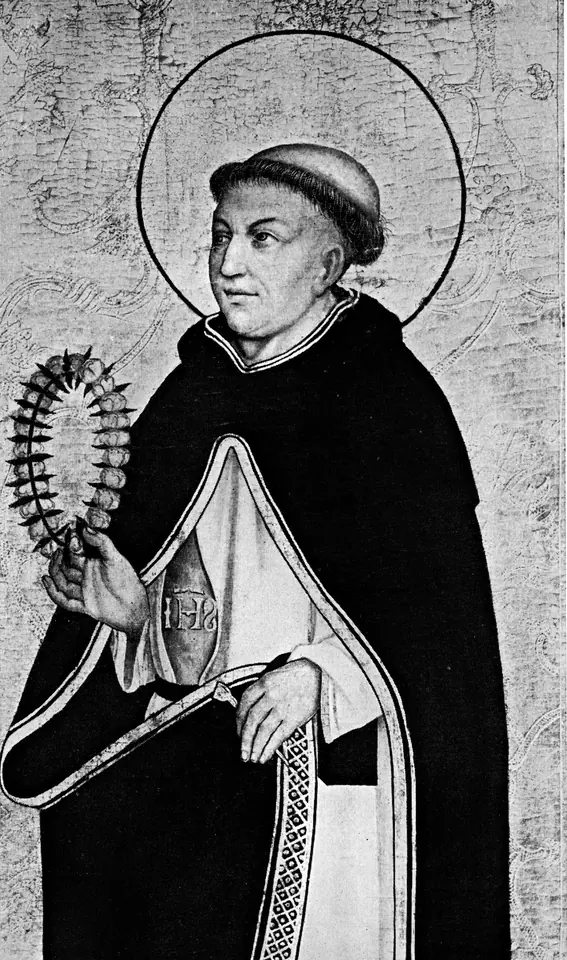
One day, burning with that love, he went to his cell, bared his breast, and with a stylus cut the name of Jesus into the flesh over his heart. Then he knelt before the crucifix and prayed:
Ah, Lord! my heart and soul's only love! look now upon my heart's intense desire. Lord, I cannot imprint Thee any deeper in myself; but do Thou, O Lord, I beseech Thee, complete the work, and imprint Thyself deep down into my very inmost heart.
He bore the letters until his death and showed them to almost no one. For years he practiced severe penances. The Catholic Encyclopedia notes that he "prudently moderated" them as he grew older, and his later teaching put patience and detachment ahead of bodily austerity.
Preacher, director and friend of souls
After Cologne he returned to Constance as a lector. His first book, the Little Book of Truth, defended a sound reading of mystical teaching at a time when some of Eckhart's propositions had been condemned. Critics attacked it, and Henry lost his teaching post sometime between 1329 and 1334, but the Catholic Encyclopedia says the book "was found to be entirely orthodox." From then on he preached in the towns of Swabia, Switzerland, Alsace and the Netherlands, and became a guide to many people, above all to communities of Dominican nuns.
At Töss, near Winterthur, the nun Elsbeth Stagel became his spiritual daughter. She translated some of his Latin into German, kept his letters, and drew from him the story of his inner life, which he later revised and published himself. In 1348 he was sent to Ulm, where he lived until his death.
The dog and the rag
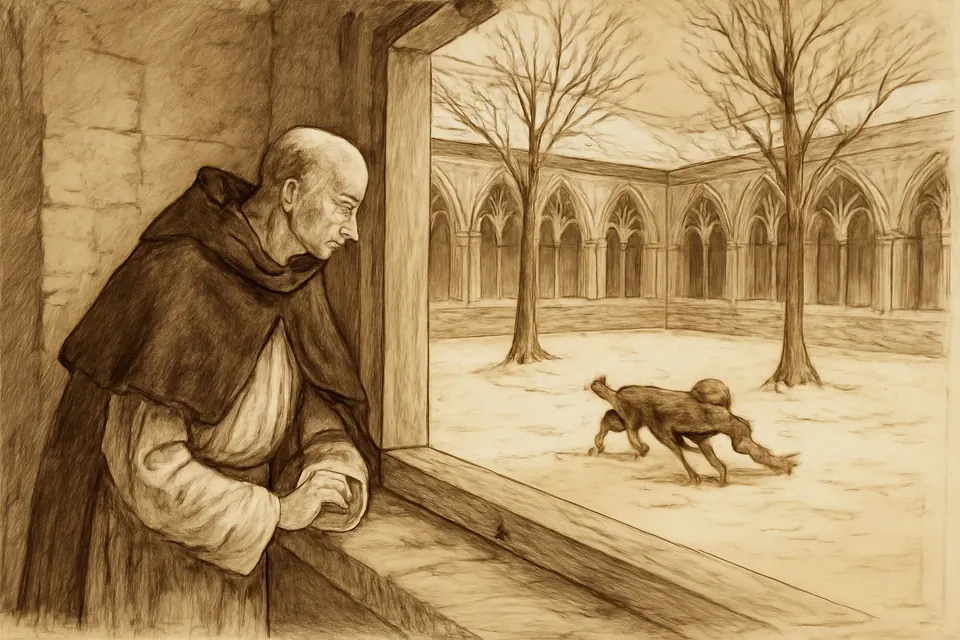
His Life tells of a winter morning when he sat in his cell, grieving over slander. A voice told him to open the window and learn. He saw a dog running about the cloister, tossing and tearing a worn foot-cloth, and heard within: "Even so shalt thou be in thy brethren's mouths." He resolved to bear it as the cloth did, in silence.
His books
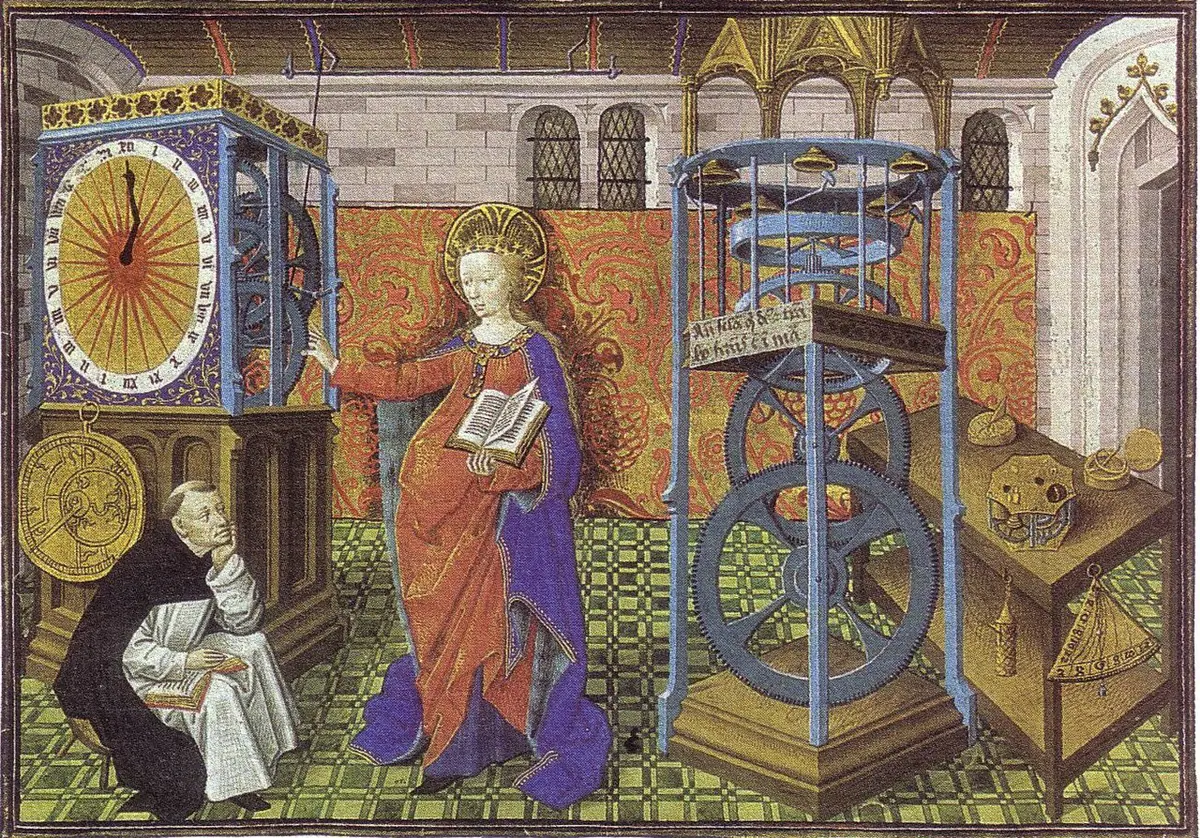
His Little Book of Eternal Wisdom (1328) speaks plainly to "simple men who still have imperfections to be put off." The scholar Heinrich Denifle called it the "most beautiful fruit of German mysticism," and for more than a century no German meditation book was more widely read. Suso then reworked it into a larger Latin book, the Horologium Sapientiae, the "Clock of Wisdom," which was copied in monasteries across Europe. Thomas à Kempis and St. Peter Canisius were among his readers.
Miracles and visions
- Traditional: his many visions, told in his Life, including one in which heavenly youths drew him into a dance and sang "In dulci jubilo" in praise of the infant Jesus.
- Traditional: a holy woman's vision of him crowned with a garland of red and white roses, meaning purity and patience in suffering.
These visions come from his own account of his inner life, written down with Elsbeth Stagel's help. The Church has never judged them, but it has honored the holiness of the man who told them.
Symbols of Blessed Henry Suso in art
- Dominican habit: white habit and black cloak.
- IHS on his breast: the name of Jesus he cut over his heart.
- Garland of roses: his sufferings borne with love, from the vision in his Life.
- Cross of nails: the small wooden cross with thirty iron nails that he wore on his bare back for years, in honor of Christ's wounds.
- Dog with a rag: the lesson of patience under slander.
Look for the letters IHS and roses together on a Dominican, and you have found him, as in the painted statue in Ulm.

Feast day and prayer
The Dominican Order keeps his memorial on January 23. See the feast day calendar.
There is no traditional prayer addressed to Blessed Henry. We can pray with his own words before the crucifix, asking the Lord to imprint himself deep in our hearts. Blessed Henry, servant of Eternal Wisdom, pray for us.
Frequently asked questions
Who was Blessed Henry Suso?
A German Dominican friar and mystic of the fourteenth century, born near Lake Constance about 1295 and died at Ulm in 1366. He studied under Meister Eckhart in Cologne, preached in Swabia, Switzerland, Alsace and the Netherlands, and wrote the Little Book of Eternal Wisdom and the Horologium Sapientiae.
When is the feast of Blessed Henry Suso?
The Dominican Order keeps his memorial on January 23. He died on January 25, 1366.
Why did Henry Suso carve the name of Jesus on his chest?
In his Life he tells how, burning with love, he wanted a sign that could never be erased, and cut the name of Jesus into the flesh over his heart with a stylus. He bore the letters until his death. It was a young man's act of love that he later moderated; he came to teach patience and detachment rather than harsh penance.
Is Henry Suso connected to the carol "In dulci jubilo"?
His Life describes a vision in which heavenly youths drew him into a dance and sang "In dulci jubilo," a joyful song about the infant Jesus. Because of that passage his name has long been linked with the carol.
Keep exploring
Sources
- Arthur McMahon, Blessed Henry Suso (Catholic Encyclopedia, vol. 7, 1910). His dates, beatification in 1831 and the March 2 feast, Elsbeth Stagel, his books, and Denifle's and Bihlmeyer's judgments
- The Life of Blessed Henry Suso by Himself, translated by Thomas Francis Knox (London, 1865): chapter V. The name of Jesus inscribed over his heart and his prayer before the crucifix
- The Life of Blessed Henry Suso by Himself (Knox, 1865): chapter VII. The heavenly dance and "In dulci jubilo"
- The Life of Blessed Henry Suso by Himself (Knox, 1865): chapter XXII. The dog with the worn foot-cloth
- The Life of Blessed Henry Suso by Himself (Knox, 1865): chapter XVIII. The wooden cross with thirty nails he wore on his back
- The Life of Blessed Henry Suso by Himself (Knox, 1865): chapter XXIV. The garland of red and white roses seen in a vision