Saint costume ideas for kids

The easiest saint costume ideas for kids use what you already have: a brown bathrobe and a rope belt make St. Francis, a white dress and a ring of battery candles make St. Lucy, a red blanket cape and a paper miter make St. Nicholas, and a polo shirt and a rosary make St. Carlo Acutis. Each costume below lists the saint's symbols so children can explain who they are.
Saint costume ideas for kids don't need a sewing machine or a costume shop. Nearly every saint can be made from a bathrobe, a pillowcase, a bedsheet and some cardboard, because what makes a saint recognizable is not the outfit but the symbols: the lamb, the keys, the broom, the crown of roses. Painters have used those symbols for centuries so that anyone walking into a church could tell which saint was which. Children can use them the same way.
Here are 25 easy DIY saint costumes for All Saints Day 2027, which falls on Monday, November 1. Many parishes will hold their All Saints Day parties on Sunday, October 31, or the weekend before. For each saint we give what you need, how to put it together, and what each symbol means, so your child can answer the question every grown-up will ask: "And who are you?"
The basic saint costume kit
Before you start, raid the closets. Most of these costumes are built from the same few things:
- Robes and tunics: bathrobes, old dresses, oversized T-shirts, or a pillowcase with holes cut for the head and arms. Brown makes Franciscans, white makes Dominicans, angels and martyrs.
- Cloaks and capes: a blanket, a tablecloth or a yard of felt pinned at the neck with a safety pin.
- Veils: a scarf, a dish towel or a pillowcase, held with a headband.
- Belts: a bathrobe tie, a rope or a length of clothesline.
- Props: cardboard, poster board, paper plates, aluminum foil, gold wrapping paper, a broom handle and the stuffed animals from your child's bed.
Two safety rules: no real candles or flames anywhere, and keep props soft enough to wave around in a crowded hall.

25 easy DIY saint costumes for kids
1. St. Francis of Assisi
You need: a brown bathrobe or hooded sweatshirt, a white rope, sandals, a stuffed bird or animal. Make it: Tie the rope around the waist with three knots hanging down. The symbols: The brown robe is the habit of the friars he founded, and the three knots stand for their vows of poverty, chastity and obedience. The animals recall his love for all God's creatures. St. Francis of Assisi, feast October 4.
2. St. Clare of Assisi
You need: a brown dress or robe, a white rope belt, a black scarf for a veil with a white cloth under it, a gold paper plate. Make it: Cut rays around the paper plate to make a sunburst for her to hold. The symbols: The sunburst is a monstrance, the vessel that holds the Blessed Sacrament, because Clare held up Our Lord in the Eucharist when soldiers attacked her convent. St. Clare, feast August 11.
3. St. Nicholas
You need: a red bathrobe or blanket for a cape, white poster board, a wrapping-paper tube, three small bags of chocolate coins. Make it: Cut a pointed bishop's hat (a miter) from the poster board and trim it with gold ribbon; curl a strip of cardboard onto the tube for a shepherd's staff. The symbols: The miter and staff show he was a bishop, a shepherd of souls. The three bags of gold recall the secret gift he gave three poor sisters. St. Nicholas, feast December 6.
4. St. Patrick
You need: a green or white robe, a green cape, a paper miter and staff (as for St. Nicholas), a paper shamrock and a stuffed snake. Make it: Pin the shamrock to the cape and coil the snake at his feet. The symbols: The shamrock comes from the traditional story that he used it to explain the Holy Trinity, three leaves on one stem. The snake recalls the old legend that he drove the snakes out of Ireland, a picture of driving out evil. St. Patrick, feast March 17.
5. St. Martin of Tours
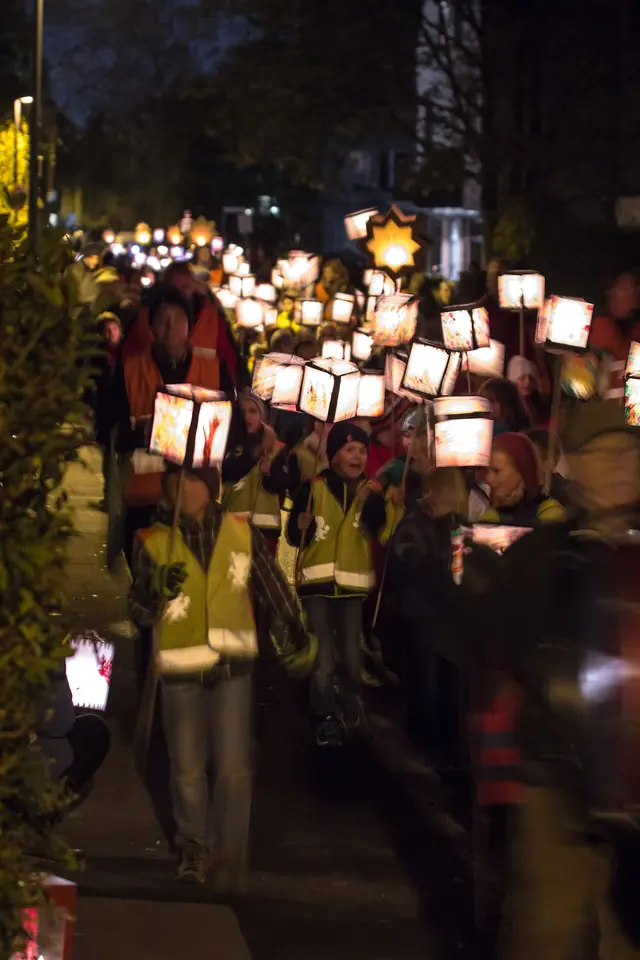
You need: a gray sweatshirt, a helmet made from a bowl covered in foil, a red felt or fleece cape, a foam sword, a paper lantern. Make it: Cut the cape so it's clearly in two halves held together with a safety pin. The symbols: Martin was a Roman soldier who cut his military cloak in half with his sword to clothe a freezing beggar, and that night he saw Christ wearing the half he gave away (Sulpicius Severus, Life of St. Martin, chapter 3). The lantern recalls the children's lantern processions held on his feast in Germany and the Netherlands. St. Martin of Tours, feast November 11.
6. St. George
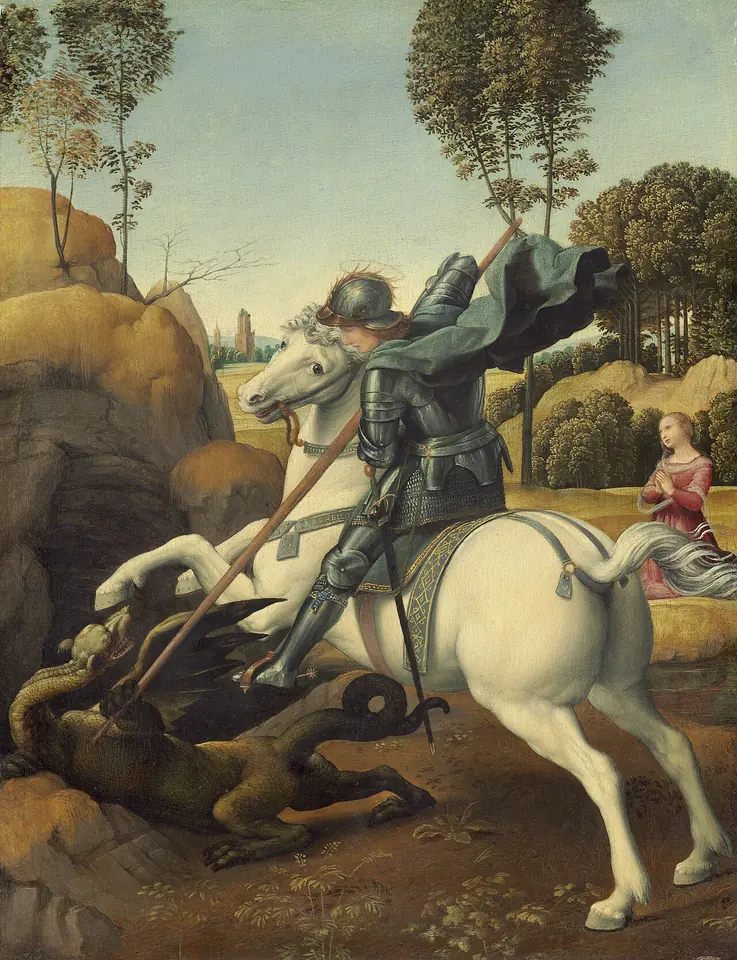
You need: a gray sweatshirt or foil "armor," a white T-shirt, red tape, a cardboard shield, a pool noodle for a lance, a stuffed dragon or dinosaur. Make it: Tape a big red cross on the white T-shirt and on the shield. The symbols: The red cross on white is St. George's cross, the sign of a soldier of Christ. The dragon is the traditional legend, and it stands for evil, which George defeats by faith. St. George, feast April 23.
7. St. Joan of Arc
You need: foil armor or a gray hoodie, a foam sword, a white pillowcase on a dowel for a banner. Make it: Draw two small figures or write "Jesus Maria" on the banner. The symbols: Joan carried a white standard with the names of Jesus and Mary into battle, and she told her judges she loved her banner far more than her sword. St. Joan of Arc, feast May 30. St. Thérèse of Lisieux, as it happens, dressed up as Joan herself, in a play she wrote for her convent in 1895.

8. St. Michael the Archangel
You need: a white robe or T-shirt, a red cape, wings cut from poster board or paper plates, a cardboard sword, scales made from a coat hanger and two paper cups on strings. Make it: Fasten the wings with elastic loops over the shoulders like a backpack. The symbols: The sword is his victory over Satan in the war in heaven (Apocalypse 12). The scales show his work of bringing souls before God. St. Michael the Archangel, feast September 29.
9. St. Christopher
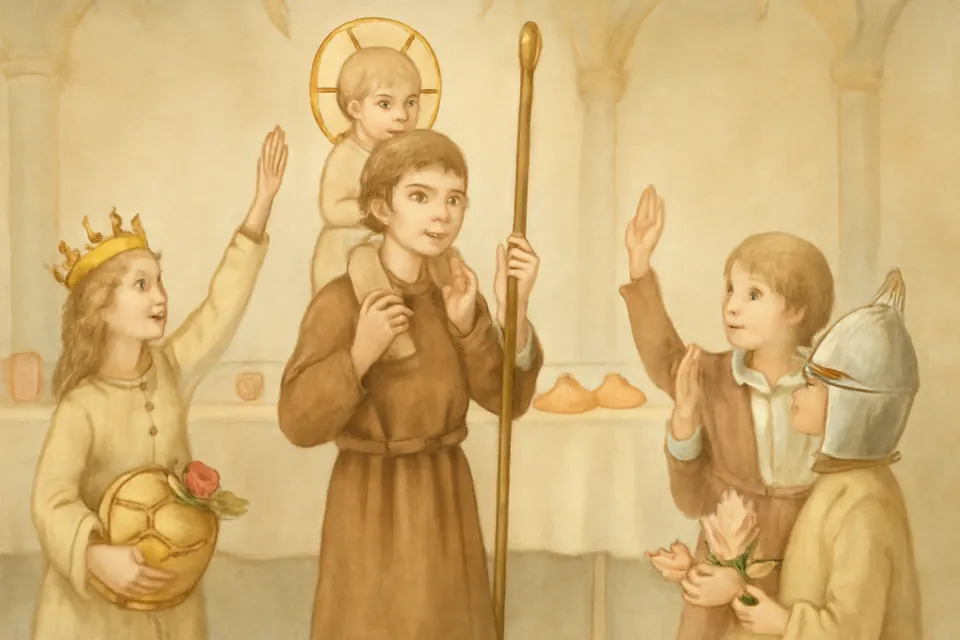
You need: a brown tunic, rolled-up pants, a broom handle or tall walking stick, a baby doll, a strip of blue fabric. Make it: Sit the doll on your child's shoulders with a safety pin or two, and drape the blue "river" around his ankles. The symbols: In the traditional story from The Golden Legend, Christopher carried a child across a river and found he was carrying Christ, who made the world. His name means "Christ-bearer." St. Christopher, feast July 25.
10. St. Lucy
You need: a white dress or nightgown, a wide red ribbon, a wreath of greenery, four to six battery tea lights. Make it: Wire or tape the tea lights onto the wreath. Never use real candles. The symbols: Her name comes from the Latin for light. White is for purity and red for her martyrdom, and the crown of lights is the Swedish custom of St. Lucy's Day. St. Lucy, feast December 13.

11. St. Agnes
You need: a white dress, a flower crown, a stuffed lamb, a palm branch cut from green paper. The symbols: Her name sounds like agnus, Latin for lamb, and the lamb is a sign of innocence and of Christ, the Lamb of God. The palm branch is the sign of a martyr's victory, which the old Catholic Encyclopedia traces back to the Apocalypse, where the saints in heaven hold palms (Apocalypse 7:9). St. Agnes, feast January 21.
12. St. Cecilia
You need: a long dress, a wreath of silk roses, a toy keyboard, recorder or a small harp cut from cardboard. The symbols: Cecilia is the patron saint of musicians, because her ancient story says that while the musicians played at her wedding, she sang in her heart to God alone. The roses come from the legend that an angel crowned her and her husband with roses and lilies. St. Cecilia, feast November 22.
13. St. Catherine of Alexandria
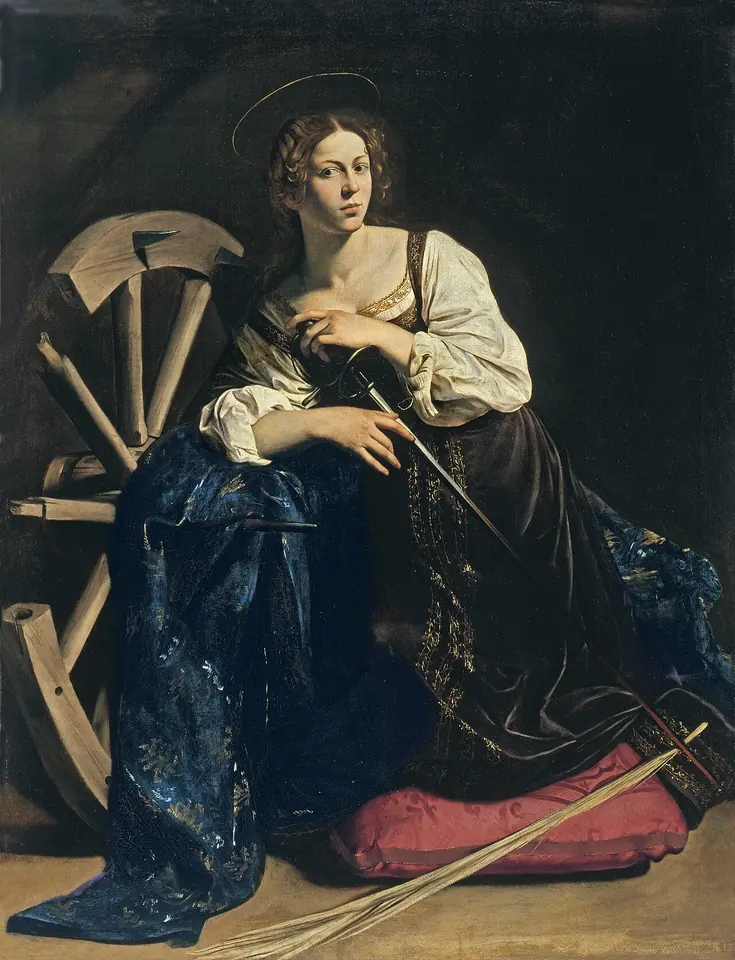
You need: a fancy dress, a crown from gold paper, a paper-plate wheel with cardboard spokes, a book. The symbols: The broken wheel is the instrument of torture that the traditional story says shattered at her touch. The crown shows she was a princess, the book that she was so learned she out-argued the emperor's philosophers. St. Catherine of Alexandria, feast November 25.
14. St. Thérèse of Lisieux
You need: a brown dress, a white sheet or pillowcase for a cape, a black scarf for a veil over a white headband, a small crucifix, a bouquet of silk roses. The symbols: The brown habit and white mantle are the Carmelite habit she wore. The roses recall her promise to spend her heaven doing good on earth; people who ask her prayers often speak of receiving a rose. St. Thérèse, feast October 1.
15. St. Anthony of Padua
You need: a brown robe with a rope belt, a baby doll, a book, a lily made of white paper. Make it: Have your child hold the book with the doll seated on top. The symbols: Anthony is shown holding the Child Jesus because of a story that a friend saw him holding the Infant in his arms as he prayed. The book is the Scriptures he preached, and the lily is purity. St. Anthony of Padua, feast June 13.

16. St. Joseph
You need: a long tunic, a brown cloak, a toy hammer or tool belt, a lily or a stick with white paper flowers at the top. The symbols: The tools show he was a carpenter who worked to feed the Holy Family. The flowering staff recalls an old story that when suitors came for Mary's hand, Joseph's staff blossomed. St. Joseph, feast March 19.
17. Our Lady
You need: a white dress, a blue scarf or sheet for a veil, a rosary. For Our Lady of Guadalupe, a blue-green mantle with gold paper stars, a rose-colored dress and a black ribbon tied at the waist. The symbols: Blue and white are the colors the Church has long given Mary, for heaven and purity. On the Guadalupe image, the black sash is traditionally read as the sign of a woman expecting a child. Help your child carry this costume with special reverence; Mary is the Queen of All Saints. The Blessed Virgin Mary and Our Lady of Guadalupe.
18. St. Juan Diego
You need: a white shirt and pants, a burlap sack or plain pillowcase for his tilma (cloak), a printed picture of Our Lady of Guadalupe, a handful of silk or paper roses. Make it: Glue the picture inside the tilma and tuck the roses in front of it. The symbols: In December 1531, Juan Diego carried roses to the bishop in his tilma, and when he opened it the image of Our Lady was on the cloth. St. Juan Diego, feast December 9.
19. St. Kateri Tekakwitha
You need: a plain dress, a shawl or blanket worn over the head and shoulders, a small cross made of two sticks tied with string, a paper lily. The symbols: Kateri often made little crosses of sticks in the woods where she prayed, and she is called the Lily of the Mohawks. Keep the costume simple and modest, the way she appears in the earliest portrait. Please skip feather headdresses or "costume shop" Native outfits, which don't belong to her or her people's dress. St. Kateri Tekakwitha, feast July 14.
20. St. Rose of Lima
You need: a white dress, a black scarf for a veil, a headband wound with small silk roses. The symbols: The white tunic and black veil are the dress of a Dominican tertiary, which Rose was. Her crown of roses recalls her name and the garden where she grew flowers to help her family. St. Rose of Lima, feast August 23.
21. St. Martin de Porres
You need: a white robe, a black cape or shawl, a broom, a stuffed mouse, cat or dog. The symbols: The black and white are the Dominican habit. The broom is the humble work he loved, which is why he is pictured with one and called the saint of the broom. The animals come from the traditional stories of his kindness to every creature, even mice. St. Martin de Porres, feast November 3.
22. St. Elizabeth of Hungary
You need: a princess dress, a gold paper crown, an apron or basket full of bread rolls and silk roses. The symbols: She was a royal princess who spent her life feeding the poor. The roses come from the traditional story that the bread she was secretly carrying to the hungry turned into roses. St. Elizabeth of Hungary, feast November 17.
23. St. Peter
You need: a robe, a cloak, sandals, two big keys cut from cardboard (one covered in gold paper, one in foil), a mesh laundry bag for a fishing net. The symbols: The keys come from Jesus' words to Peter: "I will give to thee the keys of the kingdom of heaven" (Matthew 16:19). The net recalls that he was a fisherman called to be a fisher of men. St. Peter, feast June 29.
24. St. Mother Teresa of Calcutta
You need: a white sheet, blue ribbon or painter's tape, sandals, a small crucifix, a rosary. Make it: Stripe one long edge of the sheet with three bands of blue and drape it over the head and around the body like a sari; pin the crucifix at the left shoulder. The symbols: The white sari with a blue border was the dress of the poorest women in Calcutta, which she chose for her sisters. St. Mother Teresa, feast September 5.
25. St. Carlo Acutis
You need: a polo shirt, jeans, sneakers, a backpack, a rosary, a laptop cut from cardboard. The symbols: Carlo dressed like any teenager, which is the point: he was a computer-loving boy from Milan who went to daily Mass and built a website about Eucharistic miracles. He was canonized in 2025. This is the best last-minute saint costume there is. St. Carlo Acutis, feast October 12.

Make the costumes part of the feast
The costume is only the start. A few ideas that parishes and families use every year:
- "Who am I?" Each child gives three clues about their saint, starting with the hardest, while everyone else guesses. It works best when children practice their clues at home.
- A saints' procession. Before the party, the children walk into Mass or the parish hall in costume while everyone sings or says the Litany of the Saints, answering "pray for us" after each name.
- Saint bingo. Make cards with symbols (a lamb, keys, a wheel, a broom) and mark them off as the costumed children walk past.
- Treats with a story. Chocolate coins for St. Nicholas, sweet buns for St. Lucy, bread rolls for St. Elizabeth, apples for St. Isidore the Farmer.
To pick a saint for each child, start with their name saint (see our saint names for boys and saint names for girls pages), their Confirmation saint, or a favorite from our saints for kids stories. Printable coloring pages of most of these saints make a quiet table at the party.
Keeping saint costumes reverent
All Saints Day is a solemnity, one of the great feasts of the year, and a saint costume is a small act of honor. A few guidelines keep it that way:
- Show the saint's life, not their death. Martyrs carry the palm of victory, not wounds or fake blood. St. Sebastian can carry a bundle of arrows in his hand; St. Lucy wears her crown of lights.
- Treat holy objects as holy. A real rosary or crucifix is a sacramental, so carry it with care and don't toss it in the toy box afterward. Cardboard props are fine for everything else.
- Respect real people and cultures. Saints from other cultures are dressed simply and respectfully, without stereotypes.
Why dress as saints on All Saints Day?
The Church celebrates All Saints Day on November 1 to honor every saint in heaven, the famous and the unknown. The night before is Halloween, "All Hallows' Eve," the vigil of the feast. In recent decades many Catholic parishes and schools have taken to holding All Saints parties, where children dress as saints instead of, or in addition to, the usual Halloween costumes. It's a homemade custom, not a liturgical one, but it teaches children something true: the saints were real people, and every one of us is called to join them.
In 2027, All Saints Day is Monday, November 1. In the United States it is not a holy day of obligation that year, because the US bishops lift the obligation when November 1 falls on a Saturday or a Monday. The solemnity is still celebrated, and most parishes offer Mass. See All Saints Day 2027 for the details and readings, and All Souls Day, the next day, when we pray for all the faithful departed.
Frequently asked questions
What are easy saint costumes for kids?
St. Francis (a brown bathrobe and a rope belt), St. Agnes (a white dress and a stuffed lamb), St. Peter (a robe and two big cardboard keys), St. Martin de Porres (a white robe and a broom) and St. Carlo Acutis (a polo shirt, jeans and a rosary) all come together in an evening from things most families own.
How do you make a saint costume out of household items?
Start with a base: a bathrobe, a pillowcase with holes for head and arms, a bedsheet or an old dress. Add a belt of rope or ribbon, a veil from a scarf or dish towel, and one or two props cut from cardboard or paper plates. The props are what make the saint recognizable, so spend your time there.
When is All Saints Day 2027?
All Saints Day 2027 is Monday, November 1. In the United States it is not a holy day of obligation in 2027, because it falls on a Monday, but the Church still celebrates it as a solemnity. Many parishes will hold their costume parties on the weekend before.
Why do Catholic kids dress up as saints?
It's a fun way to learn the saints' stories and to keep the holy meaning of All Saints Day, the day after Halloween. A child who dresses as St. Martin learns why he cut his cloak, and the costume gives them a story to tell all evening.
Can a child dress up as Mary or as an angel for All Saints Day?
Yes. Our Lady is the Queen of All Saints, and dressing as her, reverently, is a long-standing custom at parish parties and Christmas pageants. Angels such as St. Michael are honored on the same feast in many parishes' parties too.
What saint costume can a boy wear?
St. George, St. Michael, St. Martin of Tours and St. Joan's fellow soldier saints are favorites with boys who like armor. St. Francis, St. Nicholas, St. Patrick, St. Peter and St. Carlo Acutis are easy and well known.
Sources
- Catholic Encyclopedia (1910): Christian Iconography
- Catholic Encyclopedia (1911): Palm in Christian Symbolism
- Catholic Encyclopedia (1907): Animals in Christian Art
- Sulpicius Severus, On the Life of St. Martin, chapter 3 (New Advent)
- Jacobus de Voragine, The Golden Legend (Caxton translation, 1483): Of St. Christopher
- USCCB, Liturgical Calendar for the Dioceses of the United States of America, 2027 (PDF). Monday, November 1, 2027, All Saints, not a holy day of obligation that year