St. Clement of Alexandria
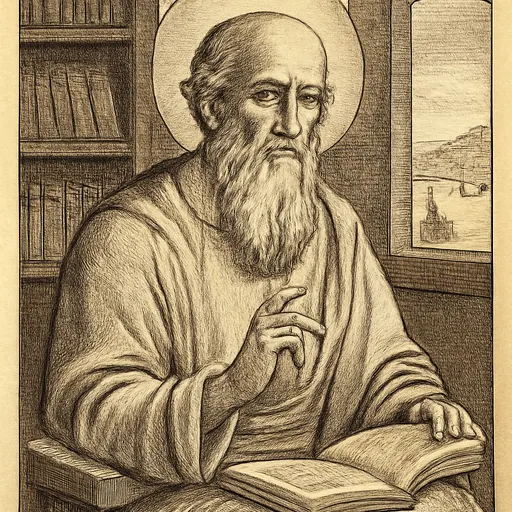
St. Clement of Alexandria (about 150–215) was a Greek Christian teacher who led the catechetical school of Alexandria around 190–202 and taught the young Origen. In his writings he showed Christ as the true teacher whom Greek philosophy was looking for. His old feast was December 4, but his name was dropped from the Roman Martyrology in the late 1500s.
Who was St. Clement of Alexandria?
St. Clement of Alexandria was one of the first great Christian teachers, a Greek scholar of the late second century who led the Church's school of instruction in Alexandria, Egypt, and wrote some of the earliest works of Christian thought that we still have whole. His full Roman name is given as Titus Flavius Clemens. He is not the same man as St. Clement of Rome, the pope who lived a century earlier.
Clement is a figure the Church has always treated with affection and some caution. He loved Greek literature and philosophy and quoted the pagan poets freely, convinced that whatever was true in them pointed to Christ. Pope Benedict XVI, who devoted a general audience to him in 2007, praised his teaching that faith and reason together lead us to know Christ, and that this knowledge is a living union of love.
His life
We know little about his life, and most of what we know comes from his own writings and from the church historian Eusebius. He was probably born in Athens around 150 to pagan parents. After his conversion he traveled in search of the best Christian teachers: the Catholic Encyclopedia lists a Greek in Ionia, another in southern Italy, one in Syria, an Egyptian, an Assyrian and a converted Palestinian Jew. At last he came to Alexandria and met Pantaenus, in whose teaching he says he "found rest."
The catechetical school
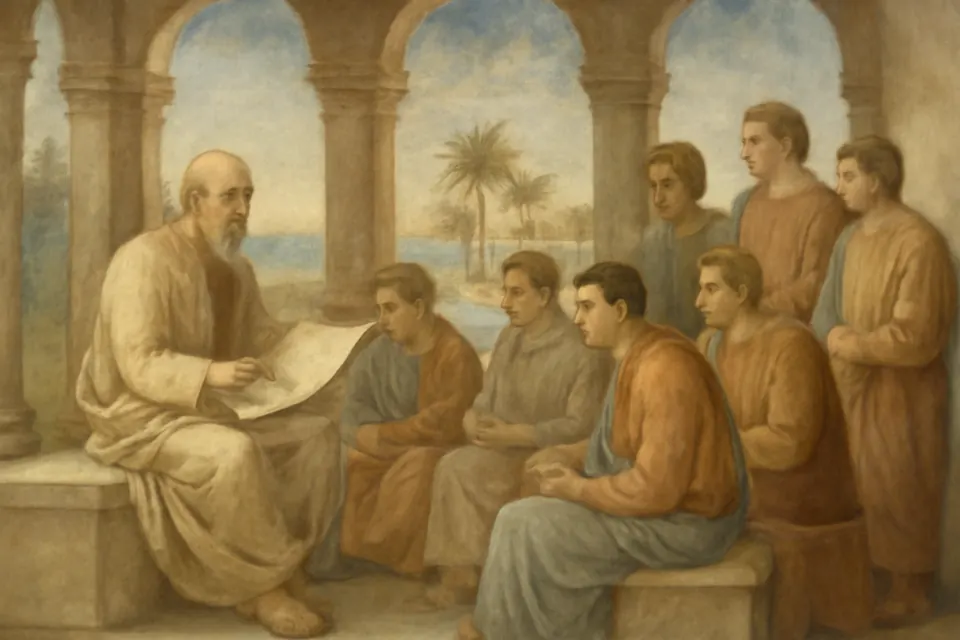
Alexandria was then the intellectual capital of the Roman world, home of the great library, of the Jewish philosopher Philo and of Gnostic teachers such as Basilides and Valentinus. The Church there ran a school where catechumens were taught and where educated pagans could hear the faith explained. Clement first assisted Pantaenus and then, around 190, succeeded him as its head. His most gifted student was the young Origen.
Exile and death
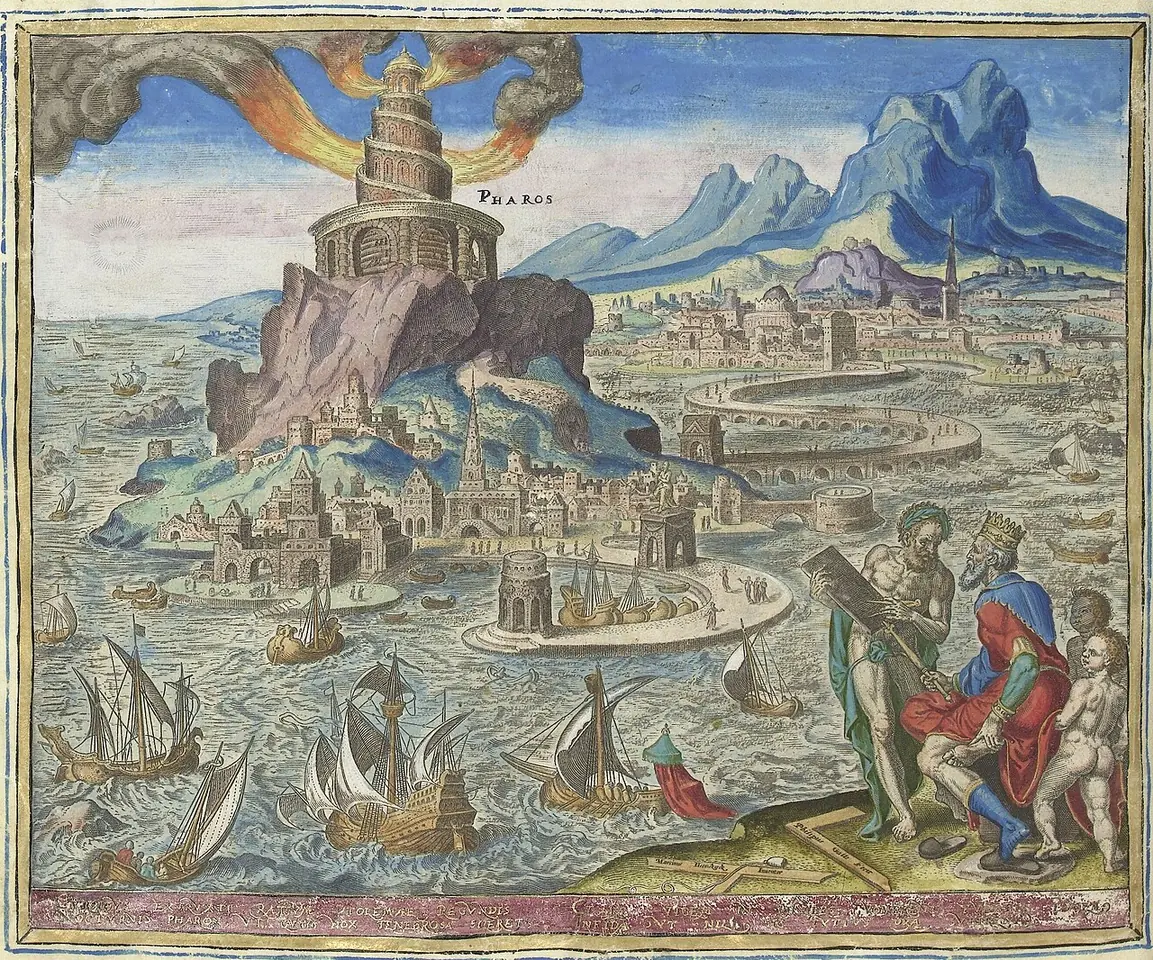
When persecution broke out under Septimius Severus in 202, catechumens and their teachers were special targets, and Clement left Alexandria. We find him next in Cappadocia with his former pupil Alexander, later bishop of Jerusalem. A letter of Alexander from 211 or 212 says that while the bishop was in prison for Christ, Clement looked after his flock and strengthened the faithful, and that Clement himself carried the letter to the Church of Antioch. Another letter, written about 215, speaks of Clement as already dead. We do not know where he is buried, and no relics are known.
His writings
Three of his works form a kind of course in the Christian life.
- The Exhortation to the Greeks (Protrepticus) invites pagans to leave their idols. It opens with the musicians of Greek myth, Amphion, Arion and Orpheus, who moved stones and tamed beasts with song, and then says that Christ is the true singer, the "New Song," who tames the hardest hearts.
- The Instructor (Paedagogus) shows Christ the Word as the tutor of the newly baptized, teaching them how to eat, dress, speak and live as Christians.
- The Miscellanies (Stromata) gathers deeper teaching for mature believers, on faith and knowledge, philosophy and Scripture.
He also left a short sermon, Who Is the Rich Man That Shall Be Saved?, which teaches that wealth is not evil in itself; everything depends on how it is used. It ends with the story of the young man whom St. John the Apostle baptized, lost to a band of robbers and won back.

Why his feast was dropped
No miracles are attached to Clement's name, not even traditional ones, and he was not a martyr. For more than a thousand years he was honored as a saint, and the martyrologies kept his memory on December 4. When the Roman Martyrology was revised under Pope Clement VIII, Cardinal Baronius advised removing his name, and Pope Benedict XIV later upheld the decision. According to the Catholic Encyclopedia, Benedict gave three reasons: Clement's life was little known, he had never had a public cult in the Church, and some of his teachings were, "if not erroneous, at least suspect." His writings are not always precise, and later readers such as Photius found errors in some of them.
That decision is not a condemnation of Clement. It means only that the Church does not keep a liturgical feast for him. He remains a Father of the Church whose writings Catholics read with profit, and many still call him St. Clement, as the Christians of the early centuries did.
Symbols of St. Clement in art
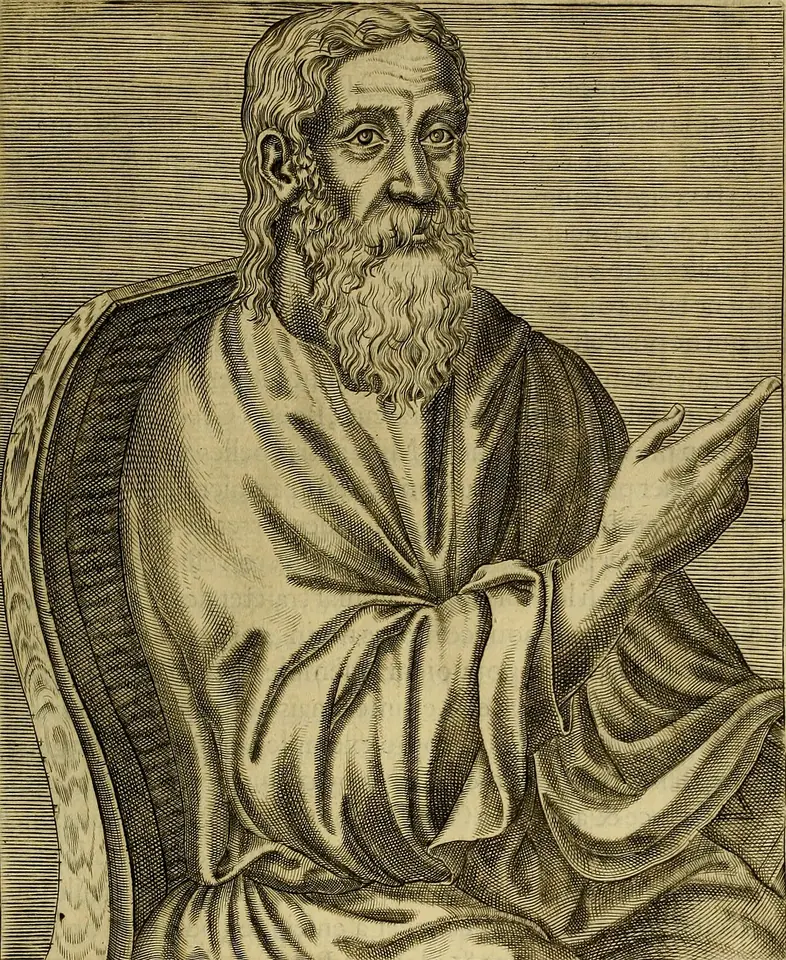
Clement was rarely painted, since he had little liturgical cult in the West. When he appears, he is shown as an old bearded Greek teacher in a philosopher's robe, seated with a book or scroll, as in Thevet's engraving above. A lyre can recall his image of Christ as the New Song. Early Christian art also gives us two images that Clement's own words explain: Christ as Orpheus, and the Good Shepherd carrying his lamb, which his hymn calls the "Shepherd of royal lambs."
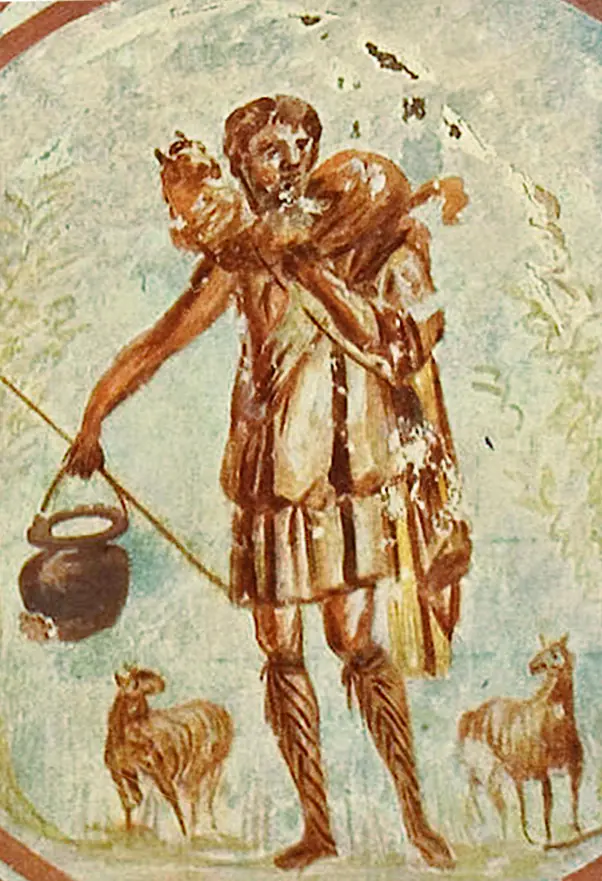
Prayer of St. Clement of Alexandria
Clement ends The Instructor with a prayer to Christ, the divine Teacher, and a hymn, one of the oldest Christian hymns outside the Bible whose author we know. This is the beginning of the prayer, in the 19th-century translation of the Ante-Nicene Fathers:
Be gracious, O Instructor, to us Your children, Father, Charioteer of Israel, Son and Father, both in One, O Lord. Grant to us who obey Your precepts, that we may perfect the likeness of the image, and with all our power know Him who is the good God and not a harsh judge.
And this is the opening of his Hymn to Christ the Savior, in the same translation:
Bridle of colts untamed, Over our wills presiding; Wing of unwandering birds, Our flight securely guiding. Rudder of youth unbending, Firm against adverse shock; Shepherd, with wisdom tending Lambs of the royal flock
Let us pray with Clement to Christ our Teacher, that we may love the truth wherever we find it and follow it home to Him.
Frequently asked questions
Is Clement of Alexandria a saint?
He was venerated as a saint and listed in the martyrologies on December 4 until the Roman Martyrology was revised under Pope Clement VIII, when Cardinal Baronius advised removing his name. Pope Benedict XIV upheld that decision, citing how little was known of his life, the lack of a public cult and some doubtful points in his writings. Many Catholics still call him St. Clement by long custom, but he has no feast in the Roman calendar today.
What did Clement of Alexandria write?
Three main works survive. The Protrepticus (Exhortation to the Greeks) invites pagans to the faith, the Paedagogus (The Instructor) shows Christ forming the newly baptized in daily Christian living, and the Stromata (Miscellanies) gathers deeper teaching for mature believers. A short sermon, Who Is the Rich Man That Shall Be Saved?, also survives.
What is the difference between Clement of Alexandria and Clement of Rome?
Clement of Rome was a pope of the late first century who wrote a famous letter to the Corinthians. Clement of Alexandria lived about a century later in Egypt and was a teacher and writer, not a bishop.
Who was Clement of Alexandria's most famous student?
Origen, who succeeded him as head of the catechetical school of Alexandria and became one of the most influential writers of the early Church.
Keep exploring
Sources
- F. Havey, Clement of Alexandria, Catholic Encyclopedia (1908). His teachers and Pantaenus, his years in Cappadocia, Alexander's letters of 211–212 and about 215, and the removal of his name from the martyrology by Clement VIII and Benedict XIV
- Clement of Alexandria, The Instructor (Paedagogus), Book III, trans. William Wilson, Ante-Nicene Fathers vol. 2 (1885). The Prayer to the Paedagogus and the Hymn to Christ the Savior
- Pope Benedict XVI, General Audience on Clement of Alexandria (April 18, 2007)