Saint names and their meanings

Saint names meaning: most saint names come from Hebrew, Greek or Latin. John means "the Lord is gracious," Michael "who is like God?", Peter "rock," Lucy "light" and Clare "bright." Below are 40 common saint names with their meanings, the saint who made each one beloved, and the feast day.
Saint names carry two meanings. One is the meaning of the word itself, usually Hebrew, Greek or Latin, sometimes a prayer, sometimes an ordinary word like "farmer" or "small." The other is the meaning a holy life gave it. Nobody names a son Paul because it means "small"; they name him for the Apostle. Here are 40 common saint names with both: what each name means and the saint who made it beloved, with links to their full entries and their feast days, which are also the name days of everyone who bears the name.
The Catechism puts it simply: "God calls each one by name. Everyone's name is sacred. The name is the icon of the person" (no. 2158).
Saint names for boys and their meanings
- John: from the Hebrew Yochanan, "the Lord is gracious." The angel told Zechariah, "thou shalt call his name John" (Luke 1:13). St. John the Baptist (June 24) and St. John the Apostle (December 27).
- Joseph: Hebrew, "he will add." When Rachel bore him, "she called his name Joseph, saying: The Lord give me also another son" (Genesis 30:24). St. Joseph (March 19).
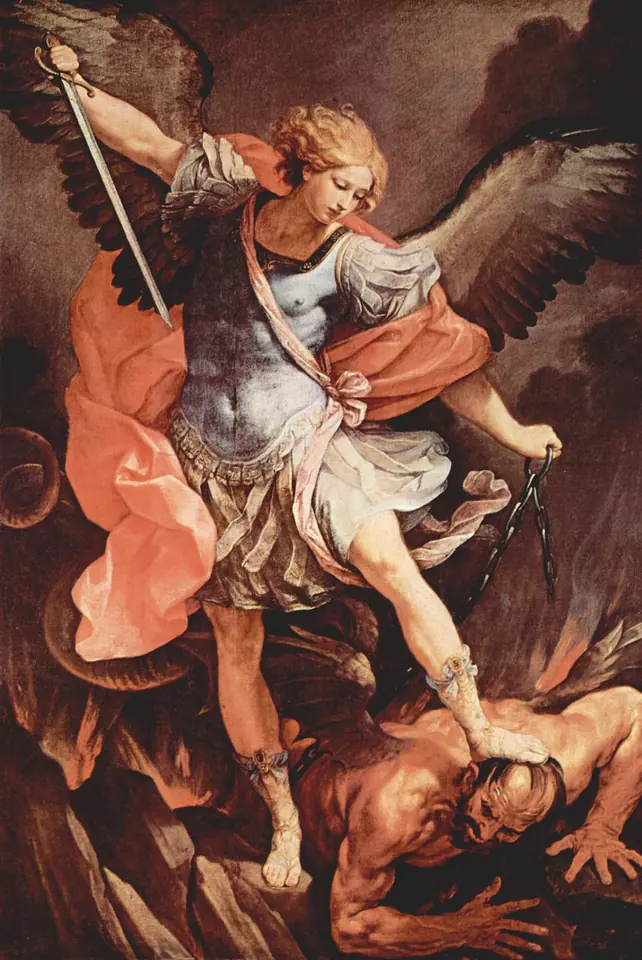
- Michael: Hebrew, "Who is like God?" The name is a question with only one answer: no one. St. Michael the Archangel (September 29).
- Peter: Greek petros, "rock," translating the Aramaic Kepha. Jesus gave it himself: "thou shalt be called Cephas, which is interpreted Peter" (John 1:42). St. Peter (June 29).
- Paul: Latin paulus, "small." Saul of Tarsus is called Paul from Acts 13:9 onward. St. Paul (June 29).
- James: from Iacobus, the Latin form of Jacob, Hebrew Ya'aqov, linked in Genesis to the heel of Esau that the newborn Jacob held. St. James the Greater (July 25).
- Thomas: Aramaic, "twin." St. John's Gospel translates it for Greek readers: "Thomas, who is called Didymus," the Greek word for twin (John 11:16). St. Thomas the Apostle (July 3).
- Andrew: Greek andreios, "manly, brave." St. Andrew (November 30).
- Matthew: from the Hebrew Mattithiah, "gift of the Lord." St. Matthew (September 21).
- Luke: Greek Loukas, probably "man from Lucania," a region of southern Italy. St. Luke (October 18).
- Stephen: Greek stephanos, "crown, wreath." Fittingly, he was the first martyr to win the martyr's crown. St. Stephen (December 26).

- Francis: Latin Franciscus, "Frenchman." St. Francis of Assisi was baptized Giovanni, and Francesco was the name his father gave him; the saint made it one of the great Christian names. (October 4)
- Anthony: from the Roman family name Antonius, of unknown Etruscan origin. The h in the English spelling came in the 17th century from a mistaken link to the Greek anthos, "flower." St. Anthony of Padua (June 13).
- Nicholas: Greek, "victory of the people." St. Nicholas (December 6).
- George: Greek georgos, "farmer," literally "earth-worker." St. George (April 23).
- Patrick: Latin Patricius, "nobleman." St. Patrick (March 17).
- Benedict: Latin Benedictus, "blessed." St. Benedict (July 11).
- Christopher: Greek Christophoros, "Christ-bearer." Early Christians used the word for anyone who carried Christ in the heart; the medieval legend of the giant who carried the Christ Child across a river may have grown from the name itself. St. Christopher (July 25).
- Dominic: Latin Dominicus, "of the Lord," and traditionally a name for boys born on Sunday, the Lord's day. St. Dominic (August 8).
- Gabriel: Hebrew, "God is my strong one" or "strong man of God." St. Gabriel the Archangel (September 29).
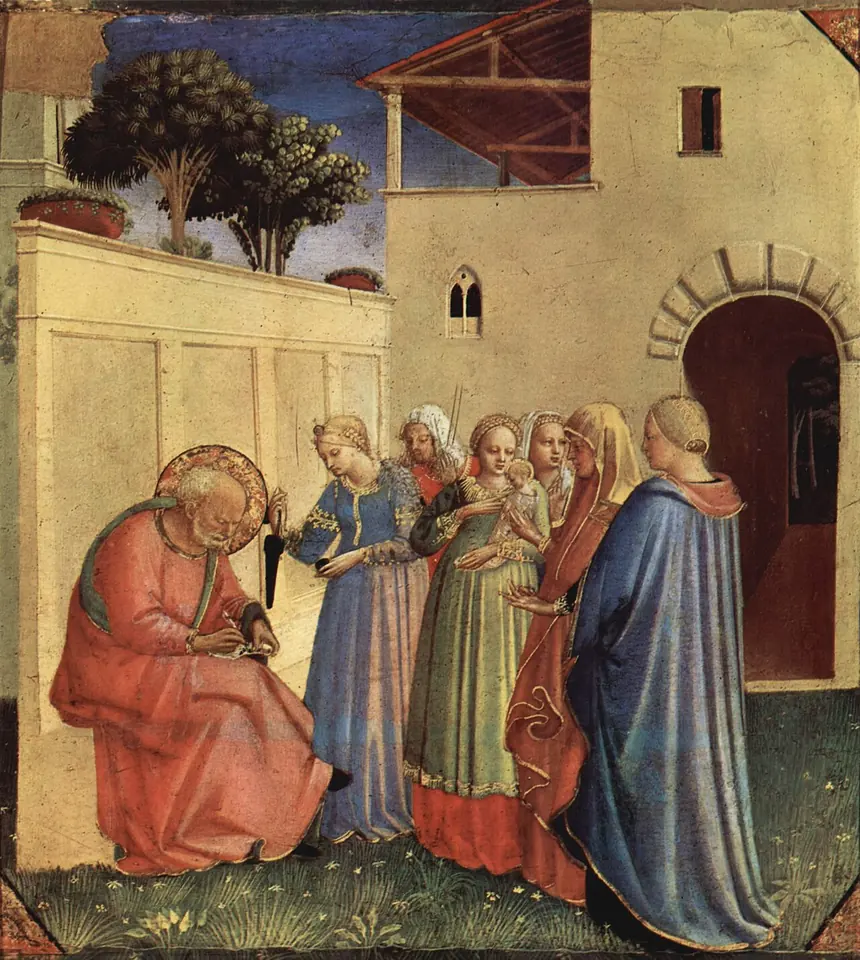
Saint names for girls and their meanings
- Mary: from the Hebrew Miriam. Scholars have proposed about seventy meanings. The Catholic Encyclopedia favors "the beautiful" or "the perfect one." The lovely title "Star of the Sea" (stella maris) traces to St. Jerome, though he most likely wrote stilla maris, "a drop of the sea." The Blessed Virgin Mary (January 1, Mary, Mother of God).
- Anne: from the Hebrew Hannah, "grace, favor." St. Anne, the mother of Our Lady (July 26).
- Elizabeth: Hebrew Elisheba, "my God is an oath." St. Elizabeth, mother of John the Baptist (September 23).
- Catherine: from the Greek Aikaterine, origin debated. Its link with katharos, "pure," is why the name came to be spelled with th. St. Catherine of Siena (April 29) and St. Catherine of Alexandria (November 25).
- Teresa: meaning uncertain, perhaps from the Greek for "summer" or "to harvest." The first known bearer was Therasia, the Spanish wife of St. Paulinus of Nola. St. Teresa of Ávila (October 15) and St. Thérèse of Lisieux (October 1).
- Clare: Latin clara, "clear, bright, famous." St. Clare of Assisi (August 11).
- Lucy: from Latin lux, "light," which is why she is invoked for the eyes. St. Lucy (December 13).
- Agnes: Greek hagne, "chaste, pure." Its sound echoes the Latin agnus, "lamb," which is why she is painted with a lamb. St. Agnes (January 21).
- Monica: meaning unknown, most likely Berber or Phoenician, fitting for a woman of North Africa. St. Monica (August 27).
- Cecilia: from the Roman family name Caecilius, from caecus, "blind." St. Cecilia (November 22).
- Margaret: Greek margarites, "pearl." St. Margaret of Scotland (November 16).
- Rose: the flower. St. Rose of Lima was baptized Isabel; her family called her Rosa, and she received the name at confirmation from St. Turibius. (August 23)
- Joan: the feminine of John, "the Lord is gracious." St. Joan of Arc (May 30).
- Bridget (Brigid): from the Old Irish Brigit, "the exalted one." St. Brigid of Kildare (February 1) and St. Bridget of Sweden (July 23).
- Helen (Helena): Greek, probably "torch," possibly linked to selene, "moon." St. Helena, mother of Constantine (August 18).
- Veronica: a Latin form of Berenice, "bringing victory," whose spelling was shaped by the phrase vera icon, "true image," after the veil that tradition says bore the Holy Face. St. Veronica (July 12).
- Agatha: Greek agathe, "good." St. Agatha (February 5).
- Martha: Aramaic, "the lady, the mistress" of the house, which suits the busy hostess of Bethany. St. Martha (July 29).
- Barbara: Greek barbaros, "foreign." St. Barbara (December 4).
- Rita: the short form of Margherita, so it too means "pearl." St. Rita of Cascia was born Margherita Lotti. (May 22)
Choosing a saint name
When you choose a saint name for a child, or a confirmation name for yourself, the saint matters more than the dictionary. A name like George or Barbara has a plain meaning and a heroic saint; a name like Clare joins both. Read about the saint, not only the word. For more ideas, see our lists of saint names for boys and saint names for girls, our guide to confirmation saints, and how to choose a patron saint.

Whatever name you carry, a saint has carried it before you. So let us thank God for our names, and ask the saints who bore them to pray for us, that we may bear them as well.
Frequently asked questions
What does John mean?
John comes from the Hebrew Yochanan, "the Lord is gracious." The angel Gabriel gave the name to the Baptist before his birth (Luke 1:13), and it has been one of the best-loved Christian names ever since.
What does Mary mean?
Scholars have proposed about seventy meanings for Miriam. The Catholic Encyclopedia favors "the beautiful" or "the perfect one." The title "Star of the Sea" comes from an early reading of St. Jerome's Latin, which most likely said stilla maris, "a drop of the sea."
Which saint names mean "gift of God"?
Matthew (from Mattithiah, "gift of the Lord"). Other saint names with God in them include John ("the Lord is gracious"), Michael ("who is like God?"), Gabriel ("God is my strong one") and Elizabeth ("my God is an oath").
Does a saint's name have to mean something holy?
No. Many saint names began as ordinary words, like George ("farmer"), Paul ("small") or Barbara ("foreign"). The name became holy because of the person who bore it. As the Catechism says, "the name is the icon of the person" (no. 2158).
Sources
- Catholic Encyclopedia (1911): Hebrew Names. Divinely given names (John, Luke 1:13; Jesus, Matthew 1:21); Joseph as "Whom God added"
- Catholic Encyclopedia (1912): The Name of Mary. About seventy proposed meanings; "stella maris" and "stilla maris"; "The beautiful or The perfect one"
- Douay-Rheims Bible: John, chapter 1. "Thou shalt be called Cephas, which is interpreted Peter" (John 1:42)
- Douay-Rheims Bible: Genesis, chapter 30. The naming of Joseph (Genesis 30:24)
- Behind the Name: the etymology and history of first names. Etymologies of the Greek, Latin and Celtic names (Theresa and Therasia, Monica, Veronica and Berenice, Bridget, Helen)