St. Fructuosus of Braga: Visigothic Hermit, Monastic Founder and Archbishop

St. Fructuosus of Braga (died 665) was a Visigothic nobleman who gave his inheritance to the poor, lived as a hermit in the mountains of Galicia, founded a string of monasteries, wrote two monastic rules, and ended his life as bishop of Dumium and archbishop of Braga. The Catholic Encyclopedia calls him the greatest of Spain's monastic bishops. His feast is April 16.
Who was St. Fructuosus of Braga?
St. Fructuosus of Braga was a seventh-century Visigothic nobleman who walked away from rank and wealth to live as a hermit, and who ended up founding more monasteries than anyone else in the Spain of his day. He wrote two monastic rules, became bishop of Dumium in 654 and archbishop of Braga in 656, and died on April 16, 665. The Catholic Encyclopedia calls him "this greatest of Spanish monastic bishops." We keep his feast on April 16.
He should not be confused with St. Fructuosus of Tarragona, the bishop burned alive with his two deacons in 259, whose feast is January 21.
Nearly everything we know comes from a life written soon after his death by a monk of the next generation (the Catholic Encyclopedia names him as Abbot Valerius), drawn from the memories of Fructuosus's own disciples.
From a general's son to a hermit
Fructuosus was the son of a Gothic general, and Alban Butler goes further and makes him "a prince of the royal blood of the Visigoth kings." He studied in the school the bishop of Palencia kept for his clergy. When his parents died he was free to choose his own life, and he chose God. Butler says he sold most of his estate and gave the money to the poor.
He went off alone into the wild country of Galicia, in the far northwest of Spain. He did not stay alone for long. Young men found him and asked to live under his guidance, and the community that gathered around him became the monastery of Complutum, today's Compludo in the mountains of El Bierzo. He governed it until it was well settled, appointed an abbot, and slipped back into the wilderness. Butler pictures him there "clothed with the skins of beasts in imitation of the ancient hermits."

The pattern repeated itself. Each time he retreated, followers came, and each time a monastery grew. The Catholic Encyclopedia counts nine more foundations after Compludo, among them a convent for eighty women under the holy abbess Benedicta.
The two rules of St. Fructuosus
Two monastic rules written by Fructuosus survive. The first, in twenty-five chapters, was made for Compludo. It ends with a pactum, a written agreement that each monk signed with his abbot, setting out the vows and the form of consecration. The second, the "common rule," was written for a whole federation of monasteries under an abbot-bishop and speaks mostly to superiors.
That second rule shows how he thought. He was not building one house but a network of them, a monastic family spread across the northwest of the peninsula.
Bishop of Dumium and archbishop of Braga
In 654 he was called to be bishop of Dumium, the monastery-see just outside Braga that St. Martin of Braga had founded a century before. On December 1, 656, he became archbishop of Braga itself.
He did not have an easy time in office. Butler says "his innocence and virtue were no security from the shafts of envy," but that he "overcame injuries by meekness and patience." When death came he asked to be laid on ashes before the altar, and he died there, as a penitent monk, on April 16, 665.

His chapel at Montélios and his relics
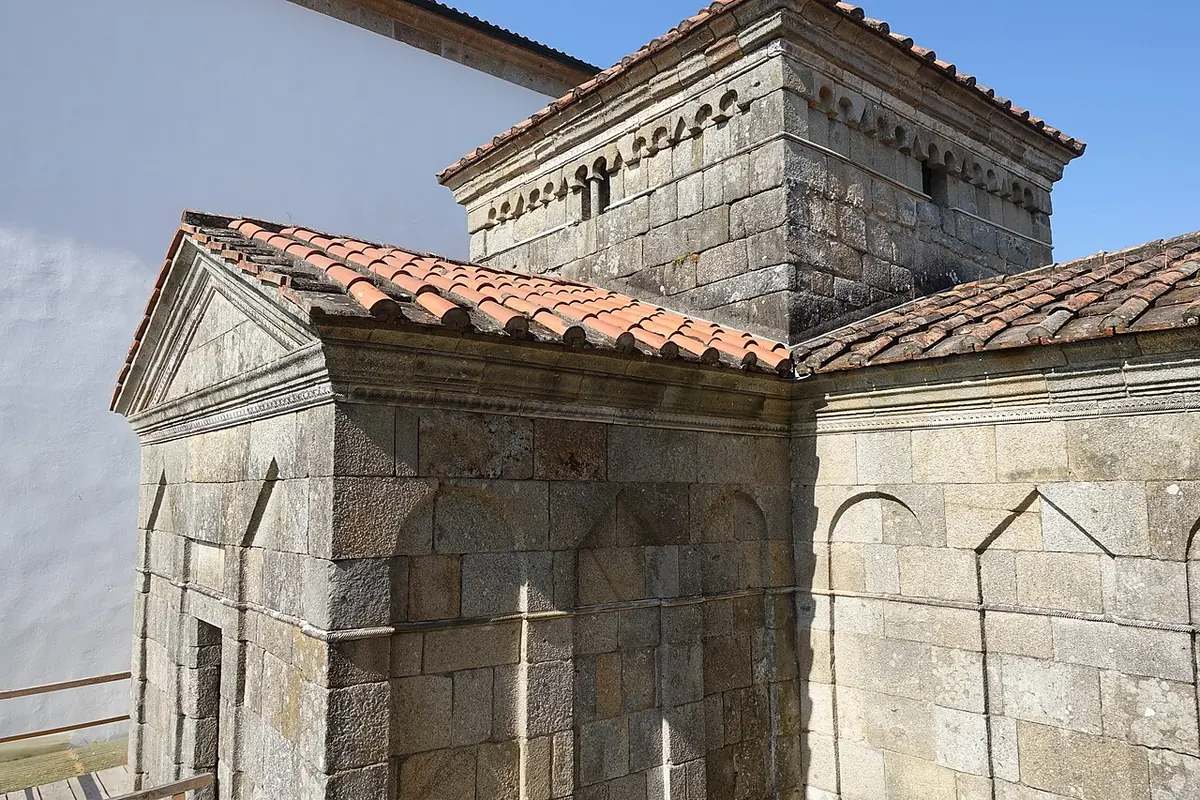
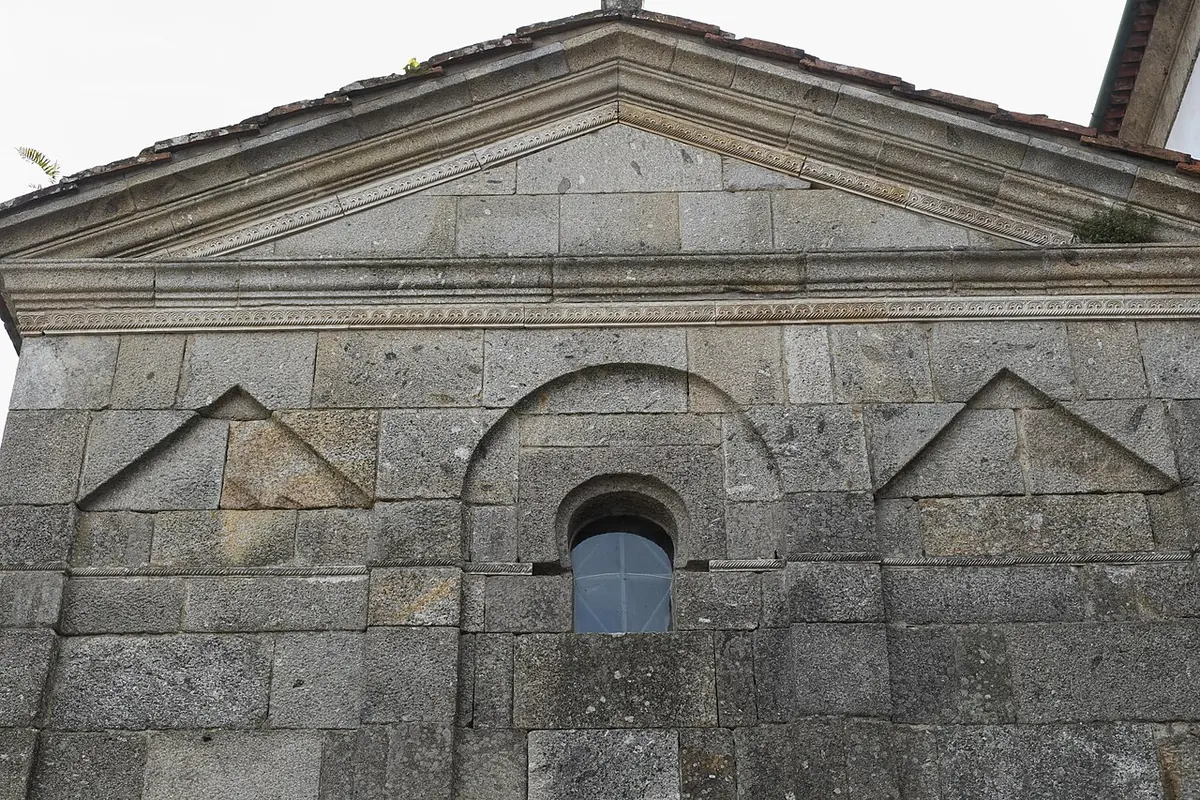
On the edge of Braga, in the Real district, stands the little chapel of São Frutuoso de Montélios, one of the rare buildings in Portugal that goes back to the early Middle Ages. Tradition connects it with Fructuosus and his burial. Its granite walls, decorated with alternating round and pointed blind arches, are small enough to take in at a glance.
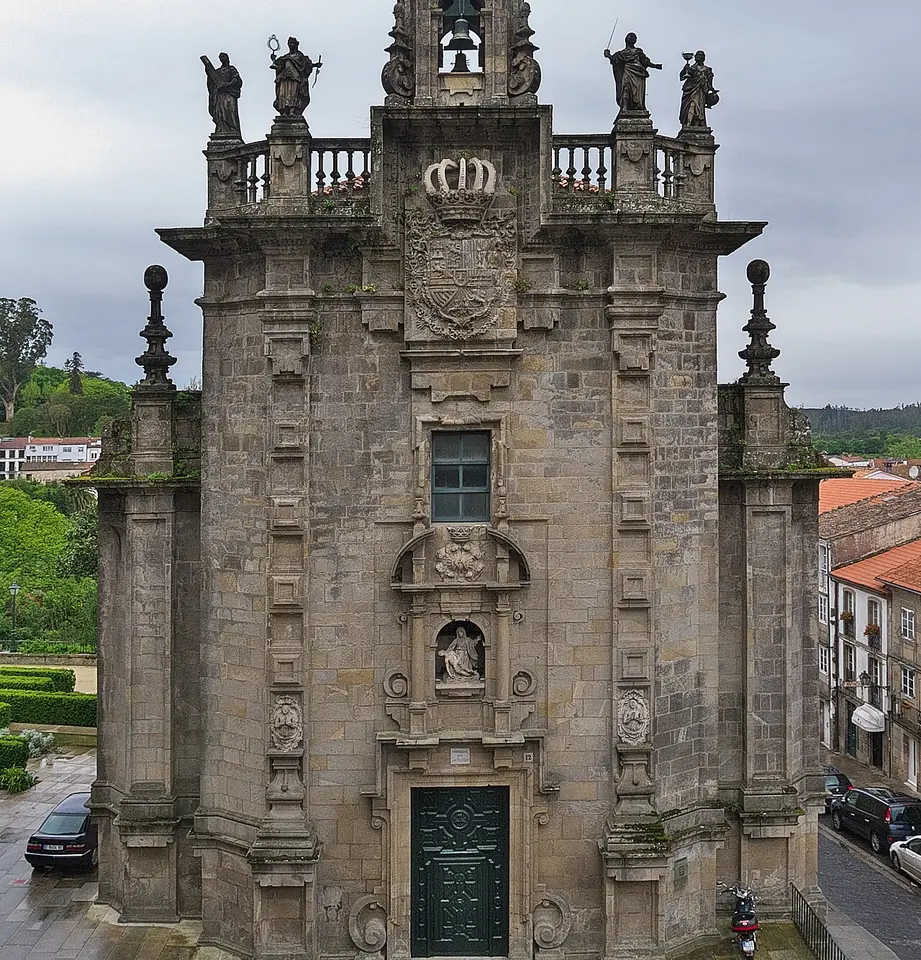
In 1102 his relics were carried off to Santiago de Compostela. Compostela still honors him with the Baroque church of San Fructuoso, built between 1754 and 1765 beside the old pilgrims' hospital, the Hospital Real.
Where the relics of St. Fructuosus of Braga are kept: see them on the relics map →
The miracles of St. Fructuosus
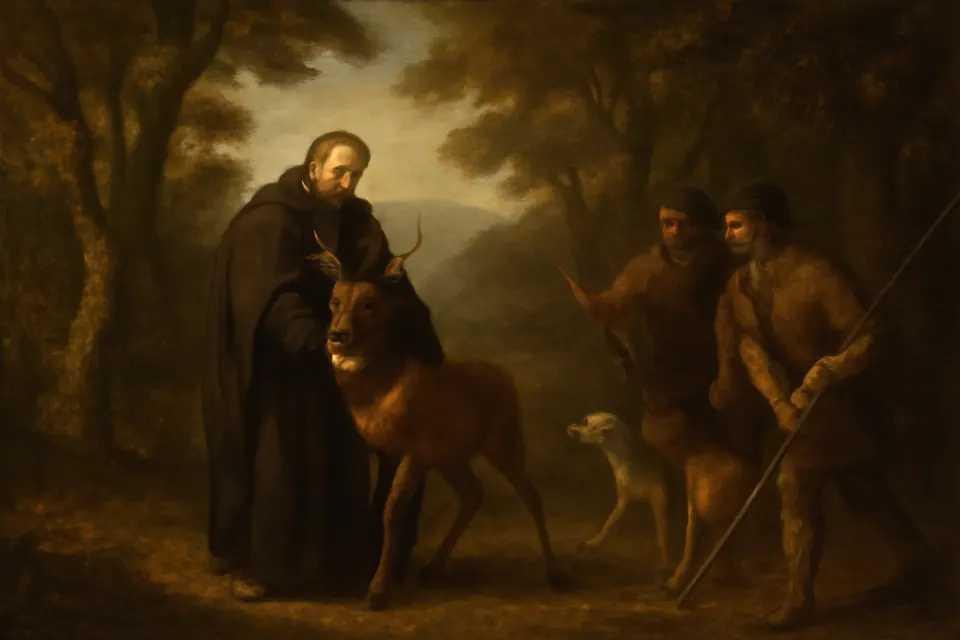
The old life is full of the wonders that gathered around hermits, and we take them as traditional, handed down by his disciples rather than formally examined. The best known is the story of the stag. Hunters were chasing a young stag, and the animal ran to Fructuosus for shelter. He saved it, and the old account says it stayed devoted to him from then on.
Symbols of St. Fructuosus in art
- A stag: his personal emblem, from the story of the animal he saved from hunters.
- The monk's habit: the hermit and founder of monasteries, sometimes shown in a rough cloak of skins.
- Miter and crozier: the archbishop of Braga, as in the statue on the cathedral front.
- A book: the rule he wrote for his monks.
In Portugal and Galicia he is usually shown as a bearded bishop. Where the stag appears, it tells you at once that this is Fructuosus and not another bishop of Braga.
Feast day and prayer
We keep his feast on April 16; see our feast day calendar. Braga and the monasteries of El Bierzo still honor him on that day. There is no widely used traditional prayer to him in English. Let us pray for the grace he had, to let go of what the world prizes and to welcome whoever God sends: St. Fructuosus of Braga, hermit, father of monks and shepherd of your people, pray for us, and for all who seek God in silence and in common life.
Frequently asked questions
Who was St. Fructuosus of Braga?
A seventh-century Spanish monk and bishop, the son of a Gothic general. After his parents died he became a hermit, founded the monastery of Compludo and about nine others, wrote two monastic rules, became bishop of Dumium in 654 and archbishop of Braga in 656, and died on April 16, 665.
Why is St. Fructuosus shown with a stag?
The old account says he saved a stag from hunters, and that the animal afterward stayed devoted to him. The Catholic Encyclopedia gives this as the reason for the stag in his images. It is a traditional story.
When is the feast of St. Fructuosus of Braga?
April 16, the day he died in 665. He is a different saint from St. Fructuosus of Tarragona, a bishop martyred in 259, whose feast is January 21.
Where are the relics of St. Fructuosus?
He died and was buried at Braga. In 1102 his relics were carried to Santiago de Compostela, where a Baroque church in the old city still bears his name.
Keep exploring
Sources
- Catholic Encyclopedia (1909): St. Fructuosus of Braga. His monasteries, the convent of 80 nuns, his dates at Dumium and Braga, the stag, the two rules, and the 1102 transfer to Compostela
- Alban Butler, Lives of the Saints (1866), vol. IV: St. Fructuosus, Archbishop of Braga, Confessor (Bartleby, archived). His death lying on ashes before the altar
- The Roman Martyrology (English edition, 1916), Internet Archive. April 16