St. Grace of Saragossa, St. Engratia, Virgin Martyr of Zaragoza
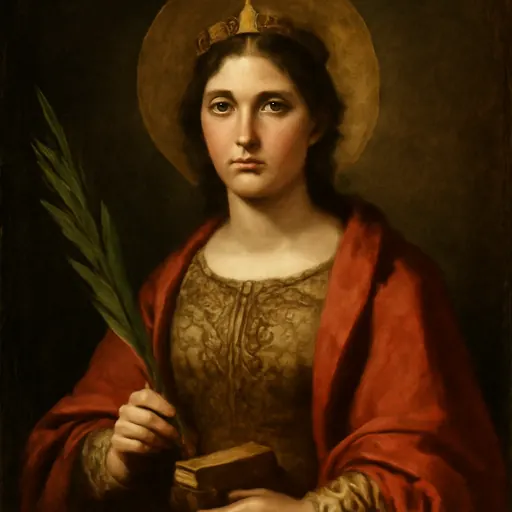
St. Grace of Saragossa is St. Engratia (Santa Engracia), a young Christian woman tortured at Zaragoza, Spain, in Diocletian's persecution around 304. The poet Prudentius, writing about a century later, says she survived her torments for a time, "the only one to outlive her own death," before dying of her wounds. We keep her feast with the martyrs of Saragossa on April 16.
Who was St. Grace of Saragossa?
St. Grace of Saragossa is the English name some saint lists give to St. Engratia, in Spanish Santa Engracia, a young Christian woman who was tortured for Christ at Zaragoza (Roman Caesaraugusta) in the persecution of Diocletian, around 304. Her story is unusual among the early martyrs: she was not killed outright. She survived her torments for a time and died later of her wounds.
We know her from one of the best witnesses of the early Spanish Church. Around 400, less than a century after her death, the Christian poet Prudentius, himself from that part of Spain, wrote a hymn in honor of the eighteen martyrs of Caesaraugusta. He gives Encratis, as he spells her name, more lines than any of the others, and he writes as one who had seen her relics with his own eyes.
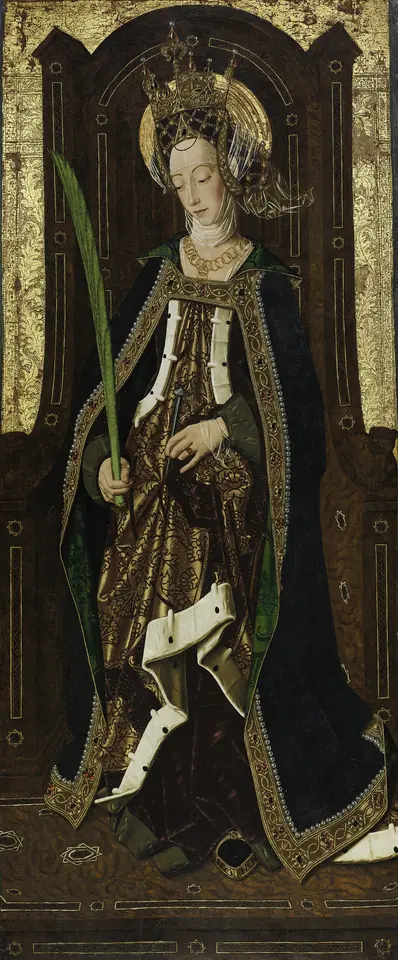
Let us ask St. Engratia, who held fast through terrible pain, to pray for all who suffer in body for their faith.
The martyrdom of St. Engratia
What Prudentius tells us
Prudentius speaks to her directly. In our own translation of his Latin: "To none of the martyrs has it been given to live on in our land with life remaining; you alone, surviving your own death, live in the world." He describes how the "barbarous torturer" tore at her whole side, how her breast was cut away so that the wound lay open "right over the heart," and how hooks tore out part of her liver.
Her wounds festered for a long time before they killed her. Prudentius counts that slow death as a fuller martyrdom, not a lesser one: though the persecutor's sword denied her a final blow, "the fullness of your suffering crowns you, martyr, as one slain." Then he adds the line that makes the hymn so moving: Vidimus partem iecoris revulsam, "We have seen the part of your liver that was torn away." Prudentius was born decades after her death, so the line suggests the city kept it as a relic. He says Christ gave Zaragoza a new honor: a house "dedicated to a living martyr."
What later tradition adds
The fuller story most Spaniards know comes from later accounts of her passion, not from Prudentius. They say Engratia was the daughter of a noble family of Braga, in Roman Lusitania, and was traveling to Gaul to be married, escorted by eighteen relatives and servants. At Caesaraugusta she learned of the governor Dacian's cruelty to the Christians, went to him and rebuked him to his face. He had her tortured and her companions put to death. Tradition identifies those companions with the eighteen martyrs Prudentius names, though Prudentius himself does not connect them.
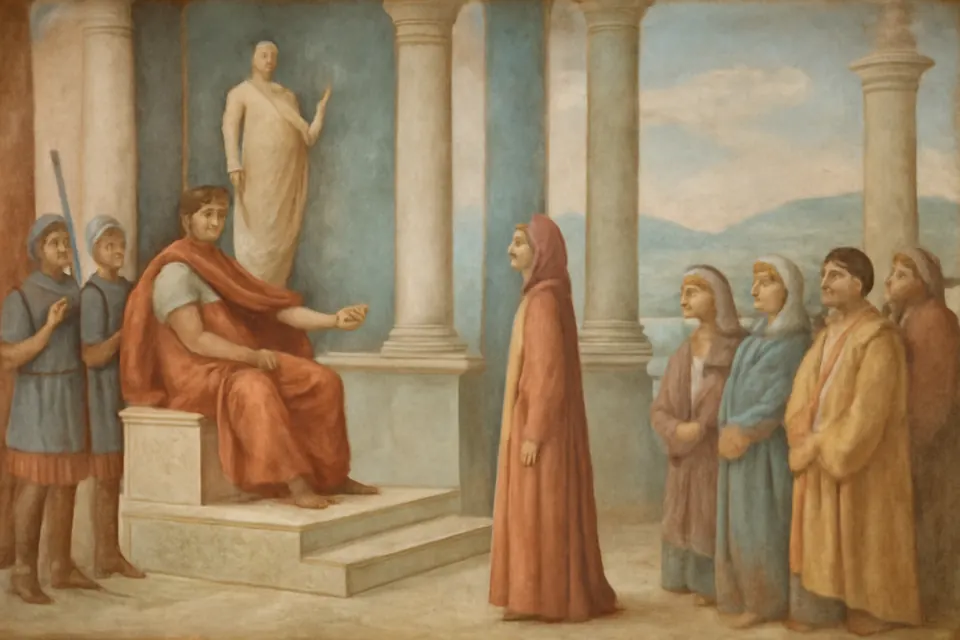
The same governor, Dacian, had St. Vincent, deacon of Saragossa, taken to Valencia and martyred there in these years.
The countless martyrs and the Santas Masas
Zaragoza remembers more than Engratia and her eighteen companions. The Catholic Encyclopedia records the tradition of the "numberless saints," the santos innumerables. It is said that Dacian promised the Christians of the city freedom to practice their faith if they left by certain gates at an appointed time, and then had them cut down as they went out. Their bodies were burned and their ashes mixed with those of criminals so that no one could honor them. A shower of rain, the story goes, washed the ashes apart, and the martyrs' remains gathered into white masses, the santas masas, "holy masses," which are still kept in the crypt of Santa Engracia. This is a traditional account, a local wonder handed down in Zaragoza, not a miracle examined by the Church. None of her miracles is approved in the modern sense.
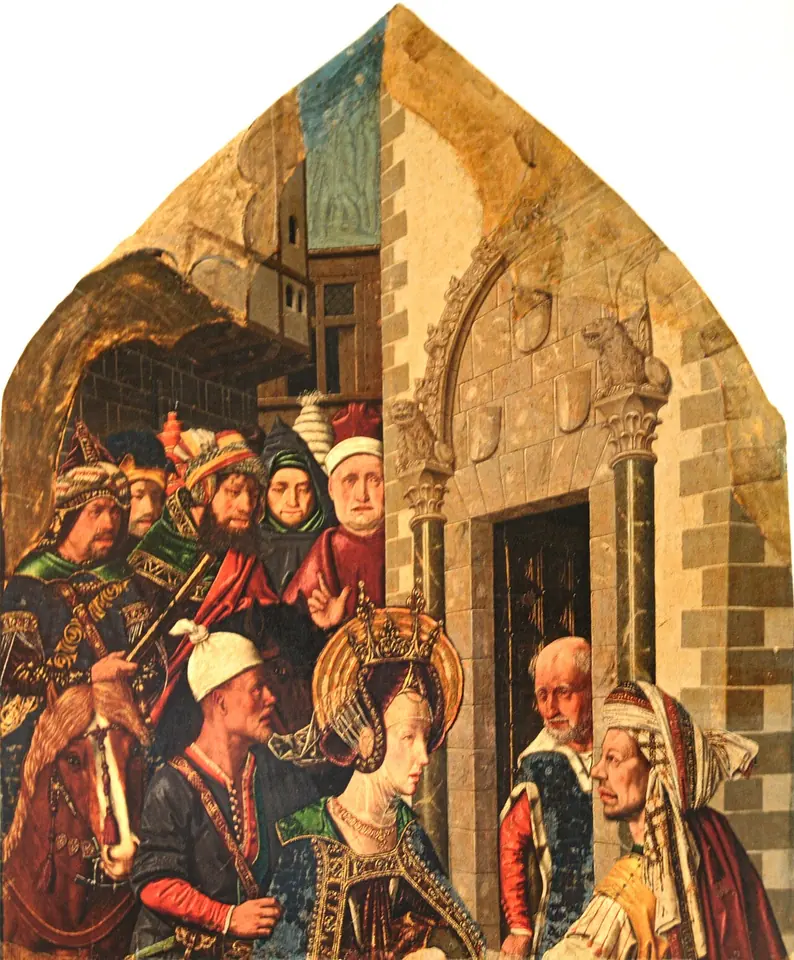
Symbols of St. Engratia in art
Spanish painters loved her, and she is easy to recognize once you know her signs.
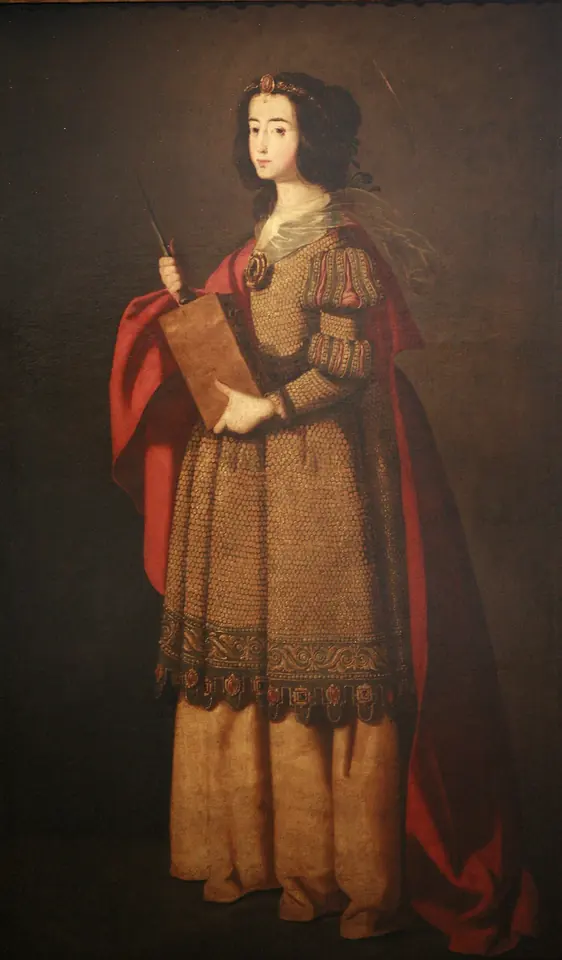
- Rich clothing and a crown: the noblewoman of tradition, on her way to be married. Bermejo dresses her in brocade on a Gothic throne.
- The palm: the victory of martyrdom.
- A nail, hook or other instrument: the tools of her torture. In the Zurbarán workshop painting on this page she holds a long, slender nail.
- A book: her faith, and the Gospel she would not deny.
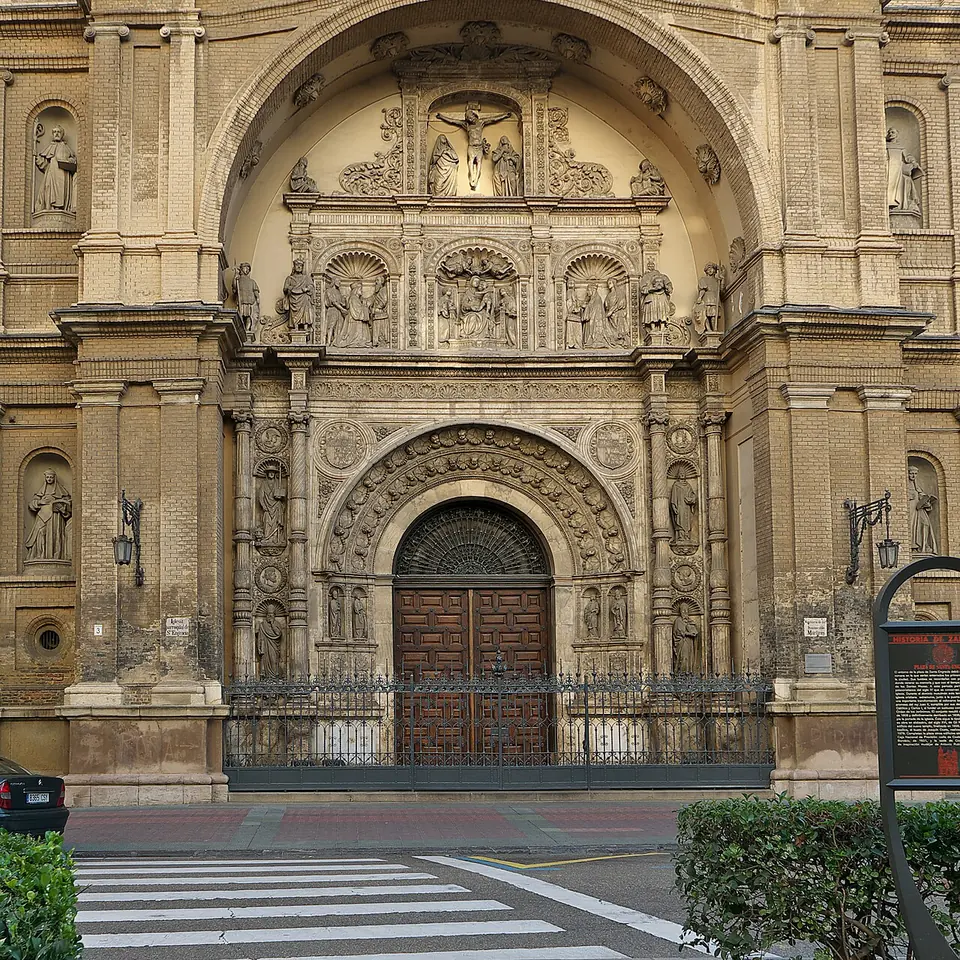
The Basilica of Santa Engracia in Zaragoza
The Basilica of Santa Engracia stands on the traditional site of the martyrdoms. A Hieronymite monastery grew up around it, and its carved stone portal, begun in 1511, is one of the city's treasures. During the siege of Zaragoza in 1808 the French destroyed the church, and the Catholic Encyclopedia says only "the crypt and the doorway" survived. The church was later rebuilt and is a parish church today. Her relics and the Santas Masas rest in the crypt.
Her cult traveled to Portugal, the land tradition calls her home: the great domed church of Santa Engrácia in Lisbon, now Portugal's National Pantheon, bears her name.
Feast day and prayer
We keep her feast with the martyrs of Saragossa on April 16. See the feast day calendar, and read more about what a martyr is.
There is no widely known traditional prayer to St. Engratia in English. Prudentius closes his hymn by telling us that the throng of martyrs laid beneath Zaragoza's altar "begs pardon for our failings." With that same trust we say: St. Engratia and all the holy martyrs of Saragossa, pray for us.
Frequently asked questions
Who was St. Grace of Saragossa?
She is St. Engratia (in Spanish, Santa Engracia; in Latin, Encratis), a virgin martyr of Zaragoza in the persecution of Diocletian, around 304. Her torturers tore her flesh, cut off a breast and tore out part of her liver, and she died later of her wounds. "Grace" is an English rendering of her name.
When is the feast of St. Grace (Engratia) of Saragossa?
April 16, with the eighteen martyrs and the countless martyrs of Saragossa. Some online lists give March 13 for "St. Grace of Saragossa," but the Church of Zaragoza and the Roman Martyrology keep her on April 16.
Where are the relics of St. Engratia?
In the crypt of the Basilica of Santa Engracia in Zaragoza, built on the traditional site of the martyrdoms. The crypt also keeps the Santas Masas, the ashes of the city's countless martyrs.
Is St. Grace of Saragossa the same as St. Engratia?
Yes. The details given for "Grace of Saragossa" match St. Engratia exactly. Don't confuse her with St. Engratia of Segovia, a later Visigothic martyr, or with the Lisbon church of Santa Engrácia, which is named for the Zaragoza martyr.
Keep exploring
Sources
- Prudentius, Peristephanon IV: Hymn in Honor of the Eighteen Martyrs of Caesaraugusta (Latin text, The Latin Library). The oldest source for Encratis, written about 400; lines 109 to 144
- Catholic Encyclopedia (1912): Saragossa. Dacian, the innumerable martyrs, the Santas Masas and the church of St. Engratia
- Catholic Readings: Catholic Saint of the Day for March 13 (St. Grace of Saragossa). An example of the March 13 listing under the name Grace