St. Julie Billiart

St. Julie Billiart (1751–1816) was a French woman who spent twenty-two years paralyzed, taught the catechism from her bed, hid priests during the French Revolution, and in 1804 founded the Sisters of Notre Dame de Namur to educate poor girls. Cured on the feast of the Sacred Heart in 1804, she walked the roads of France and Belgium founding schools. Her feast day is April 8, and her motto was "How good is the good God!"
Who was St. Julie Billiart?
Marie-Rose-Julie Billiart was born on July 12, 1751, in Cuvilly, a farming village in Picardy, north of Paris. Paralyzed for more than twenty years, she became the founder of the Sisters of Notre Dame de Namur, a congregation of teaching sisters that today works on five continents. She died in Namur, Belgium, on April 8, 1816. Pope Pius X beatified her in 1906, and Pope Paul VI canonized her on June 22, 1969.
Everything about her life comes back to one sentence she said over and over: Ah! qu'il est bon le bon Dieu! "Oh, how good is the good God!" She said it from a sickbed, in hiding, on the road and in exile, and her sisters still say it.
The life of St. Julie Billiart
The saint of Cuvilly
As a child Julie knew her catechism by heart, and the Catholic Encyclopedia says she gathered other children to explain it to them. Her parish priest let her make her First Communion at nine. When her family fell on hard times, she worked in the fields with the reapers, and the village began calling her "the saint of Cuvilly."
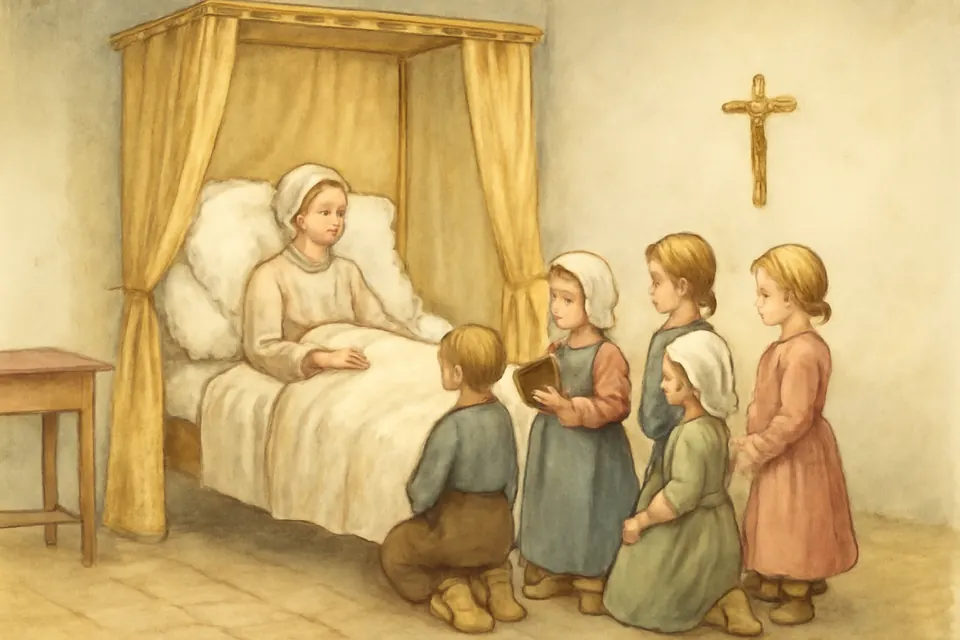
In 1774 someone fired a pistol at her father. The shock broke her health, and after poor medical treatment in 1782, the Sisters of Notre Dame write, her legs became paralyzed. She would not walk again for twenty-two years. She received Communion daily, prayed four or five hours a day, made lace and linens for the altar, and taught the village children their catechism from her bed.
Revolution and hiding
When the French Revolution came, Julie helped protect priests who refused the government's oath, among them her own parish priest. When revolutionaries surrounded the château where she was staying, she escaped in a hay cart to Compiègne in 1792, and there she lost her power of speech. In Compiègne, the sisters' account says, she had a vision of women gathered around a cross and heard the words: "These are the daughters that I will give you in an Institute, which will be marked by my cross."
In 1794 she was taken to Amiens, where she met a noblewoman, Françoise Blin de Bourdon, who had barely escaped the guillotine. Françoise was at first put off by the speechless invalid, then became her closest friend and partner for life.
The Sisters of Notre Dame
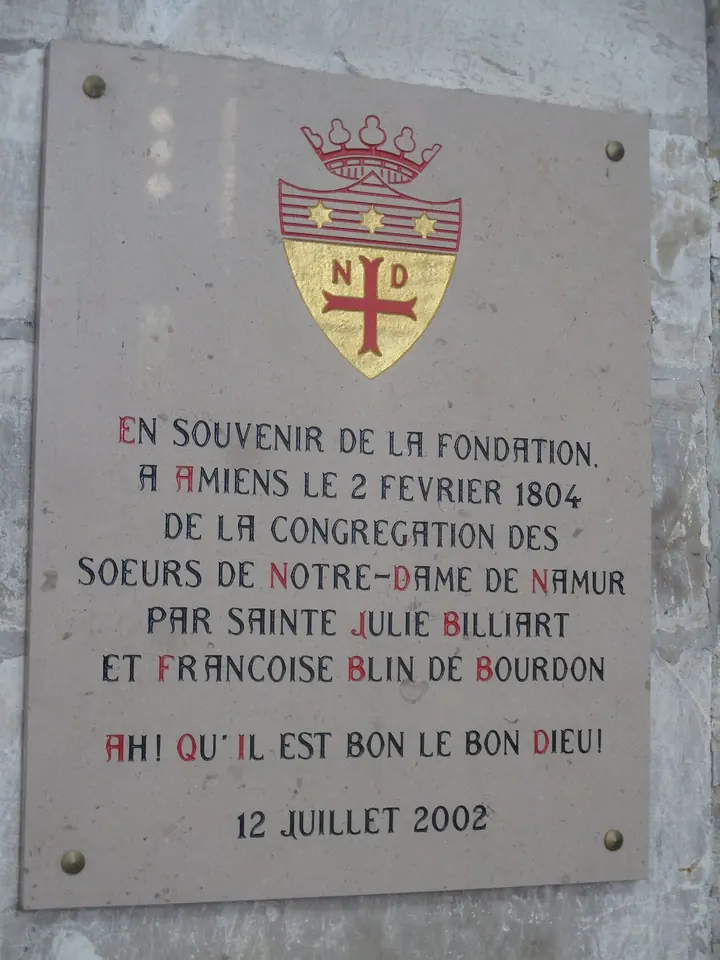
On February 2, 1804, in Amiens, Julie, Françoise and Catherine Duchâtel vowed themselves to God and to the care and education of poor girls. That is the founding day of the Sisters of Notre Dame. Julie did away with the old division between choir sisters and lay sisters, a new idea at the time.
The miracles of St. Julie Billiart
Her cure in 1804 (reported)
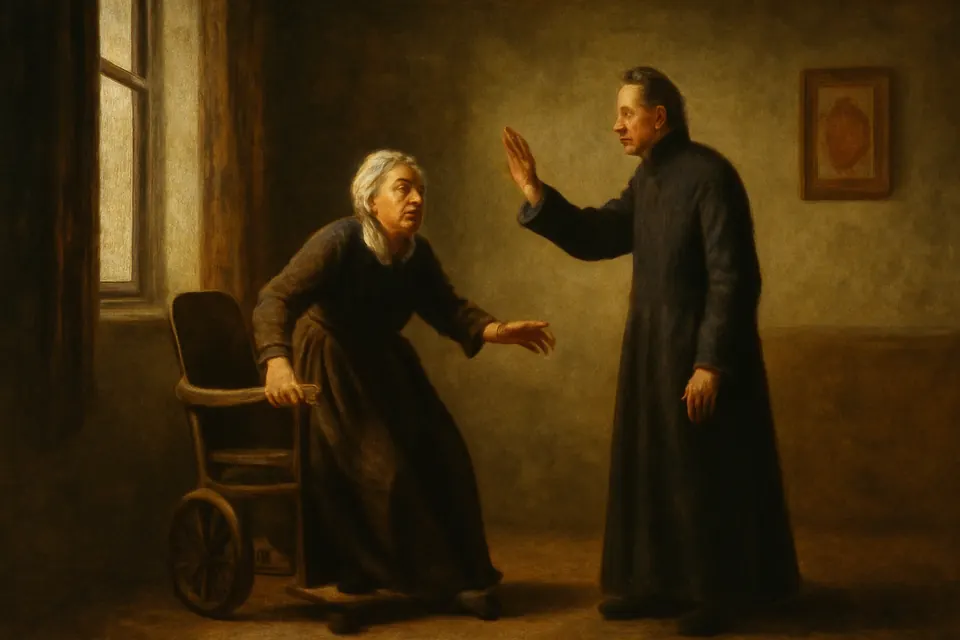
Father Enfantin, a priest of the Fathers of the Faith, asked Julie to make a novena to the Sacred Heart for an intention he didn't tell her. On the fifth day, June 1, 1804, the feast of the Sacred Heart, he told her to stand and take a step in honor of the Sacred Heart of Jesus. She stood and walked. He told her to keep it quiet, and her sisters found out days later when they saw her coming down the stairs. The cure is reported: it is well attested, but it was not one of the miracles formally examined for her canonization.
From then on she was always on the move. In twelve years she founded fifteen convents and made, by the Catholic Encyclopedia's count, one hundred and twenty journeys. A dispute with a priest in Amiens forced her to leave in 1809, and Namur became the motherhouse. She died there, after three months of illness, with the Magnificat on her lips.
The two approved miracles
The Church's decree of January 30, 1969, published in the Acta Apostolicae Sedis, recognized two cures as miracles worked through Blessed Julie's intercession. Both are approved:
- Homerus Rhodius, a foreman in Namur and father of ten, fell into a coma from liver and kidney failure in November 1919. He had received the last sacraments when, on November 30, his family laid her relic on him and began a novena. Within hours he improved, and he recovered completely.
- Otacilio Ribeiro, a young newly married farmer in southern Brazil, was taken to the hospital at Campos Novos in September 1950 with a bowel obstruction. The surgeon opened his abdomen, found a hard mass he dared not remove, and closed him up, expecting him to die. A sister nurse hung Julie's picture on the wall, put her relic on him and urged him to pray. The next morning the surgeon found him well. A week later he went home.
Symbols of St. Julie Billiart in art
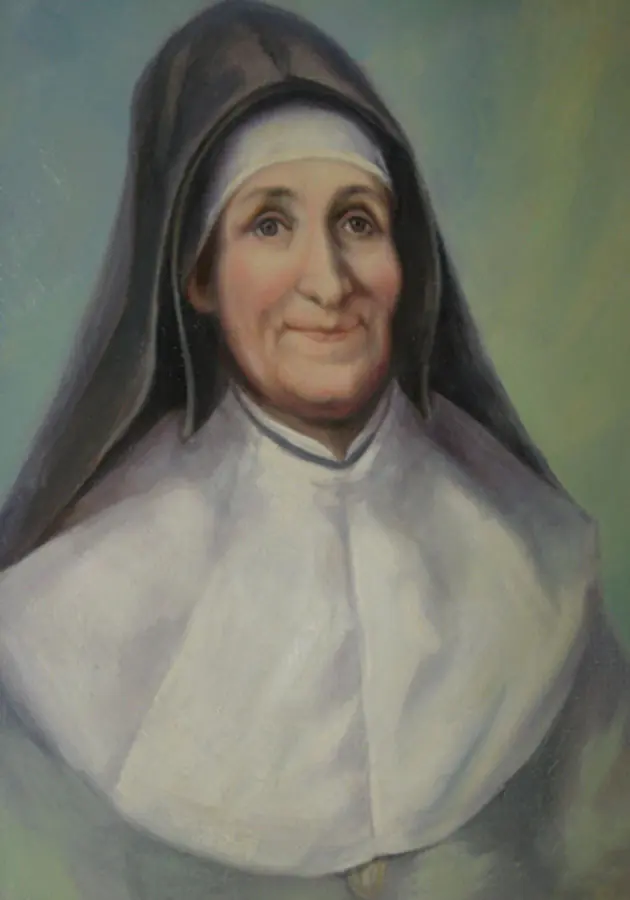
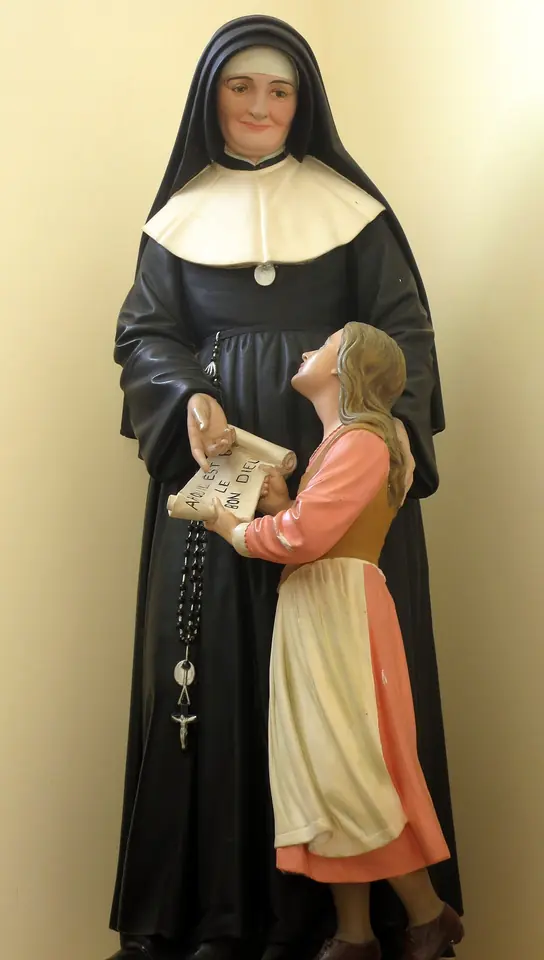
Julie is shown as a smiling sister in the black habit, white cap and broad white collar of her congregation, often with a crucifix. Look for a schoolgirl at her side, for her work in education, and for a scroll or banner with Ah! qu'il est bon le bon Dieu. Some images show her in a chair or at a sickbed, recalling her years of paralysis.
Feast day and relics
We keep her feast on April 8, the day of her death. See her neighbors on our feast days page. Her relics rest in a reliquary shrine made in Liège in 1906, the year of her beatification, in the convent church of the sisters' motherhouse in Namur, which now houses their heritage center.

Notre Dame schools and teachers around the world look to her as their patroness. See more on our patron saints page.
Prayer to St. Julie Billiart
We don't know of a traditional prayer to St. Julie in the standard prayer books, and we won't invent one under her name. Her own words are the best prayer she left us:
Ah! qu'il est bon le bon Dieu!
Oh, how good is the good God!
Let us ask St. Julie to pray for us when we are sick or held back, for teachers, and for children who have no one to teach them.
Frequently asked questions
What miracles were approved for St. Julie Billiart's canonization?
Two cures, approved by Pope Paul VI on January 30, 1969. Otacilio Ribeiro, a young farmer in Brazil, recovered overnight in 1950 from a bowel obstruction his surgeon thought would kill him. Homerus Rhodius, a foreman in Namur and father of ten, came out of a uremic coma in 1919 after his family began a novena with her relic.
How was St. Julie Billiart cured of her paralysis?
After about twenty-two years unable to walk, she made a novena to the Sacred Heart at the request of a priest, Father Enfantin. On June 1, 1804, the feast of the Sacred Heart, he told her to stand and take a step in honor of the Sacred Heart, and she walked. This is a reported miracle; it was not one of the cures examined for her canonization.
What does "Ah! qu'il est bon le bon Dieu" mean?
It means "Oh, how good is the good God!" Julie said and wrote it constantly. Pope Paul VI quoted it in his canonization homily as the exclamation "that characterizes her entirely."
When is St. Julie Billiart's feast day?
April 8, the day she died in Namur in 1816.
Sources
- Sacred Congregation of Rites, decree on the miracles for the canonization of Blessed Julie Billiart, January 30, 1969, Acta Apostolicae Sedis 61 (1969), pp. 343–345. The two approved cures of Otacilio Ribeiro (Brazil, 1950) and Homerus Rhodius (Namur, 1919)
- Paul VI, Homily for the canonization of Blessed Julie Billiart, June 22, 1969 (French and Italian)
- Catholic Encyclopedia (1910): St. Julie Billiart
- Sisters of Notre Dame de Namur: St. Julie Billiart, by Sr. Anne Stevenson, SNDdeN. The 1782 paralysis, the vision at Compiègne, Father Enfantin and the cure of June 1, 1804
- Sœurs de Notre-Dame de Namur, Belgique Sud: Centre d'héritage. Her reliquary shrine of 1906 by the Dehin brothers of Liège, in the convent church in Namur
- Roman Martyrology, April 8