St. Barsanuphius of Optina
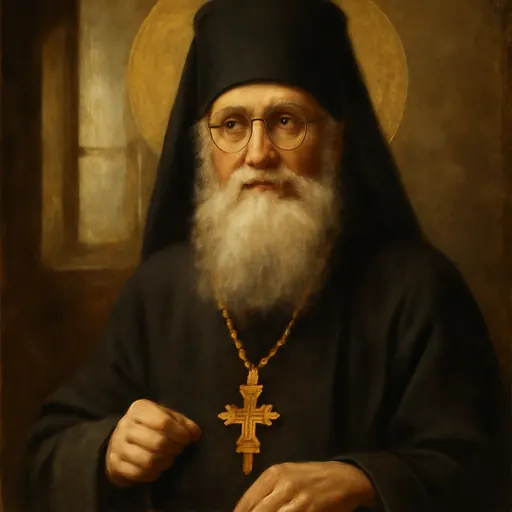
St. Barsanuphius of Optina (1845–1913) was a Russian army colonel who, after a vision during a grave illness, became a monk at Optina Monastery and one of the Optina Elders, a spiritual father known for insight into hearts. The Orthodox Church keeps his feast on April 1 (Julian), which is April 14 on the civil calendar.
Who was St. Barsanuphius of Optina?
St. Barsanuphius of Optina was a Russian army colonel who left a brilliant career in middle age to become a monk at Optina Monastery, and who became one of its famous elders, the spiritual fathers whose counsel drew all of Russia to the forests near Kozelsk. He is a saint of the Orthodox Church, and we describe him here as the Orthodox keep him. His feast falls on April 1 of the Julian calendar, which is April 14 on ours.
His life is told by the Orthodox Church in America, whose account we follow here.
The life of St. Barsanuphius of Optina
A Cossack officer
He was born Paul Plikhankov in Samara on July 5, 1845. His mother died giving birth to him. His father remarried so the boy would have a mother, and though his stepmother was strict, he loved her very much. As a descendant of the Orenburg Cossacks he was sent to a cadet corps, then to the Orenburg Military School, and he later graduated from the Cossack staff officers' school in St. Petersburg. He served at the headquarters of the Kazan military district and rose to the rank of colonel.
The vision
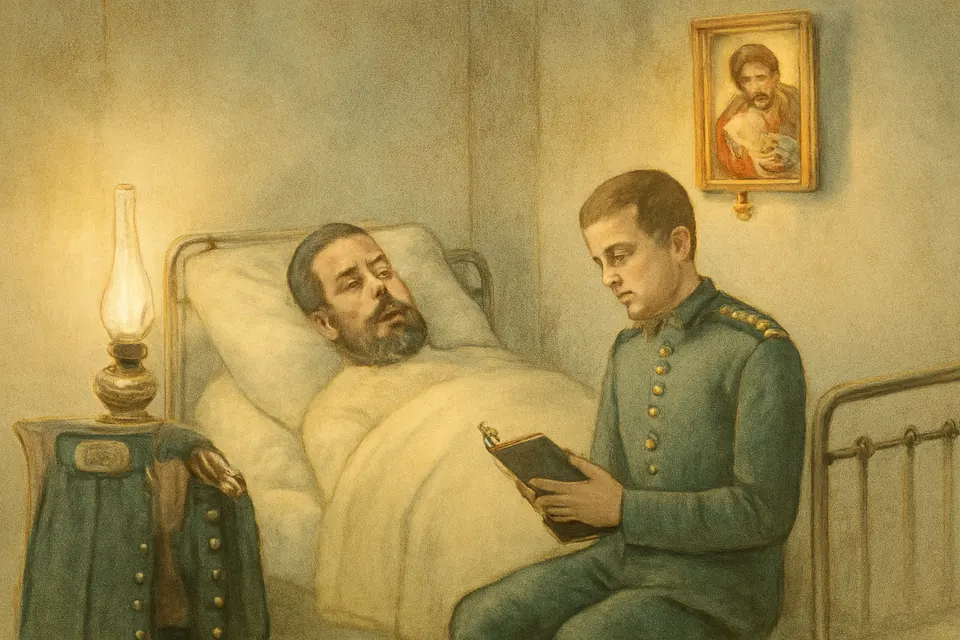
While sick with pneumonia, Paul sensed he was about to die. He asked his orderly to read him the Gospel and lost consciousness. In a vision, the heavens seemed to open, and he was afraid of the great light. His whole life passed before him and he was overcome with repentance. A voice told him to go to Optina. The doctors did not expect him to live. He recovered.
We label this vision reported: it comes from his own account, kept by those who knew him.
Called to Optina
He visited Optina in August 1889, where St. Ambrose of Optina told him to put his affairs in order. Two years later Ambrose blessed him to cut all ties with the world and enter the monastery within three months. It was not easy. His superiors offered him promotion to general and urged him to delay; friends tried to arrange a marriage. Only his stepmother was glad. On the last day of the three months he finished his affairs and reached Optina, only to find Ambrose already laid out in his coffin in the church.
He later noticed that he had left Kazan for the last time on December 17, 1891, the feast of the Prophet Daniel and the Three Holy Youths. He believed God had brought him out of a furnace of passions unharmed, as the youths were brought out of the fiery furnace.
Monk, priest and elder
The elder Anatole assigned him as cell attendant to Hieromonk Nectarius. He was accepted as a novice in 1892, ordained deacon in 1902 and priest in 1903. During a grave illness in December 1900 he was secretly tonsured a monk and given the name Barsanuphius, after St. Barsanuphius of Tver and Kazan. In 1903 he was appointed to help the skete superior, Elder Joseph, in guiding the monks and the sisters of Shamordino convent.
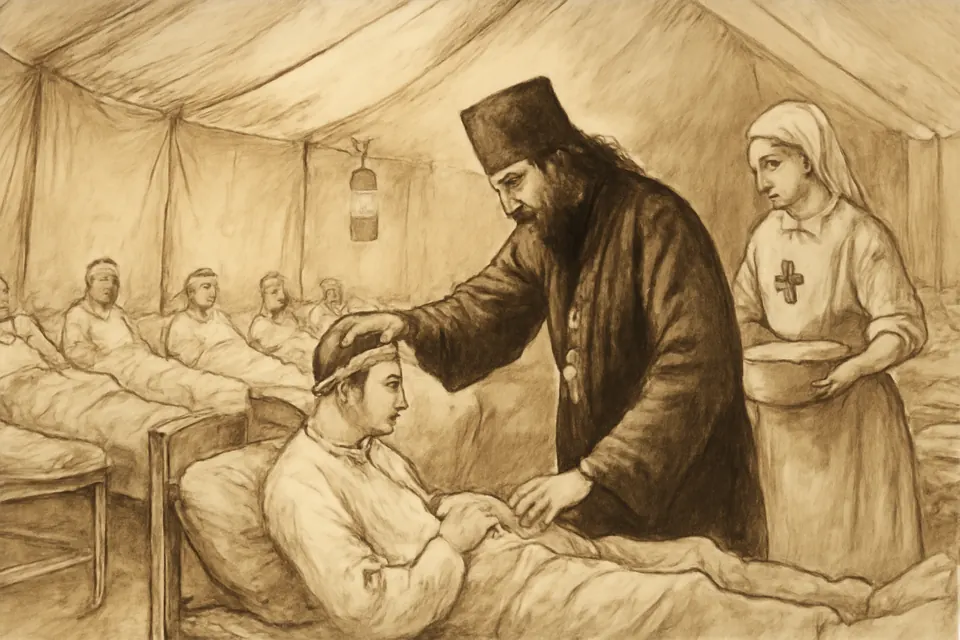
When the Russo-Japanese War began in 1904, he was sent to the Far East as a military chaplain to the wounded. He came home to Optina on November 1, 1905, and was made superior of the skete. He paid its debts, repaired its buildings and restored its discipline, joining strictness with a father's tenderness.
Gifts of the elder
The Orthodox Church in America says that, like the other Optina elders, he had gifts of clairvoyance and of healing body and soul. One spiritual son, Father Innocent Pavlov, recalled being afraid at his first confession because the elder reminded him of people and events he had forgotten. "During my lifetime, do not tell anyone about what you are experiencing now," the elder told him, "but you may speak of it after my death." These accounts are reported by those who knew him.
He loved the lives of the saints and urged everyone to read them, saying they teach us how to stand firm in faith and overcome evil. He kept many saints in his daily prayer rule because each one, he said, had a particular meaning in his life.
Exile and death
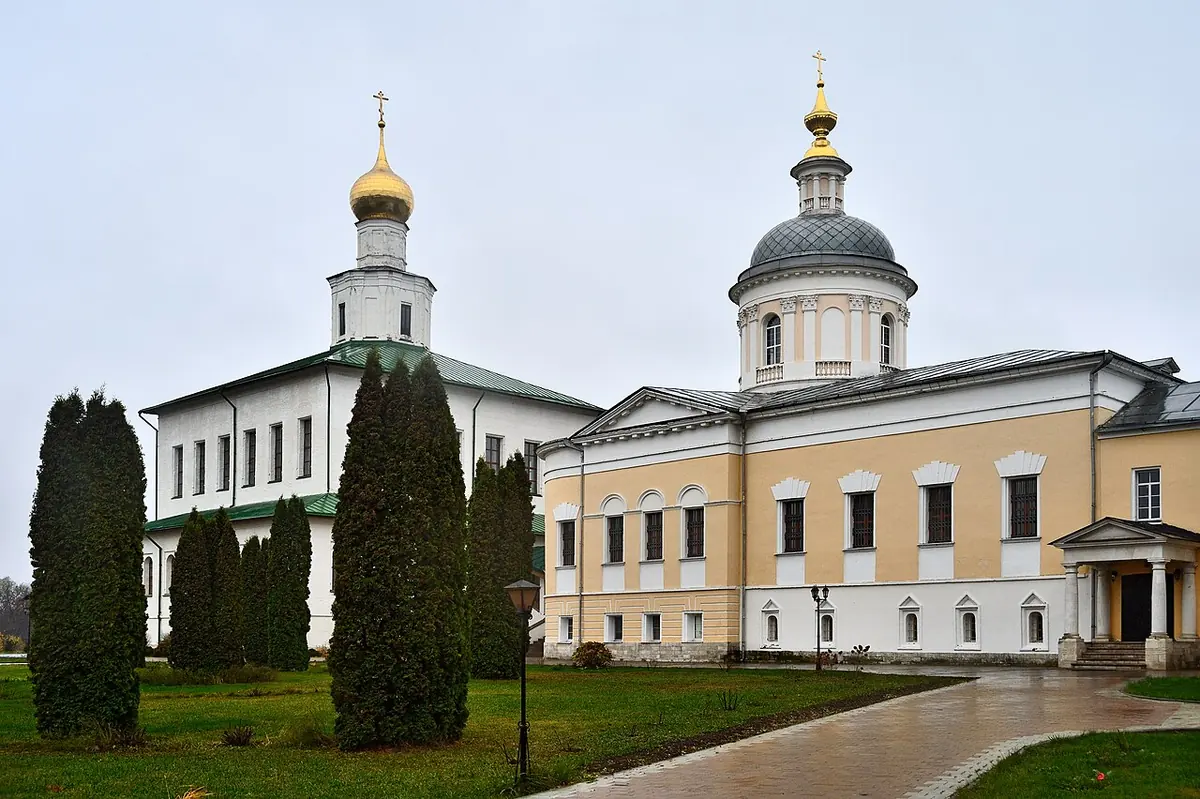
In 1910, gravely ill, he received the Great Schema. New monks who did not understand eldership then pressed for changes, and he was removed from Optina and made abbot of the Golutvin Monastery at Kolomna. He found it in decline and revived it, though rebellious brothers caused him much sorrow. Early in 1913 he asked to retire to Optina, but it was not granted. He fell asleep in the Lord on April 1, 1913. His body was carried by train to Kozelsk and buried at Optina.
Symbols of St. Barsanuphius in art
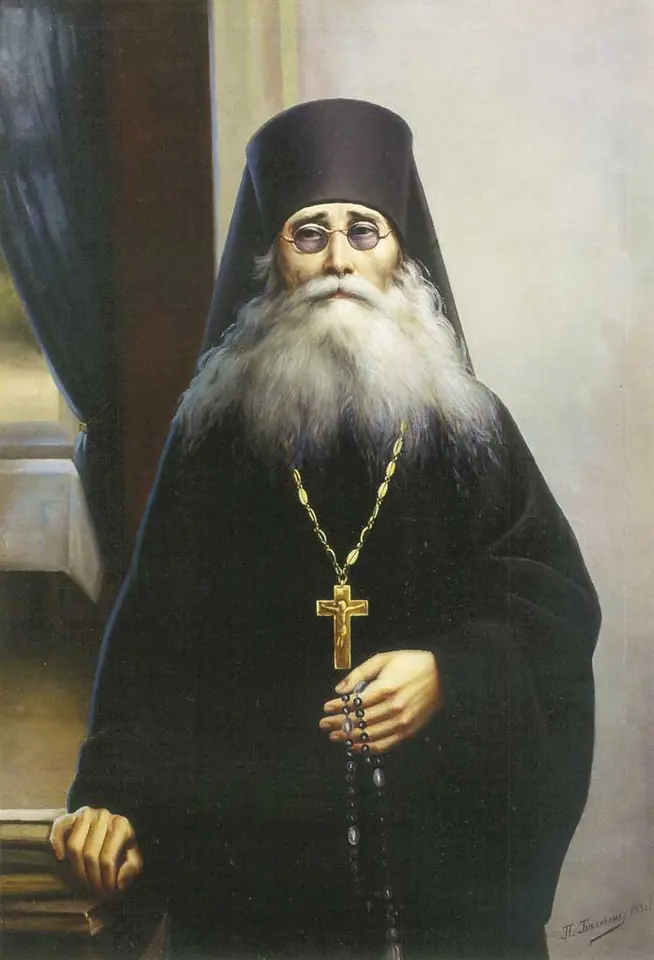
Icons show him as an old monk with a long white beard, in the black klobuk and robes of a Russian monk, often in the embroidered Great Schema he received in 1910, sometimes holding a scroll with a word of counsel. Photographs and portraits made in his lifetime show his round spectacles. In icons of the Synaxis of the Optina Elders, he stands among the other elders of the monastery.
Feast day, relics and troparion
We keep his feast on April 1 (Julian), April 14 on the civil calendar, and with all the Optina Elders on October 11 (24). His relics were uncovered with those of the other elders in 1998 and now rest in the Church of the Vladimir Icon of the Mother of God at Optina. The Moscow Patriarchate authorized local veneration in 1996 and glorified the Optina Elders for the whole Church on August 7, 2000.
His troparion (Tone 8) is the one the Orthodox Church sings for holy monastics. It praises him for taking up the Cross, for teaching us to care for the immortal soul above the passing flesh and for rejoicing with the angels. The OCA prints the full text on its website.
Holy Father Barsanuphius, pray to God for us.
Where the relics of St. Barsanuphius of Optina are kept: see them on the relics map →
Frequently asked questions
Who was St. Barsanuphius of Optina?
Born Paul Plikhankov in Samara in 1845, he was a Cossack officer who rose to colonel. After a near-fatal illness and a vision, he entered Optina Monastery in 1891, became a monk, priest and skete superior, and was one of the last great Optina Elders before the Revolution.
When is the feast of St. Barsanuphius of Optina?
April 1 on the Julian calendar, the day he died in 1913, which is April 14 on the civil calendar. The Orthodox Church in America keeps it on April 1. He is also remembered with all the Optina Elders on October 11 (24).
When was St. Barsanuphius canonized?
The Moscow Patriarchate approved local veneration of the Optina Elders on June 13, 1996, and glorified them for the whole Russian Orthodox Church on August 7, 2000.
Where are the relics of St. Barsanuphius?
At Optina Monastery near Kozelsk, in the Church of the Vladimir Icon of the Mother of God, where the relics of the Optina Elders were placed after they were uncovered in 1998.
Keep exploring
Sources
- Orthodox Church in America: Venerable Barsanuphius of Optina. His birth and military career, the vision, his entry to Optina, the war chaplaincy, his removal to Golutvin, his death, the uncovering of the relics and the glorification dates
- Orthodox Church in America: Venerable Barsanuphius of Optina, Troparion and Kontakion