St. Zeno of Verona, the African Bishop Who Smiles Over Verona

St. Zeno of Verona was a fourth-century bishop, born in North Africa, who led the Church of Verona from about 362 until his death and left more than ninety sermons that are among the oldest Latin preaching we have. He is the patron saint of Verona and of fishermen, and his feast is April 12, with Verona's own great feast on May 21.
Who was St. Zeno of Verona?
St. Zeno of Verona was a bishop of the fourth century, born in Roman North Africa, who shepherded the Church of Verona in northern Italy from about 362 until his death. He preached against the old pagan religion and against the Arian heresy, baptized crowds of converts at Easter and left a collection of sermons that are among the oldest Latin preaching to survive. Verona has loved him ever since. He is its patron saint, and the patron of fishermen too. We keep his feast on April 12, and Verona celebrates him again on May 21.
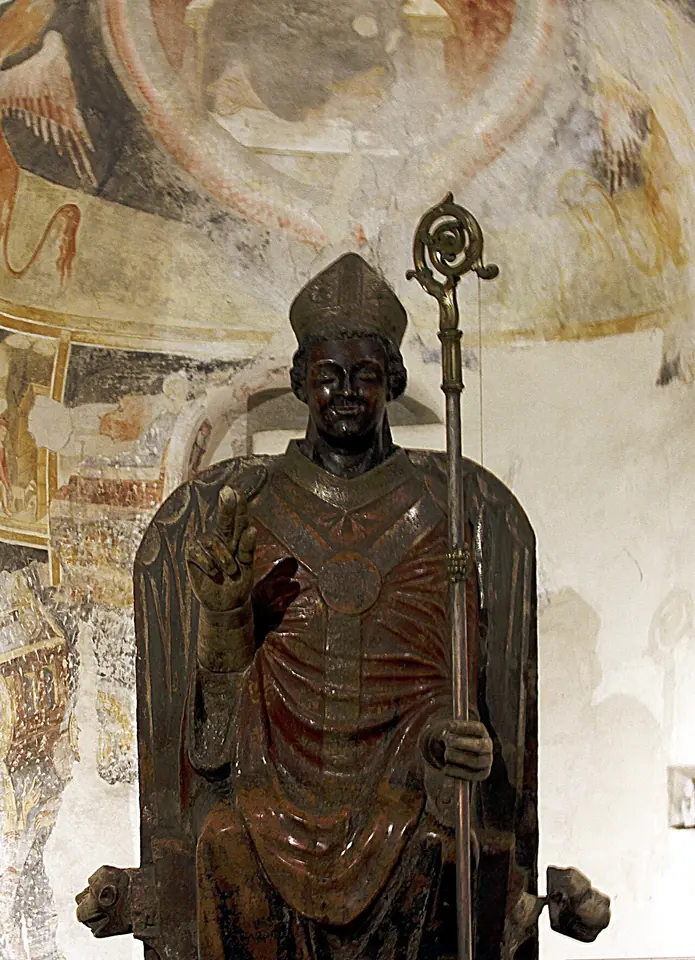
His great Romanesque basilica, San Zeno Maggiore, still holds his body, and inside it a smiling statue of him has greeted pilgrims for seven hundred years.
The life of St. Zeno: history and legend
What history tells us
The firm facts are few but good. St. Ambrose of Milan, writing to a later bishop of Verona, calls Zeno a bishop "of holy memory." Ancient lists of the bishops of Verona, including the names embroidered on an eighth-century vestment found at Ravenna, place him eighth. The Catholic Encyclopedia dates his time as bishop to 362–380. The sermons tell us the rest: he was African, trained in the Latin rhetoric of Carthage, a lively preacher and a fierce friend of the Nicene faith.
Those sermons were nearly lost. They lay forgotten in the bishop's library in Verona until two Dominicans printed 105 of them at Venice in 1508. The brothers Ballerini published a critical edition in 1739. About ninety are now accepted as his. Many are short talks to the newly baptized at the Easter Vigil, full of joy at the font, the altar and the Church as a mother giving birth to new children.
The legends
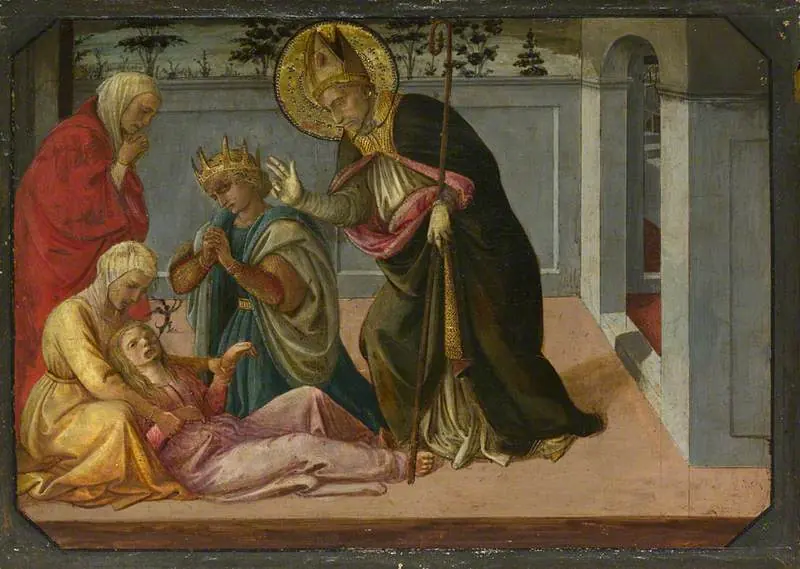
Later Verona tradition, written down in a Life by a notary named Coronato in the Lombard or Carolingian era, adds colorful stories. It says Zeno lived in a monastery outside the city and fasted and prayed to be allowed to preach. It also says he was so gentle in speech and manner that pagans abandoned their idols. A well-known legend, which the Roman Martyrology long repeated, makes him a martyr under the emperor Gallienus and says he freed the emperor's daughter from a demon. Both are traditional: Gallienus reigned a century before Zeno's time, and the Catholic Encyclopedia concludes that Zeno was "probably" a confessor who died in peace.
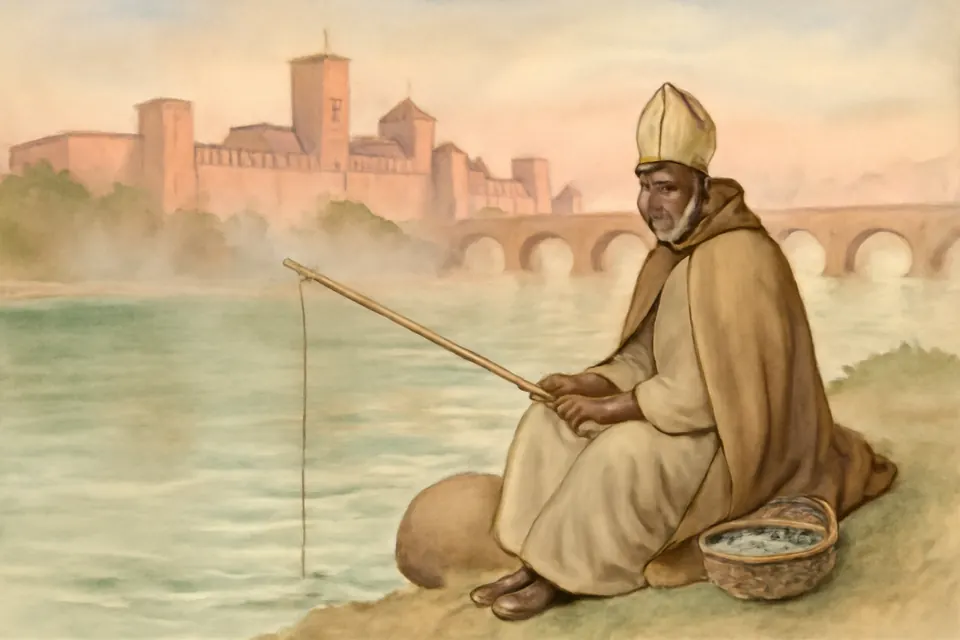
Verona also remembers him as a fisherman. Tradition holds that he lived so simply that he caught his own meals in the Adige. Many Christians have read the story as a picture of the bishop as a fisher of men, too.
The miracles of St. Zeno
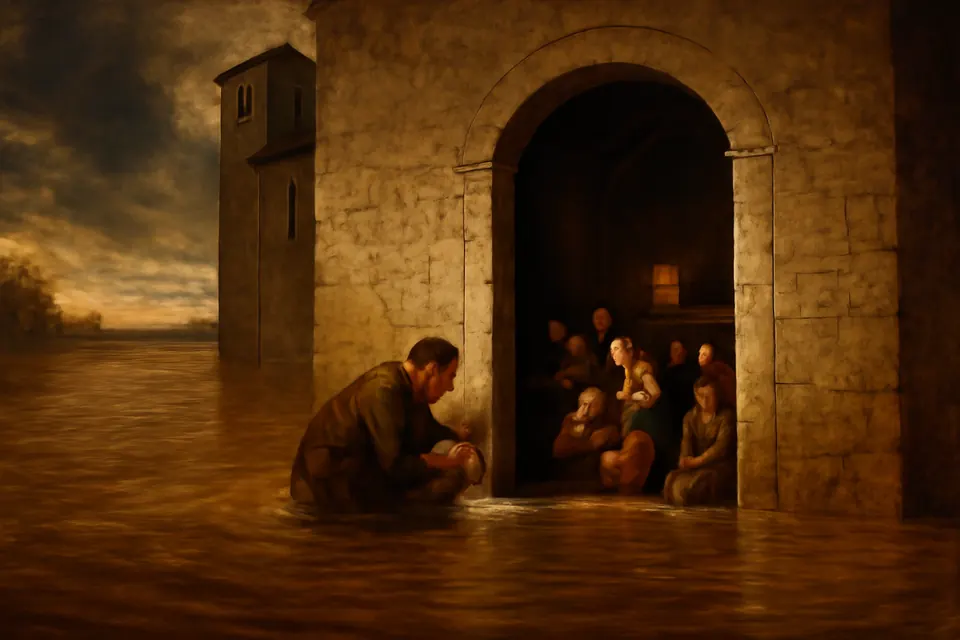
- The flood of 589: reported. St. Gregory the Great, writing about five years after the event, tells what the tribune John told him. In the year the Tiber overflowed the walls of Rome, the Adige rose at Verona until it reached the windows of "the holy martyr and Bishop Zeno's" church. "Though the church doors were open, yet did it not enter in." People trapped inside drank from the standing water at the doorway as if from a wall of glass. Gregory compares it to the three young men in the furnace whose clothes the fire could not touch.
- The emperor's daughter: traditional. The Verona legend says Zeno cast out an evil spirit from the daughter of Gallienus.
- The devil's basin: traditional. Another Verona story says Zeno won a wager with the devil and made him carry a stone baptismal font on his back from Rome to Verona.
Why St. Zeno is the patron saint of Verona and fishermen
He was the city's great early bishop, and his tomb became the heart of its devotion; a basilica and some thirty other churches and chapels in Verona bear his name. Coins with his likeness once circulated there. His patronage of fishermen, especially freshwater fishermen, comes from the fishing tradition and the fish he holds in nearly every image. See more causes on our patron saints page.
Symbols of St. Zeno in art
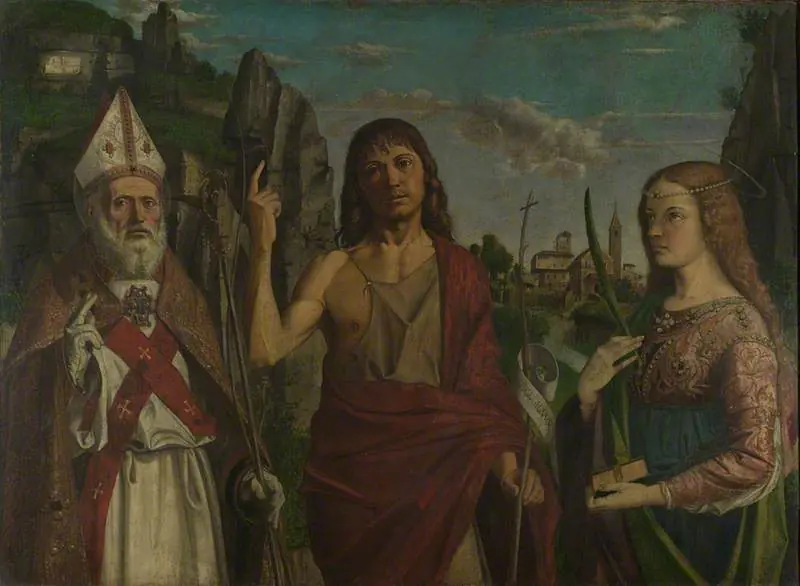
St. Zeno is shown as a bishop, in miter and cope with a crozier. His surest sign is a fish hanging on a line from his crozier, sometimes two, or a fishing rod at his side, for the Adige legend. Because he came from Africa, he is often painted with dark skin, and in Verona he is often called "il Vescovo Moro," the Moorish bishop. A small devil at his feet or a kneeling princess recalls the exorcism legend.
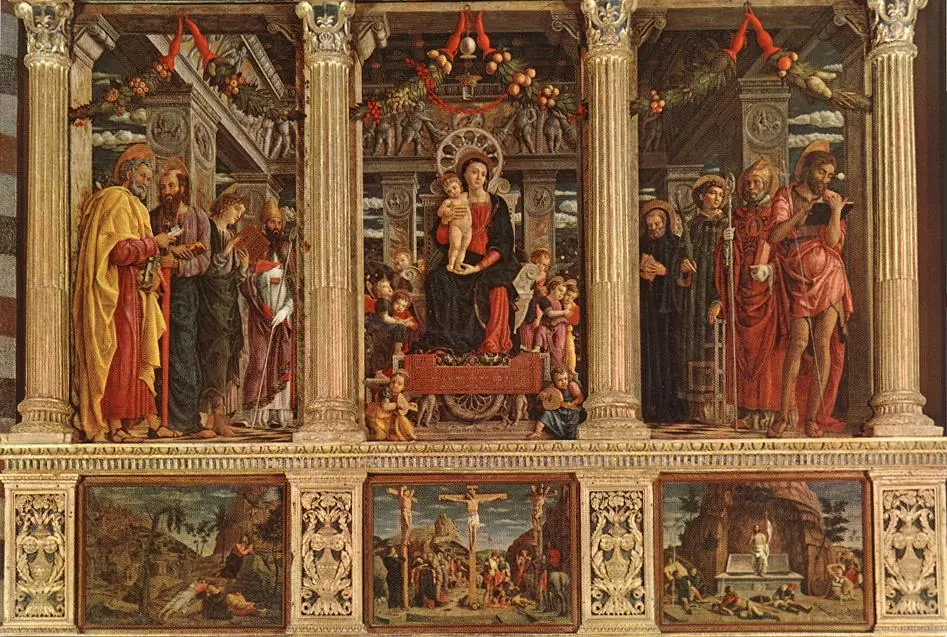
The most famous image is San Zen che ride, "the smiling St. Zeno," a seated statue in red Verona marble in the upper church of his basilica. Diocesan scholars date it to around 1300; the metal crozier and fish were added later. In Mantegna's altarpiece over the high altar, Zeno stands among the saints in the left-hand panel. Bartolomeo Montagna painted him as a white-bearded bishop beside St. John the Baptist.
The Basilica of San Zeno and his relics
San Zeno Maggiore, rebuilt in its present Romanesque form in the 1100s, stands on the site of the church Gregory wrote about. Its west doors carry bronze panels with scenes from Scripture and from Zeno's legend.

Andrea Mantegna's San Zeno Altarpiece (1457–1460) still stands over the high altar it was painted for, with the Virgin and Child enthroned among the saints.
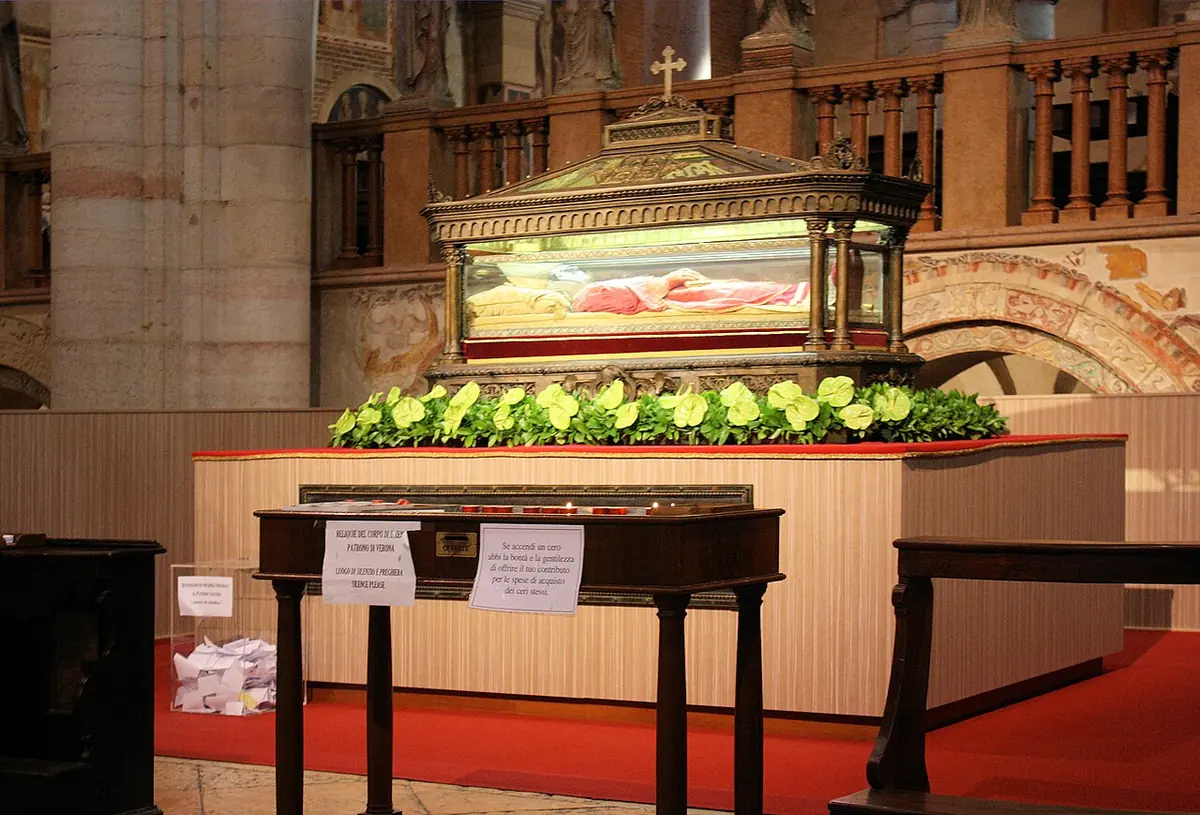
The saint's body rests in the crypt beneath, in a glass urn where the faithful come to pray. On May 21 Verona keeps the anniversary of the translation of his relics.
Prayer to St. Zeno
No single traditional prayer to St. Zeno is found in the standard Catholic prayer books. In Verona the faithful honor him at his tomb and in the Mass of his feast. Let us ask St. Zeno of Verona, who rejoiced to bring new Christians to the font, to pray for us, that we may live our baptism with joy and be, like him, fishers of men. Find other saints of April and May on our feast days page.
Frequently asked questions
Who was St. Zeno of Verona?
The eighth bishop of Verona, from about 362 to the 370s or 380, born in Roman North Africa. He worked to convert the pagans of his city, defended the Nicene faith against the Arians and preached sermons that still survive. St. Ambrose called him a bishop "of holy memory."
Why is St. Zeno the patron saint of fishermen?
Verona tradition says he lived simply and caught his own food in the Adige river, so he is shown with a fish hanging from his crozier and is honored as protector of freshwater fishermen. The fishing story is traditional; it reads also as a picture of a bishop who was a fisher of men.
When is the feast of St. Zeno of Verona?
April 12 in the Roman Martyrology. In Verona the big celebration is on May 21, the anniversary of the translation of his body to the basilica that bears his name.
What is "San Zen che ride"?
"The smiling St. Zeno," a painted marble statue of the saint seated in blessing, in the upper church of the Basilica of San Zeno. Scholars date it to around 1300. Its broad smile gave it the nickname, and it is one of the best-loved images in Verona.
Keep exploring
- Patron saint pages
- Sailors
- Feast-day calendar
- Saints remembered in AprilSaint of the day
- More
- Saints A to ZPatron saints A to ZExplore every section
Sources
- Catholic Encyclopedia (1912): St. Zeno. His dates as bishop, St. Ambrose's letter, the 105 sermons found and printed in 1508, the Ballerini edition of 1739
- St. Gregory the Great, Dialogues, Book III, chapter 19 (1911 translation, tertullian.org). The flood of the Adige that stopped at the church doors
- Chiesa di Verona: San Zen che ride (Associazione Chiese Vive). Dating of the statue, the later metal fish and crozier, and the Life by the notary Coronato
- Fondazione Banca Popolare di Verona: Figura di San Zeno. Patron of Verona and freshwater fishermen; the May 21 feast; the Verona legends
- The Roman Martyrology (English edition, 1916), April 12 (archive.org)