St. Henry Walpole, Jesuit Poet and Martyr of York
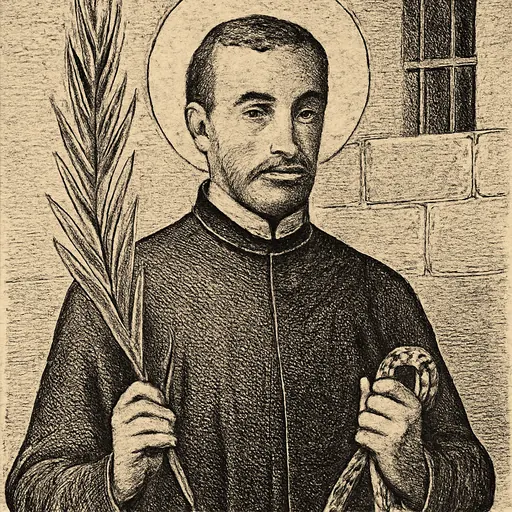
St. Henry Walpole (1558–1595) was a Norfolk gentleman and law student who was splashed with St. Edmund Campion's blood at Tyburn in 1581, wrote a poem in his honor, and became a Jesuit priest himself. Arrested the day after he landed in Yorkshire in 1593, he was racked many times in the Tower of London and hanged, drawn and quartered at York on April 7, 1595, which is his feast day. He is one of the Forty Martyrs of England and Wales.
Who was St. Henry Walpole?
St. Henry Walpole was an English Jesuit priest who gave his life for the Catholic faith at York on April 7, 1595. He came from a well-placed Norfolk family, trained as a lawyer, and might have lived a comfortable life as a country gentleman. One morning at Tyburn changed everything. He stood in the crowd as St. Edmund Campion was put to death, and Campion's blood fell on his clothes. Fourteen years later he followed Campion to the same kind of death.
We honor him with the Forty Martyrs of England and Wales, canonized by Pope Paul VI in 1970.
The life of St. Henry Walpole
A Norfolk boyhood
Henry was born in 1558 at Docking in Norfolk, the eldest son of Christopher Walpole and Margery Beckham, heiress of Narford. He went to Norwich School, then to Peterhouse, Cambridge, and then to Gray's Inn in London to read law. Gray's Inn was a gathering place for young men who leaned toward the old faith, and Henry was one of them.

The blood of Campion
On December 1, 1581, Edmund Campion was hanged, drawn and quartered at Tyburn. Augustus Jessopp, the Victorian historian of the Walpole family, tells what happened next: as the executioner threw Campion's body into the cauldron, the blood spurted out "upon Henry Walpole, and bespattered his garment." From that day, Jessopp writes, Henry resolved to give himself to the cause for which Campion had died.
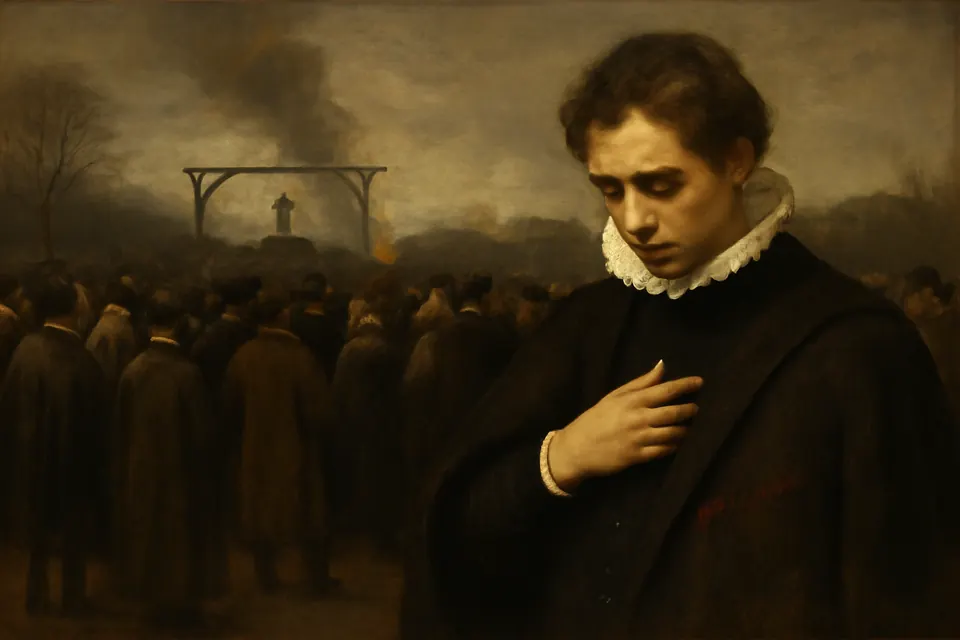
He poured his grief into a poem of thirty stanzas, "An Epitaph of the Life and Death of the most famous Clerk and virtuous Priest, Edmund Campion." Copies passed from hand to hand, and a friend named Vallenger printed it secretly. Vallenger was tried in the Star Chamber, fined and sentenced to lose his ears, but he never gave up the author's name. Suspicion fell on Walpole anyway, and he slipped out of England.
Seminary, the Jesuits and the priesthood
He reached the English College at Reims on July 7, 1582, and on April 28, 1583, entered the English College in Rome. On February 2, 1584, he was received into the Society of Jesus and sent to France to study, mostly at Pont-à-Mousson. He was ordained deacon at Metz and priest at Paris on December 17, 1588.
His first years as a priest were spent abroad. He served as chaplain to English soldiers in the Spanish army in the Netherlands, was captured and imprisoned by the English at Flushing in 1589, and later worked in Flanders and Spain helping the new English seminaries there.
Arrest and the Tower
In December 1593 he finally sailed for home with his youngest brother Thomas and a soldier companion. Storms drove the ship far past Norfolk, and by the evening of December 4 it lay off Flamborough Head in Yorkshire. Weary of the sea, Henry asked to be put ashore anywhere, and the three landed near Bridlington. A spy from another ship had gone ahead to warn the authorities at York, and Henry was arrested almost at once.
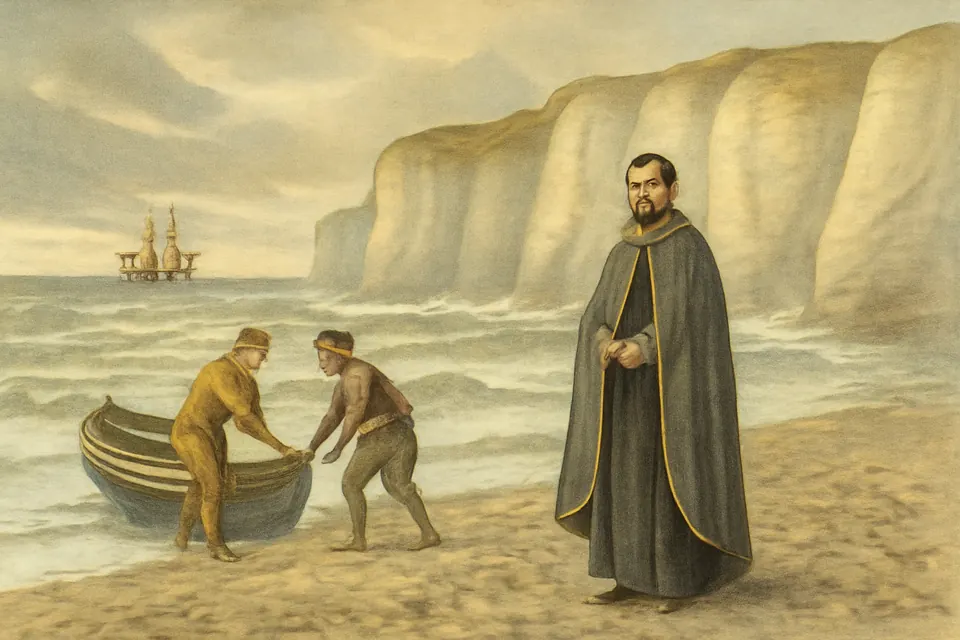
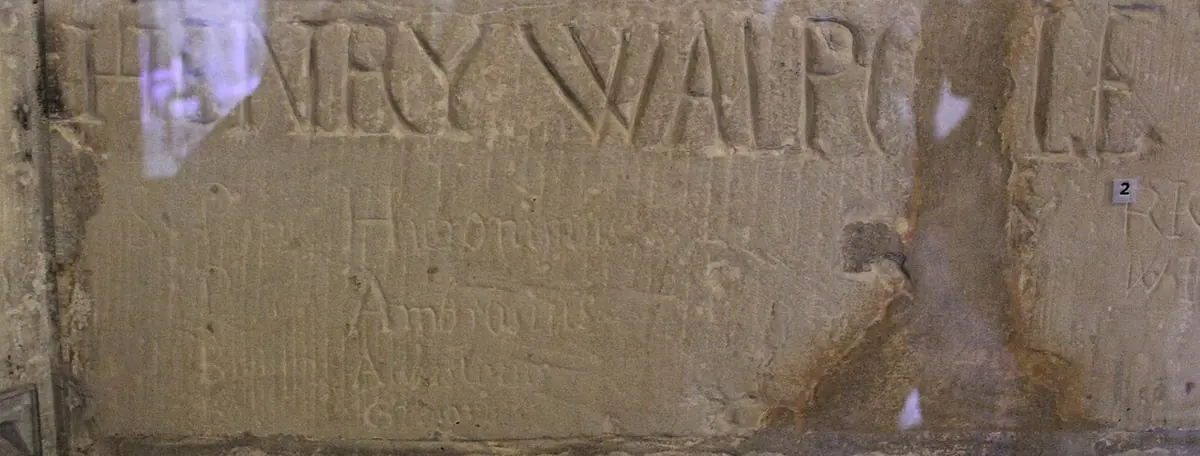
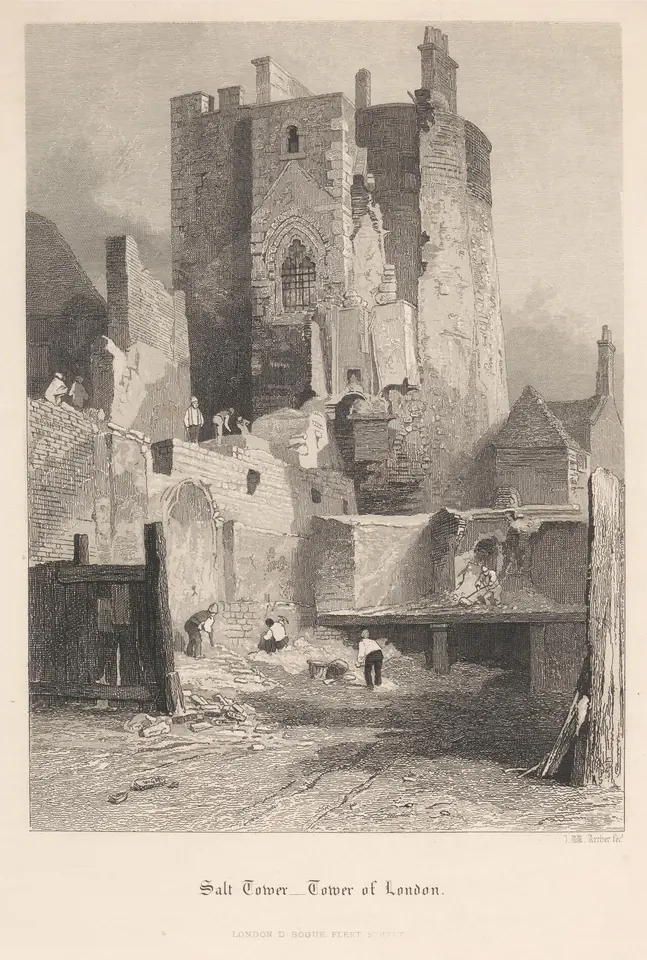
He was held at York, then taken in February 1594 to the Tower of London, where, the Catholic Encyclopedia says, "he was frequently and severely racked." In the Salt Tower he carved his name into the wall of his cell. It can still be seen there.
Trial and martyrdom at York
In the spring of 1595 he was sent back to York for trial, with a young secular priest, Alexander Rawlins. Under the law of 1585 it was high treason for an English priest ordained abroad to set foot in England, and Walpole, the trained lawyer, could not argue his way past the plain fact that he was a Catholic priest. Both men were condemned. On April 7, 1595, they were hanged, drawn and quartered at York. Rawlins died first.
What the rack did to him
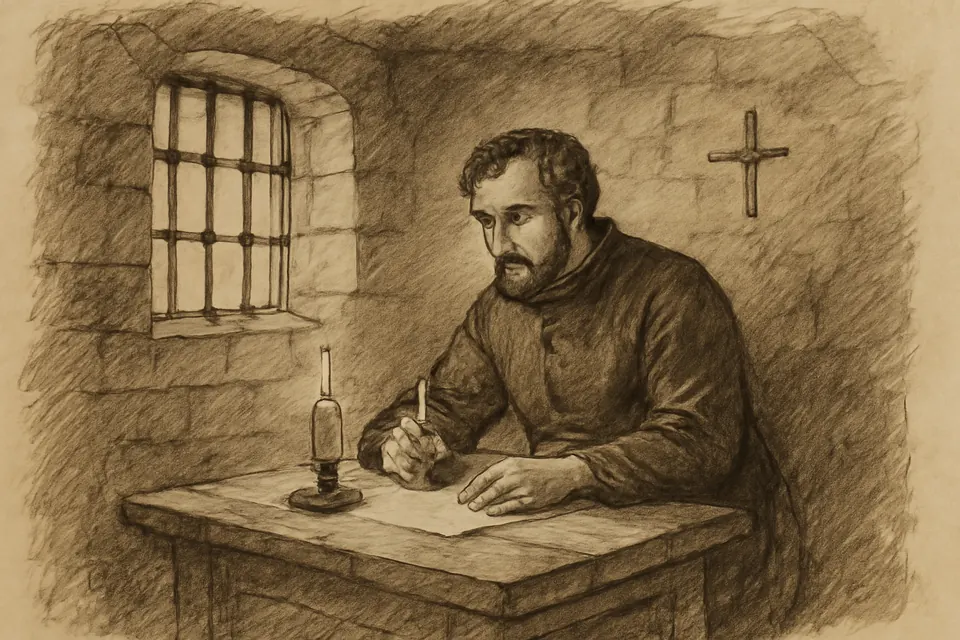
His fellow Jesuit John Gerard, quoted by Jessopp, later received some of the writings Walpole made in prison at York, including meditations on the Passion of Christ. Gerard could barely read them. The writing, he said, "seemed more like the first attempts of a child than the handwriting of a scholar," because Walpole's hands could no longer form the letters.
Miracles and veneration
No miracles are recorded in connection with St. Henry Walpole, and none were needed for his canonization: he was raised to the altars as a martyr. He was beatified in 1929 and canonized on October 25, 1970, with thirty-nine other English and Welsh martyrs, among them St. Margaret Clitherow, who had died at York nine years before him, and his fellow Jesuit poet St. Robert Southwell. His feast falls on April 7.
Symbols of St. Henry Walpole in art
No portrait from his lifetime survives, and pictures of him are modern. When he is shown, look for:
- The black Jesuit cassock, for the Society of Jesus.
- The martyr's palm, the sign of every martyr's victory.
- A rope or noose, for his death by hanging at York.
- A quill and paper, for his poem on Campion and the writings he made in prison.
The most moving image connected with him is not a painting at all. It is the name he carved with his own hand in the Salt Tower, one of many inscriptions left on those walls by prisoners for the faith.
Praying with St. Henry Walpole
We know of no traditional prayer written for St. Henry Walpole. Catholics in England ask the intercession of the English Martyrs together, especially around their shared feast. We can ask him to pray for students and young lawyers, for anyone who has seen something that shook them and is deciding what to do with their life, and for all who suffer in prison for their faith.
St. Henry Walpole, who carried Campion's blood on your clothes and his courage in your heart, pray for us.
Frequently asked questions
Who was St. Henry Walpole?
An English Jesuit priest and martyr, born at Docking in Norfolk in 1558 and educated at Norwich School, Peterhouse in Cambridge and Gray's Inn. Moved by the martyrdom of Edmund Campion, he left England, studied for the priesthood, joined the Jesuits and returned in 1593. He was executed at York on April 7, 1595.
When is the feast of St. Henry Walpole?
April 7, the anniversary of his martyrdom at York in 1595. He is also honored with the other English and Welsh martyrs.
When was Henry Walpole canonized?
He was beatified in 1929 and canonized by Pope Paul VI on October 25, 1970, as one of the Forty Martyrs of England and Wales.
What did Henry Walpole write about Edmund Campion?
A long poem, "An Epitaph of the Life and Death of the most famous Clerk and virtuous Priest, Edmund Campion," whose verses begin "Why do I use my paper, pen, and ink." Its printer was fined and lost his ears in the pillory rather than name the author.
Keep exploring
Sources
- Ven. Henry Walpole, Catholic Encyclopedia (1912), New Advent. Birth at Docking, schooling, arrival at Reims July 7, 1582, English College in Rome, ordination at Paris December 17, 1588, arrest at Flamborough, racking in the Tower, Alexander Rawlins
- Augustus Jessopp, One Generation of a Norfolk House (1879), archive.org. The landing near Bridlington and the spy who went ahead to York; Campion's blood on Walpole's clothes, the 'Epitaph' and its printer Vallenger, the opening words of the verses, and John Gerard's report that the rack left Walpole unable to form his letters
- Paul VI, Homily for the canonization of the Forty Martyrs of England and Wales, October 25, 1970, vatican.va