St. Martin I, Pope and Martyr
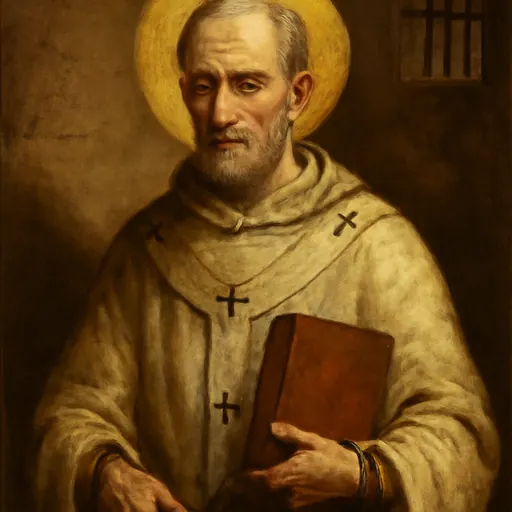
St. Martin I was pope from 649 to 653. Born in Todi in Umbria, he held the Lateran Council of 649, which condemned the Monothelite teaching that Christ had only one will. The emperor Constans II had him arrested, put on trial in Constantinople and exiled to Crimea, where he died of hunger and ill-treatment in 655. He is the last pope honored as a martyr. His feast day is April 13.
Who was St. Martin I?
St. Martin I was the pope who would not bend. Elected in 649, he called a council that condemned a teaching the emperor himself favored, and he paid for it with arrest, a show trial, chains and a lonely death in exile on the Crimean coast in 655. He is the last pope the Church honors as a martyr, and the Orthodox Church keeps his memory too, calling him St. Martin the Confessor.
He was born in Todi, in Umbria, the son of a man named Fabricius. His early biographer, Theodore, describes him as nobly born, a great student, "of profound learning, and of great charity to the poor." Before his election, Pope Theodore I sent him to Constantinople as his envoy, so Martin knew the imperial court and its theology at first hand.
The one-will controversy
The question that tore the Church apart in his day sounds abstract, but it goes to the heart of who Jesus is. The Monothelites taught that Christ has only one will. The Church answered that since Christ is truly God and truly man, he has a divine will and a human will, and that his human will freely obeys the Father, as it did in the garden of Gethsemane: "not my will, but thine, be done."
The emperors wanted peace more than clarity. Constans II issued the Typos, a decree that simply forbade anyone to discuss the question at all. Martin had himself consecrated pope without waiting for the emperor's approval, and within months, in October 649, he gathered 105 bishops at the Lateran in Rome. In five sessions the council rejected the Typos and an earlier imperial decree, condemned the leading Monothelite bishops, and set out the Catholic teaching on the two wills of Christ in twenty canons. The greatest theologian of the two wills, the Greek monk St. Maximus the Confessor, would later suffer at the hands of the same emperor.
Arrest, trial and exile
The emperor first sent the exarch Olympius to win over or remove the pope. The Catholic Encyclopedia relates that Olympius planned to have Martin killed while receiving Communion from him, and the Orthodox life of the saint says the soldier sent to do it was struck blind. That story is traditional; what is certain is that the plot failed and Olympius left Rome.

In June 1653 a new exarch, Theodore Calliopas, entered the Lateran with soldiers and announced that Martin was deposed. The pope was ill, and to prevent bloodshed he forbade his people to resist. He was carried off with only a few attendants and reached Constantinople in September, perhaps after a long stop on the island of Naxos.

There he was left on the deck of the ship for hours while crowds jeered, then kept in prison for ninety-three days in hunger and cold. At his trial before the senate, the charges were political, but, as the Catholic Encyclopedia puts it, "the true and only charge was the pope's refusal to sign the 'Typus'." According to the Orthodox life, he told the judges, "The Lord knows what a great kindness you would show me if you would deliver me quickly over to death." He was stripped, chained and dragged through the streets. When officials came to him in prison again, he answered: "Even if they cripple me, I will not have relations with the Church of Constantinople while it remains in its evil doctrines."
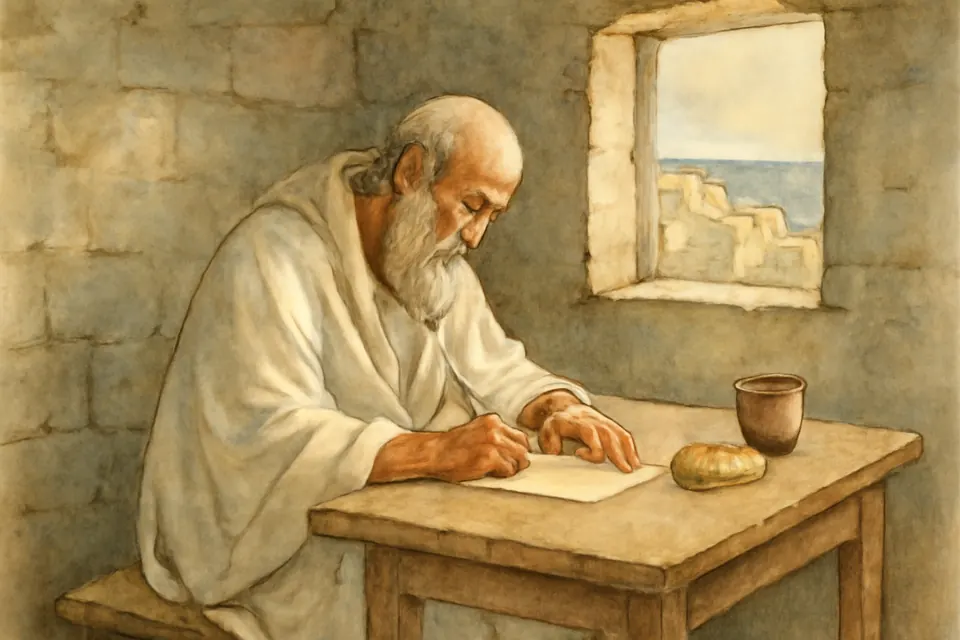
His death sentence was changed to exile. In 655 he was shipped to Cherson in Crimea, a town then suffering famine, and he died there on September 16, 655, worn out by hunger, sickness and neglect.
Miracles and the vindication of his faith
He was buried in the church of Our Lady of Blachernae near Cherson, and crowds came to his tomb. The Catholic Encyclopedia notes that "many miracles are related as wrought by St Martin in life and after death"; these are reported, not formally examined. His real vindication came in 680–681, when the Third Council of Constantinople, the Sixth Ecumenical Council, condemned Monothelitism and confirmed the teaching he had died for.
Symbols of St. Martin I in art
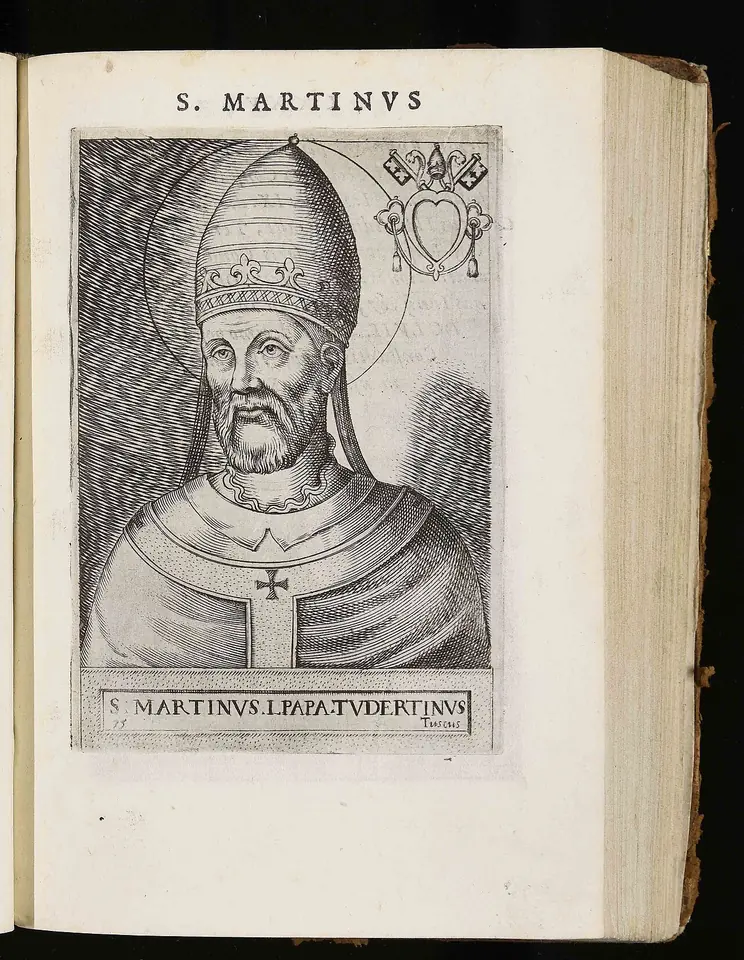
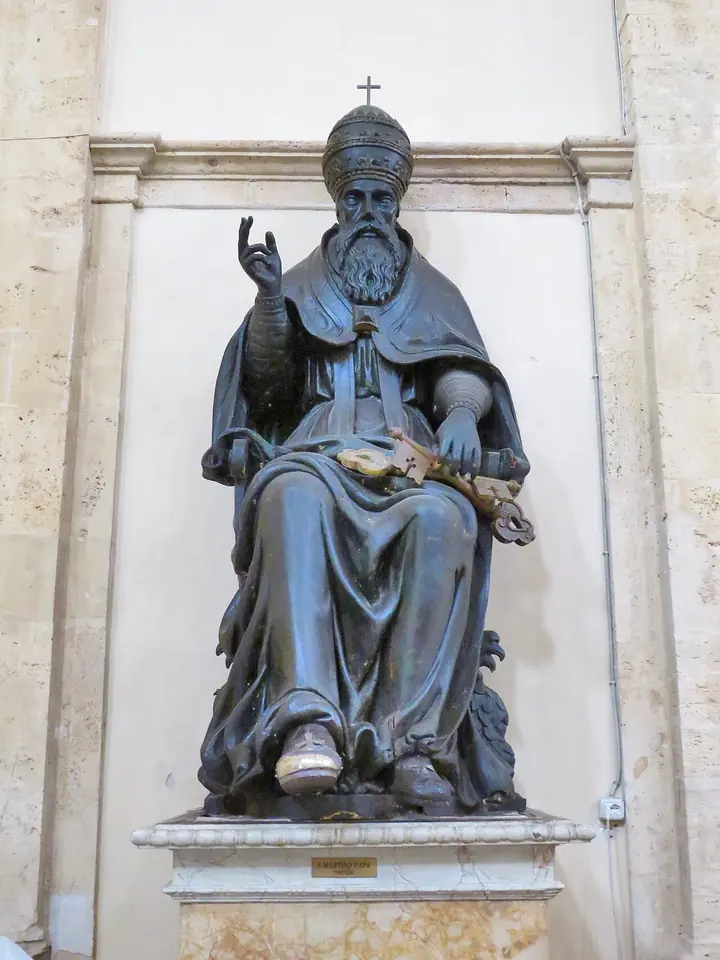
- Papal tiara and pallium: the signs of his office, as in Cavalieri's engraving and the bronze statue in Todi.
- Book of the Gospels: the faith he defended at the Lateran Council.
- Chains: his arrest and imprisonment in Constantinople.
- Martyr's palm: his death in exile, honored as martyrdom.
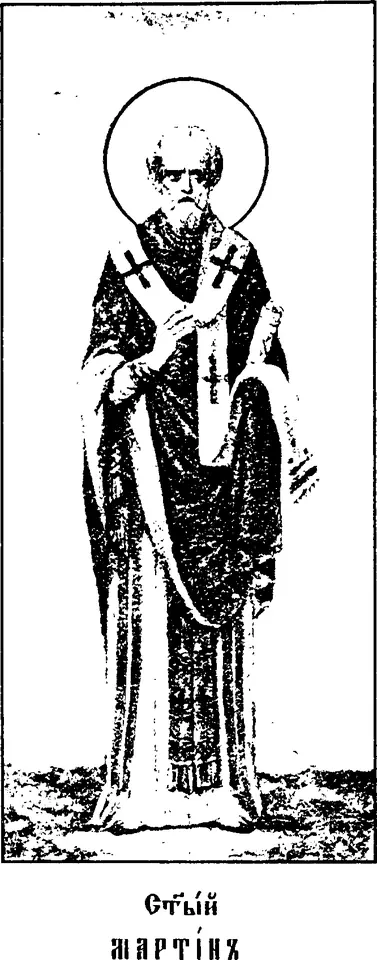
In Eastern icons he is shown as a bishop with the omophorion (the Eastern form of the pallium) and a Gospel book, often with the inscription "St. Martin, Pope of Rome." Russian icon books show him that way, standing and blessing.
Feast day, relics and Todi
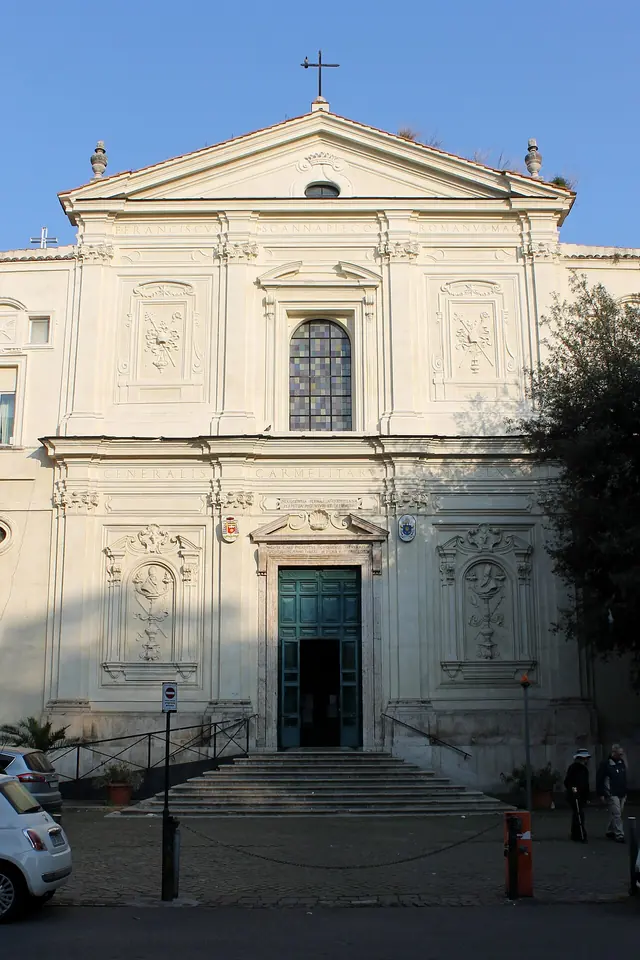
We keep his feast on April 13, an optional memorial on the General Roman Calendar. The Greeks keep April 13 as well, and the Slavic churches April 14; you can find him on our feast days page. Tradition holds that most of his relics were brought from Crimea to Rome, to the church of Santi Silvestro e Martino ai Monti on the Esquiline, dedicated to his namesake St. Martin of Tours. His hometown of Todi honors him with a bronze statue in the church of Santa Maria della Consolazione.
Prayer to St. Martin I
The Roman Missal gives a proper collect for his memorial, and the Orthodox Church sings a troparion in his honor. We can pray with him in our own words: St. Martin, faithful shepherd, pray for us. Let us ask him to pray for the pope and the bishops, for Christians imprisoned or exiled for their faith, and for all who are pressured to keep silent about the truth.
Frequently asked questions
Who was St. Martin I?
A 7th-century pope from Todi, in Umbria, who led the Church from 649 until his arrest in 653. He condemned Monothelitism, the teaching that Christ has only one will, at the Lateran Council of 649. The emperor Constans II had him seized, tried in Constantinople and exiled to Crimea, where he died in 655. He is the last pope venerated as a martyr.
When is the feast of St. Martin I?
April 13 on the General Roman Calendar. Before 1969 the Roman calendar kept him on November 12. The Orthodox Church honors him as St. Martin the Confessor, on April 13 in Greek use and April 14 in the Slavic churches.
Why was Pope Martin I arrested?
Because he refused to accept the emperor's decree, the Typos, which forbade all discussion of whether Christ has one will or two. Martin had condemned it at the Lateran Council. The charges at his trial were political, but the Catholic Encyclopedia says "the true and only charge was the pope's refusal to sign the 'Typus'."
Where is St. Martin I buried?
He was first buried in the church of Our Lady of Blachernae near Cherson, in Crimea. According to tradition, most of his relics were later brought to Rome and placed in the church of Santi Silvestro e Martino ai Monti, which is dedicated to St. Martin of Tours.
Keep exploring
Sources
- Catholic Encyclopedia (1910): Pope St. Martin I. Election, the Lateran Council, the arrest of June 1653, 93 days in prison, the trial, exile to Cherson, burial and the relics in San Martino ai Monti
- Orthodox Church in America: Saint Martin the Confessor, Pope of Rome. His words at his trial and in prison, the blinded soldier, the Orthodox feast days
- USCCB / Catholic News Service: Pope Martin I (Lent saints series, 2019). The last pope to be venerated as a martyr