Blessed Peter Gonzalez (San Telmo)

Blessed Peter Gonzalez (1190–1246), called San Telmo or St. Elmo, was a Spanish Dominican friar who preached at the court of King Ferdinand III of Castile and spent his last years teaching the poor and the sailors of Galicia. Spanish and Portuguese seamen took him as their patron. He died at Tui on April 15, 1246.
Who was Blessed Peter Gonzalez?
Blessed Peter Gonzalez is the Spanish Dominican whom sailors call San Telmo, or St. Elmo. He was born in 1190, trained for an easy career in the Church, and gave it up after a humbling fall from his horse. He became a preacher, served at the court of King St. Ferdinand III of Castile, and spent his last years among the fishermen and seamen of Galicia. He died at Tui on April 15, 1246, and we keep his feast on that day.
The Catholic Encyclopedia gives his birthplace as Astorga, in León. The town of Frómista, in the province of Palencia, also claims him as a native son.
His name causes a good deal of confusion. "Elmo" or "Telmo" is really a form of the name of St. Erasmus, a bishop martyred around 303 and one of the Fourteen Holy Helpers. Sailors had called on Erasmus for centuries. When Peter Gonzalez became the special patron of Spanish and Portuguese sailors, the two men were both called St. Elmo, and the nickname stuck to the Dominican in Spain. In the Spanish-speaking world he is simply San Telmo.
The life of Blessed Peter Gonzalez
A canon who fell in the mud
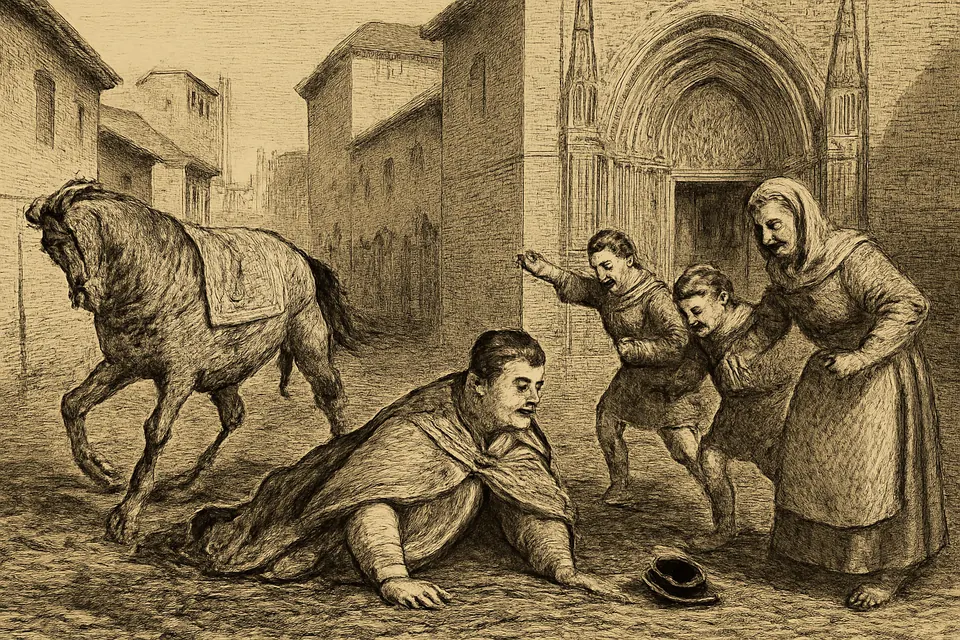
Peter was raised and educated by his uncle, the bishop of Astorga, who gave him a canonry in the cathedral while he was still very young. It was a post with income and standing, and by every account the young cleric enjoyed both.
The story that turned his life around has been told for centuries. As Franciscan Media retells it, Peter was riding into Astorga in finery to take up his post when his horse stumbled and threw him into the mud, "leaving Peter in the mud and onlookers amused." The laughter of the crowd did what no sermon had done. He looked hard at his vocation, resigned the canonry and asked to join the new Order of Preachers founded by St. Dominic.
Preacher at court and in the camp
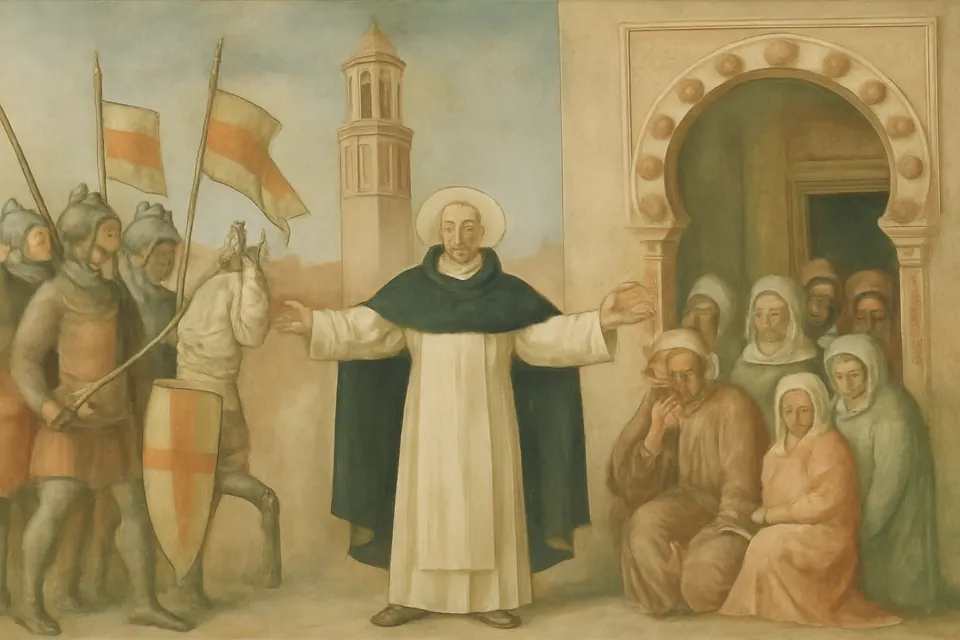
As a Dominican he became a powerful preacher. The Catholic Encyclopedia says crowds gathered to hear him and many were converted. King Ferdinand III took him into his service, and Peter went with the king on his campaigns against the Moors in southern Spain.
When Córdoba fell to the Castilians in 1236, Franciscan Media says, Peter urged the king to treat the defeated Moors with compassion. In a hard and violent age he used his place at court to plead for the vanquished.
Among the sailors of Galicia
Court life did not hold him. The Catholic Encyclopedia says his real ambition was to preach to the poor, and when he left the court he gave the rest of his life to teaching the faith to "the ignorant and the mariners in Galicia and along the coast of Spain." He walked the river valleys and the harbors of the northwest, preaching to fishermen, sailors and their families.
He died at Tui, the cathedral town on the Miño River at the border with Portugal, on April 15, 1246, and was buried in its cathedral.

St. Elmo's fire and the miracles of Blessed Peter Gonzalez
Sailors remember Peter Gonzalez best through a strange light. In stormy weather a pale blue or violet glow sometimes plays on the tips of masts and yards, like a ball or brush of fire. The Catholic Encyclopedia describes it, notes that seamen once took these lights for the souls of the dead, and records that they came to be called St. Elmo's fire.
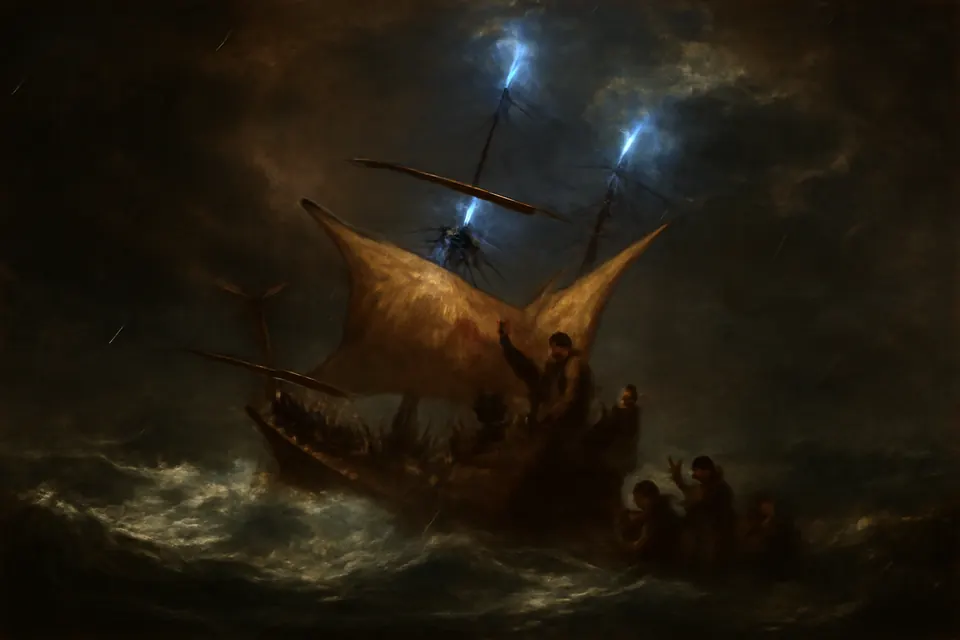
- Traditional: Spanish and Portuguese sailors took the glow at the masthead as a sign that San Telmo was watching over them, and called on him when storms broke. Science explains the light as an electrical discharge. The devotion of the men who saw it in the middle of a storm, far from land, was something else, and it lasted for centuries.
Other wonders are told of him in the old Lives of the saints, mostly about storms and the sea. We have not been able to check them against an early source, so we leave them out. No miracle has been formally approved for his cause, since he was beatified long before the modern process existed.
Why Blessed Peter Gonzalez is the patron saint of sailors
He is the patron of sailors and fishermen because they were the flock he chose at the end of his life. He went to the harbors of Galicia to teach men who were often away at sea when the parish priest preached. The seamen of Spain and Portugal adopted him, and the Catholic Encyclopedia names him their patron.
See the full list of patron saints, including the patron saints of sailors.
Symbols of Blessed Peter Gonzalez in art
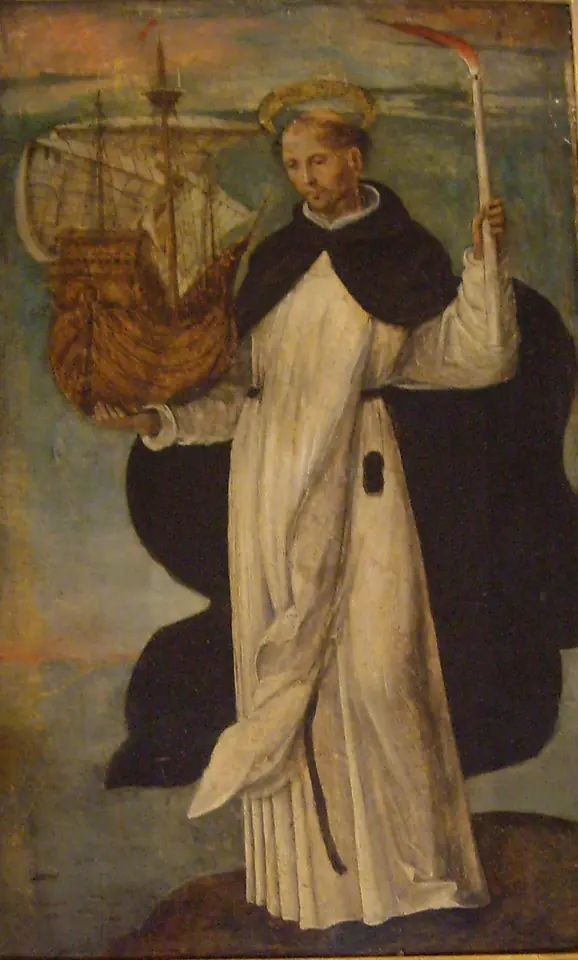
San Telmo is easy to recognize once you know what to look for.
- The Dominican habit: a white tunic and scapular with a black cloak, the dress of the Order of Preachers.
- A ship in his hand: usually a small sailing ship or galleon, for the seamen he served and protects.
- A candle or a blue flame: a lighted candle, sometimes with a pale flame, recalls St. Elmo's fire.
- The sea: waves, boats or a harbor behind him.
Alejo Fernández's panel at the top of this page comes from the altarpiece of the Virgin of the Navigators in the Alcázar of Seville. He holds the ship and the candle together. Don't confuse him with St. Erasmus, who is shown as a bishop with a miter and a windlass, not as a friar.
Feast day, tomb and festivals
We keep his feast on April 15, the day he died, though some calendars list him on April 14. His tomb is in the Cathedral of Santa María at Tui, where he has been honored since the 1200s.
See the feast day calendar for other saints honored in April.
Prayer to Blessed Peter Gonzalez
We know of no traditional prayer to him that we can quote from a reliable source. Sailors have simply called on him by name in a storm. Let us ask him to pray for all who work at sea and for their families waiting on shore, for fishermen and for those in danger on the water. Blessed Peter Gonzalez, pray for us.
Frequently asked questions
Who was Blessed Peter Gonzalez?
A Castilian priest, born in 1190, who held a cathedral post at Astorga as a young man, joined the Dominicans, preached at the court of King Ferdinand III and then gave himself to the poor and the seafarers of Galicia and the Spanish coast. He died at Tui in 1246.
Is Peter Gonzalez the same as St. Elmo?
Partly. "Elmo" or "Telmo" belongs properly to St. Erasmus, the martyr-bishop of the early 300s and patron of sailors. Because Peter Gonzalez became the patron of Spanish and Portuguese sailors, they were both popularly called St. Elmo, and in Spain he is San Telmo.
Why is St. Elmo's fire named after him?
St. Elmo's fire is the pale glow sometimes seen on masts and rigging in a storm. Sailors took it as a sign of their patron's protection. The Catholic Encyclopedia ties the name to both St. Elmos, Peter Gonzalez and St. Erasmus.
Was Peter Gonzalez canonized?
No. He is a Blessed. The Catholic Encyclopedia dates his beatification to 1254 under Innocent IV and notes that Pope Benedict XIV confirmed his cult in 1741, though he was never formally canonized. Many people still call him Saint.
Keep exploring
- Patron saint pages
- Sailors
- Feast-day calendar
- Saints remembered in AprilSaint of the dayWhat saint is my birthday?
- Same name
- Other saints named Peter →
- Relics
- Where the relics are kept (map)
- More
- Saints A to ZPatron saints A to ZExplore every section
Sources
- Catholic Encyclopedia (1911): St. Peter Gonzalez. Born 1190, his uncle the bishop of Astorga, the canonry, the mariners of Galicia, burial at Tui, beatification 1254, cult confirmed 1741, and St. Elmo's fire
- Franciscan Media, Saint of the Day: Blessed Peter Gonzalez. The fall from his horse at Astorga and his plea for the Moors after Córdoba