St. Fulbert of Chartres: Bishop, Teacher and Builder of Our Lady's Cathedral
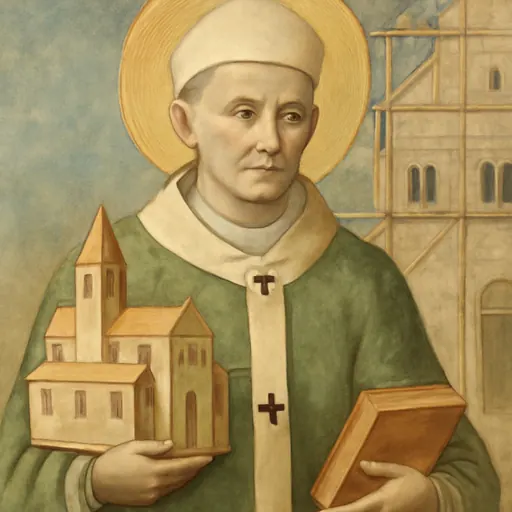
St. Fulbert of Chartres (died 1028) was the bishop who made Chartres the most famous school in France and began rebuilding its cathedral after the fire of about 1020. A devoted son of the Blessed Virgin, he preached on her Nativity and wrote the Easter hymn Chorus novae Jerusalem ("Ye choirs of New Jerusalem"). His feast is April 10.
Who was St. Fulbert of Chartres?
St. Fulbert of Chartres was the bishop and teacher who, around the year 1000, made the small cathedral town of Chartres the brightest school in France and began the rebuilding of its great church of Our Lady. He was a scholar, a letter writer, a hymn writer, and above all a lover of the Blessed Virgin. He died on April 10, 1028, and we keep his memory on April 10.
He came from humble parents. Where he was born is uncertain: some older historians said Italy, while his biographer Christian Pfister placed his birth in southern France. His education was anything but humble. He studied at the cathedral school of Reims under Gerbert, the most learned man of his age, who became Pope Sylvester II in 999.
The venerable Socrates of Chartres
In 990 Fulbert opened a school at Chartres. Within a few years, the Catholic Encyclopedia says, it was "the most famous seat of learning in France," drawing students from Italy, Germany and England. His pupils loved him and called him their "venerable Socrates."
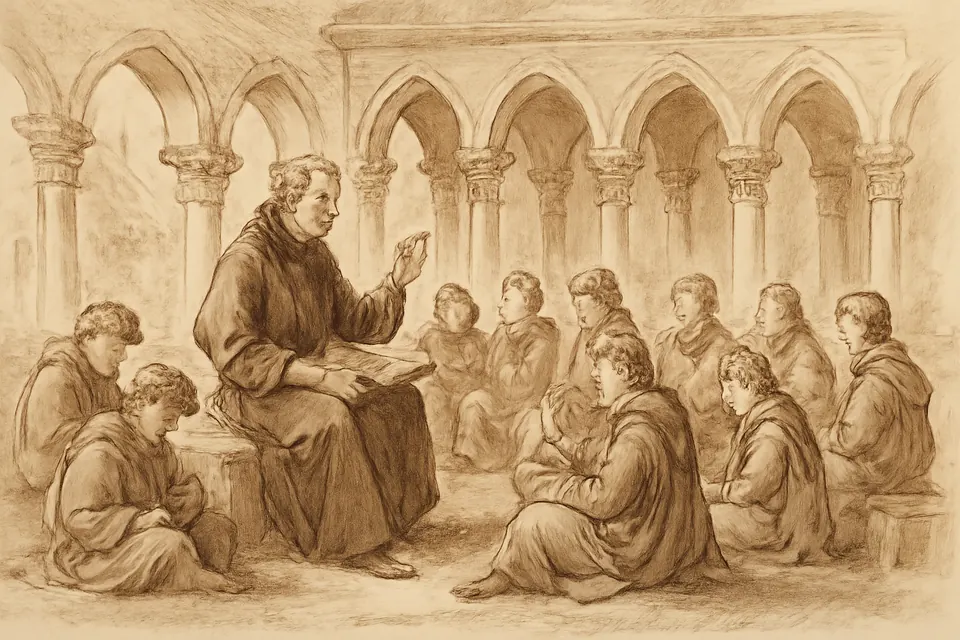
He taught the liberal arts and, according to the Schaff-Herzog encyclopedia, lectured on medicine as well as theology. He was a careful teacher of the faith. He warned his students against those who set clever argument above the teaching of the Church and the witness of Scripture, which makes it one of history's ironies that one of his own pupils, Berengar of Tours, later went furthest in putting faith under reason.
Bishop of Chartres
In 1006 or 1007 Fulbert was made bishop of Chartres, chiefly through King Robert II of France, who had been his fellow student at Reims. He kept teaching in his school after he became bishop. He also served for years as treasurer of the church of St. Hilary at Poitiers, the shrine of St. Hilary of Poitiers.
He was a reforming pastor. He called for better clergy, rebuked bishops who spent their time on military campaigns, and spoke against handing church offices to laymen. He was never a monk, but he was a friend of the great monastic leaders of his day, among them St. Odilo of Cluny, whom he called the "Archangel of the Monks."
About 140 of his letters survive. They are a window onto the Church of the eleventh century, its liturgy and its discipline.
Rebuilding the cathedral of Our Lady
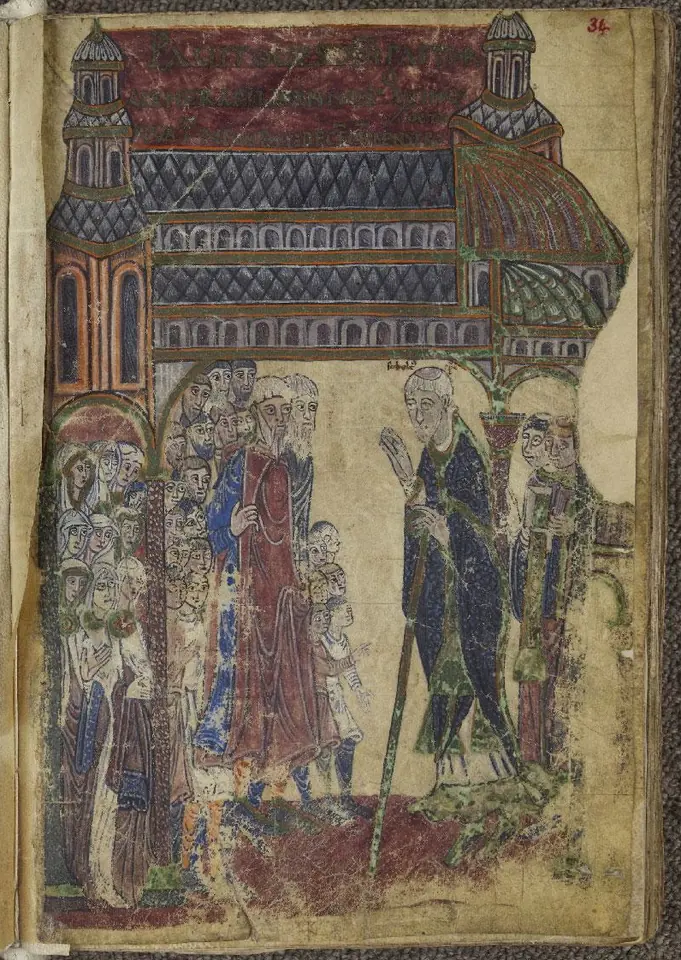
Around 1020 fire destroyed the cathedral of Chartres. Fulbert set to work at once to rebuild it on a larger scale. He wrote to the rulers of Christendom for help, and the Catholic Encyclopedia names King Canute of England and Duke William of Aquitaine among those who gave.

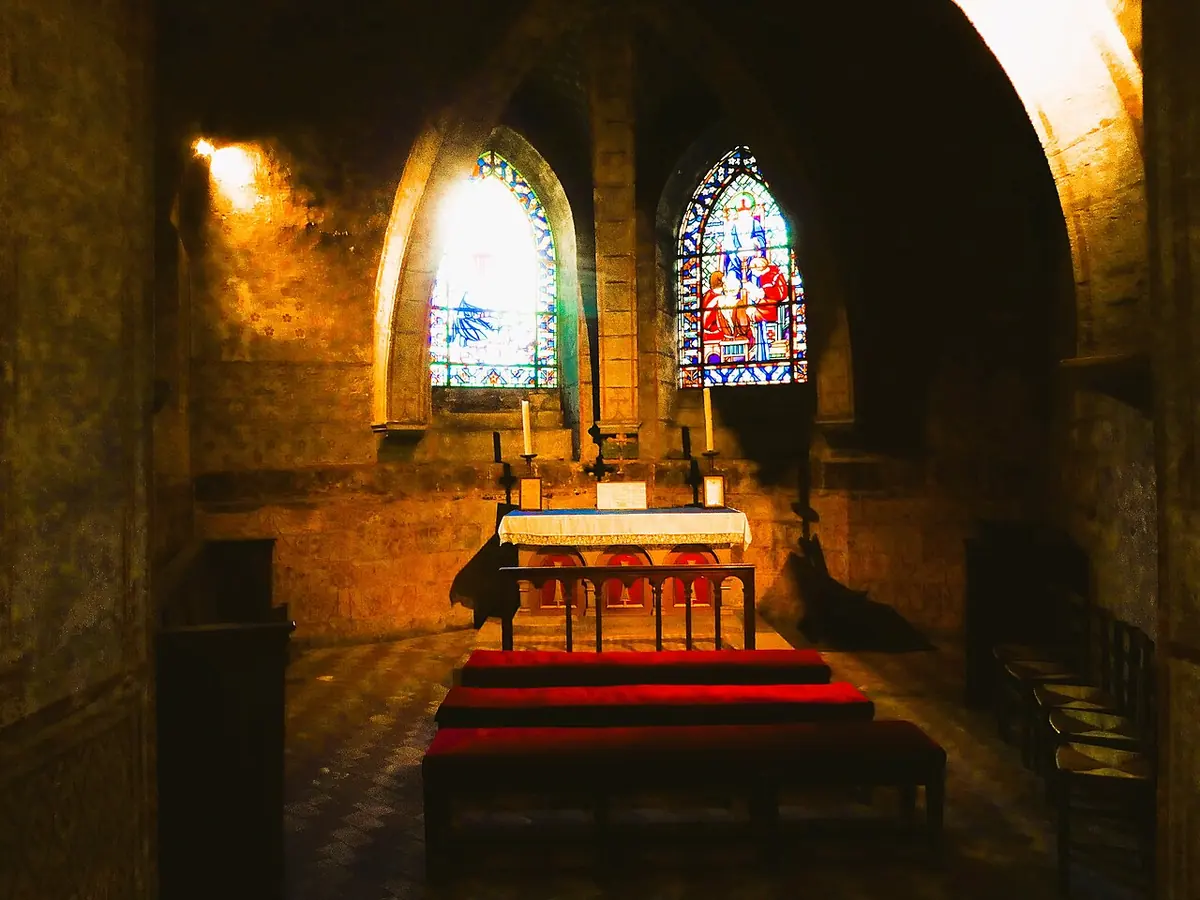
Chartres already held its great relic, the Veil of the Virgin, which Charles the Bald had brought there from Aachen around 876. Fulbert's church was built to honor it and the Mother of God. Later fires in 1134 and 1194 took the upper church again, but the great crypt beneath today's cathedral goes back to the church he began, and a chapel in it bears his name.
Fulbert and the Blessed Virgin
Five of Fulbert's nine surviving sermons are on Our Lady. In his preaching for her Nativity on September 8 he retold the story of Theophilus, the cleric who sold his soul and was rescued by the Virgin's intercession. Through Fulbert, later medieval writers took up the story, including the Golden Legend, which cites him by name.
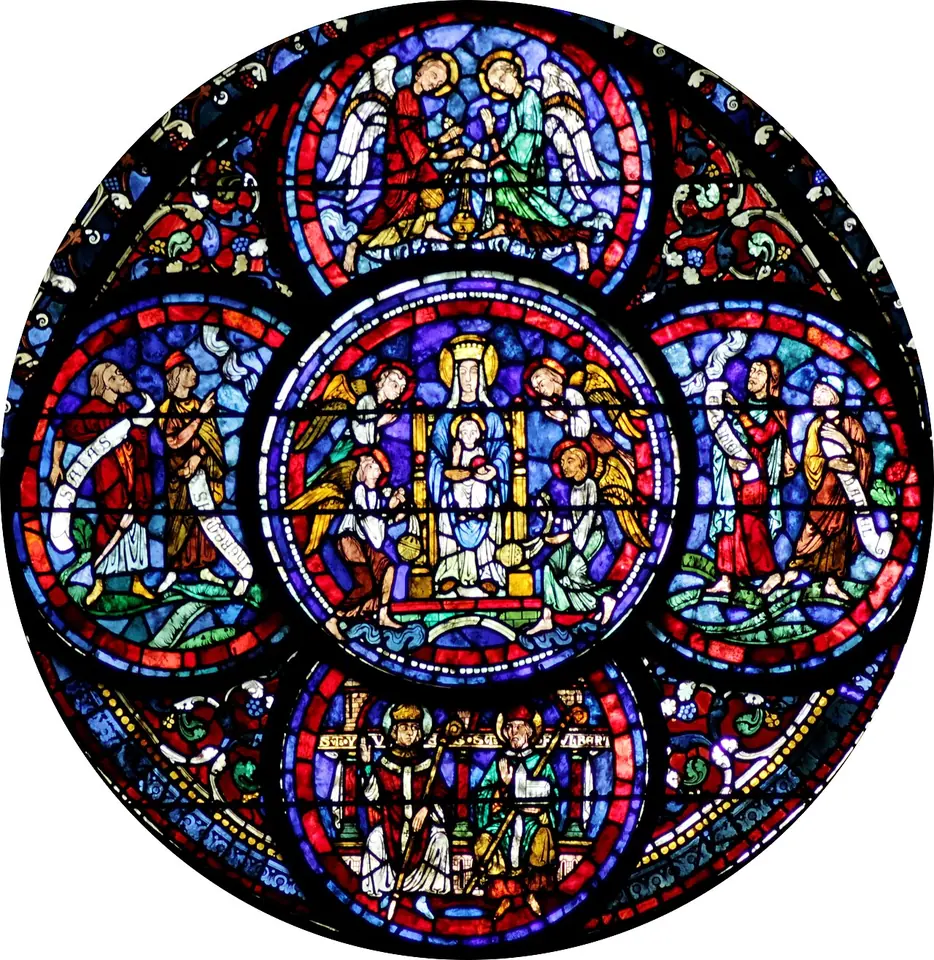
The thirteenth-century glaziers of Chartres remembered him beside the Virgin he loved. At the foot of the window of the Miracles of the Virgin, he appears with St. Ivo of Chartres, holding a model of his cathedral.
Fulbert's hymns
He wrote twenty-seven hymns and parts of the Church's Office. One of them is still sung every Easter in English-speaking churches. John Julian's Dictionary of Hymnology says that of all his works only this one hymn, Chorus novae Jerusalem, is widely known. It was sung through Eastertide in the medieval Sarum Breviary, and Robert Campbell's translation of 1850 begins:
Ye choirs of New Jerusalem,
Your sweetest notes employ
Julian also lists the Marian responsory Stirps Jesse among works attributed to him.
Miracles and veneration
We know of no approved miracles of Fulbert, and the old sources we have opened record no reported ones worth repeating as fact. He was never formally canonized. His holiness was recognized the old way: by the love of his diocese, which has honored him as a saint since the Middle Ages.
Symbols of St. Fulbert in art
- Model of a cathedral: the rebuilder of Chartres, as in the thirteenth-century window and on the choir screen.
- Miter and crozier: the bishop.
- Book or pen: the teacher, letter writer and hymn writer.
At Chartres look for him in the lower panels of bay 38, on the sculpted choir screen, and in his chapel in the crypt.

Feast day and prayer
We keep his memory on April 10; see our feast day calendar. There is no traditional prayer to him in English, but his own hymn is a fitting prayer in Easter season. Let us ask his help: St. Fulbert of Chartres, teacher of the faith and faithful son of Mary, pray for teachers and students, for all who build up the house of God, and for us.
Frequently asked questions
Who was St. Fulbert of Chartres?
A French bishop and teacher of the early eleventh century. Educated at Reims under Gerbert (later Pope Sylvester II), he opened a school at Chartres that drew students from all over Europe, became bishop of Chartres in 1006 or 1007, rebuilt its cathedral after a fire around 1020, and died on April 10, 1028.
What hymn did St. Fulbert of Chartres write?
The Easter hymn Chorus novae Jerusalem, sung in English as "Ye choirs of New Jerusalem" in Robert Campbell's 1850 translation. John Julian's Dictionary of Hymnology dates it to the beginning of the eleventh century and notes that it was sung in the Sarum Breviary through Eastertide.
Was St. Fulbert of Chartres canonized?
No formal canonization took place. He has been honored as a saint at Chartres by long local veneration, and he is remembered on April 10.
Why is Fulbert connected with the Nativity of Mary?
Five of his nine surviving sermons are on the Blessed Virgin, and his preaching on her Nativity (September 8) was read and copied for centuries. His sermon also carried the story of Theophilus, saved by Our Lady, to later medieval writers.
Keep exploring
Sources
- Catholic Encyclopedia (1909): Fulbert of Chartres. His teachers and pupils, "venerable Socrates," King Robert, the rebuilding after the fire with help from Canute, his 140 letters, 27 hymns and 9 sermons
- John Julian, A Dictionary of Hymnology (1892), Internet Archive. The entry 'Chorus novae Hierusalem' and the entry on Fulbert; Campbell's translation of 1850
- Schaff-Herzog Encyclopedia of Religious Knowledge, vol. 4: Fulbert of Chartres (CCEL). His school called "a second fertile nursery of learning"
- Catholic Encyclopedia (1908): Chartres. His appeal to the sovereigns of Europe and the Veil of the Virgin