Blessed Pierina Morosini, Factory Worker and Martyr of Purity
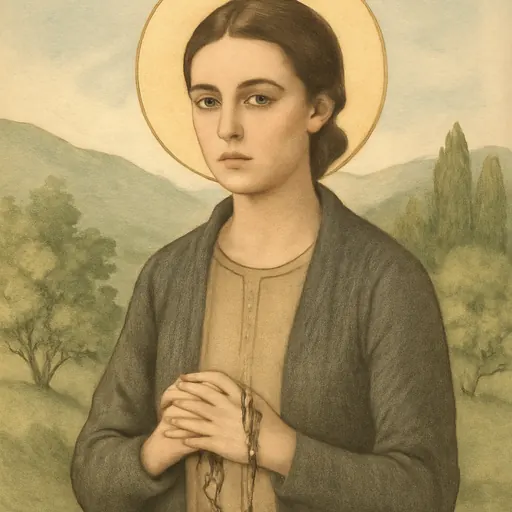
Blessed Pierina Morosini (1931–1957) was a young cotton-mill worker from Fiobbio, near Bergamo in northern Italy, the eldest of nine children and a leader in her parish Catholic Action. On April 4, 1957, walking home from her shift, she was attacked by a young man and died of her injuries two days later, having resisted him to protect her chastity. John Paul II beatified her as a martyr on October 4, 1987. Her feast is April 6.
Who was Blessed Pierina Morosini?
Blessed Pierina Morosini was a young Italian factory worker who died a martyr of purity in 1957. The eldest of nine children in a poor family of Fiobbio, a hill village near Bergamo, she went to work at a cotton mill at fifteen and kept her family fed for eleven years. She went to Mass every morning before her shift and prayed the Rosary on the long walk to the mill. On April 4, 1957, on her way home along a path through the chestnut woods, a young man attacked her. She resisted him and was struck on the head with a stone. She died two days later without regaining consciousness. She was twenty-six.
Pope John Paul II beatified her in 1987 and said of her that she had discovered she "could become a saint even without going into a convent" (our translation).
The life of Blessed Pierina
A family of nine in Fiobbio
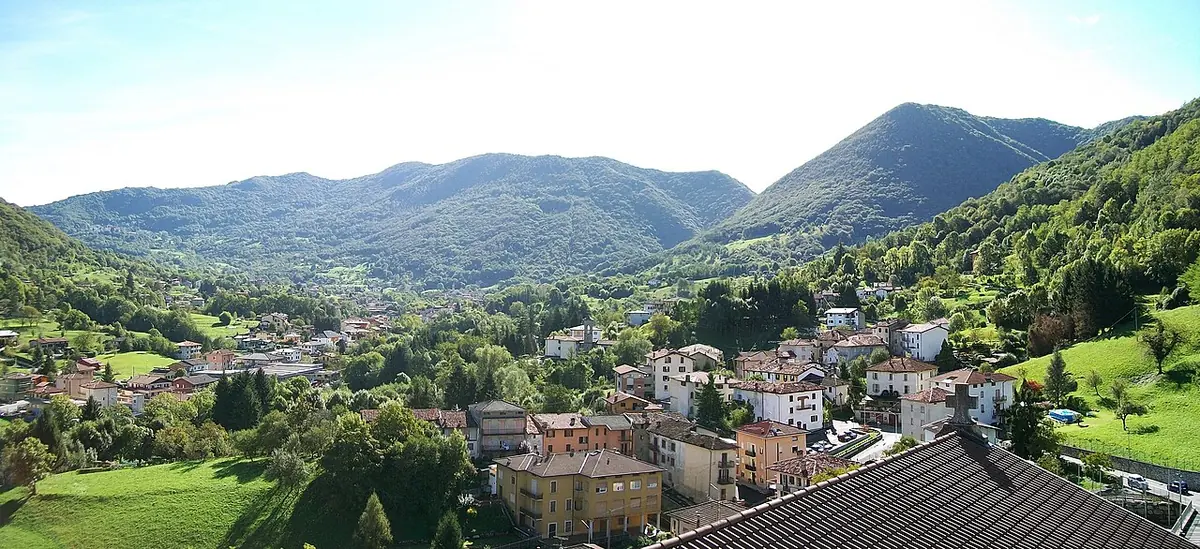
Pierina Morosini was born on January 7, 1931, at a farmhouse called the Stalle in Fiobbio, part of the town of Albino in the province of Bergamo, and baptized the next day as Pierina Eugenia. Her father, Rocco, was disabled and earned a little as a night watchman. Her mother, Sara, looked after other people's children as well as her own in exchange for bread.
Pierina was bright enough to become a teacher, and the people who knew her thought she had a real vocation to the Poor Sisters of Bergamo. She also dreamed of the missions. None of it was possible. Her family needed her wages.
At the looms
On March 18, 1946, she was hired at the Honegger cotton mill in Albino, first cleaning the floor and looms, then as an apprentice, and finally as a weaver at the looms herself. For the early shift she rose at four. She still found time to receive Communion before work, and she prayed on the road, at the loom, and in any few minutes she could slip into church. John Paul II noted that her fellow workers remembered her faithfulness at work, her friendliness joined with reserve, and the respect she had as a woman and as a believer.

She joined Catholic Action in 1942 and later led its youngest groups in the parish. She supported the missions and the seminary of Bergamo and became a Franciscan tertiary. In 1947, when her mother turned her from the convent because the family depended on her, she made private vows of chastity, poverty and obedience and wrote a short rule of life. Among her resolutions were "to keep peace in the family," "always to look cheerful" and "to try not to know other people's business." One note sums up her life: "my love, a crucified God; my strength, Holy Communion; my favorite hour, the hour of Mass; my motto, to be nothing; my goal, heaven" (our translations).

"I would rather be killed"
That same year, 1947, she went on the parish pilgrimage to Rome for the beatification of Maria Goretti, the young girl killed in 1902 resisting an attacker. Pierina came home deeply moved and took Maria as her model. Ten years later, in early 1957, she told one of her brothers: "Rather than commit a sin, I would let myself be killed" (our translation).
About a month later, on April 4, 1957, a little before three in the afternoon, she was walking home from her shift on the lonely path over Monte Misma, through the chestnut wood she had crossed twice a day for eleven years. A young man from Albino attacked her. She first tried to recall him to his conscience, then to escape. He struck her on the head with a stone. Her brother found her unconscious on the path, and she was taken to the hospital in Bergamo, where she died on April 6.

Beatification as a martyr
The people of her valley called her a new Maria Goretti at once, and they would not let her be forgotten. The Bishop of Bergamo, Clemente Gaddi, opened her cause on December 8, 1975. Theologians and then the cardinals of the Congregation for the Causes of Saints voted in favor of her martyrdom in defense of chastity, the fruit of her faith, and on July 3, 1987, John Paul II approved the decree.
He beatified her in St. Peter's Basilica on October 4, 1987, during the Synod of Bishops on the laity, with Blessed Antonia Mesina and Blessed Marcel Callo. "Her martyrdom," he said, "was consummated on the very road home," and "her footsteps did not stop" (our translation). As a martyr she was beatified without an approved miracle; favors received through her prayers remain reported graces until one is examined for her canonization.
On April 10, 1983, her remains had been moved from the cemetery into the parish church of Fiobbio, near the pew where she used to kneel. Since her beatification they rest under the high altar.

Symbols of Blessed Pierina in art
Pierina lived in the age of photography, and her images follow her photographs: a young woman with dark hair drawn back, in a plain dress. Artists give her the rosary she prayed on her walk to work, a weaver's loom or a spool of cotton for her years at the mill, the lily of purity and the palm of martyrdom.
Feast day and where she is honored
We keep her feast on April 6, the day she died, as the Roman Martyrology lists it. The Diocese of Bergamo celebrates her on May 6, since April 6 so often falls in Holy Week or the Easter octave. Pilgrims visit her tomb in the parish church of Fiobbio and climb to the chapel on the path where she was attacked. See our feast days calendar for other saints of April.
Praying with Blessed Pierina
We have not found an official English prayer to Blessed Pierina Morosini, so we do not print one. Her own motto can become a prayer: my strength, Holy Communion; my goal, heaven.
Let us ask Blessed Pierina Morosini to pray for young working women, for those who walk to work in danger, for victims of sexual violence, and for all who are tempted to give up their purity.
Frequently asked questions
Who was Blessed Pierina Morosini?
An Italian laywoman who worked at a cotton mill in Albino for eleven years to support her poor family. She had wanted to be a nun and a missionary, gave herself to God by private vows instead, and was killed in 1957 defending her purity.
Why is she compared to St. Maria Goretti?
She went to Rome in 1947 for Maria Goretti's beatification and took her as a model. Ten years later she was killed in the same way, resisting an attacker, and the people of her valley at once called her a new Maria Goretti.
When is the feast of Blessed Pierina Morosini?
April 6, the day she died. In the Diocese of Bergamo her memory is kept on May 6, because April 6 often falls in Holy Week or Easter week.
Where is she buried?
Under the high altar of the parish church of Fiobbio, her home village. A small chapel stands at the place on the mountain path where she was attacked.
Keep exploring
Sources
- John Paul II, Homily at the beatification of Marcel Callo, Antonia Mesina and Pierina Morosini, October 4, 1987 (Italian), Vatican. Her family, Catholic Action, private consecration, ten years in the mill, and the quotations on this page (our translations)
- Pierina Morosini, Dicastery for the Causes of Saints (Italian). Birth at the Stalle farmhouse, hiring at the Honegger mill on March 18, 1946, her private vows in 1947, the attack and her death
- Beata Pierina Morosini, Santi e Beati (Italian). Her parents, her rule of life and sayings, the stages of the cause, the 1983 translation and her tomb, and the May 6 date in Bergamo
- Roman Martyrology 2004, April (GCatholic). April 6 entry for Blessed Pierina Morosini