St. Dionysius of Corinth, Second-Century Bishop and Letter Writer

St. Dionysius of Corinth was bishop of Corinth around the year 170 and one of the most respected pastors of the second-century Church. Churches across Greece, Crete and Asia Minor asked his advice, and Eusebius preserved parts of his letters. His feast in the Roman Martyrology is April 8; the Byzantine Church remembers him on November 29.
Who was St. Dionysius of Corinth?
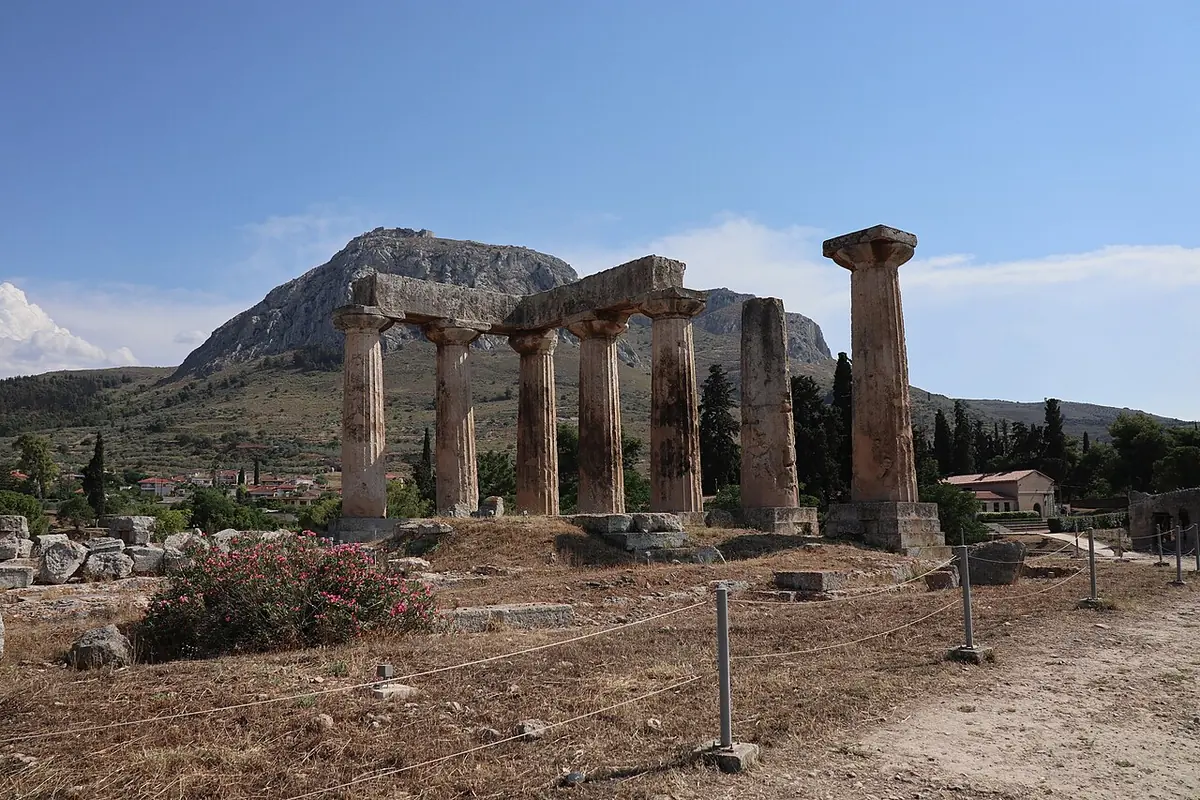
St. Dionysius of Corinth was the bishop of Corinth, in Greece, around the year 170. He is a quiet figure, known to us almost entirely through one historian, but his voice reaches us from very near the time of the apostles. The Church at Corinth was one St. Paul had founded and written to, and a hundred years later its bishop had become a man other churches turned to for counsel. We keep his feast on April 8.
His dates come from his own letters. He wrote to Pope Soter, who led the Church of Rome from about 166 to 175, and Eusebius placed the height of his career in the eleventh year of Marcus Aurelius, the year 171. Bishop Primus came before him at Corinth and Bacchyllus after him, at the time of the Easter controversy in the 190s.
The letters of St. Dionysius
Eusebius of Caesarea, writing his Church History in the early 300s, had a collection of seven of Dionysius's "catholic epistles," letters written to whole churches, and he summarized each one. St. Jerome, writing later, knew nothing more than what Eusebius tells us.
- To the Lacedaemonians (the Spartans): teaching on the true faith and a plea for peace and unity.
- To the Athenians: a call back to the Gospel life. Their bishop Publius had recently been martyred and their faith had grown cold. Here Dionysius also records that Dionysius the Areopagite, converted by Paul in Acts 17, was the first bishop of Athens.
- To the Nicomedians: against the heresy of Marcion.
- To Gortyna and the churches of Crete: praise for their bishop Philip and a warning against heretics.
- To Amastris and Pontus: teaching on marriage and chastity, and the command to receive back those who return after a fall, whether into sin or heresy.
- To Cnossus: gentle advice to Bishop Pinytus not to lay a heavy burden of continence on his people, but to remember the weakness of most.
- To the Romans: thanks for alms sent by Pope Soter.
There was also a private letter of spiritual counsel to a Christian woman named Chrysophora, whom Eusebius calls "a most faithful sister."
Pinytus wrote back, politely, that next time Dionysius might send stronger food, so his flock would not grow old on milk. Eusebius admired both men.
The letter to Rome
Only the letter to the Romans survives in quoted passages, and they are precious. Dionysius thanks the Roman Church for a custom of charity it had kept "from the beginning":
For from the beginning it has been your practice to do good to all the brethren in various ways, and to send contributions to many churches in every city. Thus relieving the want of the needy, and making provision for the brethren in the mines by the gifts which you have sent from the beginning, you Romans keep up the hereditary customs of the Romans, which your blessed bishop Soter has not only maintained, but also added to.
He also tells us that the Church of Corinth read the pope's letter aloud at Sunday worship, as it still read the earlier letter "written to us through Clement," the letter of Pope St. Clement we still have. And he wrote of the two great apostles, in the words the Catholic Encyclopedia gives:
You also by this instruction have mingled together the Romans and Corinthians who are the planting of Peter and Paul. For they both came to our Corinth and planted us, and taught alike; and alike going to Italy and teaching there, were martyred at the same time.
The Catholic Encyclopedia calls this witness to the martyrdom of St. Peter and St. Paul "of first-rate importance." It is written by a bishop of the generation after the apostles' own disciples.
Letters tampered with
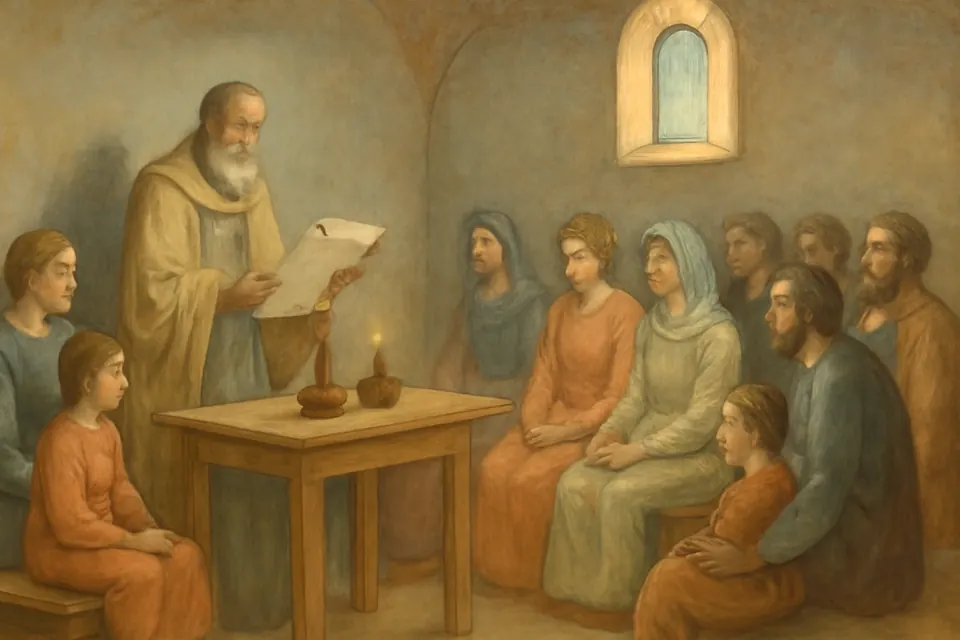
Dionysius complained that his letters were being altered. Eusebius quotes him: "these epistles the apostles of the devil have filled with tares, cutting out some things and adding others." He added that it was no wonder if some had tried to corrupt the Lord's own writings too. Already in the second century, the Church had to guard its texts.
How did he die?
We do not know. The Synaxarion of Constantinople remembers him on November 29 as a martyr, but the Santi e Beati entry notes that nothing certain is known about his death. The West took him into its calendars through the ninth-century martyrology of Usuard, and from there into the Roman Martyrology on April 8. Its entry praises his "admirable knowledge of the word of God," with which he taught his own people by preaching and the bishops of other cities by letter.
No miracles are recorded of him, approved, reported or traditional. His legacy is his words.
Relics at Saint-Denis
His body, according to the Italian accounts, was brought to Rome. In 1215, at the Fourth Lateran Council, Pope Innocent III gave relics to Himmericus (Emeric), prior of the Abbey of Saint-Denis near Paris, and they were honored there as the relics of Dionysius of Corinth. The Ökumenisches Heiligenlexikon points out that the pope's covering letter seems to say they were meant as the relics of Dionysius the Areopagite. The many saints named Dionysius, or Denis, were easily confused. What became of these relics later is not clear.
Where the relics of St. Dionysius of Corinth are kept: see them on the relics map →
Symbols of St. Dionysius of Corinth in art
Dionysius is rarely shown in art, and he has no fixed attribute of his own.
- Miter and crosier: his office as bishop.
- Book, letter or scroll: his letters to the churches.
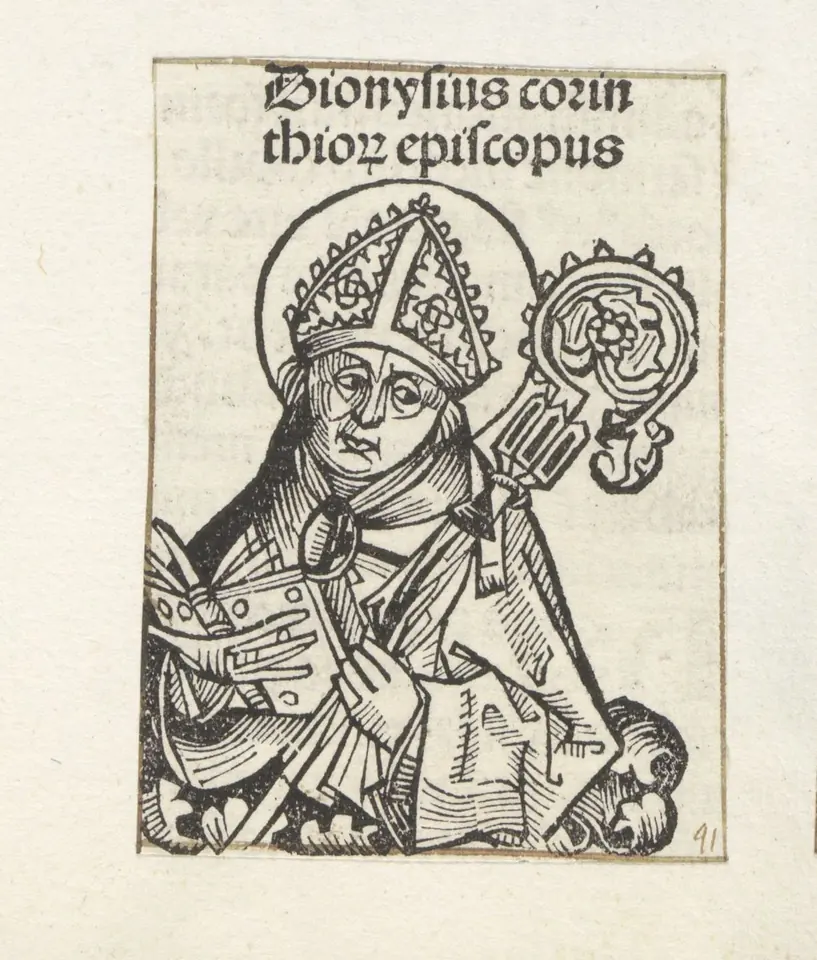
The Nuremberg Chronicle of 1493 gives him a woodcut portrait as a mitered bishop holding an open book, one of hundreds of imagined portraits in that great printed history. Greek icons show him like other holy bishops, in the omophorion with a Gospel book; the Ökumenisches Heiligenlexikon pictures one in the cathedral of St. Peter at Argos. If you meet a bishop with a book and the name Dionysios, read the inscription carefully: the Areopagite and Dionysius of Alexandria are far more often painted.
Praying with St. Dionysius of Corinth
We know of no traditional prayer to St. Dionysius of Corinth that we can cite, so we ask his help simply: "St. Dionysius, pray for us."
His letters suggest what to ask. Let us pray through him for bishops and pastors who must be firm against error and still merciful to those who come back after a fall, for the unity of Christians, and for all who write letters of counsel and comfort. He was glad that Rome cared for prisoners in the mines; we can ask him to help us remember the poor and the imprisoned, as the Church of Rome did in his day.
Frequently asked questions
Who was St. Dionysius of Corinth?
The bishop of Corinth around 170, in the reign of Marcus Aurelius. He wrote pastoral letters to other churches, against heresy and for peace and mercy, and Eusebius of Caesarea quoted them in his Church History. They are among our oldest witnesses to the Church after the apostles.
When is the feast of St. Dionysius of Corinth?
April 8 in the Roman Martyrology. The Byzantine Church remembers him on November 29.
Was St. Dionysius of Corinth a martyr?
The Greek Synaxarion calls him a martyr, but nothing certain is known of how he died. The Roman Martyrology honors him as a bishop and teacher of the faith.
What did St. Dionysius of Corinth say about St. Peter and St. Paul?
In his letter to the Romans he wrote that Peter and Paul both planted the Church at Corinth, taught together in Italy, and were martyred at the same time. It is one of the earliest written witnesses to their martyrdom in Rome.
Keep exploring
Sources
- St. Dionysius, Catholic Encyclopedia (1909), New Advent. Dates of his episcopate, the seven letters Eusebius knew, and the English text of the extracts from the letter to the Romans
- Eusebius, Church History, Book IV, chapter 23, New Advent. The oldest account of his letters, Pinytus's reply, the letter to Chrysophora and his complaint that his letters had been tampered with
- San Dionigi di Corinto, Santi e Beati. The Roman Martyrology text, his November 29 commemoration in the Synaxarion of Constantinople, Usuard, and the gift of his body to the abbey of Saint-Denis by Innocent III (in Italian)
- Dionysios I. von Korinth, Ökumenisches Heiligenlexikon. The 1215 gift of relics at the Fourth Lateran Council and the papal letter suggesting they were meant as the Areopagite's (in German)