St. Hermann Joseph of Steinfeld, the Boy Who Gave an Apple to the Christ Child
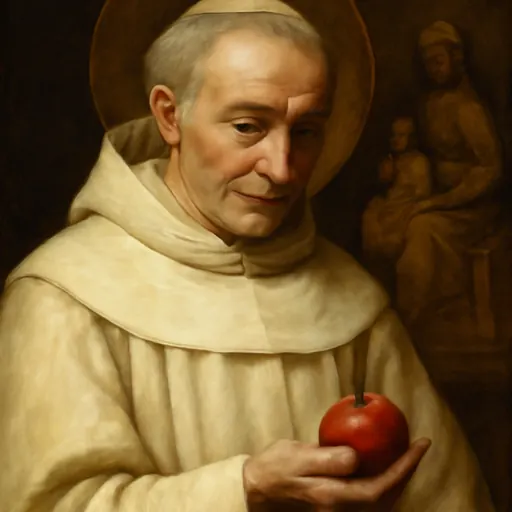
St. Hermann Joseph (about 1150–1241) was a Premonstratensian canon of Steinfeld Abbey near Cologne and one of the great medieval Marian mystics. The best-loved story tells how, as a poor boy, he offered his apple to the Christ Child in a statue of the Virgin and Child, and the Child accepted it. His feast is April 7.
Who was St. Hermann Joseph?
St. Hermann Joseph was a canon of the Premonstratensian order who spent almost his whole life at Steinfeld Abbey in the Eifel hills west of Cologne. He was a mystic, a writer of prayers and hymns to the Mother of God, a humble server of his brothers, and, of all things, a mender of clocks. Catholics in the Rhineland have loved him for eight centuries, mostly because of one story from his childhood: the day a poor boy gave his apple to the Christ Child.
The life of St. Hermann Joseph
A poor boy in Cologne
Hermann was born in Cologne about 1150 to parents who, the Catholic Encyclopedia says, were poor but "had once been rich." What we know of him comes chiefly from a Life written by Razo Bonvisinus, prior of Steinfeld, who knew him. At seven he went to school, and in every spare moment he could be found in the church of St. Maria im Kapitol, kneeling before an image of the Virgin and Child.
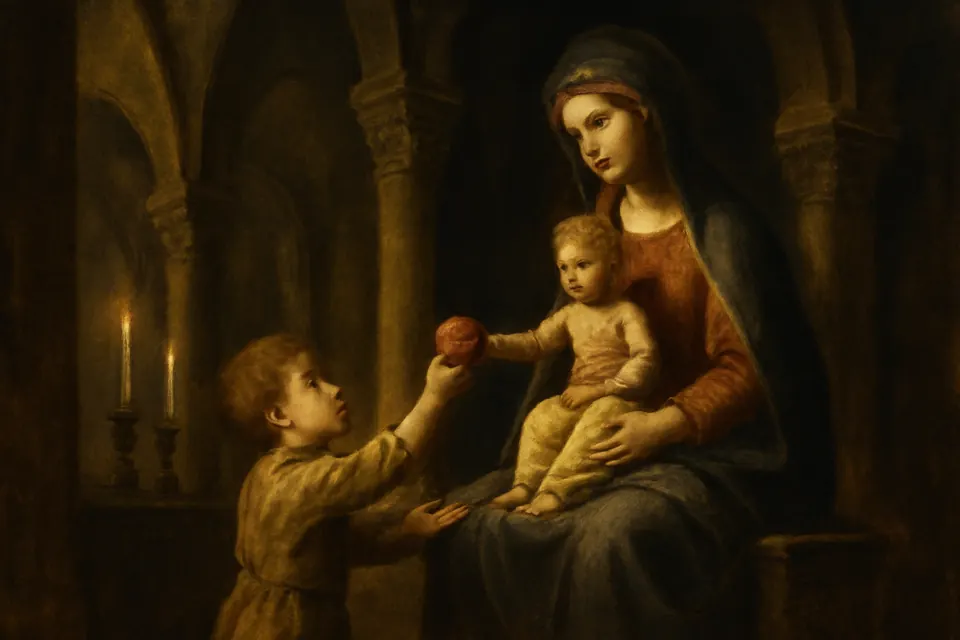
One day, the story goes, he brought an apple saved from his own small meal and held it up to the Child. The Child accepted it. Baring-Gould, writing in the nineteenth century, gently suggests the stone hand closing on the apple may have been the boy's own imagining. The Church has never asked us to believe it as history. The story has lasted because it shows so plainly what kind of child Hermann was.
Another tale from his boyhood says that he came to church barefoot on a bitter winter day, and Mary showed him a stone under which he would find money for shoes. Hermann told this story himself, his biographer says, a few days before he died.
Steinfeld
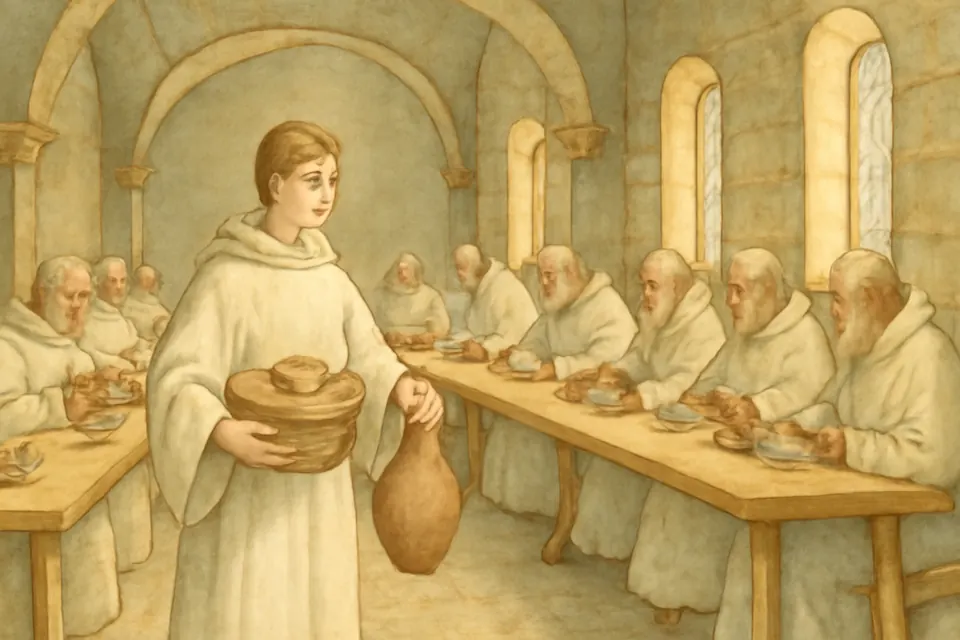
At twelve he entered the abbey of the Premonstratensian canons at Steinfeld, the order founded by St. Norbert. He was sent to study in Friesland and came home to serve his brothers in the refectory. The work left him no time for reading and little for prayer, and he grieved over it, until, Baring-Gould relates, he heard Mary say to him in prayer: "Nothing that thou canst do is more precious than to serve the brethren in love."
Later he became sacristan, which gave him the quiet of the church. He was ordained a priest, and his brothers noticed the reverence with which he offered Mass.
Mystic and clockmaker
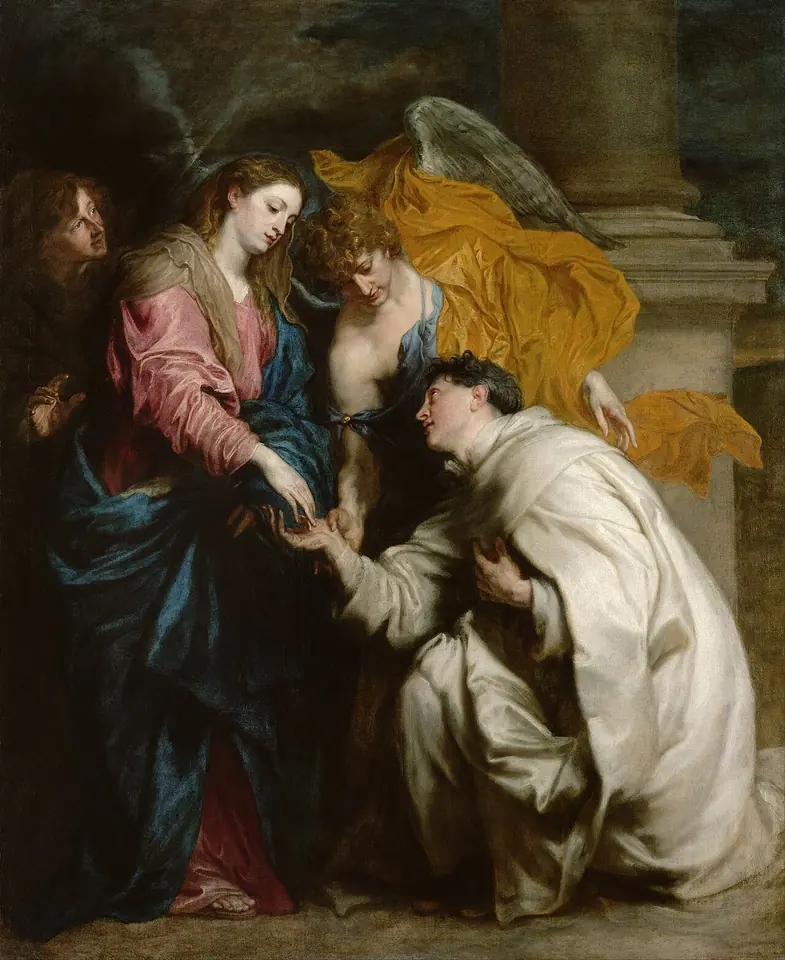
Hermann's heart belonged to the Mother of God. He composed prayers and hymns in her honor and liked to call himself her chaplain. His brothers gave him the name Joseph because of this love, and his biographer says Mary confirmed it in a vision in which he was espoused to her. Baring-Gould, who had a healthy caution about visions, warns that not every one of them should be taken literally.
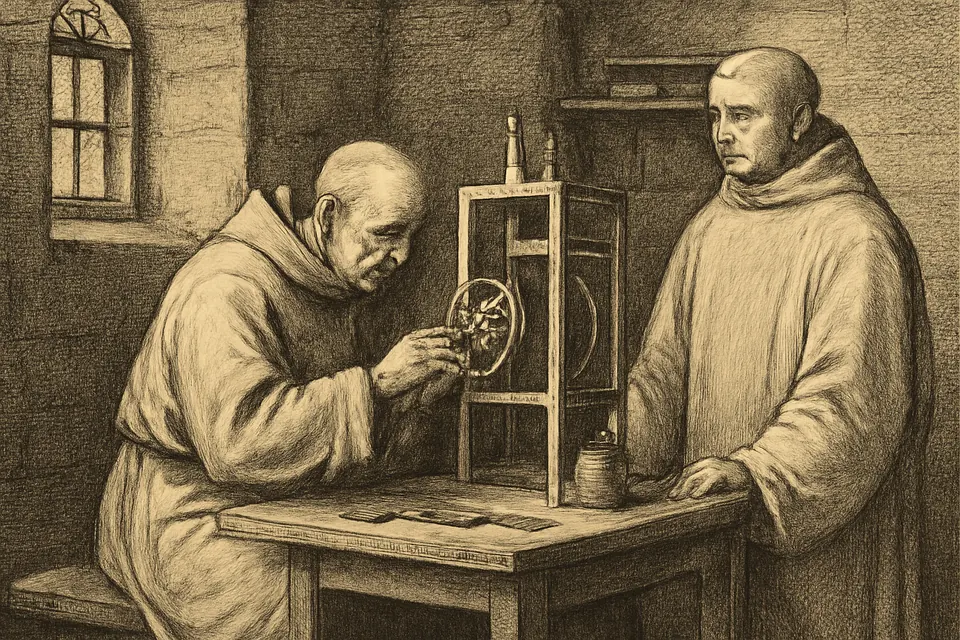
He also had a very practical gift. He was "in frequent demand for the making and repairing of clocks," the Catholic Encyclopedia notes. He was sent out to do pastoral work, and late in life he served as chaplain to the Cistercian nuns at Hoven, near Zülpich. He died there on April 7, 1241, and was buried in their cloister.
Miracles and visions
- The apple accepted by the Christ Child (traditional). From the Life by his contemporary, Razo.
- The money for shoes (traditional). Told by Hermann himself to his biographer.
- Visions of Mary and of angels with censers (reported). His biographer recorded many ecstasies, including two angels who censed only those brothers who were truly praying during Lauds.

No miracle was formally examined, since his canonization process, begun in 1626 at the request of the archbishop of Cologne and Emperor Ferdinand II, was interrupted.
His writings
The Catholic Encyclopedia lists a lost commentary on the Song of Songs, a set of twelve thanksgivings (Duodecim gratiarum actiones), a hymn in honor of St. Ursula and the virgins of Cologne, and several prayers to Christ and on the five joys of Mary. The authorship of the last three is not quite certain.
Symbols of St. Hermann Joseph in art
- The apple: his most common attribute, from the childhood story.
- The white habit: the Premonstratensian canons wear white.
- The Virgin and Child: he is often shown kneeling before them, offering the apple, as the Catholic Encyclopedia describes.
- A ring, or Mary taking his hand: the vision of his espousal to Mary, painted by Van Dyck and by Jean-Guillaume Carlier.
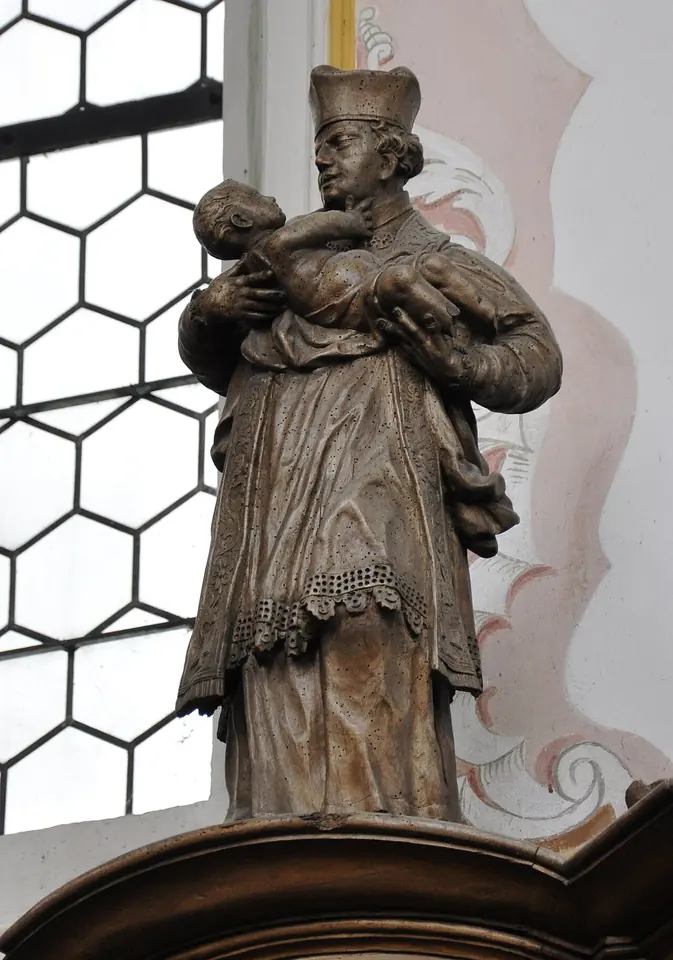
- The Christ Child in his arms: some Baroque statues, like the one at Schussenried, show him holding the Child.
Don't confuse him with Blessed Hermann of Reichenau, the eleventh-century monk and composer, who is shown with a book or musical instruments.
Feast day and tomb
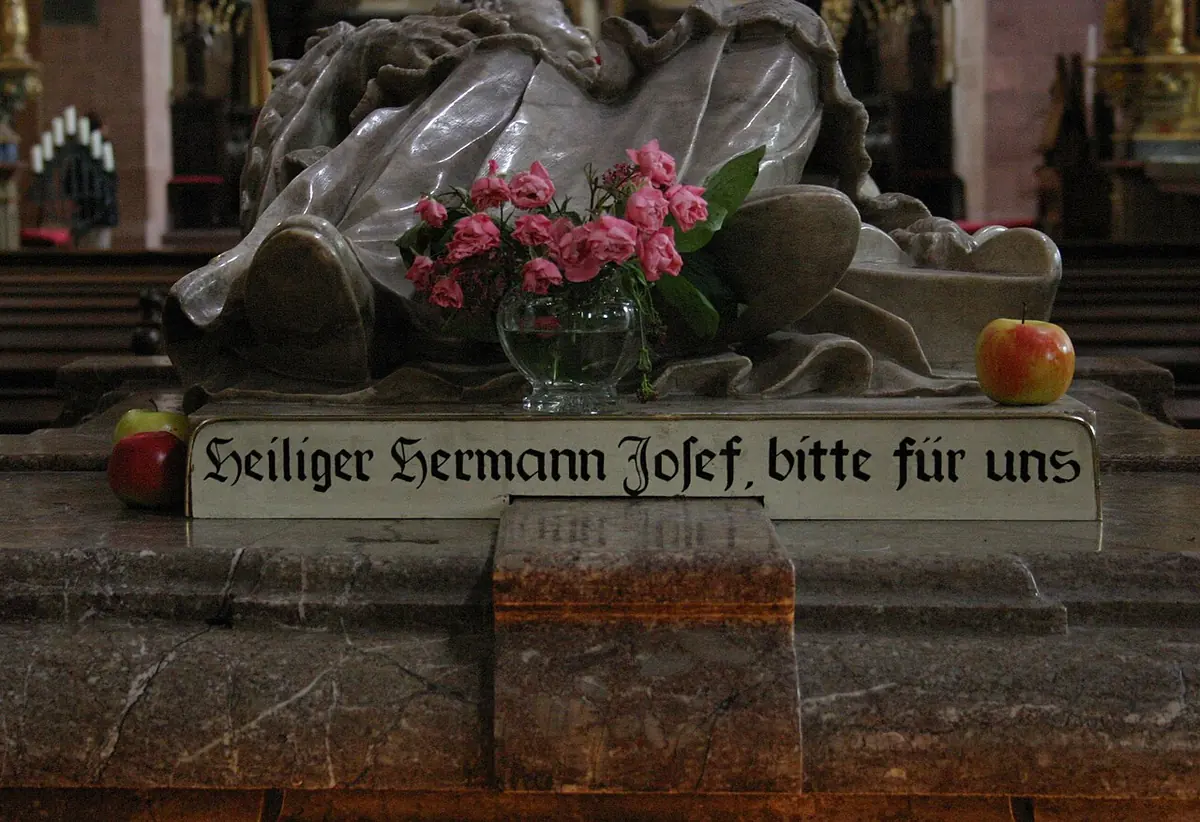
His feast is April 7. His body was later carried from Hoven to Steinfeld, where his marble tomb remains in the abbey church, now a basilica. Some of his relics are at Cologne and Antwerp. The Premonstratensians also kept the translation of his relics on May 24. In 1958 Pope Pius XII confirmed his title of saint. See more saints of April on our feast days page.
Praying with St. Hermann Joseph
We know of no single traditional prayer to St. Hermann Joseph in common use in English. The sign on his tomb at Steinfeld says it simply: "Heiliger Hermann Josef, bitte für uns," St. Hermann Joseph, pray for us. Let us ask him to give us a childlike love for Jesus and Mary, and the humility to serve others in love when our own plans for prayer are interrupted.
Frequently asked questions
Who was St. Hermann Joseph?
A German canon of the Premonstratensian (Norbertine) order, born in Cologne around 1150, who entered Steinfeld Abbey at twelve, served there as refectorian and sacristan, became a priest, wrote prayers and hymns to Mary, and died on April 7, 1241, at Hoven near Zülpich.
What is the story of St. Hermann Joseph and the apple?
His contemporary biographer tells that as a small boy he brought an apple to the church of St. Maria im Kapitol in Cologne, held it out to the Christ Child in a statue of the Virgin and Child, and the Child took it. This story is traditional, and it is why he is shown holding an apple.
Why is he called Hermann Joseph?
His brothers in religion gave him the name Joseph because of his tender love for Mary. His biographer says that in a vision Mary confirmed the name.
Is Hermann Joseph a saint or blessed?
Older books call him Blessed. His feast was long kept, and in 1958 Pope Pius XII confirmed the title of saint.
Keep exploring
Sources
- Bl. Hermann Joseph, Catholic Encyclopedia (1910), New Advent. The Life by Razo Bonvisinus, prior of Steinfeld; the apple and the shoes; clock-making; chaplain to the Cistercian nuns at Hoven; translation to Steinfeld; relics at Cologne and Antwerp; process begun in 1626; his works; editor's note on 1958
- S. Baring-Gould, The Lives of the Saints, vol. 4 (April), archive.org. The dream of playing with the Child Jesus, the pennies under the stone, the answer in the refectory ('Nothing that thou canst do is more precious than to serve the brethren in love'), the vision of the angels with censers