St. Magnus Erlendsson, Earl of Orkney and Martyr
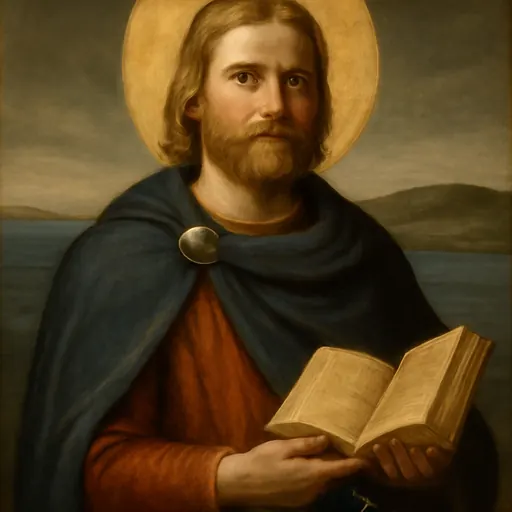
St. Magnus Erlendsson was a Norse Earl of Orkney who refused to fight in an unjust raid, shared his earldom with his cousin Hakon, and was killed by him on the island of Egilsay about 1117, after forgiving his executioner. Healings at his grave led to his veneration as a martyr. His feast is April 16, and his relics rest in St. Magnus Cathedral, Kirkwall.
Who was St. Magnus Erlendsson?
St. Magnus Erlendsson was an Earl of Orkney in the early twelfth century, a Norse ruler of the islands off the north of Scotland, and he is the great saint of the north. Orkneyinga saga, the Icelandic history of the Orkney earls written down about a hundred years after his death, remembers him as a man who would not shed blood unjustly, and who forgave the man ordered to kill him.
He was the son of Earl Erlend and his wife, Thora, and shared the rule of Orkney with his cousin Hakon Paulsson. That arrangement ended on the island of Egilsay, where Hakon had him put to death in April, about the year 1117. The saga's dates for the year do not agree with each other, and its nineteenth-century editor works out 1115 or 1116.
The life of St. Magnus
The psalter at the Menai Strait
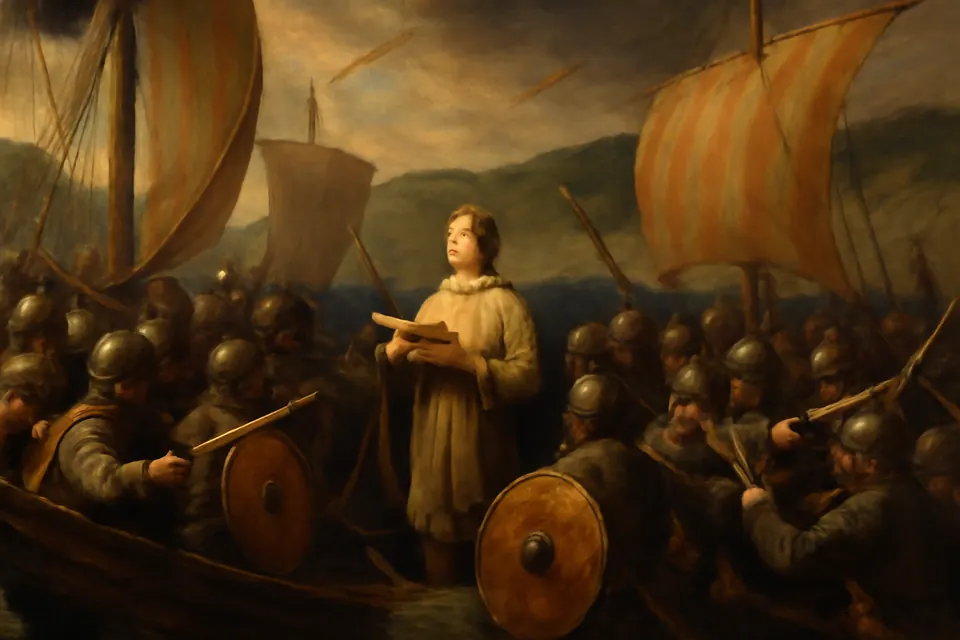
As a young man Magnus sailed with King Magnus Barelegs of Norway on his great raid around the British Isles in 1098. When the fleet met two Norman lords, Hugh the Stout and Hugh the Bold, in the strait off Anglesey, the young Orkneyman refused to arm himself. The saga gives his reason: he had nothing against any man there, and so he would not fight. The king told him to go below if he dared not fight, adding that he did not believe it was for religion's sake.
Magnus took a psalter and sang during the battle, and did not shelter himself.
He came through unhurt. The king was displeased with him after the battle. That night Magnus slipped away, hid in the woods, and made his way to the court of the King of Scots, where he stayed until the king's death.
Earl of Orkney
After King Magnus's death, King Eystein of Norway gave Magnus his father's half of the earldom, and he ruled Orkney jointly with Hakon. For some years there was peace between them. Then the cousins' followers quarreled, and the two earls swore to keep the peace and agreed to meet on Egilsay in Easter week, each with two ships and the same number of men, to confirm it.
The meeting on Egilsay
Magnus came as agreed. Hakon came with eight warships. When Magnus saw them he understood, but he would not let his men fight for him: "I will not put your lives in danger for mine, and if peace cannot be established between us, let it be as God wills." He went into the church to pray and had Mass sung.
In the morning he made Hakon three offers to spare his life: to go on pilgrimage to Rome or Jerusalem and never return, to be held prisoner in Scotland, or to be maimed and blinded and kept in a dungeon. Hakon was ready to accept the last, but his chiefs insisted that one earl must die that day. "Slay him then," said Hakon, "for I will rather have earldom and lands than instant death."
The martyrdom of St. Magnus
Hakon's standard-bearer, Ofeig, refused to do the killing. Hakon then forced his cook, Lifolf, to do it, and the man began to weep aloud. The saga gives Magnus's answer:
Weep not thus, for this is an honourable task. Be firm, and you shall have my clothing, according to the custom and laws of the men of old. Be not afraid, for you do this against your will, and he who forces you sins more than you.
He took off his tunic and gave it to Lifolf, asked leave to pray, and prayed, the saga says, "not only for his friends, but also for his enemies and murderers." Then he asked Lifolf to strike him on the head, "for it is not fitting that high-born lords should be put to death like thieves." He signed himself with the cross and bowed under the blow. Orkneyinga saga gives the day as two days after Tiburtius's day, which is April 16.

The miracles of St. Magnus
The saga reports that the place where he died, once moss and stones, became green turf. Hakon at first refused him church burial, but Magnus's mother, Thora, served Hakon at a feast that same day and begged him with tears to let her bury her son. He relented, and Magnus was buried at Christ's Kirk in Birsay.
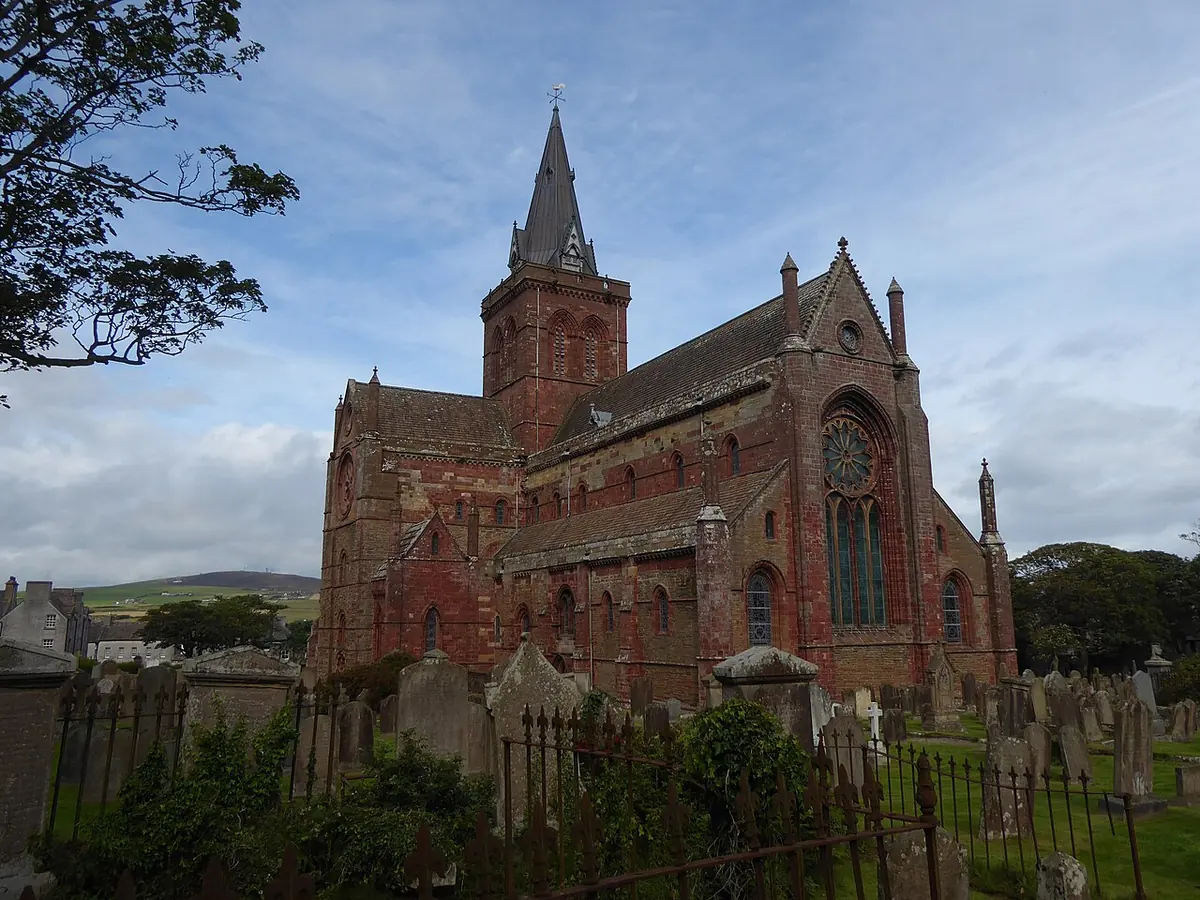
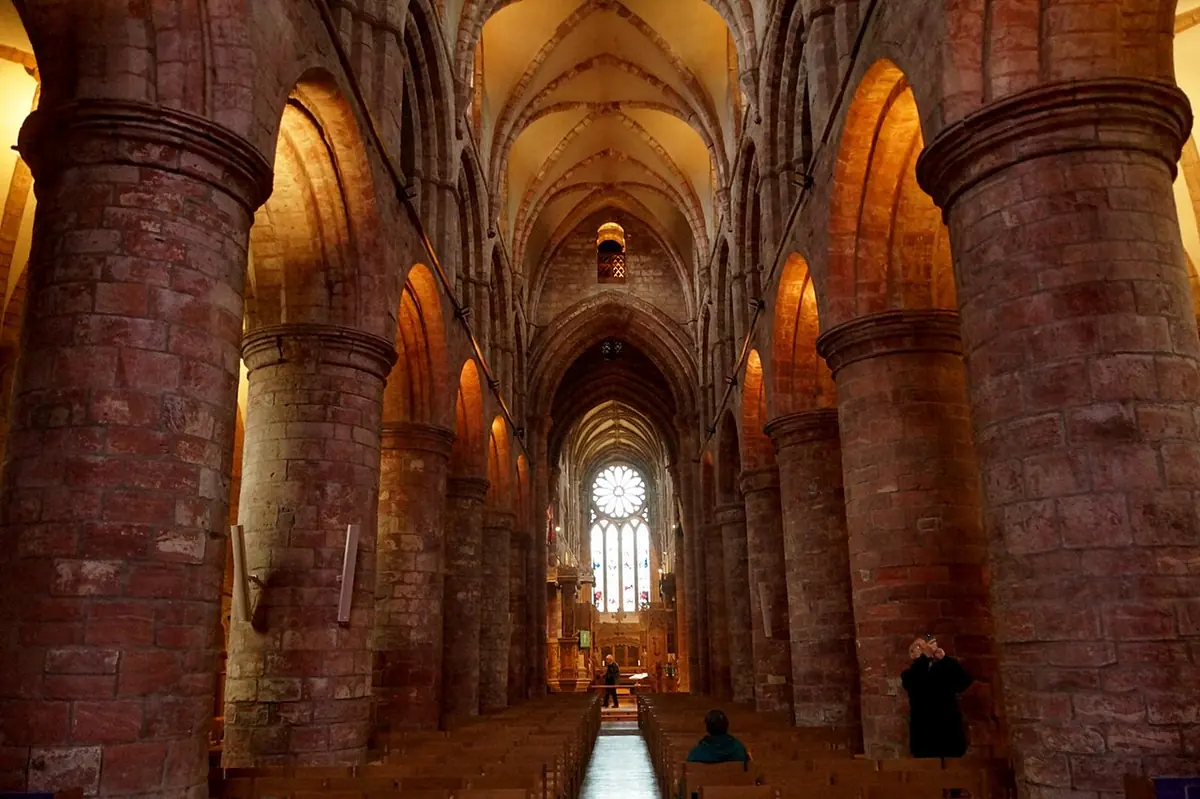
Soon, the saga says, a heavenly light was seen over the grave and a sweet fragrance noticed there, and the sick who kept vigil at the tomb were healed. These are reported miracles, set down in the saga and in a fuller book of his miracles. The first Bishop of Orkney, William, doubted them for a long time before he was persuaded. About twenty years after the martyrdom he raised the relics and placed them in a shrine at Christ's Kirk, the old way of declaring a saint. The saga then tells of a Westray man named Gunni, to whom Magnus appeared twice in a dream asking to be taken east to Kirkwall. The bishop carried the relics there and placed them on the altar of the church then standing, and when Magnus's nephew, Earl Rognvald, began the great minster at Kirkwall in 1137, it was built to receive them.
In 1919, during restoration work, a hidden cavity was found in one of the cathedral's pillars. It held a box of bones, including a skull with a wound consistent with an axe blow. The bones were returned to the pillar, where they rest today.
Why St. Magnus is the patron of Orkney
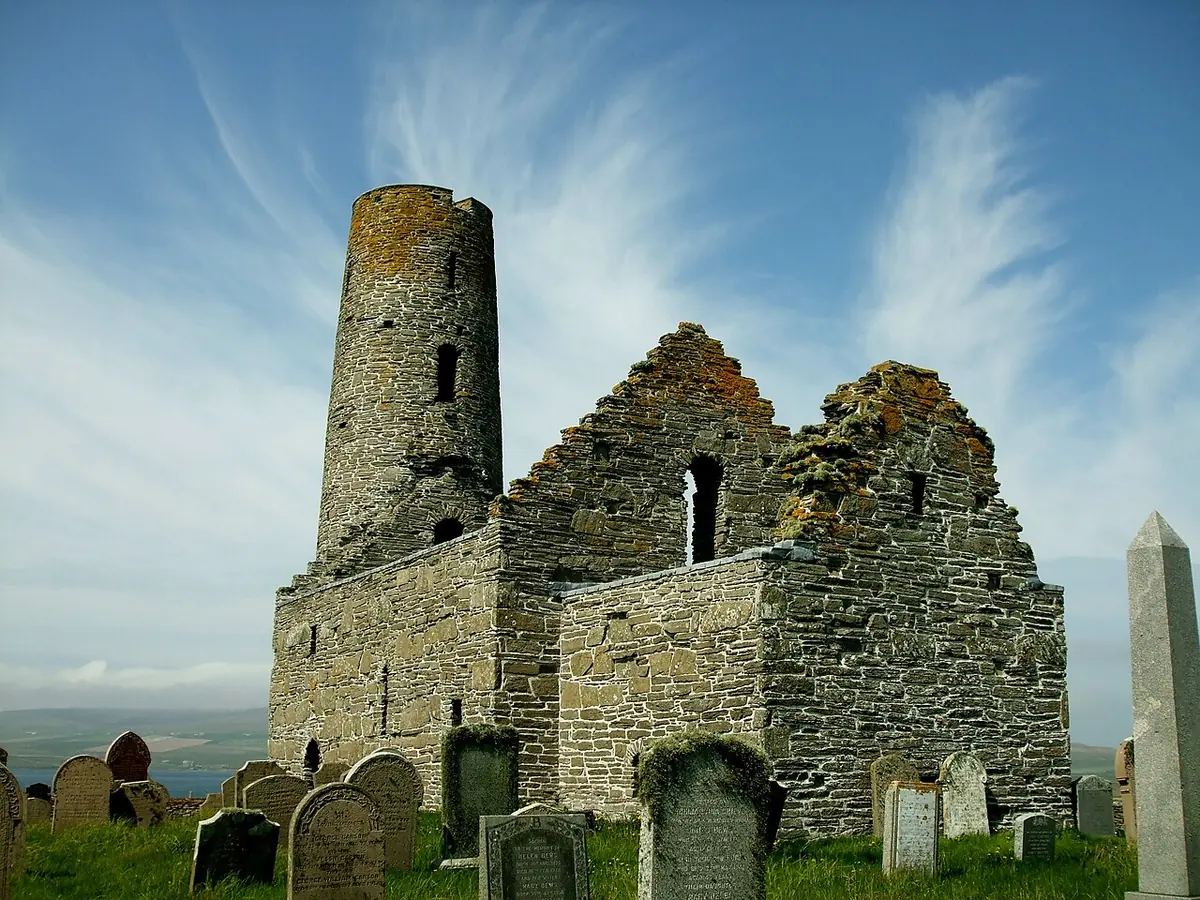
Orkney's cathedral bears his name, and he has been the islands' patron since the twelfth century. The Roman Martyrology calls him a martyr who was "murdered with evil deception while going defencelessly to negotiate peace with his cousin." The old church on Egilsay, close to where he died, still stands.
Symbols of St. Magnus in art
Look for these signs of St. Magnus in Orkney, in Scandinavia and in the churches named for him:
- An axe, the weapon of his death, often held in his hand as a martyr's attribute.
- An earl's sword and mantle, sometimes a coronet, showing his rank.
- A psalter or book, recalling his singing at the Menai Strait.
- The martyr's palm.
- A model of St. Magnus Cathedral, in some later images.
An axe in the hand of a young nobleman in a northern church is the best clue.
Feast day and prayer
We keep the feast of St. Magnus on April 16, the day of his death.
We have no prayer to St. Magnus from a source we can cite here. His own prayer on Egilsay, for his friends and for his enemies, is the best model. Let us ask St. Magnus to pray for peacemakers, for those who must choose between power and conscience, and for the grace to forgive those who harm us.
St. Magnus, pray for us.
Frequently asked questions
Who was St. Magnus of Orkney?
Magnus Erlendsson, Earl of Orkney in the early 1100s. Orkneyinga saga remembers him as a peaceable, devout ruler who sang psalms instead of fighting in a Viking battle, and who was put to death by his cousin Earl Hakon on Egilsay, praying for his killers.
When is the feast day of St. Magnus?
April 16, the day of his death, in the Roman Martyrology.
Where are the relics of St. Magnus?
In St. Magnus Cathedral in Kirkwall, founded in 1137 by his nephew, Earl Rognvald. In 1919 a box of bones, including a skull with a wound like an axe blow, was found hidden in one of the cathedral's pillars and returned there.
Is St. Magnus of Orkney the same as St. Magnus of Füssen?
No. St. Magnus of Füssen was an eighth-century Benedictine missionary in Bavaria, honored on September 6. St. Magnus Erlendsson was an Earl of Orkney who died in the twelfth century.
Keep exploring
Sources
- Orkneyinga Saga, trans. Jon A. Hjaltalin and Gilbert Goudie, ed. Joseph Anderson (Edinburgh, 1873), chapters 36–43. The battle in the Menai Strait, the meeting on Egilsay, his three offers, his words to Lifolf, his burial at Birsay and the early miracles
- Roman Martyrology 2004, April (GCatholic). April 16 entry
- Scotland's Churches Trust: St. Magnus Cathedral, Kirkwall. The founding in 1137 and the 1919 discovery of the bones in a pillar