St. Teresa of the Andes

St. Teresa of the Andes (Teresa of Jesus of Los Andes, born Juanita Fernández Solar, 1900–1920) was a young Discalced Carmelite nun from Santiago who died of typhus at 19, after only eleven months in the convent. Pope John Paul II canonized her in 1993, making her Chile's first saint, and offered her as a model for young people. Her feast is April 12 in the Roman Martyrology and July 13 among the Carmelites and in Chile.
Who was St. Teresa of the Andes?
St. Teresa of the Andes was a young Chilean woman who lived only nineteen years and spent just eleven months as a Carmelite nun, yet she is Chile's first saint. She was born Juana Enriqueta Josefina of the Sacred Hearts Fernández Solar in Santiago on July 13, 1900, and everyone called her Juanita. She died of typhus on April 12, 1920, in the small Carmelite monastery of the Holy Spirit at Los Andes, a town at the foot of the mountains about 90 kilometers from the capital. She had taken the name Teresa of Jesus, and the place added the rest: Teresa "de los Andes."
Pope John Paul II beatified her in Santiago on April 3, 1987, and canonized her in Rome on March 21, 1993. The Vatican's biography calls her the first Chilean saint, the first Discalced Carmelite nun to be canonized outside Europe, and the fourth St. Teresa of Carmel, after St. Teresa of Ávila, St. Teresa Margaret of Florence and St. Thérèse of Lisieux.
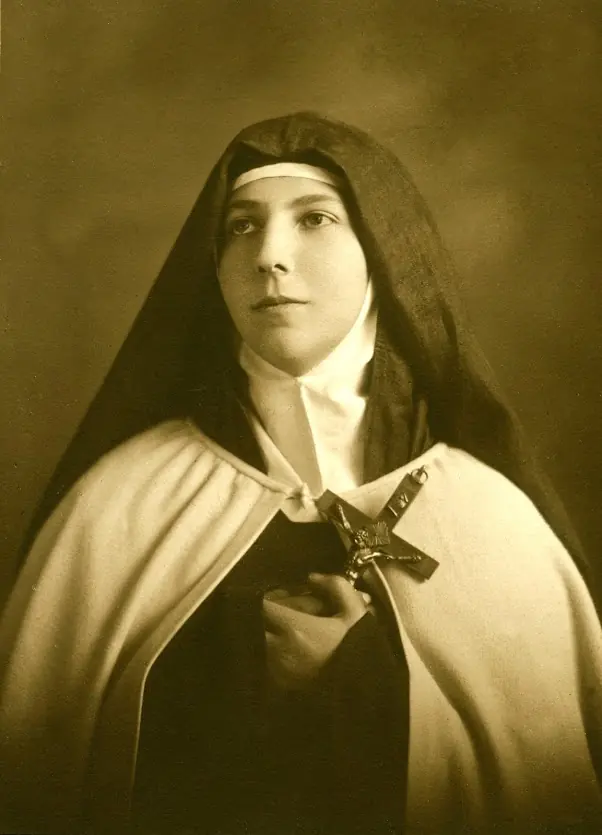
From the outside her life looks very small: a girl from a good family, a convent school, a short novitiate, an early death. The Church holds her up because of what happened inside that small life. We have her own account of it in her diary and letters, which have been printed in many languages.
The life of St. Teresa of the Andes
A Santiago childhood
Juanita was one of six children of Miguel Fernández and Lucía Solar, a prosperous and devout family. She grew up among parents, brothers and sisters, a grandfather, aunts, uncles and cousins, with summers on the family's estate at Chacabuco. She went to school with the French Religious of the Sacred Heart in Santiago.
She dated the beginning of her spiritual life to a natural disaster. "It was shortly after the 1906 earthquake that Jesus began to claim my heart for himself," she wrote in her diary, remembering the great Valparaíso earthquake that shook central Chile when she was six.
She was not a placid child. The Vatican biography is frank: by nature she was "proud, self-centred, stubborn," and quick-tempered. What set her apart was that she fought those faults steadily, one by one, out of love.

First Communion and a call to Carmel
Preparing for her First Communion, which she received on September 11, 1910, she set out to remake her character so as to be less unworthy of receiving the Lord. The people around her saw the change. From that day, her biography says, she experienced an inner conversation with Jesus that stayed with her for the rest of her life.
At fourteen she read Story of a Soul, the autobiography of St. Thérèse of Lisieux, then not yet beatified, and she came to believe that Christ wanted her in Carmel. In 1917 she also read the writings of St. Elizabeth of the Trinity, the young French Carmelite who had died in 1906. At fifteen she made a private vow of virginity for nine days and kept renewing it.
She remained a lively girl who loved tennis and swimming, played the piano and harmonium, and had many friends. They knew she was different, and they came to her for advice.
The letter to her father
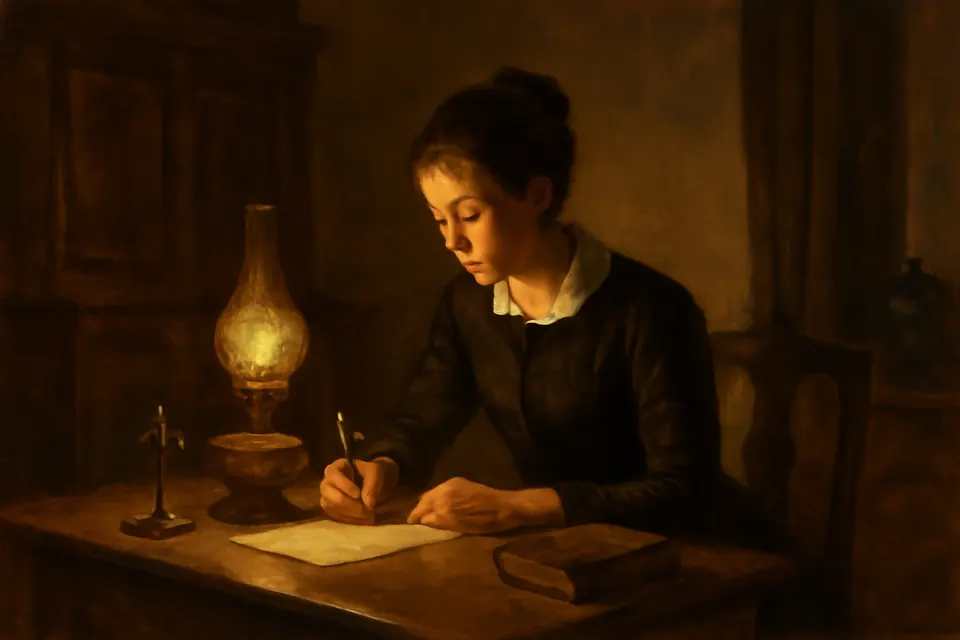
When she was eighteen, Juanita had to ask her father's permission to enter the cloister. On March 25, 1919, she wrote him a long letter asking for it. The Carmelite nuns of Thicket Priory in England, who keep her memory, record that he was moved to tears and gave his consent.
Eleven months in Carmel
On May 7, 1919, she entered the monastery of the Holy Spirit at Los Andes. She received the habit on October 14 and began her novitiate as Sister Teresa of Jesus. In the cloister she kept up a correspondence with family and friends, and these letters became a quiet apostolate. She described the Carmelite vocation as loving, suffering and praying for the Church, for priests and for the conversion of sinners.
She had long believed she would die young, and a month before her death she told her confessor so. On Good Friday, April 2, 1920, she fell gravely ill with typhus. Because she was in danger of death, she was allowed to make her religious vows early, on April 7, six months before the end of her novitiate. She died on the evening of April 12, 1920, three months short of her twentieth birthday.
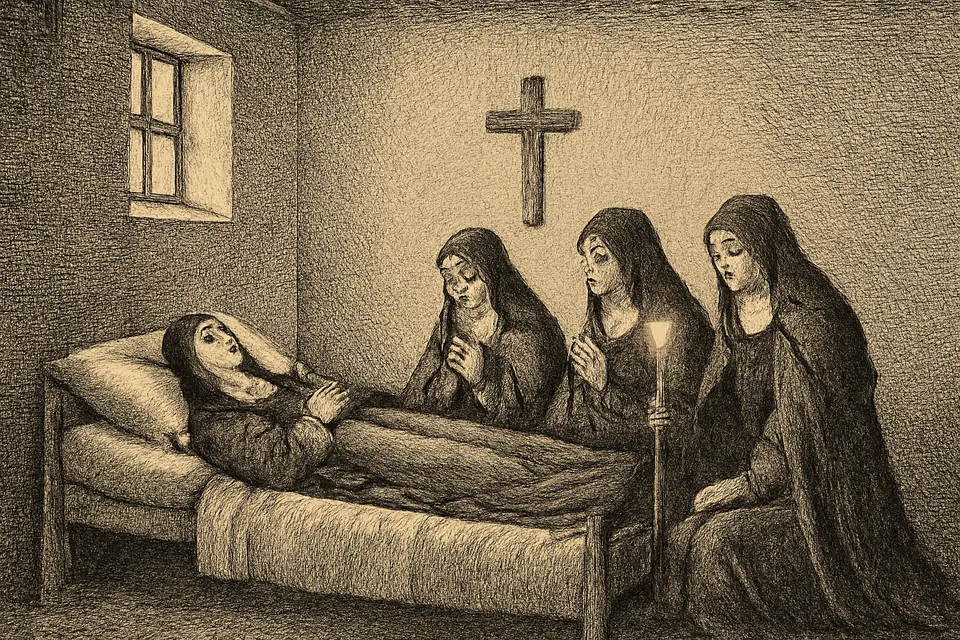
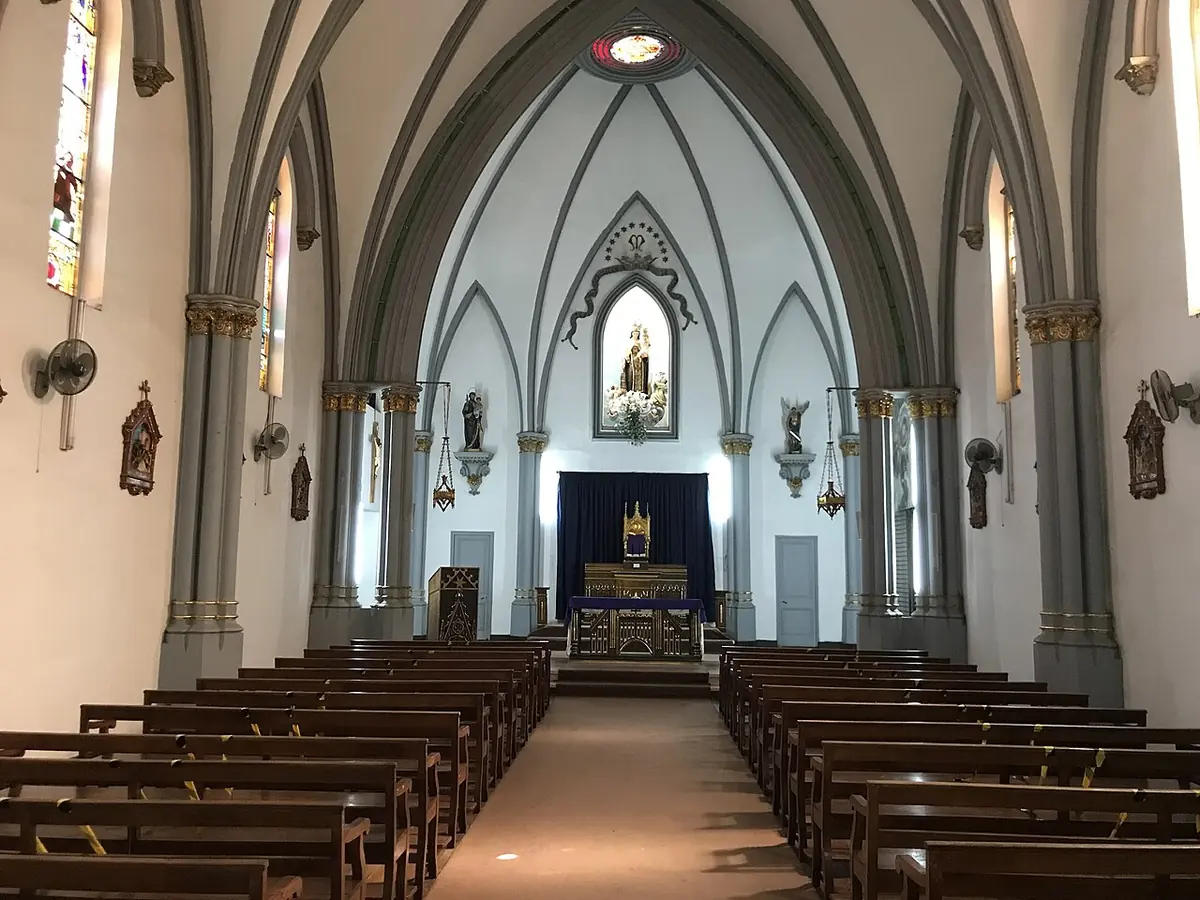
Many people came to her funeral, and her reputation for holiness spread at once. She was buried at the monastery in Los Andes, and the old monastery church there still welcomes pilgrims.
The miracles of St. Teresa of the Andes
Two cures were investigated and approved by the Church in the course of her cause. Both are told in detail by Catholic.net, drawing on the records of the process:
- The firefighter (approved, for beatification): On December 4, 1983, Héctor Uribe Carrasco, a volunteer of Santiago's Sixth Fire Company, fell from a roof while fighting a fire and was struck by a 380-volt current. Doctors found pulmonary and cerebral edema and gave him no chance of life. On December 7 his mother, Olga Carrasco, went with his fellow firefighters to pray at Teresa's tomb. From then on he began to recover, and he recovered fully.
- The schoolgirl (approved, for canonization): On December 7, 1988, Marcela Antúnez Riveros, a student at the Colegio Las Condes, was pulled from a swimming pool after at least five minutes under water, blue and without vital signs. While the rescuers worked, two parents and a group of her classmates begged Teresa's intercession. The doctors at Santiago's Clínica Alemana feared irreversible brain damage; she recovered quickly and left the hospital three days later with no injury. Vatican medical experts found no scientific explanation.
Beyond these two, the shrine receives a steady stream of thanks for favors, which remain reported, not formally examined.
Why St. Teresa of the Andes is a patron of young people
At the canonization Mass, John Paul II said that her life "cries out quietly from the cloister: God alone is enough!" and that she cries it "especially to the young, hungry for truth and searching for a light to give meaning to their lives" (our translation from the Spanish). He presented her as a model "of the perennial youth of the Gospel" and summed up her message in four verbs: to love, to suffer, to pray, to serve.
Chilean youth took him at his word. Since 1990, young people have walked each October from the hacienda of Chacabuco, where Juanita spent her summers, to her shrine at Auco, a pilgrimage of 27 kilometers that ends at her tomb with Mass. Tens of thousands join it in a typical year. For Chileans she is also simply Teresita, the country's own saint. You can find other young saints and their patronages on our patron saints page.
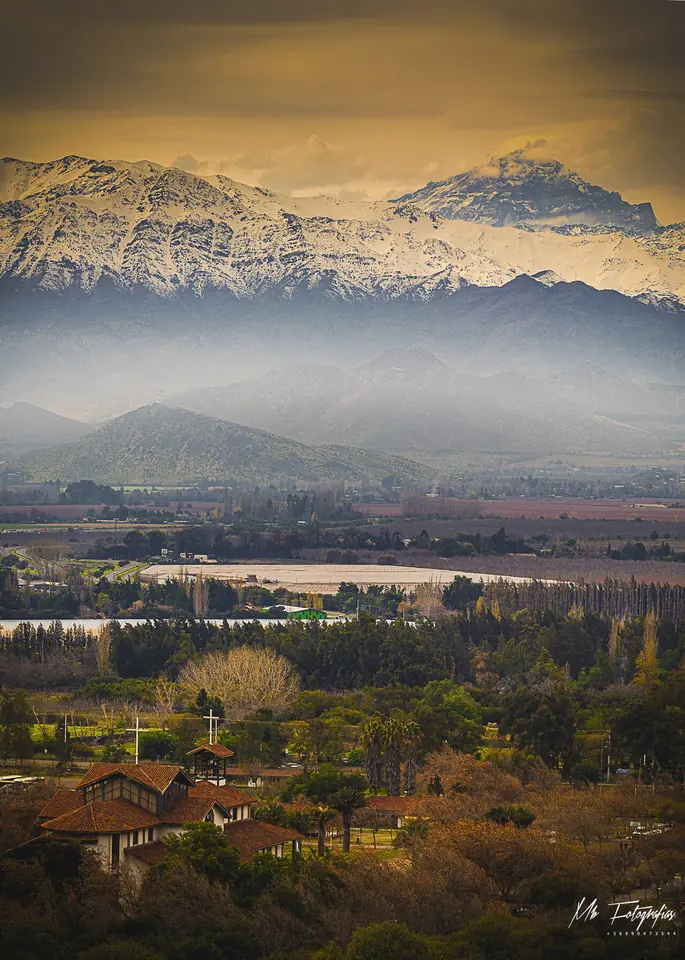
Symbols of St. Teresa of the Andes in art
Because Teresa lived in the age of photography, most of her images go back to a few real photographs. To recognize her in a church or on a holy card, look for:
- The Discalced Carmelite habit: a brown habit, a cream-white mantle and a veil, the dress of the Order of Our Lady of Mount Carmel. It marks her as a daughter of St. Teresa of Ávila and St. John of the Cross.
- A crucifix held against her heart: taken straight from her best-known photograph, near the top of this page. It speaks of the love of Christ crucified at the center of her short life.
- A young face: she is always shown at about nineteen, which sets her apart from older Carmelite saints in the same habit.
- The Andes: many Chilean images place snowy peaks behind her, a nod to her name and to her shrine under Aconcagua.
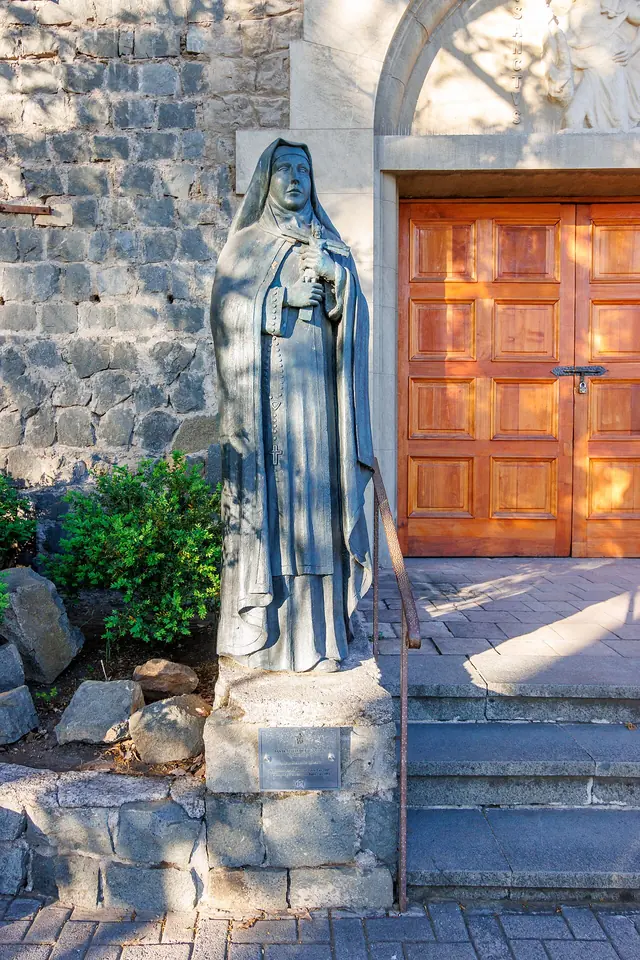
Statues in Chile, like the one below, usually follow the same photograph: a slender young nun, the crucifix held in both hands, eyes lowered or lifted in prayer.
Her shrine and feast day
In 1987, after the beatification, the Carmelite community moved from Los Andes to a new monastery and shrine at Auco, in the municipality of Rinconada de Los Andes, and took her remains with them. The Vatican biography notes that her body is venerated there "by the thousands of pilgrims who seek in her and find guidance, light and a direct way to God." The shrine is one of the most visited places of pilgrimage in Chile.
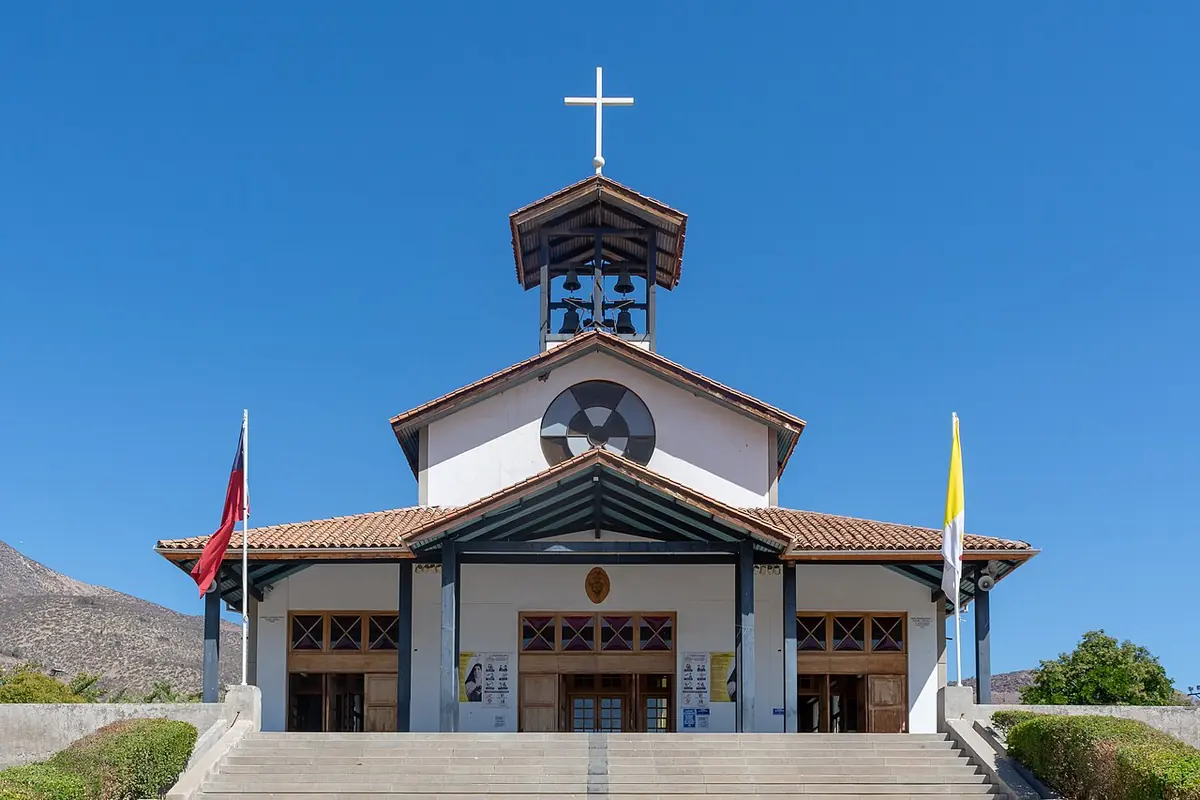
Her place of rest before the move is still honored in the old monastery at Los Andes.

The Roman Martyrology lists her on April 12, the day of her death. The Discalced Carmelites keep her memorial on July 13, her birthday, and it is a feast in their houses in Chile, where she is widely celebrated on that day. Look for both dates on our feast days calendar.

Prayer to St. Teresa of the Andes
The Carmelite Orders pray this collect on her feast, from their Proper of the Liturgy of the Hours (1993):
God of mercy, joy of the saints, you set the young heart of Saint Teresa ablaze with the fire of virginal love for Christ and for His Church; and even in suffering made her a cheerful witness to charity. Through her intercession, fill us with the delights of your Spirit, so that we may proclaim by word and deed the joyful message of your love to the world. We ask this through our Lord Jesus Christ, your Son, who lives reigns with you and the Holy Spirit, God, for ever and ever.
The same office gives a reading from her own spiritual writings, which begins:
Jesus alone is beautiful; He is my only joy. I call for Him, I cry after Him, I search for Him within my heart.
Let us ask St. Teresa of the Andes to pray for the young people we love, for those searching for their vocation, and for families waiting on a son's or daughter's choice, as her own father once did. In one of her letters, quoted by John Paul II at her canonization, she promised that her love did not end at the convent door: "When I love, it is forever. A Carmelite never forgets. From her little cell she accompanies the souls she loved in the world" (our translation).
Frequently asked questions
Who was St. Teresa of the Andes?
She was Juana Enriqueta Josefina of the Sacred Hearts Fernández Solar, called Juanita, born into a well-off Catholic family in Santiago, Chile, in 1900. She entered the Carmelite monastery at Los Andes in May 1919, took the name Teresa of Jesus, and died there on April 12, 1920, at 19. She is Chile's first canonized saint.
When is St. Teresa of the Andes' feast day?
The Roman Martyrology lists her on April 12, the day she died. The Discalced Carmelites celebrate her on July 13, her birthday, and that is the day most Chileans keep.
What miracles are attributed to St. Teresa of the Andes?
Two cures were approved. For her beatification, the recovery of Héctor Uribe Carrasco, a volunteer firefighter in Santiago who was electrocuted and given up for dead in 1983. For her canonization, the recovery of Marcela Antúnez Riveros, a schoolgirl pulled lifeless from a swimming pool in 1988, whom doctors expected to have permanent brain damage.
What is St. Teresa of the Andes the patron saint of?
Pope John Paul II presented her as a model for young people, and Chilean youth have adopted her as their own; tens of thousands walk to her shrine each October. She is also loved throughout Chile as the country's first saint.
Where is St. Teresa of the Andes buried?
In the crypt of the Shrine of St. Teresa of Los Andes at Auco, in Rinconada de Los Andes, about 90 kilometers north of Santiago, where the Carmelite nuns moved in 1987.
Keep exploring
Sources
- Vatican: Teresa de Jesús "de los Andes" (1900–1920), biography
- Pope John Paul II, Homily for the canonization of Claudine Thévenet and Teresa of Jesus of Los Andes, March 21, 1993
- Catholic.net: Teresa de Los Andes, Santa (with the two miracles)
- Proper of the Liturgy of the Hours of the Carmelite Orders (1993), July 13: St. Teresa of Jesus Fernández Solar (Carmelite Quotes)
- ACI Prensa: 30 años de la peregrinación al Santuario de Santa Teresa de Los Andes
- Carmel of the Annunciation, Thicket Priory: St Teresa of the Andes