St. Begga of Andenne
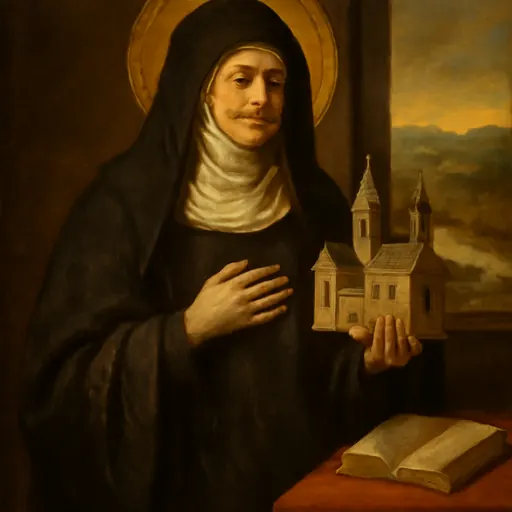
St. Begga (about 615–693) was a Frankish noblewoman, daughter of Pepin of Landen and St. Itta and older sister of St. Gertrude of Nivelles. She married Ansegisel, son of St. Arnulf of Metz, and through her son Pepin of Herstal became an ancestor of Charlemagne. Widowed, she founded the monastery of the seven churches at Andenne on the Meuse. Her feast day is December 17.
Who was St. Begga?
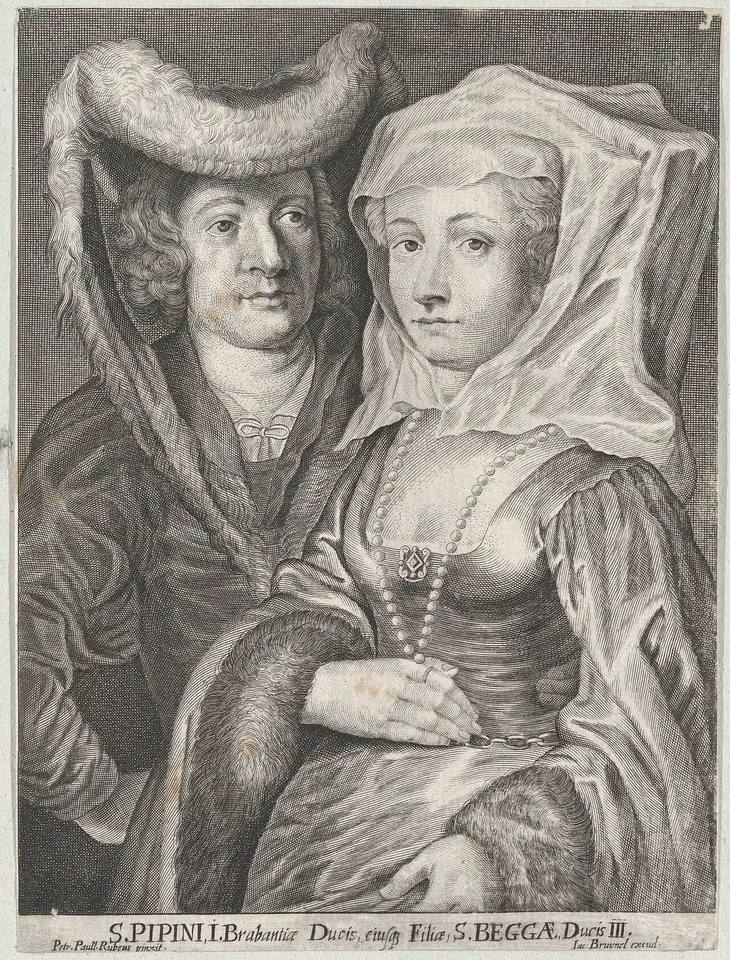
St. Begga was a Frankish noblewoman of the 7th century, a wife, mother and widow who ended her life as the abbess of a monastery she founded at Andenne, on the Meuse River in present-day Belgium. She was born about 615, a daughter of Pepin of Landen, the powerful mayor of the palace under the Frankish kings, and of his wife, St. Itta. Her younger sister was St. Gertrude of Nivelles.
Where Gertrude refused marriage, Begga married. Her husband was Ansegisel, a son of St. Arnulf of Metz, and among their children was Pepin of Herstal. Through him Begga became the grandmother of Charles Martel and the great-great-grandmother of Charlemagne. The Roman Martyrology remembers her in one line: "the blessed Widow Begga, sister of holy Gertrude."
We should be honest about how little we know. The Christian History Institute notes that four hundred years passed before anyone wrote her Life, and a 17th-century biography embellished it further. What follows keeps to what the sources agree on, and labels the legends as legends.
The life of St. Begga
Daughter of Pepin, wife of Ansegisel
Begga grew up in the family that would rule the Franks. Her marriage joined the houses of Pepin and Arnulf, the two great families of Austrasia. She and Ansegisel had three children. Sometime before 679 Ansegisel died; some accounts say he was killed by an enemy named Gundewin, others that he died in a hunting accident.
Pilgrim and abbess
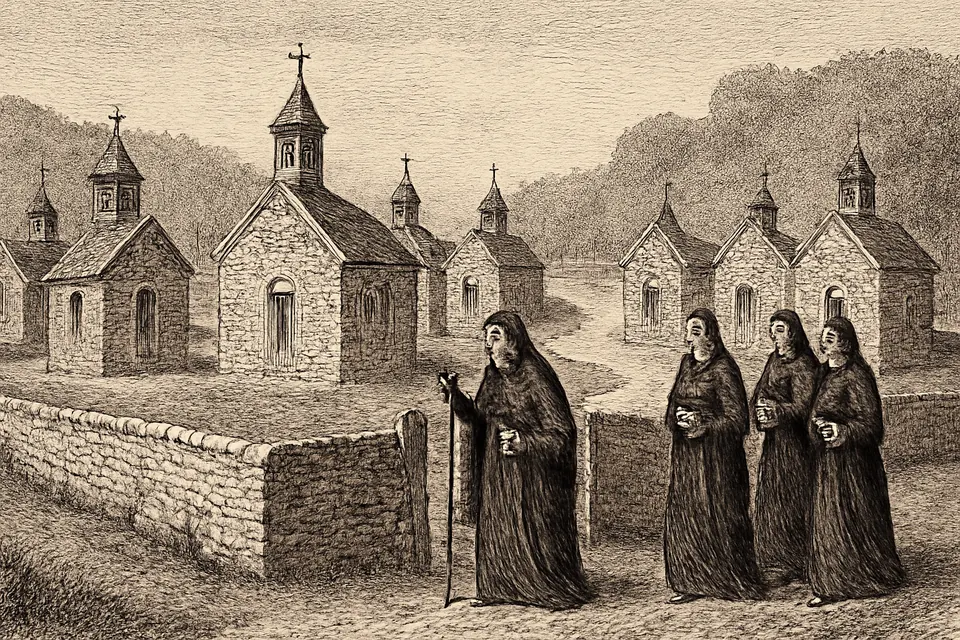
As a widow Begga made a pilgrimage to Rome, perhaps around 679, and prayed at its great churches. Late in life she founded a monastery at Andenne, on the Meuse below Namur, and became its abbess. Inside its enclosure she built seven churches, in imitation, the Christian History Institute suggests, of the churches she had visited in Rome.
To start the new community, nuns came from her sister's abbey at Nivelles. Gertrude had died more than thirty years before, but the sisters brought her customs, which they had learned from the Irish monks at Nivelles, and books. They also brought a piece of Gertrude's bed as a relic.
Begga died at Andenne on December 17, 693, at about seventy-eight, and was buried there.
Miracles and legends of St. Begga
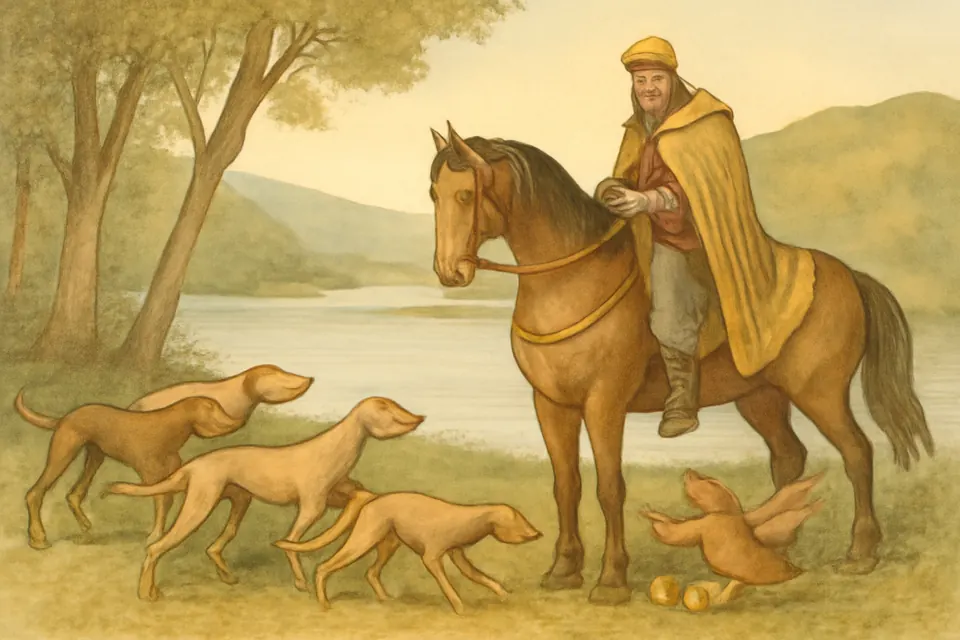
- The hen and seven chicks: traditional. Andenne's legend tells that her son Pepin of Herstal was hunting on the right bank of the Meuse when his dogs stopped before a hen sheltering her seven chicks. Begga read it as one of the signs that God wanted a monastery and seven churches on that spot.
- Gertrude's bed: traditional. The piece of Gertrude's bed brought from Nivelles was said to work cures, and it was later adorned with gold and precious stones.
Why St. Begga is the patron of the beguines
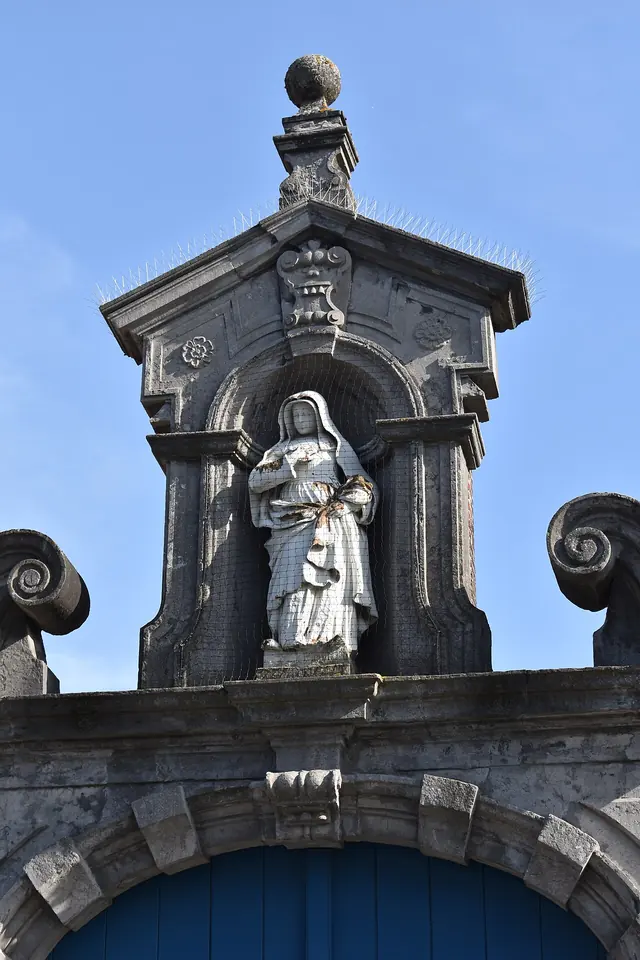
The beguines were communities of lay women who lived together in prayer and works of mercy without taking lifelong vows, and they spread across the Low Countries from about 1200. In time some of them came to claim Begga as their foundress and composed liturgies in her honor. The Catholic Encyclopedia lists her name as one possible origin of the word "beguine" but calls that tradition doubtful, and history does not support her founding a movement that began five centuries after her death. Still, the beguines chose well: a widow who turned her household into a house of prayer. They keep her as their patron, and her statue stands above the gateway of the beguinage of Lier.
Symbols of St. Begga in art
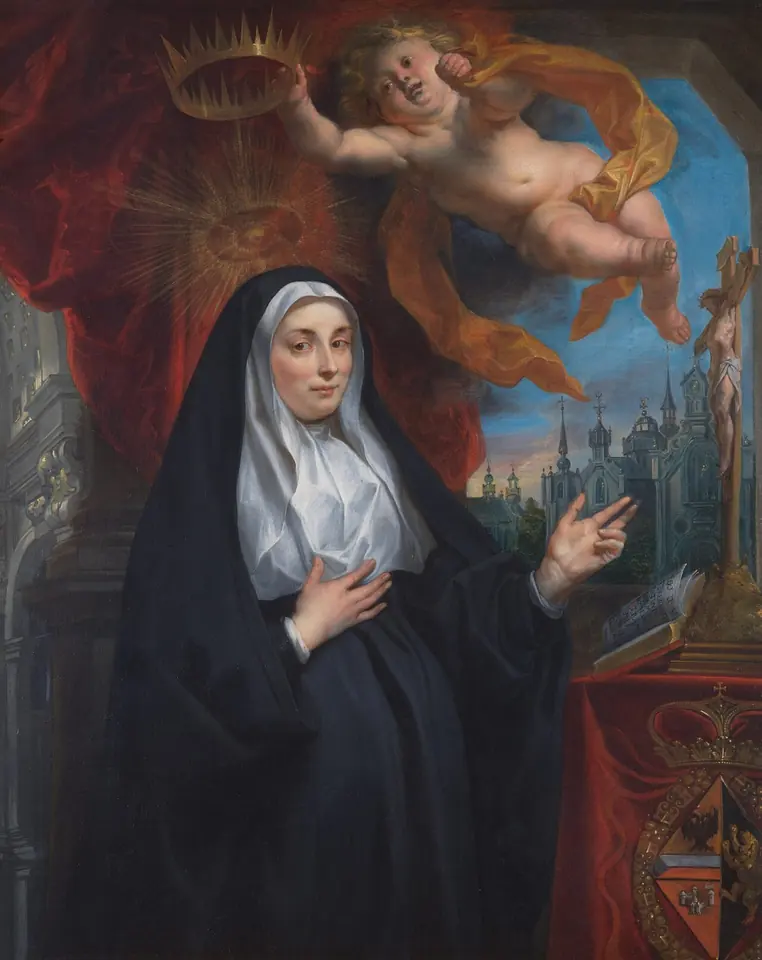
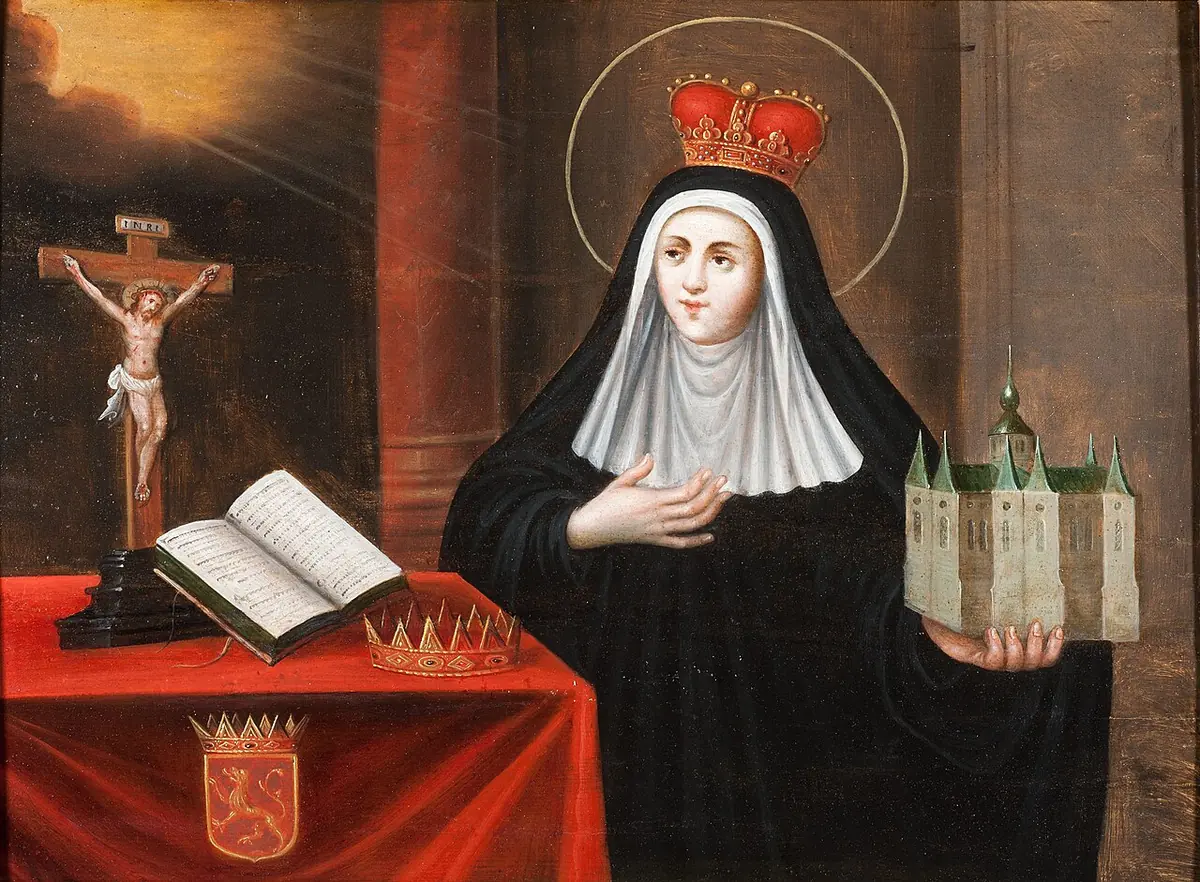
In Flemish painting Begga wears the black habit and white veil of an abbess. A crown, lying beside her or held by an angel, recalls her royal family and the world she left. She often holds a model of a church, sometimes crowded with towers, for the seven churches of Andenne. The painting in the KU Leuven collection puts all of these together with a crucifix, an open book and her family's coat of arms. In Andenne she may be shown with the hen and seven chicks.
Feast day and Andenne
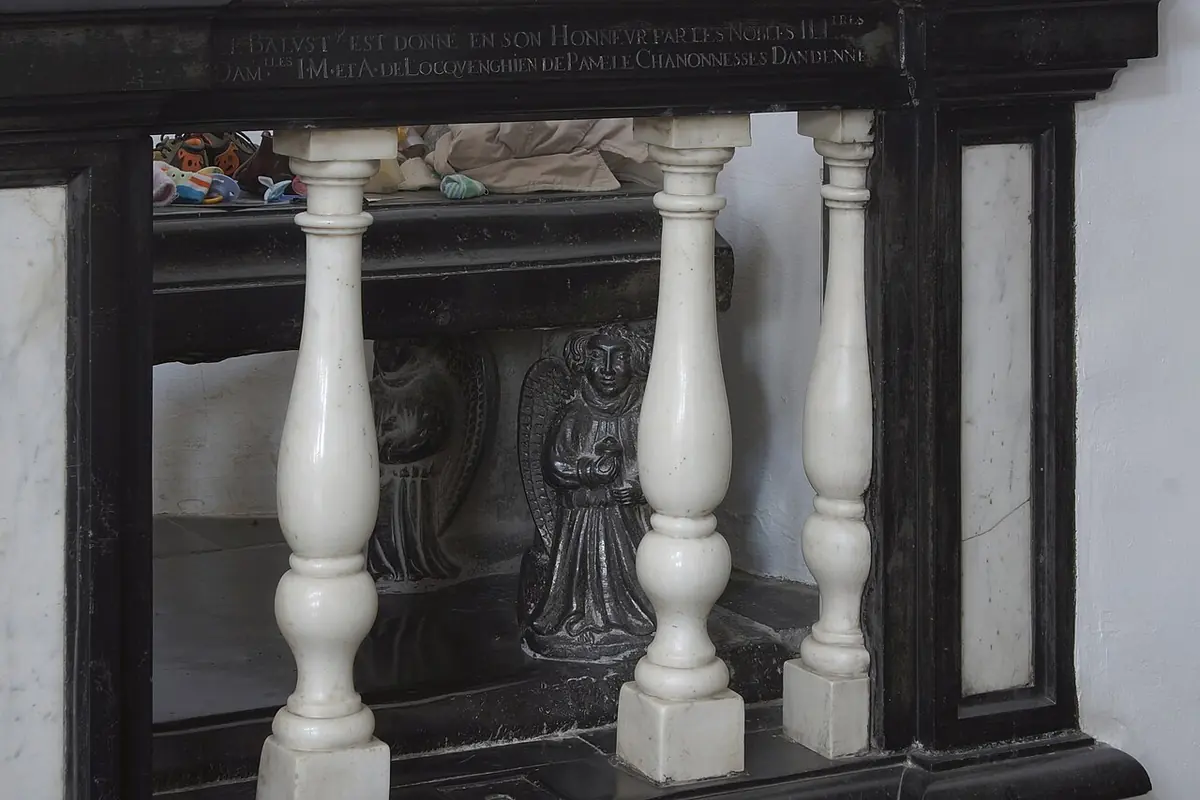
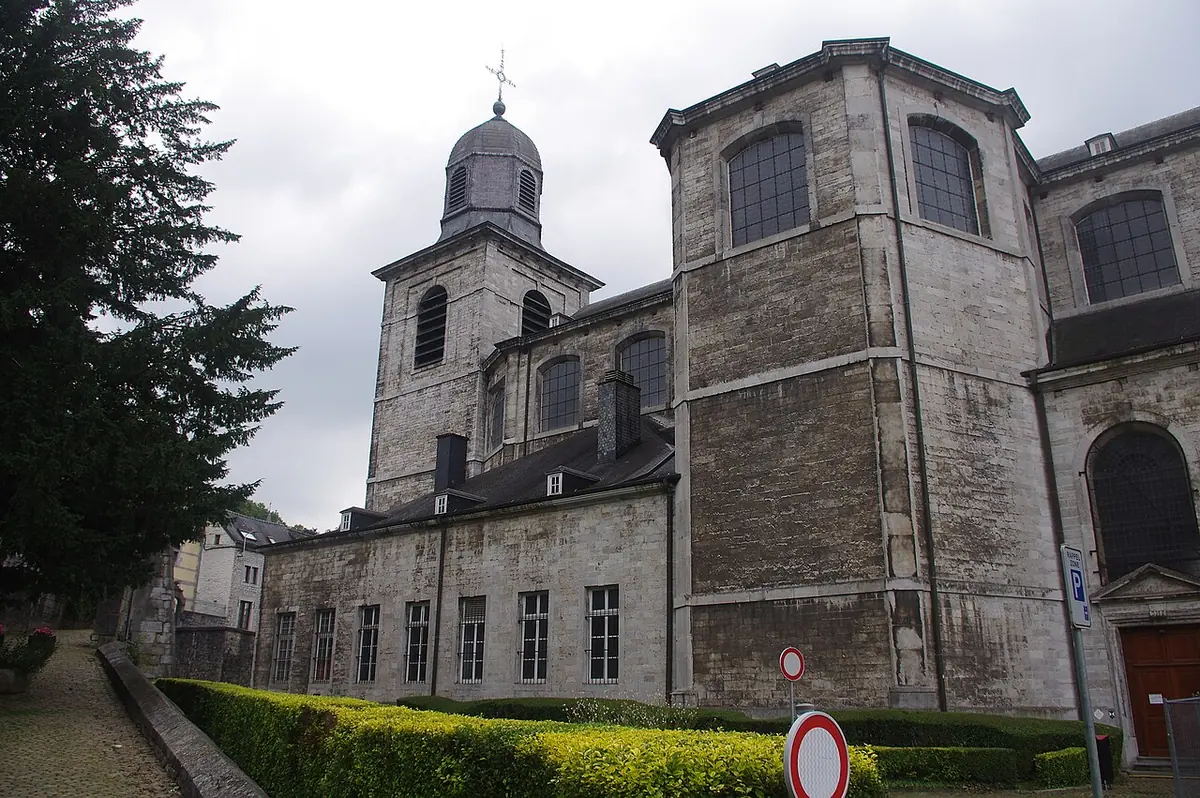
We keep her feast on December 17. The seven churches of Andenne fell into ruin and were pulled down in the 18th century, with the permission of Empress Maria Theresa, and their stones went into the present Collegiate Church of St. Begga, built from 1764 to 1778 to designs by Laurent-Benoît Dewez. Restored over three and a half years, it reopened in February 2025. In a small apse chapel behind her altar, pilgrims pray near the black marble bench on which, as the story goes, her coffin once rested, and her relics are kept in a gilded shrine in the church's treasury.
See more saints of mid-December on our feast days page.
Prayer to St. Begga
No traditional English prayer to St. Begga has come down to us, though printed Flemish litanies of St. Begga survive from the 18th and 19th centuries. We can ask her prayers in our own words, as a woman who knew marriage, motherhood, grief and, at the end, the cloister.
Let us ask St. Begga to pray for widows, for mothers and grandmothers who pass on the faith to their families, and for all who start over late in life.
Frequently asked questions
Who was St. Begga?
A daughter of Pepin of Landen, mayor of the palace of Austrasia, and of St. Itta. She married Ansegisel, son of St. Arnulf of Metz; their son was Pepin of Herstal, the grandfather of Charles Martel. After her husband's death she became a nun and founded the abbey of Andenne, where she died on December 17, 693.
Did St. Begga found the beguines?
Probably not. The beguines appeared in the Low Countries around 1200, five centuries after her death. The Catholic Encyclopedia mentions the tradition that their name comes from her, but calls it doubtful and gives other likely origins. The beguines adopted her as their patron, and her statue stands over the gate of the beguinage of Lier.
What is the legend of the hen and the seven chicks?
Andenne tells that Begga's son, Pepin of Herstal, was hunting on the right bank of the Meuse when his dogs stopped before a hen guarding her seven chicks. Begga took it as one of the signs that God wanted a monastery with seven churches on that spot. The fountain on the Place du Chapitre was once called the Fountain of the Chicks.
How is St. Begga related to Charlemagne?
She was his great-great-grandmother. Her son Pepin of Herstal was the father of Charles Martel, whose son Pepin the Short was Charlemagne's father.
Keep exploring
Sources
- Diocese of Namur, Communications (March 2025): Réouverture de la collégiale Sainte-Begge à Andenne. The hen and seven chicks, the seven churches, her tomb chapel, shrine and the reopening of the church in 2025
- Christian History Institute: Despite Royal Connections, Begga's Bio Is Full of Gaps. Her family, the late Life written four centuries after her death, the nuns from Nivelles and the relic of Gertrude's bed
- Catholic Encyclopedia (1907): Beguines and Beghards. The doubtful tradition linking the beguines' name to her
- Roman Martyrology, December 17 (English translation, Divinum Officium project)