St. Eulalia of Mérida
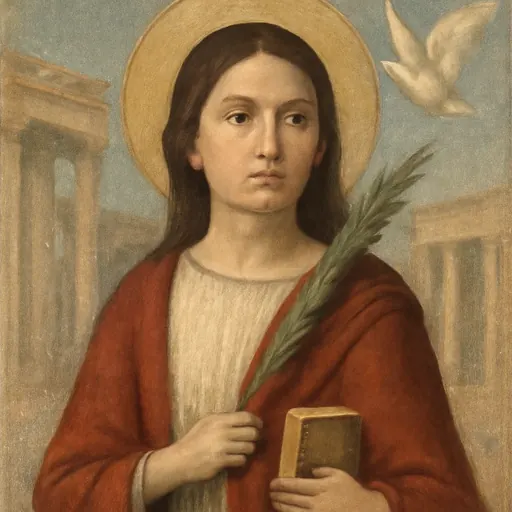
St. Eulalia of Mérida was a girl of about twelve who was martyred at Mérida in Roman Spain around 304, in the persecution of Diocletian and Maximian. The poet Prudentius sang how a white dove rose from her lips as she died and snow covered her body. She is the patron of Mérida and Oviedo, and her feast day is December 10.
Who was St. Eulalia of Mérida?
St. Eulalia of Mérida was a Christian girl of about twelve who gave her life for Christ at Augusta Emerita, the Roman capital of Lusitania and today's Mérida in western Spain, around the year 304. That was the Great Persecution of the emperors Diocletian and Maximian. She became the most beloved martyr of Spain, and her story was told across Europe through the hymn the Spanish poet Prudentius wrote for her about ninety years later. We keep her feast on December 10.

Her story, as Prudentius tells it
Nearly everything we know comes from the third hymn of Prudentius's Peristephanon, the "Book of Crowns" he wrote around 400 in honor of the martyrs. It is a poem, not a court record, and it tells her story the way the Christians of Mérida were telling it in his day. With that in mind, here is what he says. (The translations from his Latin are ours.)
A girl who would not hide
Eulalia came of a noble family, "noble in birth, nobler in her death," as Prudentius begins. She was twelve years old. Even as a little girl she had no interest in toys, amber or golden necklaces; she was serious and modest beyond her years. When the order came that Christians must burn incense to the gods, her mother hid her at a country estate far from the city so that the eager child would not run to her death.
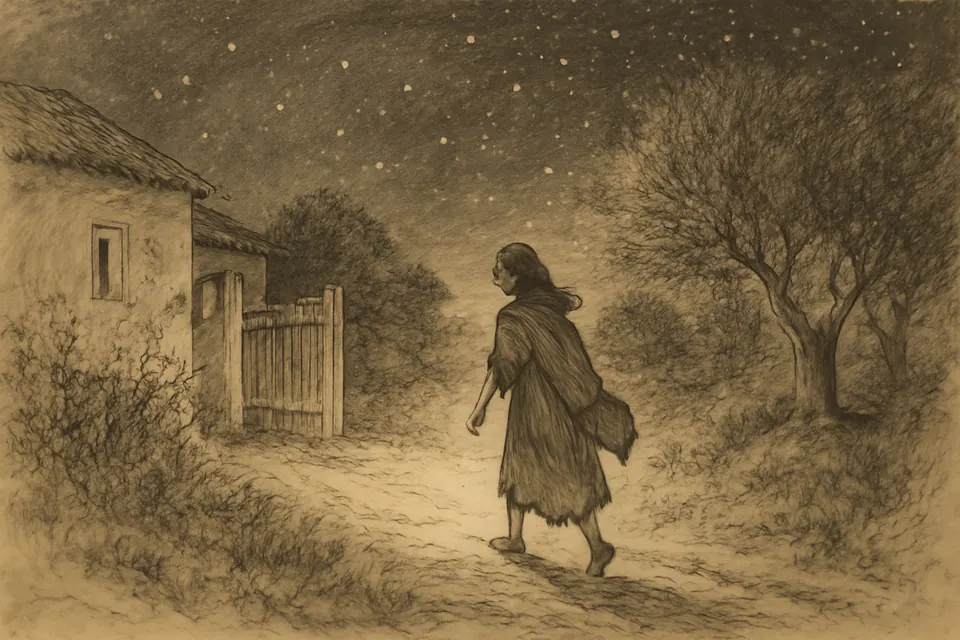
Eulalia would not stay hidden. One night she opened the gates without anyone seeing and set off across country, her feet torn by thorns and rough ground. Prudentius says she was not alone: a company of angels went with her, and though the night was dark, she had a light to lead her, as the pillar of fire led Israel out of Egypt.
Before the judge
She walked many miles before dawn and in the morning went straight to the governor's tribunal. Standing among the officials, she cried out against the folly of destroying souls and denying the one God. She declared herself a Christian and an enemy of the idols, and threw down a famous challenge: "Isis, Apollo, Venus nihil est, / Maximianus et ipse nihil", Isis, Apollo and Venus are nothing, and Maximian himself is nothing too.
The judge tried to win her back. Think of your weeping family, he said, of the marriage that awaits you. All you need do is touch a little salt and a few grains of incense with your fingertips, and all this pain will pass you by. Eulalia's answer was to spit in his face, scatter the idols and kick over the sacrificial cake.
Her martyrdom
Two executioners tore her sides with iron hooks. Eulalia counted the wounds as they were made. In Prudentius's poem she says they are letters writing Christ's name on her body: "See, Lord, you are being written on me." Then they set torches to her sides. Her long hair, which had fallen over her shoulders to cover her modesty, caught fire, and the girl, longing to die quickly, opened her mouth and drank in the flame.
The miracles of St. Eulalia: the dove and the snow
Two wonders mark her death in the poem. Both are traditional: they come to us from Prudentius's hymn, the oldest account we have, written about ninety years after her death.
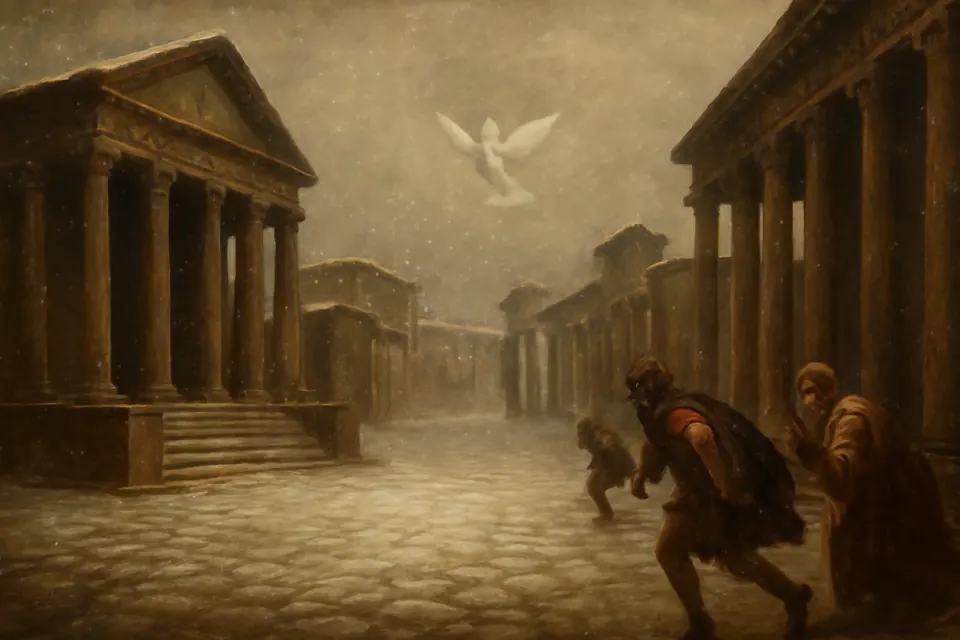
At the moment she died, Prudentius writes, a dove "whiter than snow" was seen to leave her mouth and rise toward the stars; it was Eulalia's spirit. The executioner saw it, was struck with terror and fled, and the lictor ran after him. Then winter sent snow. It fell over the whole forum and covered the martyr's body where it lay in the cold, "like a little linen cloak." The poet says that since the tears of mourners could not reach her, the elements themselves held her funeral at God's command.
One Eulalia or two?
Barcelona honors its own girl martyr Eulalia on February 12, with a story very like this one. Some critics have suspected the two are one saint. The Catholic Encyclopedia defends two distinct martyrs. Each had her own church, calendar entry and bishop caring for her shrine by the seventh century: Bishop Oroncius of Mérida founded a convent beside his martyr's basilica in 651, and Bishop Quiricus of Barcelona asked to be buried near his. We honor them as two, and you can read about the other on our page for St. Eulalia of Barcelona.
Where St. Eulalia is honored
Prudentius already describes her tomb at Mérida, beside the Guadiana river, in a church shining with marble and gilded ceilings, where pilgrims and locals came to venerate her bones. He ends by asking boys and girls to bring violets and crocuses, flowers that even a Spanish winter grants, to heap on her altar. The Basilica of Santa Eulalia still stands at that place.

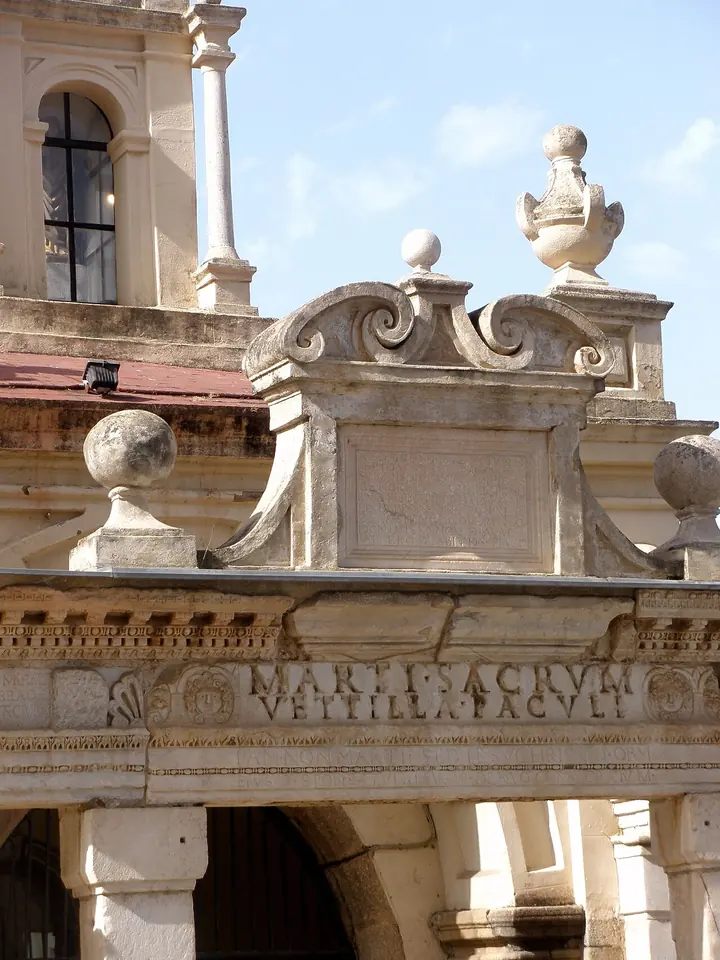
In front of the basilica is a small shrine known as the Hornito, "the little oven," which tradition connects with the fire of her martyrdom. It was built with stones from a Roman temple, and its cornice still bears a Latin dedication to Mars.
Her relics left Mérida in the eighth century. Catholic Culture's notes for her feast say they were carried to Oviedo in the north by King Silo in 780, and that she was named patron of Oviedo in 1639. They rest in a silver casket in her own chapel in Oviedo Cathedral.
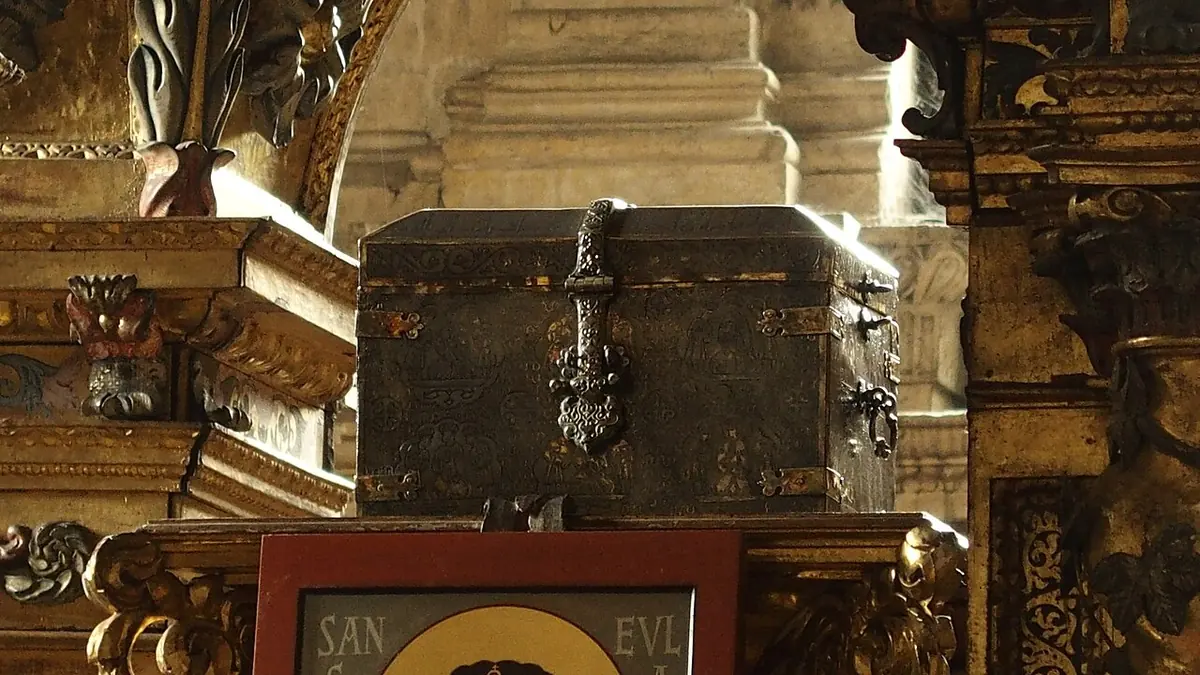
Why St. Eulalia is the patron saint of Mérida and Oviedo
Mérida is her birthplace and the place of her martyrdom and tomb; Prudentius already calls her the glory of the city she "adorns with her bones." Oviedo became her second home when her relics were brought there, and the city took her as patron in 1639.
Symbols of St. Eulalia of Mérida in art
Painters show Eulalia as a young girl or young woman with the martyr's palm. Her most personal sign is the dove, for the spirit Prudentius saw rise from her lips, and sometimes the snow that covered her. She may hold a torch, as in the Seville painting above, for the flames that killed her, or a cross, sometimes X-shaped, as in some nineteenth-century Spanish prints. A book stands for her faith. Because the Barcelona Eulalia shares most of these signs, look for a label, a local setting, or the dove and snow to know which one you are seeing.
Prayer to St. Eulalia of Mérida
The oldest prayer to her is the one Prudentius closes his hymn with: let us venerate her bones and the altar set above them, for she lies beneath the feet of God and, moved by our song, looks kindly on her people. There is no fixed modern prayer in standard prayer books, so we ask her help simply, in our own words.
St. Eulalia of Mérida, brave child of Christ, pray for the young people of our day, that they may never be ashamed of the Lord, and pray for all who suffer for their faith.
Frequently asked questions
When is the feast of St. Eulalia of Mérida?
December 10, in the Roman Martyrology and the Orthodox calendar. Don't confuse her with St. Eulalia of Barcelona, kept on February 12.
Are St. Eulalia of Mérida and St. Eulalia of Barcelona the same person?
The Church honors them as two martyrs. Their stories are very similar, and some scholars have suspected one became two, but the Catholic Encyclopedia points to separate churches, calendars and bishops caring for each shrine by the seventh century.
Where are the relics of St. Eulalia of Mérida?
In Oviedo Cathedral in northern Spain, in a silver casket in her own chapel. They were carried there from Mérida in the eighth century, and in 1639 she was named patron of Oviedo.
Why is St. Eulalia shown with a dove?
Because Prudentius, writing about ninety years after her death, says a dove whiter than snow flew from her mouth as she died, and that it was her spirit rising to heaven.