St. Adelaide of Italy, Holy Roman Empress
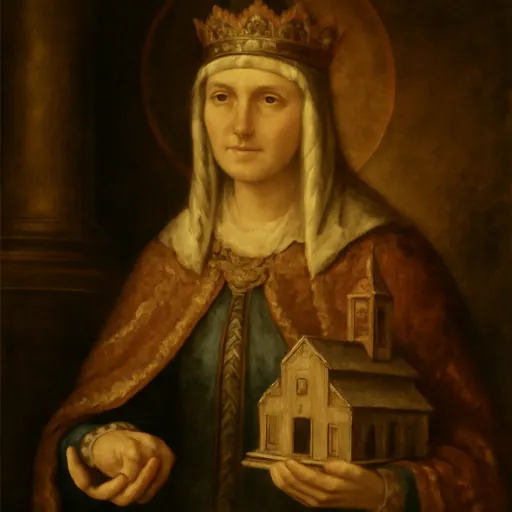
St. Adelaide of Italy (about 931–999) was a Burgundian princess who became queen of Italy, married Otto the Great and was crowned Holy Roman Empress in 962. She ruled as regent and spent her wealth on monasteries and the poor. Her feast day is December 16, and she is invoked by widows, stepparents and people in difficult family situations.
Who was St. Adelaide of Italy?
St. Adelaide of Italy was a tenth-century queen and empress whose life reads like a romance, and who became a saint through the long patience of her widowhood. Born about 931, the daughter of King Rudolph II of Burgundy, she was married young to the king of Italy, widowed at nineteen, imprisoned, rescued, and then married to Otto the Great, with whom she was crowned in Rome in 962. After his death she suffered from the jealousy of her own family, twice withdrew from court, and finally ruled the empire as regent for her grandson. We keep her feast on December 16.
Her friend St. Odilo, abbot of Cluny, wrote her life soon after she died. Most of what we know comes from him, and it is a life written by a man who loved and admired her. The main events are well attested in the chronicles of the time.
Queen of Italy and prisoner
A peace treaty of 933 between her father and Hugh of Provence promised the little Adelaide in marriage to Hugh's son Lothair. The wedding took place in 947, and Lothair became king of Italy. He died in 950. The Catholic Encyclopedia notes that Berengar, Marquis of Ivrea, who seized the Italian crown, was suspected of poisoning him.
Berengar wanted the young widow married to his son Adalbert, which would have strengthened his claim. She refused. In April 951 she was locked up, alone and closely guarded. The 1907 Catholic Encyclopedia places her prison in a castle on Lake Garda; the German national biography says Como. Either way, she was free by August.

The escape
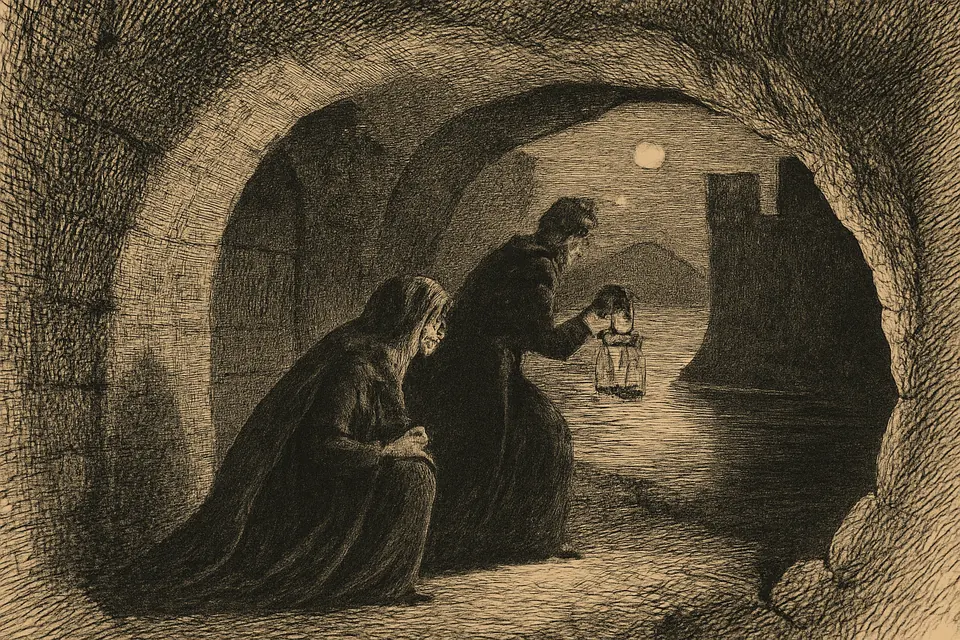
The story told in the older lives is a dramatic one. A priest named Martin dug a passage, and she slipped out through it and hid in the woods and marshes, where he fed her on the fish he caught in the lake. Then Alberto Azzo, lord of Canossa, took her into his castle. The details of the tunnel and the fish belong to the colorful tradition; the escape itself and the refuge at Canossa are history.
Empress beside Otto the Great
The Italian nobles had already invited Otto, king of the Germans, to come south against Berengar. He met Adelaide at Canossa and married her at Pavia on Christmas Day, 951. They had several children, among them the future Otto II and Mathilda, who became abbess of Quedlinburg. On February 2, 962, Pope John XII crowned Otto and Adelaide emperor and empress in Rome.
Her people loved her. The Catholic Encyclopedia says that in Germany "she was the idol of her subjects" while Otto lived, and the Italians welcomed Otto more readily because of her.
Widowhood, exile and regency
Otto died in 973. Under her son Otto II, Adelaide's troubles began. Her daughter-in-law, the Byzantine princess Theophano, resented her, and some at court complained of how much she gave away to the poor. She withdrew to Pavia until St. Majolus, abbot of Cluny, made peace between mother and son.
When Otto II died in 983, leaving a small boy as heir, the rivalry flared up again and Adelaide was pushed out a second time. Theophano died in 991, and Adelaide was called back to govern as regent for her grandson Otto III. The Catholic Encyclopedia sums up her rule: she took no revenge on her enemies, "her court was like a religious house," and she built churches and monasteries and worked for the conversion of the pagan peoples to the north.

Coins of those years were struck with both names, Otto and Adelheid, a sign of her real share in the government.

Her holy death at Selz
Her favorite foundation was the Benedictine abbey of Sts. Peter and Paul at Selz in Alsace, founded about 991. In her last year she set out for Burgundy to make peace between her nephew, King Rudolph III, and his subjects. On the way back she fell ill and died at Selz on December 16, 999, and was buried there. Pope Urban II, who reigned from 1088 to 1099, enrolled her among the saints.
The miracles of St. Adelaide
Medieval tradition tells of cures at her tomb in Selz, which drew pilgrims for centuries. These wonders are traditional: accounts that the Church never formally examined. No miracle of hers was investigated the way modern causes are. Her holiness was recognized in the older way, by the devotion of the people and the approval of the pope.
Why St. Adelaide is the patron saint of widows and stepparents
Her patronages come straight from her story. She was a widow twice and a second wife, and she became stepmother to Otto's son Liudolf from his first marriage. She knew the pain of in-law conflict for more than twenty years and spent long stretches as an exile from court. Modern patron lists name her for all of these, and for empresses and princesses. They are devotions that grew from her life, not formal designations by the Church.
Symbols of St. Adelaide in art
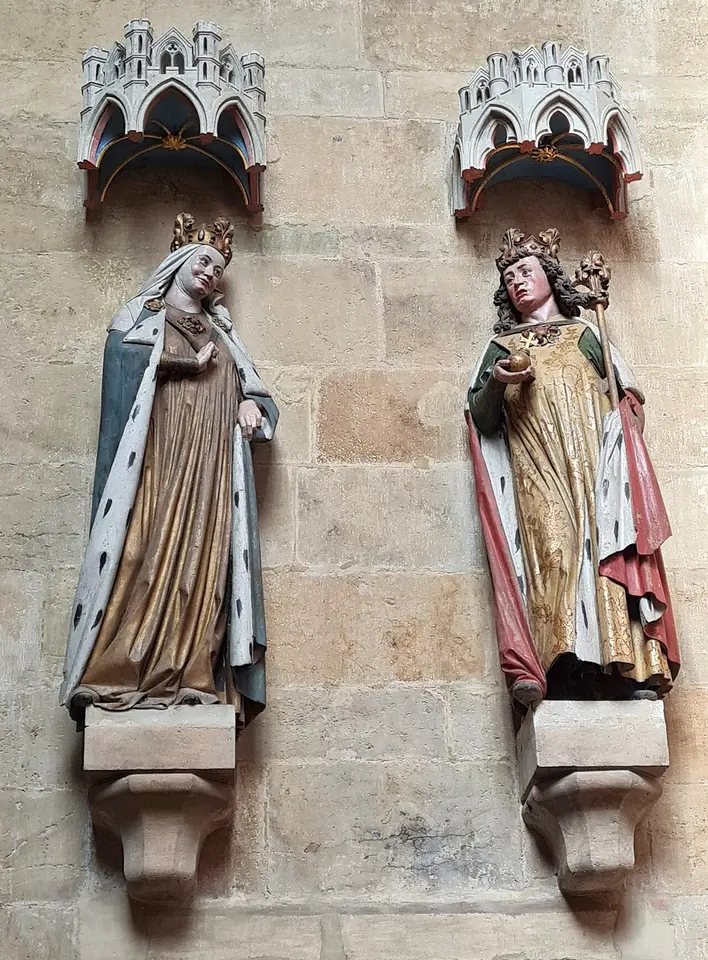
St. Adelaide is shown as a crowned queen or empress in royal robes, often with a model of a church to show the monasteries she founded. Some images give her bread or alms for the poor, and a few show a ship, recalling her flight across the lake. In German churches she often appears beside Otto, as in the thirteenth-century statues of Meissen Cathedral. Nineteenth-century French images, like Abel Terral's portrait of 1839, show her alone, reading or praying.
To tell her from other crowned women saints, look for the church model together with a companion emperor, or a name on the base: "Adelheid" in German lands.
Feast day and where she is honored
Her feast is December 16. Her abbey at Selz is long gone; the town of Seltz, on the Rhine north of Strasbourg, still honors her. In German-speaking lands she is "die heilige Adelheid," and many churches in Germany, Switzerland and Alsace carry her name. See our feast days page for the saints around her date.
Prayer to St. Adelaide
We have found no traditional prayer to St. Adelaide in the standard prayer books. Odilo's Epitaph praises her, but it is not a prayer. Ask her help simply, especially for blended families, for widows starting over, and for anyone hurt by family rivalry:
St. Adelaide, patient wife and merciful queen, pray for us and for our families.
Frequently asked questions
When is the feast of St. Adelaide of Italy?
December 16, the day she died at her abbey of Selz in Alsace in 999. She was never placed on the General Roman Calendar, but German calendars and the Benedictines have long kept her day.
What is St. Adelaide the patron saint of?
Popular patron lists name her for empresses and princesses, widows, second marriages, stepparents, in-law problems and exiles. Each comes from her life; none is a formal Church designation.
Who wrote the life of St. Adelaide?
St. Odilo, abbot of Cluny, who knew her personally. His Epitaph of the Empress Adelaide, written soon after her death, is the main early source for her life.
Was St. Adelaide really imprisoned?
Yes. After the death of her first husband, King Lothair of Italy, in 950, Berengar of Ivrea held her captive in 951 when she refused to marry his son. She escaped later that year, and Otto I married her at Pavia that Christmas.