St. Boniface of Tarsus

St. Boniface of Tarsus was, by tradition, the steward of a rich Roman woman named Aglaë. They lived in sin until both repented; she sent him east for martyrs' relics, and in Tarsus he confessed Christ and was beheaded. The Orthodox Church keeps his feast on December 19, and he is invoked against drunkenness. His story is a legend.
Who was St. Boniface of Tarsus?
St. Boniface of Tarsus is the martyr of a famous repentance story. By tradition he was the steward of a wealthy young Roman woman named Aglaë, and the two lived together in sin. She sent him east to bring home relics of the martyrs, and he came home as a martyr's relic himself, beheaded at Tarsus in Cilicia for confessing Christ. The Orthodox Church keeps his feast with St. Aglaë on December 19, and he is invoked against drunkenness. Before 1969 the Roman calendar kept him on May 14.
We should say plainly at the start: this is a legend. Baring-Gould, writing in the 1890s, judged that his Acts "may in the main be true" but are "certainly not ancient and trustworthy as a whole." The commission that revised the Roman calendar in 1969 was blunter. It called his passion omnino fabulosa, wholly legendary, and removed his feast. The Orthodox Church still celebrates him, and his church still stands on the Aventine Hill in Rome. A story need not be history to teach us something true about mercy.
The steward and his mistress
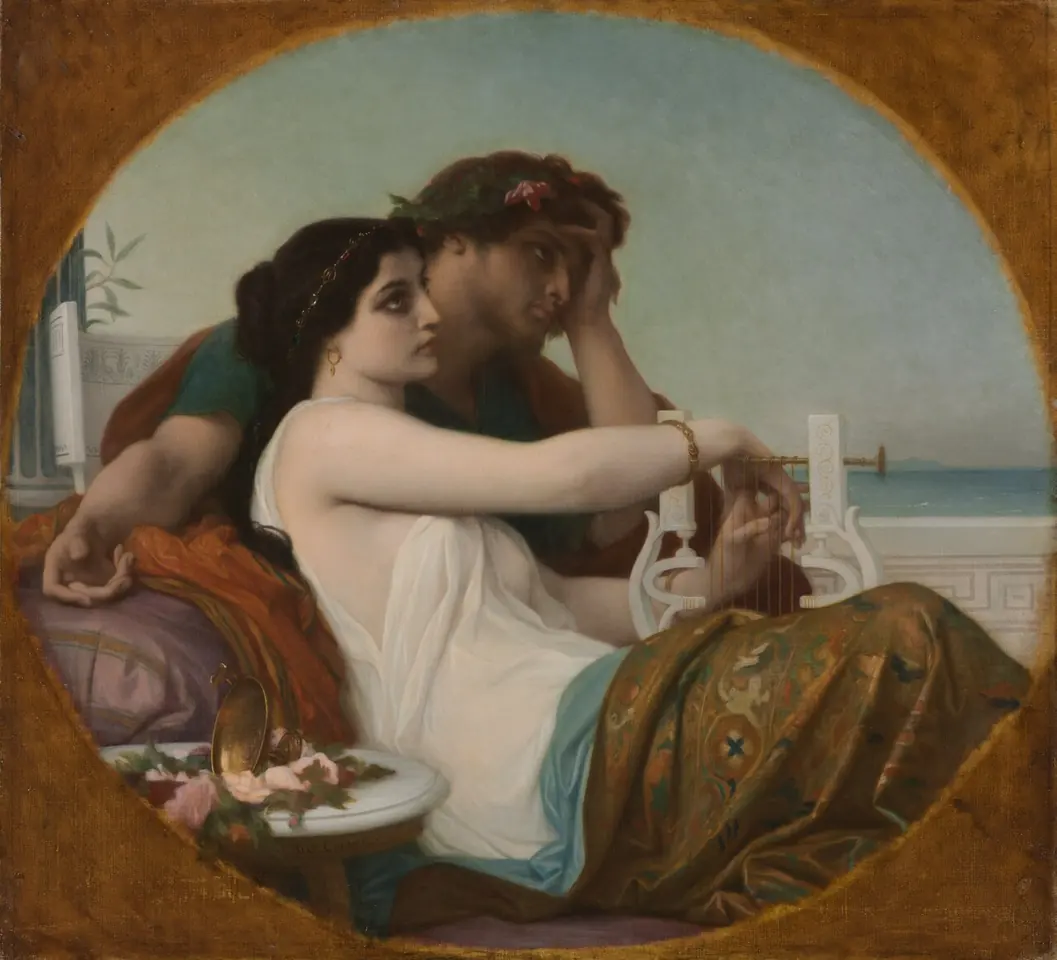
The Orthodox life tells it this way. Boniface was a slave of Aglaë and her household steward. Baring-Gould calls him "a debauched, drunken fellow." Yet even in their sin, both "felt the sting of conscience." Aglaë learned that whoever keeps and honors the relics of the martyrs receives great help toward salvation, so she sent Boniface to the East, where the persecution was fierce, to bring back the relics of a martyr who might become their protector.
As he left, Boniface laughed and asked her, "My lady, if I do not find any relics, and if I myself suffer for Christ, would you accept my relics with reverence?" Aglaë scolded him for joking about a holy errand. On the long road he thought about her words, and about whether he was worthy even to touch a martyr's bones.
Martyrdom at Tarsus
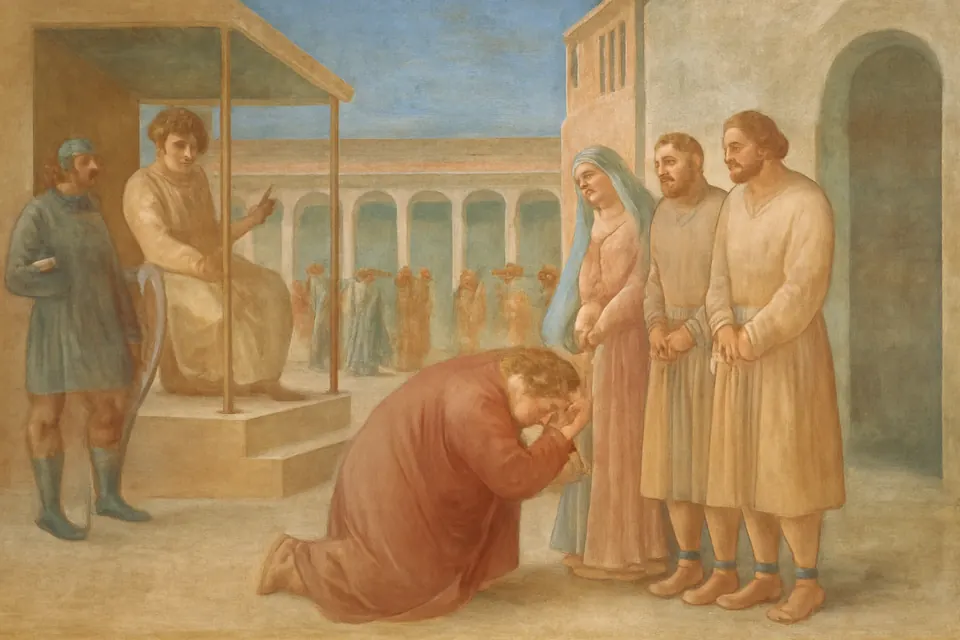
At Tarsus, the life continues, Boniface left his companions at an inn and went to the city square, where Christians were being tortured. Struck by their courage and by the grace on their faces, he embraced them and kissed their feet and asked them to pray that he might suffer with them. When the judge asked who he was, he answered, "I am a Christian," and refused to sacrifice to the idols.
The miracles of St. Boniface of Tarsus
Everything in this section is traditional, from his legendary passion and the Orthodox life.
- Unharmed by molten tin (traditional). After he was beaten and tortured, his torturers poured molten tin into his mouth, and he was not hurt. The crowd cried out, "Great is the God of the Christians!"
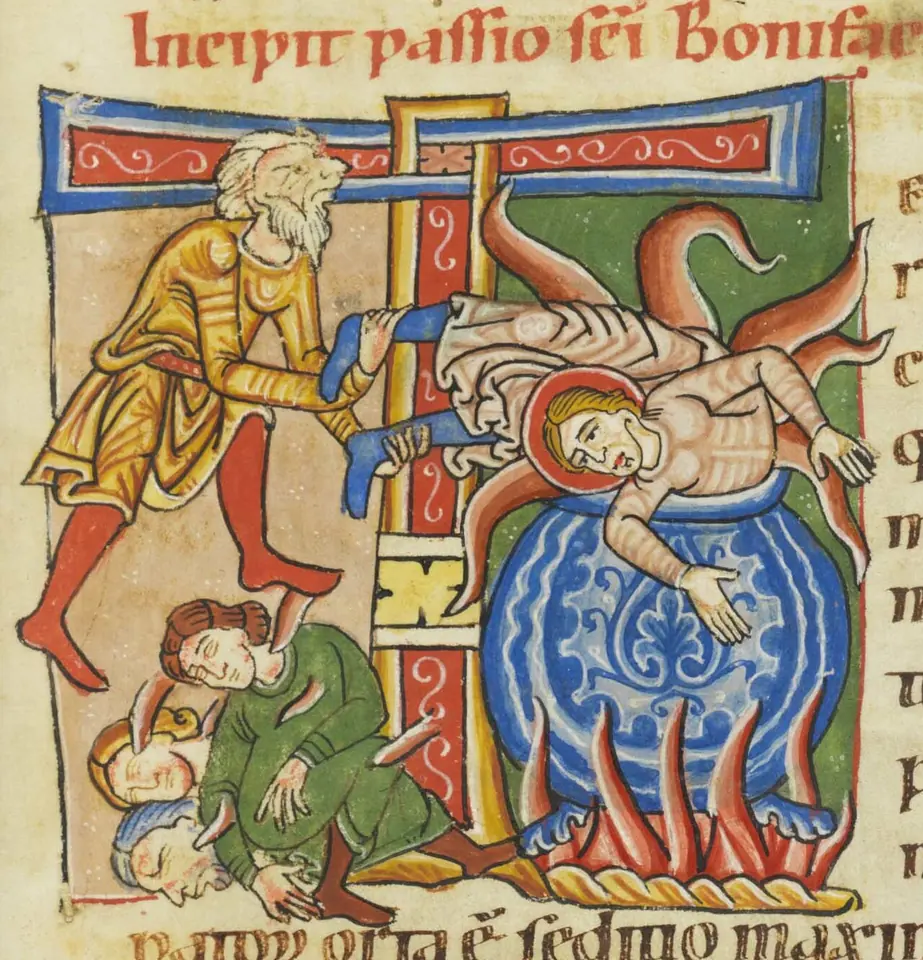
- The cauldron of pitch (traditional). The next day he was thrown into a cauldron of boiling pitch. An angel came down to him, and the pitch boiled over onto his executioners instead.
- Blood and milk (traditional). When he was finally beheaded, blood and a milky fluid flowed from the wound, and about 550 men believed in Christ.
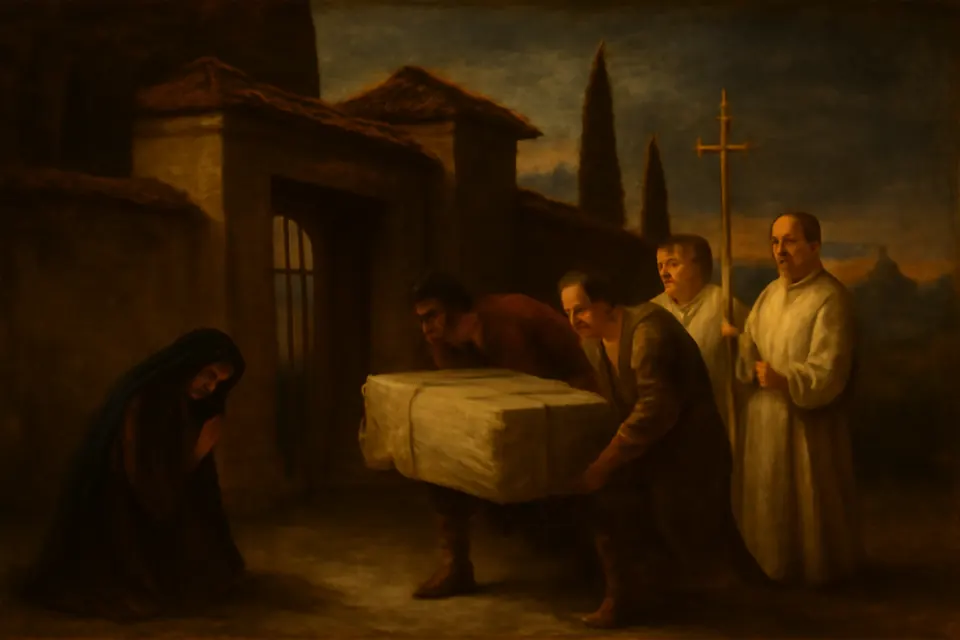
His companions waited two days at the inn and began to think he had gone off drunk somewhere. When they found a witness who led them to his body, they wept and asked his pardon. They ransomed his body and carried it back to Rome.
Aglaë receives her relics
The night before they arrived, an angel told Aglaë in her sleep to make ready to receive her former slave, now "the brother and fellow servant of the Angels." She met the relics with the clergy and built a church over his grave. Then she gave her wealth to the poor and lived fifteen years in penance in a monastery, and she was buried beside him.
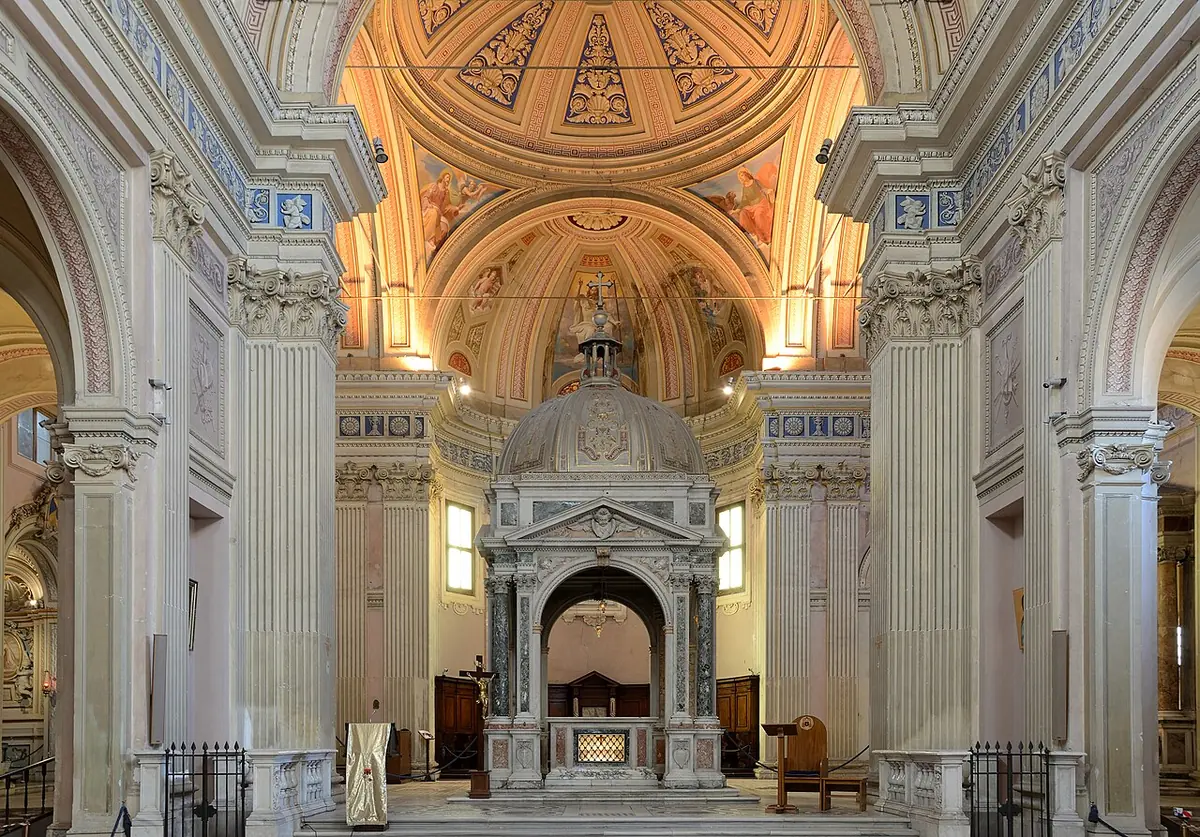
Baring-Gould places his relics in the church of St. Alexis in Rome. This is Santi Bonifacio e Alessio on the Aventine, which honors Boniface together with St. Alexius.
Where the relics of St. Boniface of Tarsus are kept: see them on the relics map →
Why St. Boniface is invoked against drunkenness
The Orthodox Church in America ends his life with these words: "We pray to Saint Boniface for deliverance from drunkenness." The reason is in the story: he was a drunkard and a sinner whose life turned around in a single moment of grace, and even his friends expected to find him in a tavern. For anyone fighting an addiction, Boniface is a sign that no one is too far gone for God.
The Ice Saints
Because his old Roman feast fell on May 14, Boniface joined St. Pancras and St. Servatius (and in some places St. Mamertus) as one of the "Ice Saints" of May 11 to 14. In the country lore of central Europe, from Switzerland to Poland and Bohemia, a late cold snap was expected on those days, and gardeners waited for the Ice Saints to pass before planting tender crops.
Symbols of St. Boniface of Tarsus in art
He is uncommon in Western art and more familiar from Russian and Greek icons. Look for:
- A young man with a cross or martyr's palm: in icons he is usually youthful, in a red cloak, holding a cross, the sign of a martyr.
- A cauldron over a fire: his ordeal in boiling pitch, as in the Weissenau Passional.
- A sword: his beheading.
- A Roman lady beside him: St. Aglaë, his companion in repentance. Nineteenth-century painters such as Cabanel liked to show the two of them before their conversion.
Feast day and prayer
We honor St. Boniface of Tarsus on December 19, the Orthodox feast he shares with St. Aglaë; older Roman missals keep a commemoration on May 14. See the feast day calendar.

We know of no traditional English prayer to him; the Orthodox Church sings his troparion on his feast. Let us ask him to pray for all who are bound by drink, and for those who love them: Holy Martyr Boniface, pray for us.
Frequently asked questions
Who was St. Boniface of Tarsus?
By tradition he was the steward and lover of a wealthy Roman woman, Aglaë. Moved to repent, she sent him to the East to bring back relics of martyrs. At Tarsus in Cilicia he saw Christians being tortured, declared himself a Christian and was beheaded. His body was brought back to Rome as the relics she had asked for.
Why is St. Boniface of Tarsus invoked against drunkenness?
The Orthodox Church in America says, "We pray to Saint Boniface for deliverance from drunkenness." His legend calls him a heavy drinker before his conversion, and his companions at first thought he had gone off drunk when he did not come back from the square in Tarsus.
When is the feast of St. Boniface of Tarsus?
December 19 in the Orthodox Church, together with St. Aglaë. Before 1969 the Roman calendar commemorated him on May 14.
Why was St. Boniface of Tarsus removed from the Roman calendar?
The 1969 reform, which reviewed every saint on the calendar against historical evidence, judged that his passion is "omnino fabulosa," wholly legendary. He is not in the current Roman Martyrology. The Orthodox Church still honors him.
Keep exploring
- Patron saint pages
- Alcoholics
- Feast-day calendar
- Saints remembered in DecemberSaint of the dayWhat saint is my birthday?
- Relics
- Where the relics are kept (map)
- More
- Saints A to ZPatron saints A to ZExplore every section
Sources
- Orthodox Church in America: Martyr Boniface at Tarsus in Cilicia, and Righteous Aglaïa of Rome. The Orthodox life, his words to Aglaë (quoted), the 550 converts and the prayer against drunkenness
- Sabine Baring-Gould, The Lives of the Saints, vol. 5 (May), May 14. The date 290, the reliability of the Acts and the relics at the church of St. Alexis in Rome
- Calendarium Romanum (Vatican, 1969). Lists him among saints with grave historical difficulties: "Passio S. Bonifatii Tarsensis est omnino fabulosa"