St. Maravillas de Jesús, Discalced Carmelite

St. Maravillas de Jesús (1891–1974) was a Madrid noblewoman, the daughter of the Marquis of Pidal, who became a Discalced Carmelite in 1919 and founded a string of small, very poor Carmels, beginning at the Cerro de los Ángeles near Madrid and reaching as far as India. She died at La Aldehuela on December 11, 1974, saying, "What happiness to die a Carmelite!" Pope John Paul II canonized her in Madrid in 2003.
Who was St. Maravillas de Jesús?
St. Maravillas de Jesús was a Spanish Discalced Carmelite nun, born into one of the great families of Madrid, who gave up everything for the hidden life of Carmel and spent fifty years founding small, poor convents where her sisters could live the Rule of St. Teresa as fully as possible. She was born María de las Maravillas Pidal y Chico de Guzmán on November 4, 1891. Her father, Luis Pidal y Mon, Marquis of Pidal, was then Spain's ambassador to the Holy See.
She died on December 11, 1974, and Pope John Paul II canonized her in her own city in 2003. In his homily he said she "was motivated by a heroic faith that shaped her response to an austere vocation, in which she made God the centre of her life."
The life of St. Maravillas
A girl who gave herself to God
The family was devout, and María was a remarkable child. According to the Holy See's biography, she made a vow of chastity at the age of five. As a young woman she gave her time to works of charity, and she discovered the writings of St. John of the Cross and St. Teresa of Jesus. Reading them, she knew she was called to be a Discalced Carmelite.

She did not leave at once. Her father fell ill, and she nursed him faithfully until his death in 1913. Her mother was reluctant to let her go. Finally, on October 12, 1919, she entered the Carmel of El Escorial, near Madrid, and became Sister Maravillas de Jesús. She made her simple vows on May 7, 1921, and her solemn profession on May 30, 1924.

The Carmel of the Cerro de los Ángeles
Even before her final vows she felt a particular call from God to found a Carmel on the Cerro de los Ángeles, the hill at Getafe, south of Madrid, crowned by a great monument to the Sacred Heart. The bishop of Madrid-Alcalá named her prioress on June 28, 1926, and the new monastery was inaugurated on October 31 of that year, with three other sisters from El Escorial.
She was careful to say she was not founding a new order or a branch of one. She wanted only to live deeply the spirit of St. Teresa and St. John of the Cross, under the Carmelite Rule and Constitutions. In 1933 she sent sisters as far as Kottayam, in India, and from that Carmel others were founded in India.
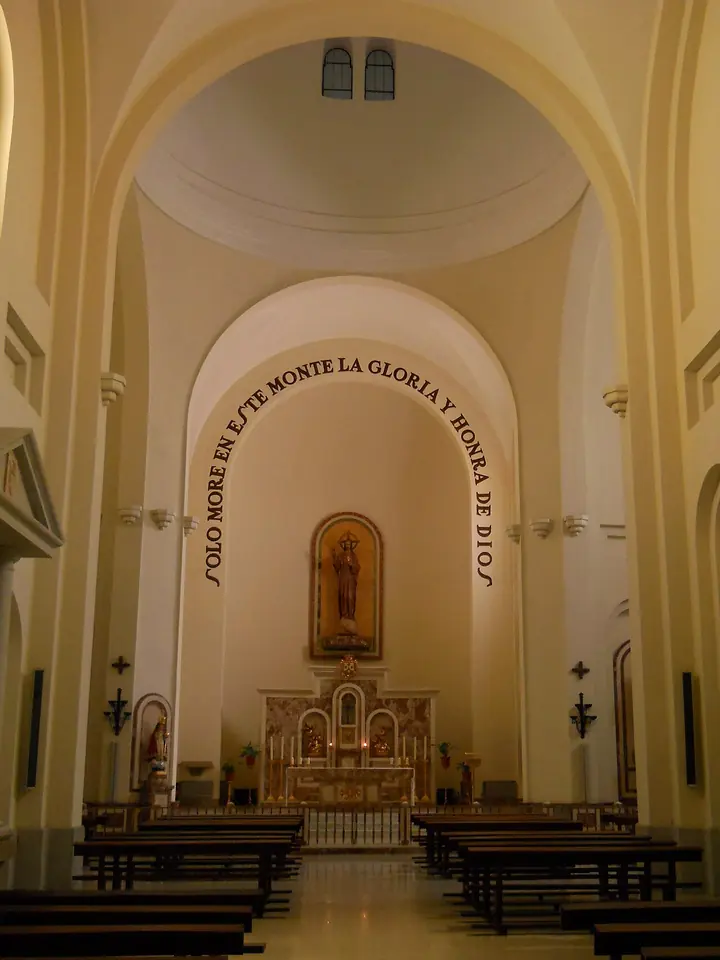
War and poverty
During the Spanish Civil War the community of the Cerro had to leave its monastery and lived for a time in an apartment in Madrid. In September 1937 Mother Maravillas founded another Carmel at Las Batuecas, in the province of Salamanca, and in 1939 she restored the monastery of the Cerro. Through all the hunger and danger of those years, the Holy See's biography says, she gave her daughters courage and joy.
More foundations followed across Spain. Her convents were criticized for being too poor: small, unfurnished, with bare walls on which hung only verses from Scripture and the Carmelite saints. Her answer is recorded in her canonization biography: "it is not our concern to plant a seed, since the Discalced Carmelites have already been founded. Even if our convents collapse, nothing will happen."

She also restored her first Carmel at El Escorial and sent nuns to the Monastery of the Incarnation at Ávila, where St. Teresa herself had lived for many years. To unite the monasteries she had founded with others of the same spirit, she established the Association of St. Teresa, which the Holy See approved in 1972. In his homily John Paul II noted that her enclosed life "did not prevent her from responding to the needs of the persons she dealt with and promoting social and charitable works around her."

The dark night
Her sisters saw her courage and cheerfulness. Only her spiritual directors knew that for most of her life she walked through what St. John of the Cross calls the dark night of the soul, a long dryness and trial in prayer in which faith and surrender to God's will were her only guides.
A Carmelite to the end
On December 8, 1974, the solemnity of the Immaculate Conception, she was anointed and received Holy Communion. She died on December 11 in the Carmel of La Aldehuela, near Madrid, surrounded by her community. Her sisters report that she kept repeating, "What happiness to die a Carmelite!"
Miracles and canonization
Pope John Paul II beatified Mother Maravillas in Rome on May 10, 1998, and canonized her on May 4, 2003, at an open-air Mass in Madrid's Plaza de Colón, with St. Pedro Poveda, St. José María Rubio, St. Genoveva Torres and St. Angela of the Cross. The healings the Church examined for her causes were approved miracles, as every canonization requires. ACI Prensa reported in 2008 that some of the miracles attributed to her took place in Argentina; we have not found an official account of their details.
Symbols of St. Maravillas in art
St. Maravillas lived in the age of photography, so her images are portraits of a real modern nun rather than symbols built up over centuries. In paintings and holy images she is shown:
- In the Discalced Carmelite habit, brown with a white mantle and black veil, the habit of St. Teresa's reform.
- With a crucifix, the sign of the Christ crucified whom she followed in poverty.
- Near the Sacred Heart, recalling her first foundation beside the monument on the Cerro de los Ángeles.
She is easy to tell from St. Teresa: Teresa is shown with a quill, a book or the dove of the Holy Spirit, and usually in sixteenth-century dress, while Maravillas is a modern nun, often older, with a calm and steady face.
Feast day and prayer
We keep the feast of St. Maravillas de Jesús on December 11, the day she died. Her tomb is in the church of the Carmel of La Aldehuela, at Getafe near Madrid, where she died.
We have not found a traditional prayer to her that we can cite here. Let us ask her, who held on to God through years of darkness, to pray for all who feel nothing in prayer, for contemplative nuns and those discerning a call to Carmel, and for the poor she served from her cloister.
St. Maravillas de Jesús, pray for us.
Frequently asked questions
Who was St. Maravillas de Jesús?
María de las Maravillas Pidal y Chico de Guzmán, born in Madrid in 1891 to a noble family. She entered the Discalced Carmelites at El Escorial in 1919, founded the Carmel of the Cerro de los Ángeles in 1926 and many more after it, and died at the Carmel of La Aldehuela in 1974.
When is the feast day of St. Maravillas de Jesús?
December 11, the day she died in 1974.
When was St. Maravillas canonized?
Pope John Paul II beatified her in Rome on May 10, 1998, and canonized her in Madrid's Plaza de Colón on May 4, 2003, together with four other Spanish saints.
What were St. Maravillas's last words?
Her sisters report that as she was dying she kept repeating, "What happiness to die a Carmelite!"
Keep exploring
Sources
- Holy See: María Maravillas de Jesús Pidal y Chico de Guzmán (1891–1974), biography for the canonization of May 4, 2003. Her family, vow at age five, dates of entry and profession, foundations, the dark night, the Association of St. Teresa, her death and beatification
- Pope John Paul II, homily at the canonization Mass in Plaza de Colón, Madrid, May 4, 2003
- ACI Prensa (2008): Productora argentina lanza DVD sobre Santa Maravillas de Jesús. Miracles attributed to her in Argentina