St. Philoxenus of Mabbug, Syriac Teacher and Bishop
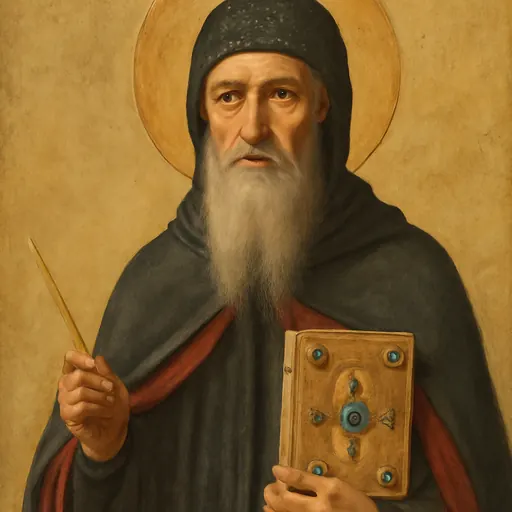
St. Philoxenus of Mabbug (died 523) was bishop of Hierapolis (Mabbug) from 485 to 519 and one of the greatest writers in the Syriac language. He commissioned a new Syriac translation of the New Testament. A leading opponent of the Council of Chalcedon, he died in exile. The Syriac Orthodox Church honors him as a saint on December 10.
Who was St. Philoxenus of Mabbug?
St. Philoxenus of Mabbug was a Syriac monk, theologian and spiritual writer who served as bishop of Hierapolis, called Mabbug in Syriac, from 485 until he was driven into exile in 519. He died at Gangra in Asia Minor in 523. The Catholic Encyclopedia calls him "one of the greatest masters of Syriac prose," and the Syriac Orthodox Church honors him as Mor Philoxenos, a saint and teacher, on December 10.
He was also a man of controversy. Philoxenus rejected the Council of Chalcedon (451), which the Catholic Church and the Eastern Orthodox churches receive, and he spent his life defending the churches that refused it. For that reason the Catholic Church does not honor him as a saint. We write about him here as the Syriac Orthodox Church keeps him, as we have for his ally St. Severus of Antioch, and in the hope voiced by Pope John Paul II and the Syriac Orthodox Patriarch in 1984: that the old quarrel over words need not divide those who confess the same Christ.
His life
From Beth Garmai to Edessa
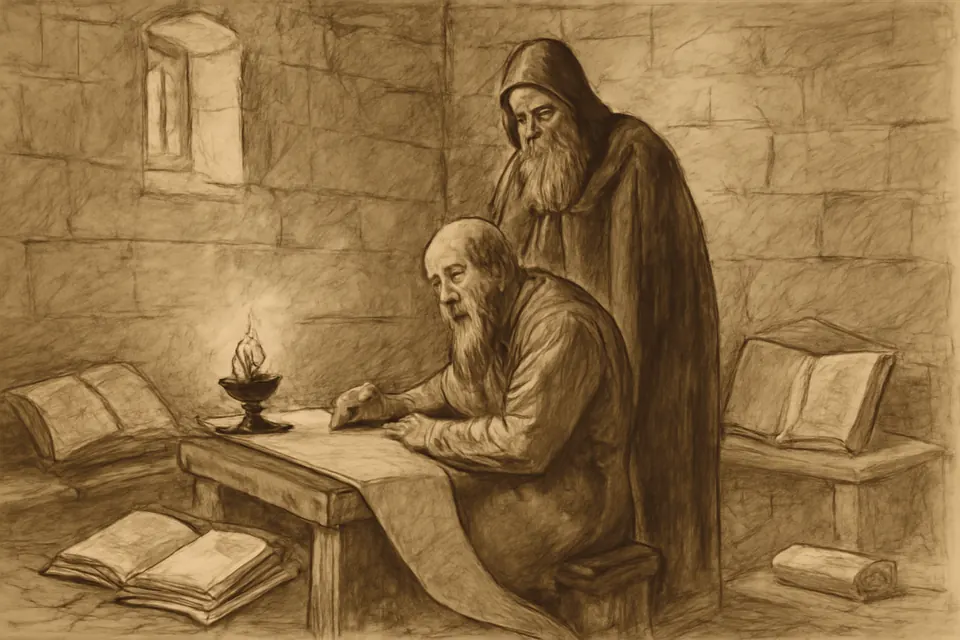
Philoxenus was born Akhsenaya at a village called Tahal in Beth Garmai, a region on the border of the Persian Empire, east of the Tigris. Budge, who edited his Discourses, could find nothing about his parents except that he was baptized, and that he had a brother named Addai. He went west to study at Edessa, the great center of Syriac learning, in the years when Ibas was its bishop (435–457). There, according to the Catholic Encyclopedia, he became a committed opponent of Chalcedon and of the teaching of Nestorius.
Bishop of Mabbug
In 485 Peter the Fuller, Patriarch of Antioch, consecrated him bishop of Hierapolis, the old city of Mabbug near the Euphrates, today's Manbij in Syria. He supported the Henoticon, the Emperor Zeno's formula meant to reconcile the churches, and wrote against the Council of Chalcedon. He twice went to Constantinople, and in 512 he persuaded the Emperor Anastasius to depose Flavian of Antioch and put Severus in his place.
The Philoxenian version
Philoxenus loved the Scriptures and wanted a Syriac Bible as close as possible to the Greek. At his request, and under his direction, his chorepiscopus Polycarp made a new translation around 505. The Catholic Encyclopedia notes that the shorter Catholic Epistles in our Syriac Bibles (2 Peter, 2 and 3 John and Jude) come from this version, along with fragments of Isaiah and of St. Paul. About a century later, Thomas of Harqel revised it to make the Harklean version.
Exile and death
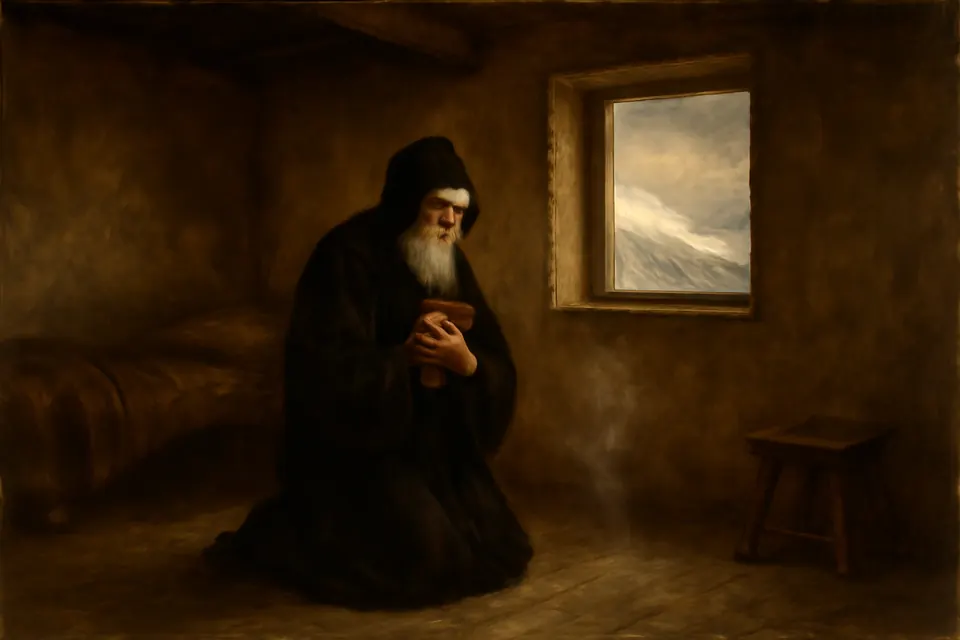
When Anastasius died in 518, the new emperor, Justin I, restored the bishops who had been deposed, and Philoxenus was banished with fifty-three other bishops in 519. He went first to Philippopolis in Thrace. From there, in a letter of 522, he wrote to the monks of Senun near Edessa. The next year he was moved to Gangra in Paphlagonia. A Syriac life quoted by Budge says his enemies "shut him up in an upper chamber, and made smoke in the room below it, and they shut the doors: in this way was he crowned, and he was suffocated by them in the true faith." His own church remembers him as a confessor who died for the faith.
His writings
Philoxenus wrote letters, treatises on the Trinity and the Incarnation, commentaries on the Gospels and liturgical texts. His best-loved work is the series of thirteen Discourses on the Christian life: on faith, simplicity, the fear of God, poverty, fasting and purity. Written for monks, they are full of plain good sense about prayer and the heart. In the Fourth Discourse he compares faith to a healthy eye:
So also the eye of faith, which is set in the pupil of simplicity, immediately it heareth the voice of God recogniseth it, and there riseth in it the light of His Word.
The words are from Budge's translation of 1894. For Philoxenus, simplicity was not foolishness but "the singleness of one thought," the trust of a child who receives the word of God without bargaining.
Wonders told of St. Philoxenus
The Syriac tradition remembers Philoxenus for his teaching and his sufferings rather than for miracles, and we have found no miracle stories about him in the sources we consulted. His church counts his death at Gangra as a crown, and that is the traditional account of his end: it comes from a Syriac life, not from a court record.
Symbols of St. Philoxenus in art
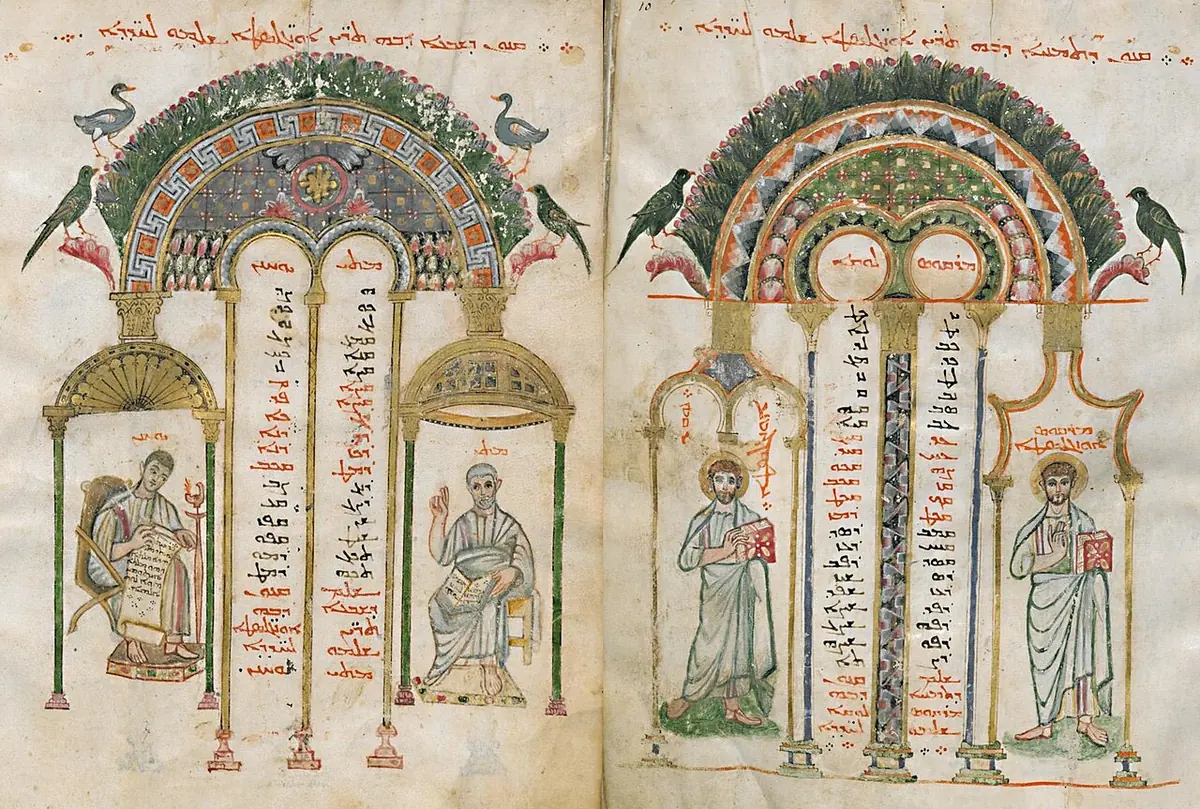
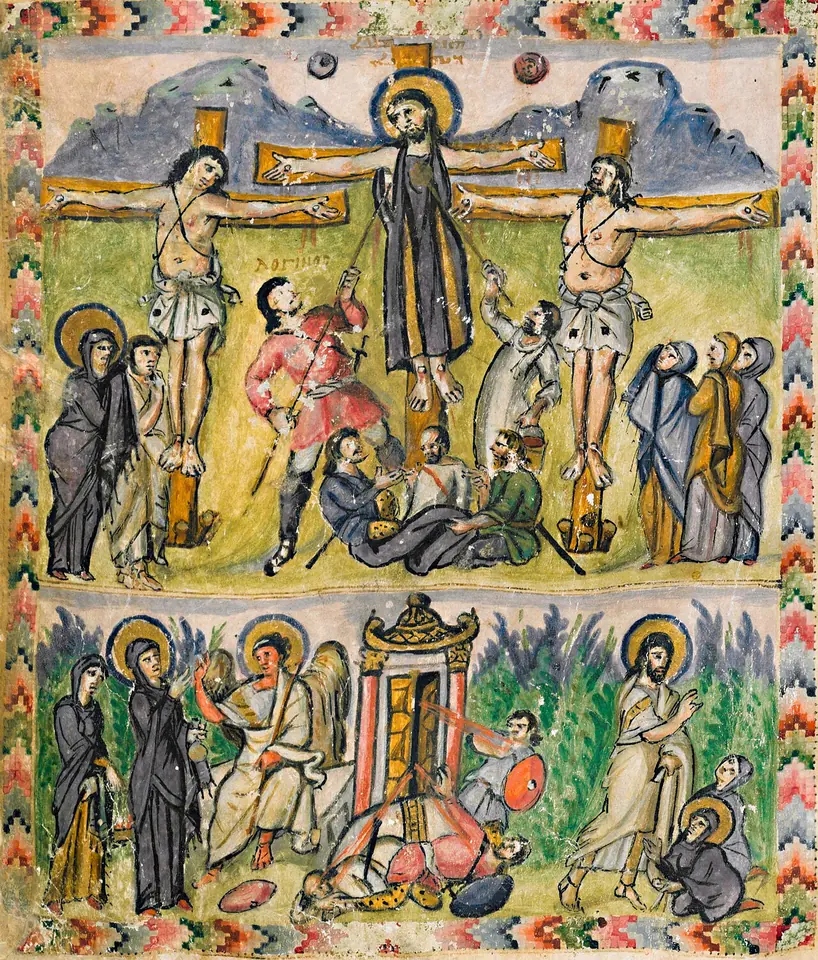
There are no old portraits of Philoxenus. Modern icons show him as an ascetic bishop with a long beard in the black monastic hood embroidered with crosses, the dress of Syriac bishops, often holding a Gospel book or a pen and scroll for his writings, and sometimes a hand cross. He is usually painted alongside other Syriac fathers such as Severus of Antioch and St. Jacob of Serugh. This page uses the Rabbula Gospels, a Syriac manuscript made in 586, to show the book culture he belonged to.
Feast day and where he is honored
The Syriac Orthodox Church commemorates Mor Philoxenos on December 10, a day it shares with the martyrs Mor Behnam and his sister Mort Sarah. He is honored among the great teachers of the Syriac tradition, with St. Ephrem, St. Jacob of Serugh and St. Severus. His place of burial is not known. See our feast days calendar for other saints of December.
Philoxenus and Christian unity
The quarrel over Chalcedon divided the Christians of the East for fifteen centuries. On June 23, 1984, Pope John Paul II and the Syriac Orthodox Patriarch Ignatius Zakka I signed a common declaration saying that the confusions and schisms between their churches "arose only because of differences in terminology and culture." When we read Philoxenus on faith and simplicity, we hear a voice both churches can recognize. Let us pray, with the Syriac Orthodox faithful who honor him, for the day when all who love Christ will share one altar.
Frequently asked questions
Who was Philoxenus of Mabbug?
A Syriac-speaking monk from Beth Garmai, educated at Edessa, who became bishop of Mabbug (Hierapolis, today's Manbij in Syria) in 485. He was a gifted spiritual writer and a leader of the churches that rejected the Council of Chalcedon. Exiled in 519, he died at Gangra in 523.
Is Philoxenus of Mabbug a saint in the Catholic Church?
No. He is a saint of the Syriac Orthodox Church and the other Oriental Orthodox churches. Because he rejected the Council of Chalcedon, the Catholic and Eastern Orthodox churches do not number him among their saints. In 1984 Pope John Paul II and the Syriac Orthodox Patriarch declared together that the old divisions about Christ 'arose only because of differences in terminology and culture.'
What is the Philoxenian version of the Bible?
A Syriac translation of the Scriptures made at Philoxenus's request and under his direction by the chorepiscopus Polycarp, around 505. Parts of it, such as the Syriac text of 2 Peter, 2 and 3 John and Jude printed in Syriac Bibles, are believed to come from this version.
When is the feast of St. Philoxenus of Mabbug?
December 10 in the Syriac Orthodox calendar.
Keep exploring
Sources
- Catholic Encyclopedia (1911): Philoxenus. His birth at Tahal, studies at Edessa, consecration in 485, the deposition of Flavian in 512, his exile, and the Philoxenian version made by Polycarp
- E. A. Wallis Budge, The Discourses of Philoxenus, Bishop of Mabbogh, vol. 2 (London, 1894), archive.org. The introduction on his life and the Syriac account of his death at Gangra; the quotation from the Fourth Discourse, p. 73
- Syriac Orthodox Resources: Liturgical Calendar of the Syriac Orthodox Church, Malankara 2014. Mor Philoxenos of Mabbug on December 10
- Common declaration of Pope John Paul II and Patriarch Moran Mar Ignatius Zakka I Iwas (June 23, 1984)