St. Virginia Centurione Bracelli of Genoa

St. Virginia Centurione Bracelli (1587–1651) was a noblewoman of Genoa, the daughter of a doge, who was widowed at twenty and gave the rest of her life to the poor. She took in abandoned girls during war and famine, organized the city's ladies to visit the poor at home, and founded the community that became the Brignoline Sisters. St. John Paul II canonized her in 2003, and her feast day is December 15.
Who was St. Virginia Centurione Bracelli?
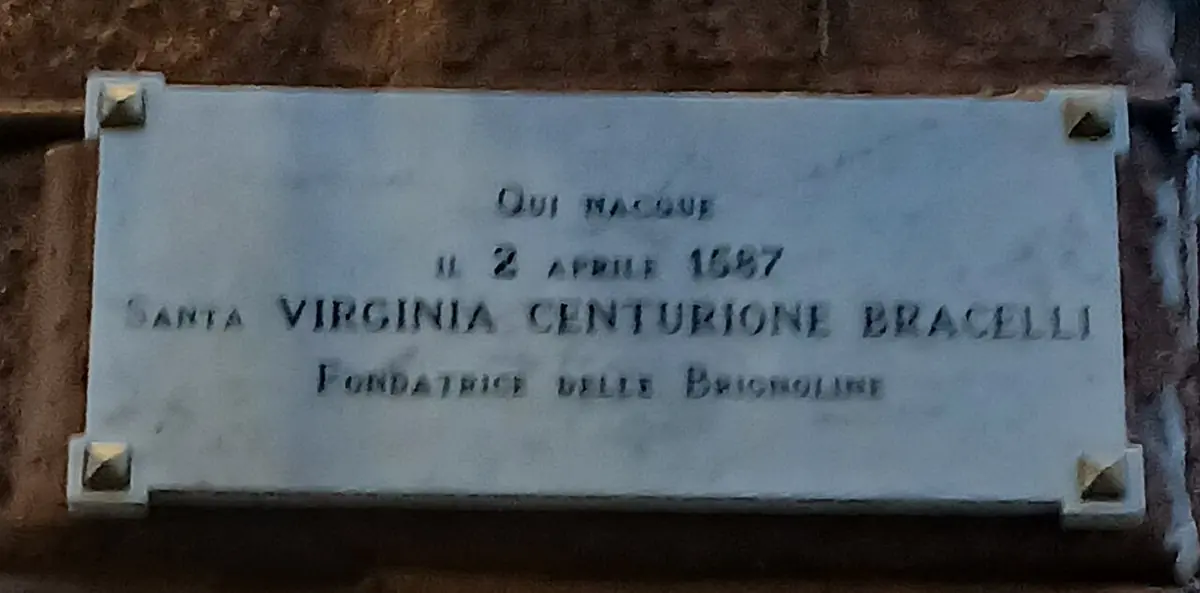
St. Virginia Centurione Bracelli was a noblewoman of Genoa who became a beggar for the poor. Born on April 2, 1587, into one of the oldest families of the Republic, she was married at fifteen, widowed at twenty, and spent the next forty-four years in the service of abandoned girls, the sick, the old and the hungry of her city. The community she founded is still at work. St. John Paul II, who canonized her in 2003, called her "a simple and active saint."
A doge's daughter and a hard marriage
Her father, Giorgio Centurione, would become doge of Genoa in 1621 and 1622. Her mother, Lelia Spinola, taught her the faith and her letters, and a tutor gave her Latin. As a girl Virginia hoped to enter a convent, but her father decided otherwise. On December 10, 1602, she married Gaspare Grimaldi Bracelli, the young heir of another great house. The Dicastery for the Causes of Saints describes him frankly as inclined to a disorderly life and to gambling.
They had two daughters, Lelia and Isabella. Virginia tried with patience and prayer to draw her husband to a better life. In 1607 he fell gravely ill at Alessandria, where she went to nurse him, and he died a Christian death on June 13. She was twenty years old.
"I want you to serve me in my poor"
Virginia made a vow of perpetual chastity and refused the new marriages her father arranged. She lived quietly with her mother-in-law, raised her daughters and managed their property. John Paul II, at her beatification in Genoa in 1985, recalled the prayer she made before the crucifix and the answer she received:
"Voglio servire solo te che non puoi morire"; questa era la preghiera di Virginia di fronte al crocifisso. "Voglio che tu mi serva nei miei poveri", fu la risposta del Signore.
"I want to serve only you, who cannot die," she prayed. And the Lord answered, "I want you to serve me in my poor." From about 1610 she gave away half of her dowry income in alms. When her daughters were married, she gave herself to the poor entirely.
War, refugees and the girls of Genoa
In the winter of 1624 to 1625, war broke out between Genoa and the Duke of Savoy, who was backed by France. Refugees, hunger and unemployment poured into the city. Virginia opened her home, first to about fifteen abandoned girls, then to as many poor people, especially women, as she could hold. After her mother-in-law died in August 1625, she went out herself into the worst quarters of the city to look for girls in danger of being drawn into prostitution.

To reach the poor who were ashamed to beg, she founded the Hundred Ladies of Mercy, Protectors of the Poor of Jesus Christ. Each lady took a district and visited families in their homes to learn what they truly needed. John Paul II saw in this a modern idea of charity, one that did not wait for the poor to come asking but went looking for them.
Our Lady of Refuge on Mount Calvary
The plague and famine of 1629 to 1630 filled her house beyond capacity. On April 14, 1631, she moved her girls into an empty convent called Monte Calvario and placed them under the protection of Our Lady of Refuge. Within three years the Work had three houses and about 300 residents. The Senate of the Republic recognized it on December 13, 1635.
Virginia called them her "daughters." She shared their food and clothing, taught them the catechism and trained them in work so they could earn their own bread. She later bought two houses on the hill of Carignano, which became the mother house. From those who chose to stay for life came two congregations: the Sisters of Our Lady of Refuge on Mount Calvary, known in Genoa as the Brignoline, and the Daughters of Our Lady on Mount Calvary, based in Rome.
Last of all
In 1641 the Senate appointed noble protectors to govern the Work, and Virginia submitted to them entirely. She lived as the least of her daughters at Carignano, going out morning and evening to beg for the house and nursing the sick sisters herself. She persuaded the Republic to take the Virgin Mary as its protector on March 25, 1637, promoted the Forty Hours' devotion, which began in Genoa near the end of 1642, and in 1647 reconciled the archbishop's curia with the city government. She died on December 15, 1651, at the age of sixty-four.
Miracles and holiness
The Dicastery's biography says the Lord gave her ecstasies, visions, interior words and other mystical gifts. As with every saint raised to the altars since the 1980s, the Church investigated healings attributed to her prayers before her beatification and canonization; these are approved miracles, though we have not found their details published in English. We do not repeat unverified stories.
Symbols of St. Virginia in art
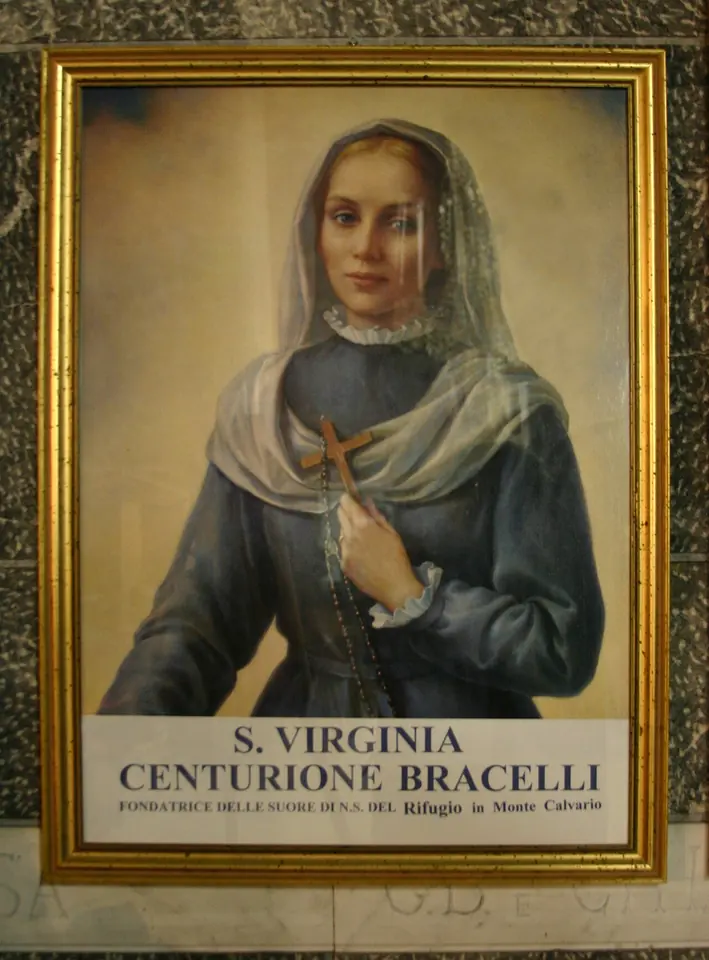
- A crucifix held to her heart: the Christ of Calvary she contemplated, and the name of her Work.
- A dark dress with a white veil and collar: the dress of a Genoese widow, close to the habit her daughters wear.
- A rosary: her prayer.
- Poor girls or children around her: the abandoned girls she sheltered.
Modern portraits, like the one in the church of Sacro Cuore e San Giacomo di Carignano, on the hill where her first mother house stood, show her young and serene with the crucifix.
Her body and her feast
Her body, nearly incorrupt and dressed in the habit of her daughters, rests in the mother house of the Brignoline Sisters in the Marassi district of Genoa. When John Paul II beatified her there in 1985, he spoke of Genoa as the city where she was born and worked, and where her body rests.

Her feast is December 15. You can find other saints of mid-December on our feast days page.
Prayer to St. Virginia Centurione Bracelli
The Dicastery for the Causes of Saints keeps a page of her thoughts and a prayer for her intercession; we have not reproduced it here. Her own favorite words were simple. John Paul II quoted them at her canonization: when God is one's only goal, "all disagreements are smoothed out, all difficulties overcome."
Let us ask her prayers for widows, for girls and young women in danger, for refugees, and for every family that has lost its way.
Frequently asked questions
Who was St. Virginia Centurione Bracelli?
A noble widow of Genoa, born in 1587, whose father became doge of the Republic. After her husband's death in 1607 she vowed never to remarry and devoted herself to the poor, especially girls in danger on the streets. She founded the Work of Our Lady of Refuge, which grew into two religious congregations, and died in 1651.
When is the feast of St. Virginia Centurione Bracelli?
December 15, the day she died in 1651.
When was Virginia Centurione Bracelli canonized?
St. John Paul II beatified her in Genoa on September 22, 1985, and canonized her in St. Peter's Square on May 18, 2003, together with Joseph Sebastian Pelczar, Ursula Ledóchowska and Maria De Mattias.
Where is St. Virginia Centurione Bracelli buried?
Her body, almost incorrupt, rests in the mother house of the Sisters of Our Lady of Refuge on Mount Calvary in the Marassi district of Genoa.