St. Paul of Latros, Hermit of Mount Latmus

St. Paul of Latros was a tenth-century Byzantine monk and hermit who lived for decades in caves on Mount Latmus, near Miletus in western Turkey. Disciples gathered around him, and Emperor Constantine VII wrote to him for counsel. He died on December 15, 955 or 956, the day the Church keeps his feast.
Who was St. Paul of Latros?
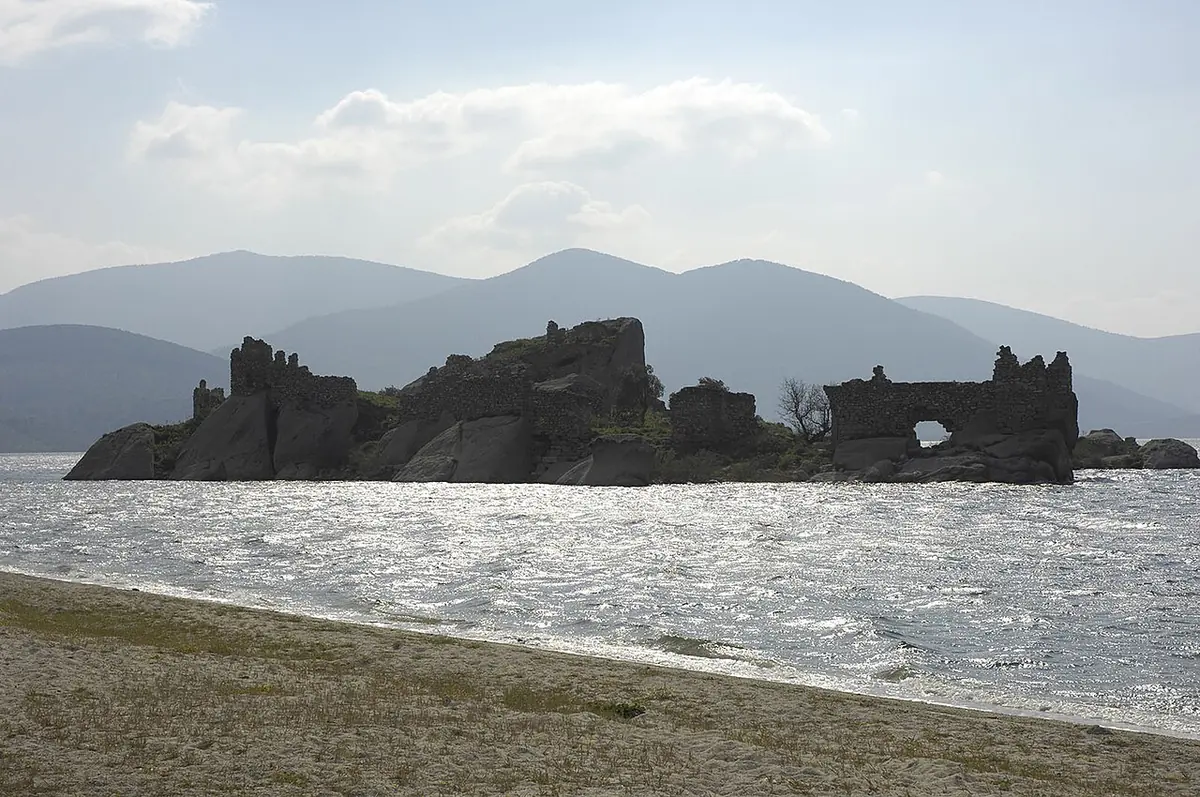
St. Paul of Latros was a Byzantine hermit of the tenth century who lived and prayed in the caves of Mount Latros, also called Latmus or Latra, a wild granite range above Lake Bafa near ancient Miletus, in what is now western Turkey. His holiness drew so many disciples that he twice fled to find solitude again. Emperors wrote to him. He died on December 15, 955 or 956, and the Orthodox Church keeps his memory on that day.
An old Greek life of him survives. Alban Butler, who drew on it for his Lives of the Saints, called it "well wrote."
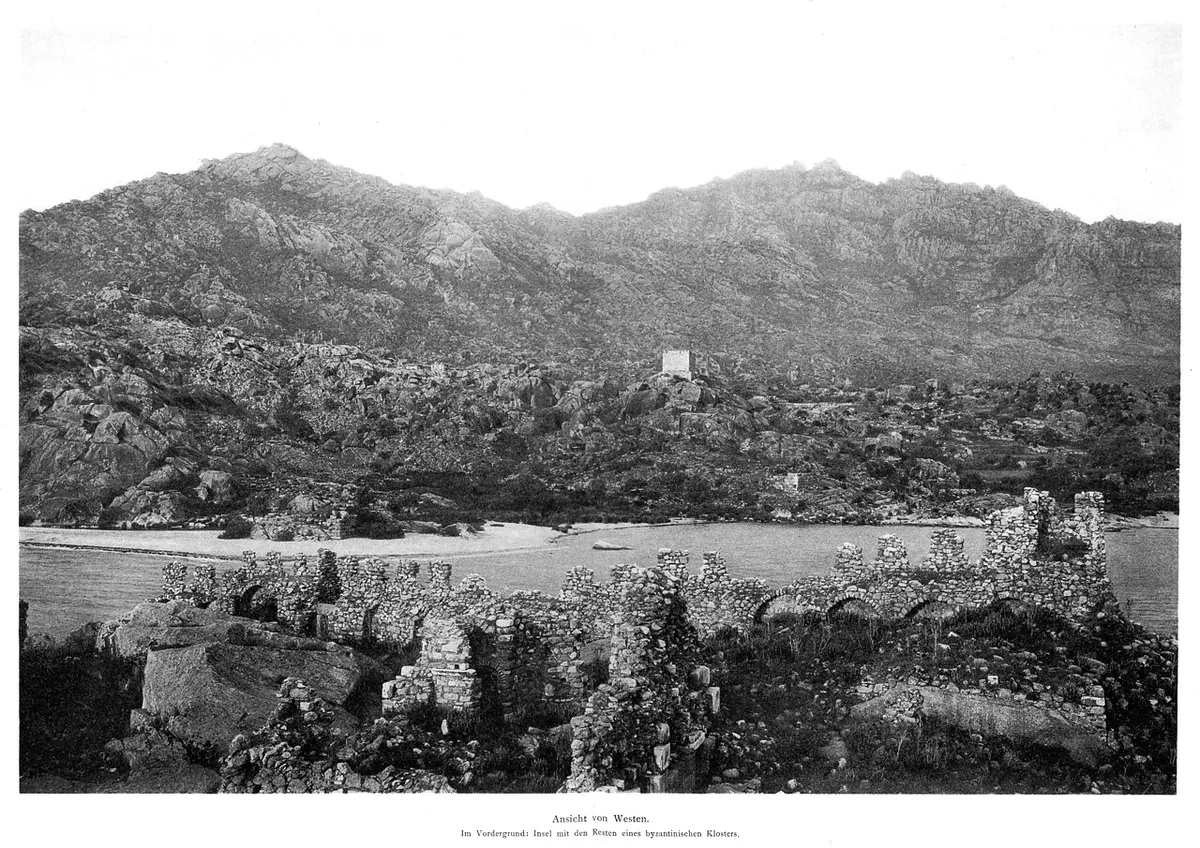
A soldier's son becomes a monk
Butler tells his story from the old Greek life. Paul's father, an officer in the imperial army, was killed fighting the Arabs at sea. His mother, Eudocia, left Pergamon, the family's home, for Bithynia with her two sons. The Orthodox Church in America's life adds that Paul was educated at the monastery of St. Stephen in Phrygia.
His older brother, Basil, refused a good marriage and became a monk on Mount Olympus in Bithynia, and later lived near Mount Latros. When their mother died, Basil persuaded Paul to follow him into monastic life and placed him with the abbot of Carya, a monastery at the top of Mount Latros.
The young monk threw himself into prayer and penance. Butler writes that he never lay down to sleep but leaned his head against a stone or a tree, and that whenever he worked in the kitchen, the sight of the fire reminded him of hell and moved him to tears.
The hermit of the mountain
Paul wanted to live alone, but his abbot thought him too young and refused as long as he lived. After the abbot's death, Paul took his first cell, a cave on the highest part of the mountain. For weeks he lived on green acorns, which at first made him violently ill.
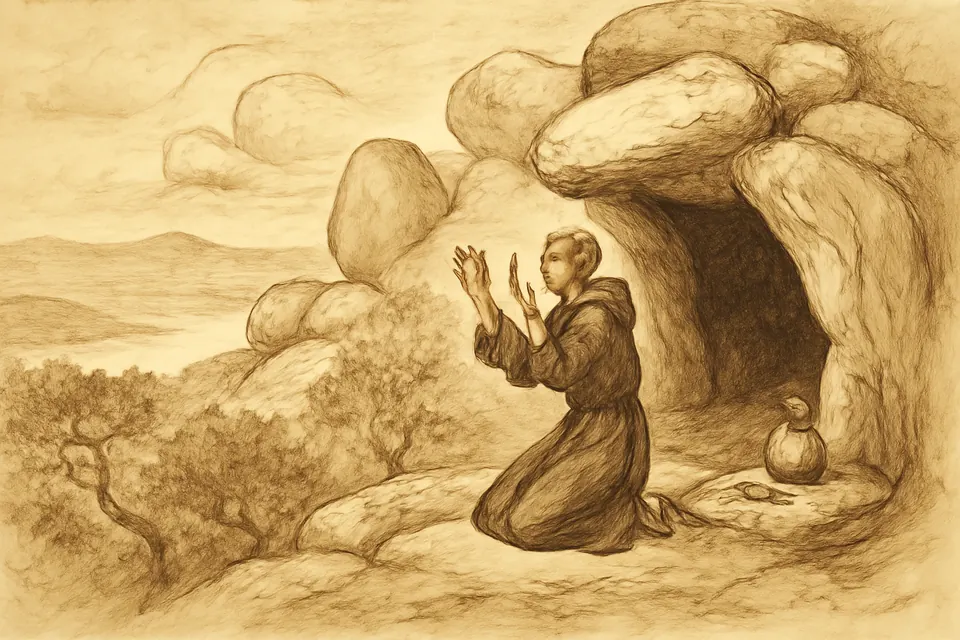
His first three years alone were full of temptation, which he fought, Butler says, by perseverance and above all by prayer. A countryman sometimes brought him coarse food. At first he had no water, until, in Butler's words, "God produced a spring with a constant stream near his dwelling." That spring is a traditional miracle, recorded in his old life and not otherwise investigated.
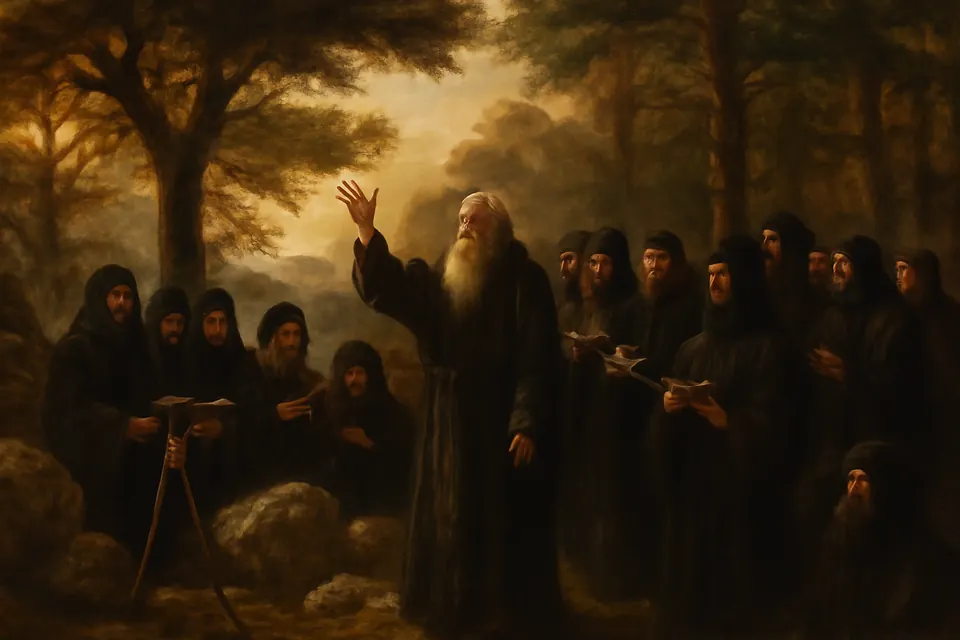
Others came to live near him and built a lavra, a cluster of hermits' cells. After twelve years Paul slipped away to a wilder part of the mountain, alone with the animals. Even so he came back to visit his monks and sometimes led them into the forest to sing God's praises together. Asked once why he seemed joyful at some times and sad at others, he answered, as Butler gives it:
"When nothing diverts my thoughts from God, my heart swims in excess of overflowing joy, insomuch that I often forget my food, and all earthly things; but it is an affliction to live amidst the distraction of worldly conversation."
Samos and the emperor
Looking for deeper solitude, he crossed to the island of Samos and hid in a cave on Mount Cerces (Kerkis). He was found there too. Many came to him, and he restored three monasteries that Arab raiders had ruined on the island. Then the monks of Latros begged him to come back, and he returned to his old cell at the summit.
The Orthodox Church in America says that his ascetic life brought him the gifts of clairvoyance and wonderworking. Emperor Constantine VII Porphyrogenitus (912–959, in the OCA's dates) wrote to him often and asked his advice on serious matters; Butler adds that the emperor always regretted it when he did not take it. Paul gave away whatever he could spare of his own food and clothing to the poor, and once, Butler says, he would have sold himself as a slave to help people in desperate need if he had not been stopped.
His holy death
Near the end of his life Paul wrote a rule for his lavra. Butler records that on December 6, 956, sensing that death was near, he came down from his cell, celebrated the liturgy earlier than usual, and went to bed with a high fever. He spent his last days praying and giving loving instructions to his monks, and died on December 15. Butler gives the year as 956; the OCA gives 955.
Symbols of St. Paul of Latros in art
Icons of St. Paul of Latros follow the pattern for holy monks in the Byzantine tradition:
- The monastic habit and cowl: the life he chose as a young man.
- A long gray beard and a thin, ascetic face: years of fasting in the mountains.
- A scroll: the teaching he gave his monks.
- A cave or mountain: his hermitage on Latros.
Without a written name it is hard to tell him from other hermit saints, so look for the inscription on the icon.
Feast day and prayer
We keep his memory on December 15. See the feast day calendar.
On his feast the Orthodox Church sings a troparion (Tone 4) and a kontakion (Tone 8) that honor him as a companion of the holy ones and as a hermit who gave up the world's noise so that his life made room for God; the OCA prints both on its website.
Let us ask St. Paul of Latros to pray for all who seek God in silence, and for us, that nothing may divert our thoughts from Him.
Frequently asked questions
Who was St. Paul of Latros?
A tenth-century Byzantine monk born near Pergamon. He entered a monastery on Mount Latros (Latmus) near Miletus, lived for years as a hermit in its caves, gathered disciples into a lavra, twice withdrew to the island of Samos, and was consulted by Emperor Constantine VII Porphyrogenitus. He died in 955 or 956.
Where is Mount Latros?
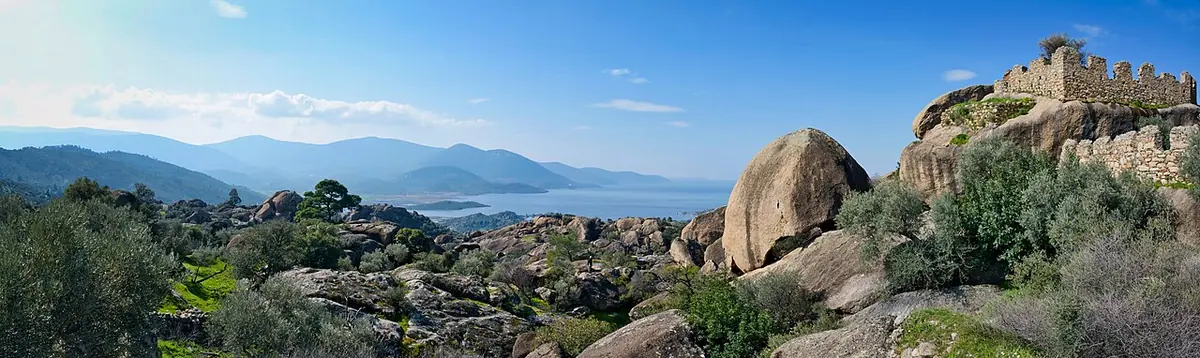
Mount Latros or Latmus is the granite range now called Beşparmak Dağları (the Five Fingers), above Lake Bafa near ancient Miletus and Herakleia in western Turkey. In the Middle Ages it was one of the holy mountains of Byzantine monasticism, dotted with monasteries and hermit caves.
When is the feast of St. Paul of Latros?
December 15, the day he died. The Orthodox Church in America keeps him on December 15; Butler's Lives tells his story under December 20 and mentions Greek calendars that list him on December 21.
Is Paul of Latros the same as St. Paul the Hermit?
No. St. Paul of Thebes, the first hermit, lived in the Egyptian desert in the third and fourth centuries. Paul of Latros lived six centuries later in Asia Minor and is sometimes called Paul the Younger.
Keep exploring
Sources
- Alban Butler, The Lives of the Fathers, Martyrs, and Other Principal Saints, vol. 12 (December), 1812: St. Paul of Latrus or Latra, Hermit. His family, his brother Basil, Carya, the acorns and the spring, the twelve years, the Samos lauras, the letters of Constantine Porphyrogenitus, his saying about joy, his last Mass and death on December 15, 956
- Orthodox Church in America: Venerable Paul of Latros (December 15). His birthplace, the monastery of St. Stephen in Phrygia, the gifts of clairvoyance and wonderworking, repose in 955
- Orthodox Church in America: Venerable Paul of Latros, Troparion and Kontakion. The troparion (Tone 4) and kontakion (Tone 8) quoted here