St. Ado of Vienne, Archbishop and Author of a Martyrology
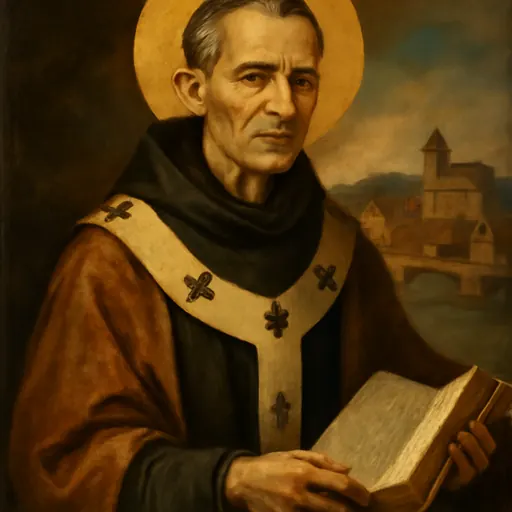
St. Ado of Vienne was a Benedictine monk of Ferrières who became archbishop of Vienne in 860 and wrote the Martyrology of Ado, one of the great calendars of the saints from which the Roman Martyrology descends. He reformed his clergy and defended Christian marriage against King Lothair II. We keep his feast on December 16.
Who was St. Ado of Vienne?
St. Ado of Vienne was a ninth-century Benedictine monk, scholar and archbishop of Vienne in the Rhône valley, best known for the Martyrology of Ado, a day-by-day calendar of the saints that shaped how the Western Church has remembered its martyrs ever since. He was born about 800 in the diocese of Sens to a noble family and died at Vienne on December 16, 875. We keep his feast on December 16, when the Roman Martyrology names "blessed Ado, bishop and confessor."
Monk of Ferrières and teacher at Prüm
Ado was raised at the Benedictine abbey of Ferrières, south of Paris. One of his teachers there was Abbot Lupus Servatus, among the finest classical scholars of his age. According to the Catholic Encyclopedia, Ado was gifted and hard-working, obedient and humble. Friends urged him toward a career in the world that his birth and talents could have won him. He chose instead to take the Benedictine habit at Ferrières.

When Markward, a monk of Ferrières, became abbot of Prüm near Trier, he asked for Ado to teach the sacred sciences there. Some of the monks of Prüm came to hate the newcomer, and after Markward died they drove him out. With his own abbot's permission Ado went to Rome and stayed five years.
The martyrology
From Rome he went to Ravenna. There, by his own account, he found an old Roman martyrology, which he used as the base of his own work. He published his martyrology in 858. For each day of the year it gives the saints honored, with a short account of their lives and deaths drawn from earlier martyrologies like Bede's, from the acts of the martyrs, and from the Fathers.

The Ravenna book, which scholars call the "Little Roman" martyrology, has a story of its own. Ado's editors printed it with his work, and for centuries it was treated as an ancient document. The Catholic Encyclopedia's article on martyrologies notes that it was "contemporary with Ado, who made it known," and that the weight long given to it was wrong, "as recent researches have proved." Ado's own martyrology, though, did its work. Usuard, a monk of Saint-Germain-des-Prés, drew on it for his martyrology, and the present Roman Martyrology is, in the Catholic Encyclopedia's words, "in sum the martyrology of Usuard" completed from other sources. Many of the short notices read in monasteries at Prime each day go back, through Usuard, to Ado.

Pastor near Vienne, then archbishop
Ado came to Lyons, where the archbishop, St. Remigius of Lyons, received him warmly and, with the consent of the abbot of Ferrières, made him pastor of the church of Saint-Romain near Vienne. In 860 he was chosen archbishop of Vienne, and the next year Pope St. Nicholas I sent him the pallium.
He set to work on his clergy. He corrected their laxity by word and example and ordered them to teach the laity the doctrines every Christian must know. His own life, the Catholic Encyclopedia says, was "a model of humility and austerity."
Defending a queen's marriage
The great public test of his time as bishop came from King Lothair II of Lorraine. Lothair put away his lawful wife, Theutberga, to marry his mistress Waldrada. At the Synod of Metz in 863, papal legates were bribed into approving the new marriage. Ado hurried to Rome and reported what had happened, and Pope Nicholas annulled the acts of the synod. It was a stand for the bond of marriage against a king.

His other writings
Besides the martyrology, Ado wrote a chronicle of the world from creation to the year 874, the Chronicon de sex aetatibus mundi, and the lives of two saints of his region, St. Desiderius (Didier) of Vienne and St. Theudarius.
Symbols of St. Ado in art
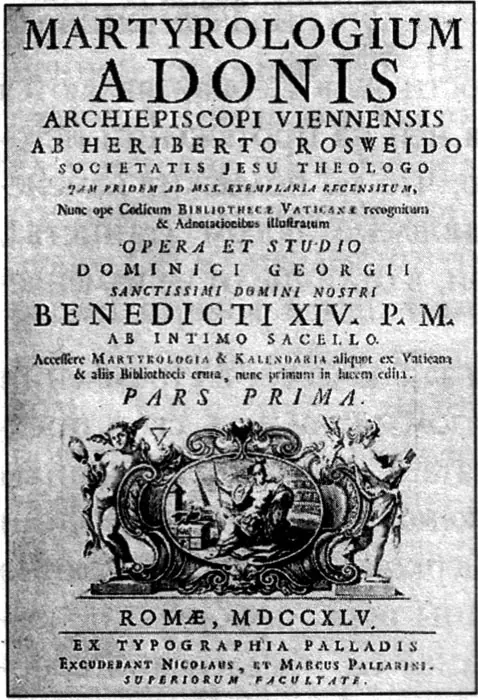
Images of St. Ado are rare. When he is shown, he wears the pallium of an archbishop, sometimes over a Benedictine habit, and holds a book, his martyrology. The best monuments to him are not paintings but books: the many medieval copies of his martyrology and the printed editions, such as the Rome edition of 1745 prepared under Pope Benedict XIV.
Feast day and prayer
We keep the memory of St. Ado on December 16, the day of his death, and Vienne has long celebrated him on that day. There is no traditional prayer to him in common use. Let us ask St. Ado, who spent his life gathering the memory of the martyrs, to pray for historians, librarians and all who keep the Church's memory, and for bishops who must speak hard truths to the powerful. St. Ado, pray for us.
Frequently asked questions
Who was St. Ado of Vienne?
A Frankish nobleman, born about 800 in the diocese of Sens, who became a Benedictine monk at Ferrières, taught at Prüm, spent years in Rome and Ravenna, and served as archbishop of Vienne from 860 until his death on December 16, 875.
What is the Martyrology of Ado?
A calendar of saints and martyrs for every day of the year, with a short account of each, which Ado published about 858. Later compilers, above all Usuard, drew on it, and through them it fed into the Roman Martyrology still used today.
What did St. Ado do about King Lothair II?
When Lothair II put away his wife Theutberga and papal legates at the Synod of Metz were bribed into approving his marriage to Waldrada, Ado went to Rome and told Pope Nicholas I, who annulled the synod's decisions.
Keep exploring
Sources
- Catholic Encyclopedia (1907): St. Ado of Vienne. His birth, Ferrières, Lupus Servatus, Prüm, Rome and Ravenna, the martyrology of 858, his appointment by St. Remigius of Lyons, his consecration in 860, the Lothair affair and his writings
- Catholic Encyclopedia (1910): Martyrology. Ado among the ninth-century historical martyrologies, and the "Little Roman" martyrology he made known, whose importance "recent researches" showed was wrongly assumed
- The Roman Martyrology (1916 English edition), December 16. At Vienne, blessed Ado, bishop and confessor