St. Odile of Alsace
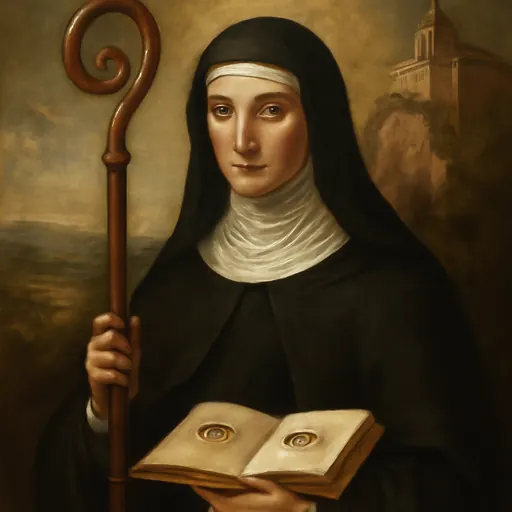
St. Odile of Alsace (about 660–720) was the daughter of Duke Adalric of Alsace and the first abbess of Hohenburg, now Mont Sainte-Odile. Her tenth-century life says she was born blind and received her sight at baptism. She is the patroness of Alsace and of the blind and those with eye ailments; we keep her feast on December 13.
Who was St. Odile of Alsace?
St. Odile of Alsace was a Frankish noblewoman who founded and ruled the convent of Hohenburg, on a sandstone mountain in the Vosges above the Alsace plain, and died there about 720. The mountain has carried her name ever since: Mont Sainte-Odile, or the Odilienberg. She is the patroness of Alsace, and because her life says she was born blind and healed at baptism, Christians have asked her prayers for the blind and for every trouble of the eyes for more than a thousand years.
We keep her feast on December 13, the feast of St. Lucy, the other great patroness of the eyes.
History and legend
The Catholic Encyclopedia sorts out what is solid. A trustworthy statement, apparently taken from an earlier life, makes her the daughter of the Frankish lord Adalric (also called Eticho) and his wife Bereswinda, who held large estates in Alsace. She founded the convent of Hohenburg, which Charlemagne granted immunity and which Louis the Pious confirmed and endowed on March 9, 837. Her oldest surviving life was written at the end of the tenth century; a shorter text survives in an early eleventh-century manuscript, and both seem to draw on an eighth-century original. A further "life" published in the seventeenth century by Jérôme Vignier has been proved a forgery.
Everything else comes from the old life and the tradition of Alsace. It is a moving story, and we tell it as tradition, not as documented history.
The blind child
Tradition holds that Odile was born blind, to the bitter disappointment of her father, who wanted a son. Adalric ordered the child put to death. Her mother saved her and gave her to a nurse, and Odile was raised among nuns at Palma, which the Norwegian Catholic biography identifies with Baume-les-Dames near Besançon.
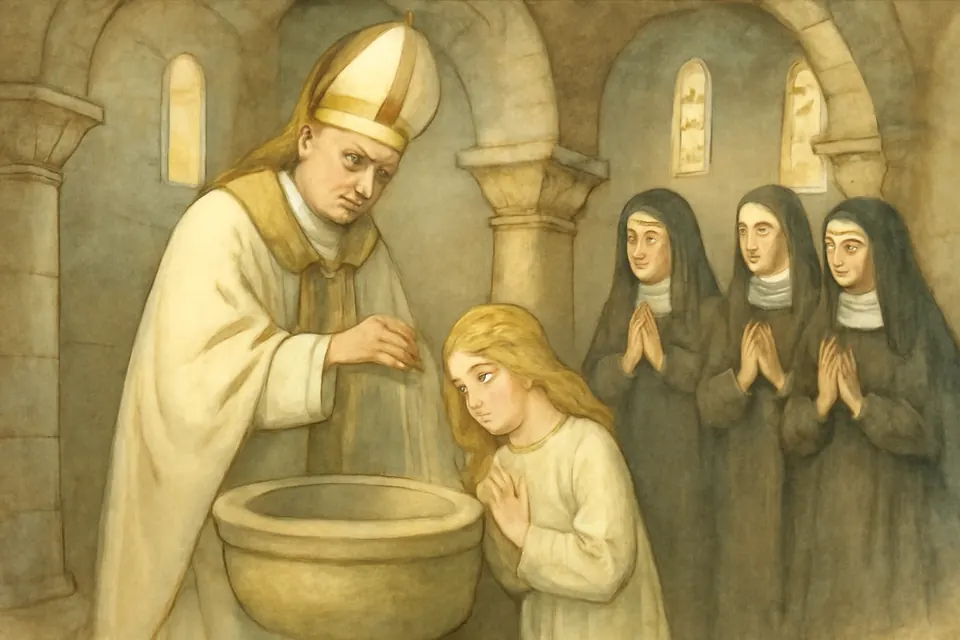
When she was about twelve, St. Erhard, a bishop of Regensburg, came to baptize her. As he touched her eyes with the holy oil, she could see. She was named Odile at that baptism.
Return to Hohenburg
Her younger brother Hugh brought her home against their father's wishes, and the legend says Adalric struck him in his rage. Adalric then wanted to marry Odile to a nobleman of his choosing. She refused, wanting to give herself to God, and fled across the Rhine into the Black Forest. Tradition holds that a rock opened to hide her. At last her father relented and gave her his castle of Hohenburg to make into a convent.
Abbess of two convents
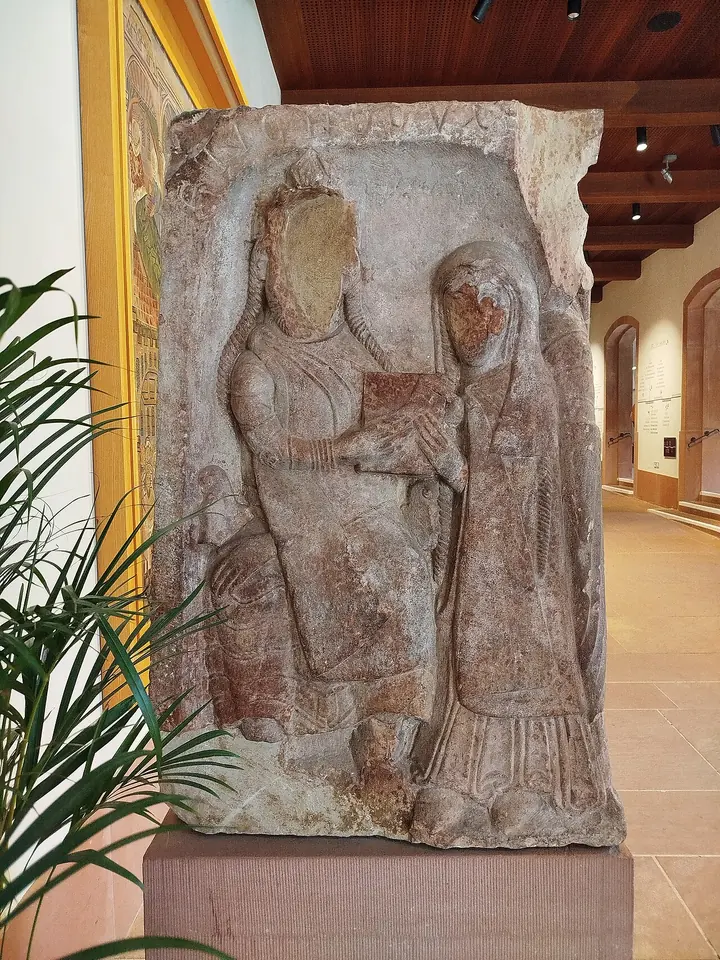
Many women joined her. Because the mountaintop was hard for the sick and the old to reach, she founded a second house, Niedermünster, at the foot of the mountain, with a hospice for the poor. Tradition also says she prayed her father free of the punishment he had earned. She died on December 13, about 720, and was buried on the mountain.

The miracles of St. Odile
- Her sight at baptism (traditional). The tenth-century life is the source. It made her the patroness of the blind.
- The rock that opened (traditional). Told of her flight from her father.
- St. Odile's spring (traditional). On the path between the two convents, the legend says, she met a blind and thirsty beggar and struck a rock, and water flowed. The spring still runs below the convent, and the Norwegian Catholic biography records that its water has been sought for eye ailments since her time.
- Healings at her tomb (reported). Her grave became a pilgrimage for people with eye troubles from Alsace and the lands around it. No single cure there has been formally examined by the Church.
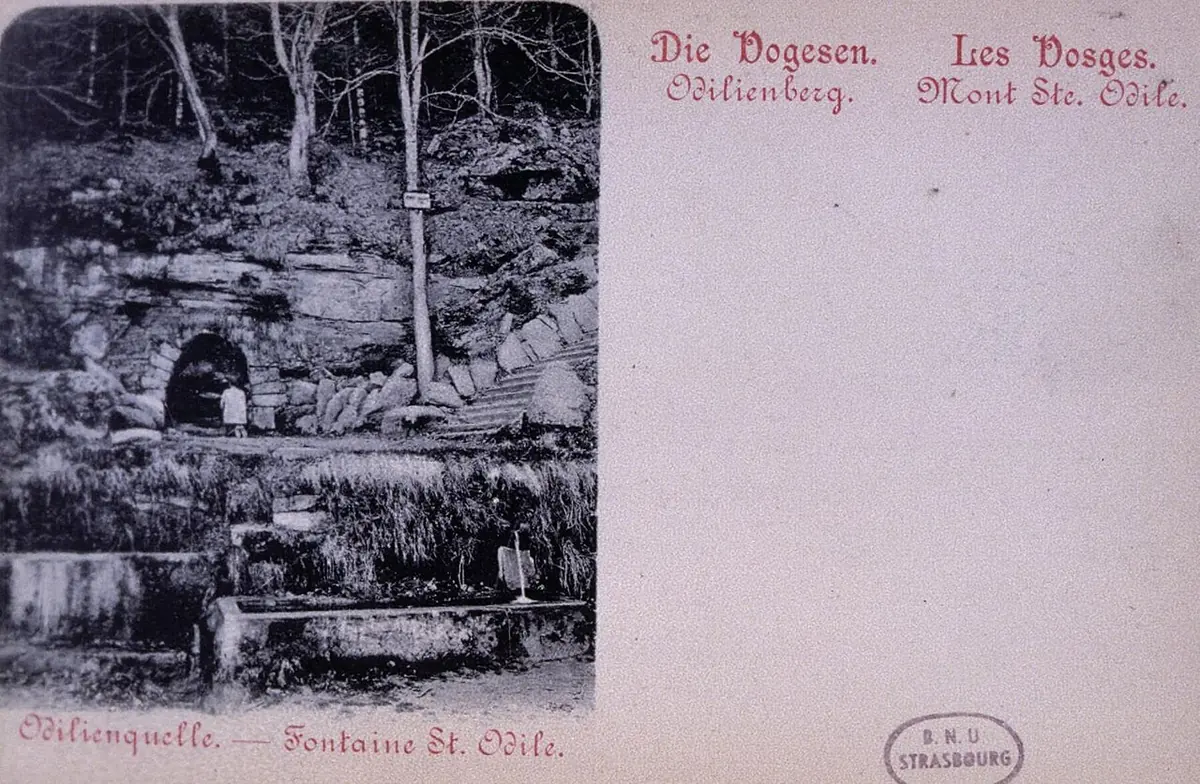
Why St. Odile is the patron saint of Alsace and of the blind
She was the daughter of the duke of Alsace, she founded its best-loved shrine, and pilgrims have climbed to her mountain for centuries; the Catholic Encyclopedia calls her simply "Patroness of Alsace." Her patronage of the blind and of the eyes comes from the story of her healing at baptism and from her spring.
Symbols of St. Odile in art
St. Odile is easy to recognize once you know her sign:
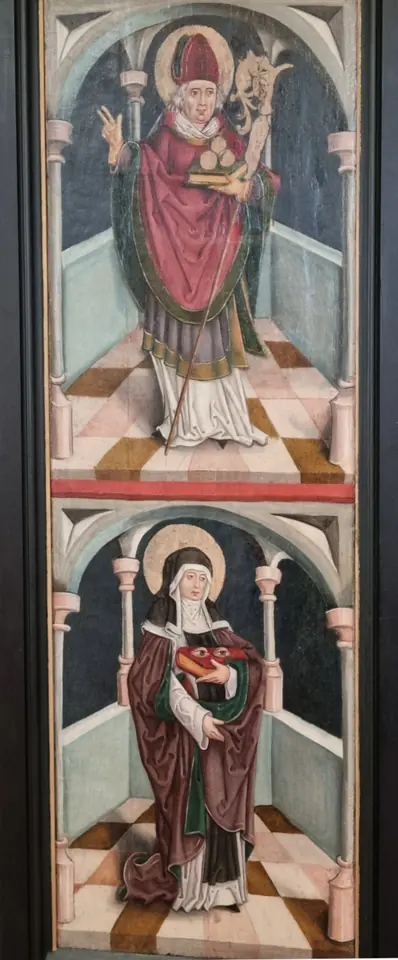
- A book with two eyes lying on it: her emblem, recalling her healing. The Catholic Encyclopedia notes that "she is represented with a book on which lie two eyes."
- The habit of an abbess: a dark habit and veil, often with a crozier.
- A chalice: the legend says she received Holy Communion just before she died.
In German and Alsatian churches she often appears with her father, or beside St. Lucy, who also may carry eyes. Lucy's eyes usually sit on a dish; Odile's lie on a book.
Feast day, tomb and pilgrimage
We keep her feast on December 13. Her tomb is on Mont Sainte-Odile, above Ottrott, about 25 miles southwest of Strasbourg, in a small chapel beside the convent church; her sarcophagus is still there. Pilgrims come all year, and many walk down to her spring.
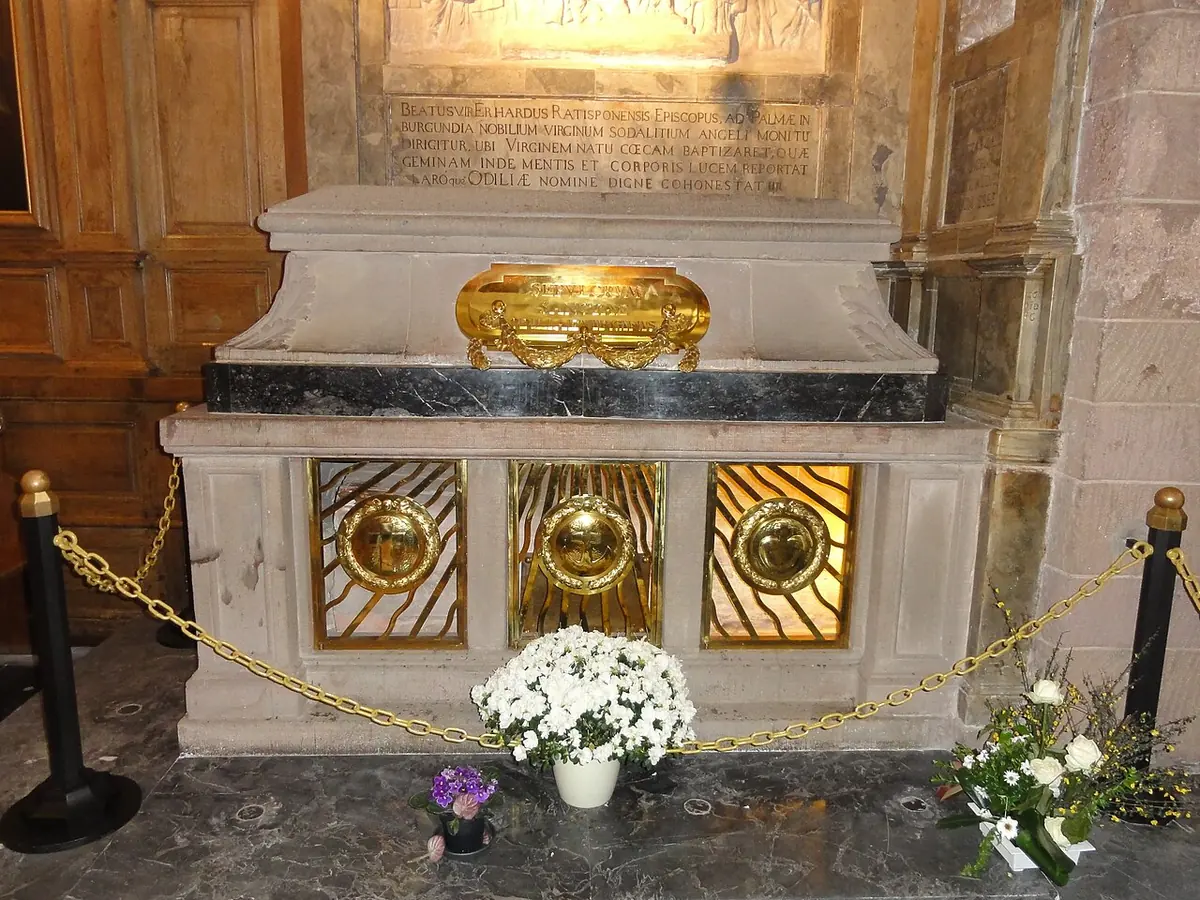
Prayer to St. Odile
We have no prayer from St. Odile's own hand. Let us ask her intercession simply, as pilgrims on her mountain have done for centuries: St. Odile, you who received the light of your eyes at your baptism, pray for all who are blind or losing their sight, for those with sick eyes, and for the people of Alsace; and pray that we may see with the eyes of faith. St. Odile, pray for us. See our patron saints page for other saints invoked for the eyes.
Frequently asked questions
When is the feast day of St. Odile?
December 13, the same day as St. Lucy. Both are invoked for the eyes.
Why is St. Odile the patron saint of the blind?
Her tenth-century life says she was born blind and received her sight at her baptism. Her spring on Mont Sainte-Odile has long been visited by people with eye troubles.
Why is St. Odile shown with two eyes on a book?
The two eyes recall the sight she received at baptism. The book is the Gospel and the Rule of her convent. The Catholic Encyclopedia notes that she is represented "with a book on which lie two eyes."
Where is St. Odile buried?
On Mont Sainte-Odile, above Ottrott in Alsace, in a chapel beside the convent church. Her sarcophagus can still be seen there.
Keep exploring
- Patron saint pages
- Eyes
- Feast-day calendar
- Saints remembered in DecemberSaint of the dayWhat saint is my birthday?
- Relics
- Where the relics are kept (map)
- More
- Saints A to ZPatron saints A to ZExplore every section
Sources
- Catholic Encyclopedia (1911): St. Odilia. Her parents, the foundation of Hohenburg, the charters of Charlemagne and Louis the Pious, the age of her lives, Vignier's forged life, her grave and her emblem
- Den hellige Odilia av Alsace, Den katolske kirke (Norway). The legend in detail, Baume-les-Dames, St. Erhard of Regensburg, Niedermünster, the spring for eye troubles, and her attributes