Blessed Arthur Bell, Franciscan Martyr
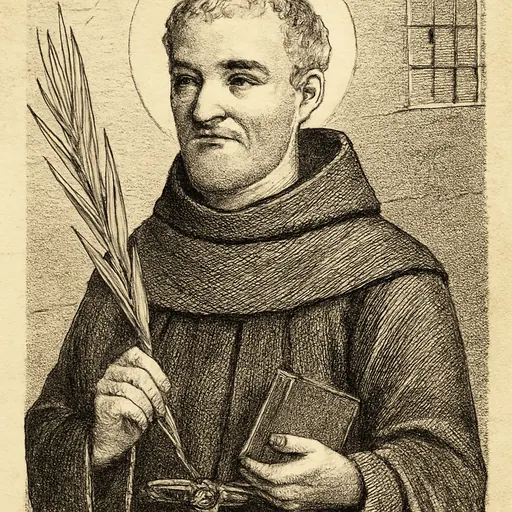
Blessed Arthur Bell (1590–1643), known in religion as Father Francis, was an English Franciscan friar from Worcestershire who helped restore the English and Scottish Franciscan provinces and served nine years on the secret English mission. He was condemned for his priesthood and executed at Tyburn on December 11, 1643, which is his feast. He was beatified in 1987.
Who was Blessed Arthur Bell?
Blessed Arthur Bell was an English Franciscan priest, known in his Order as Father Francis, who gave his life at Tyburn on December 11, 1643. He had prayed for martyrdom, Bishop Richard Challoner wrote, "for the space of twenty years," and when the sentence came he thanked his judges and sang the Te Deum. He was beatified by Pope St. John Paul II in 1987, one of 85 martyrs of England, Scotland and Wales raised to the altars that day.
We keep his feast on December 11.
From Worcestershire to Spain
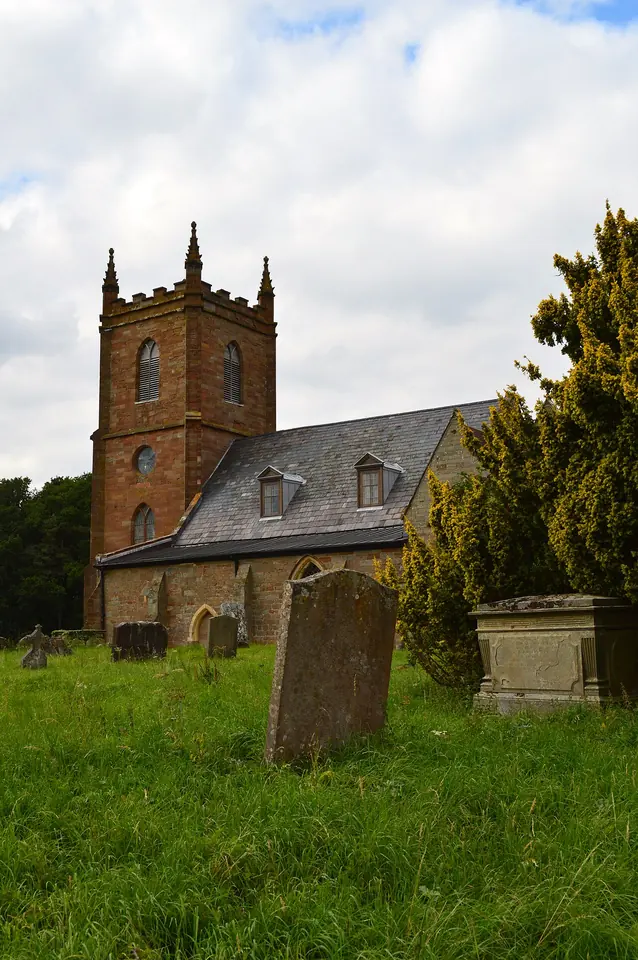
Arthur Bell was born in 1590 at Temple Broughton, in the parish of Hanbury, six miles from Worcester. Challoner's Memoirs of Missionary Priests gives the date as August 13; the Catholic Encyclopedia says January 13. His father died when he was eight, and he grew up partly with his mother and partly with her brother, Francis Daniel, in Suffolk.
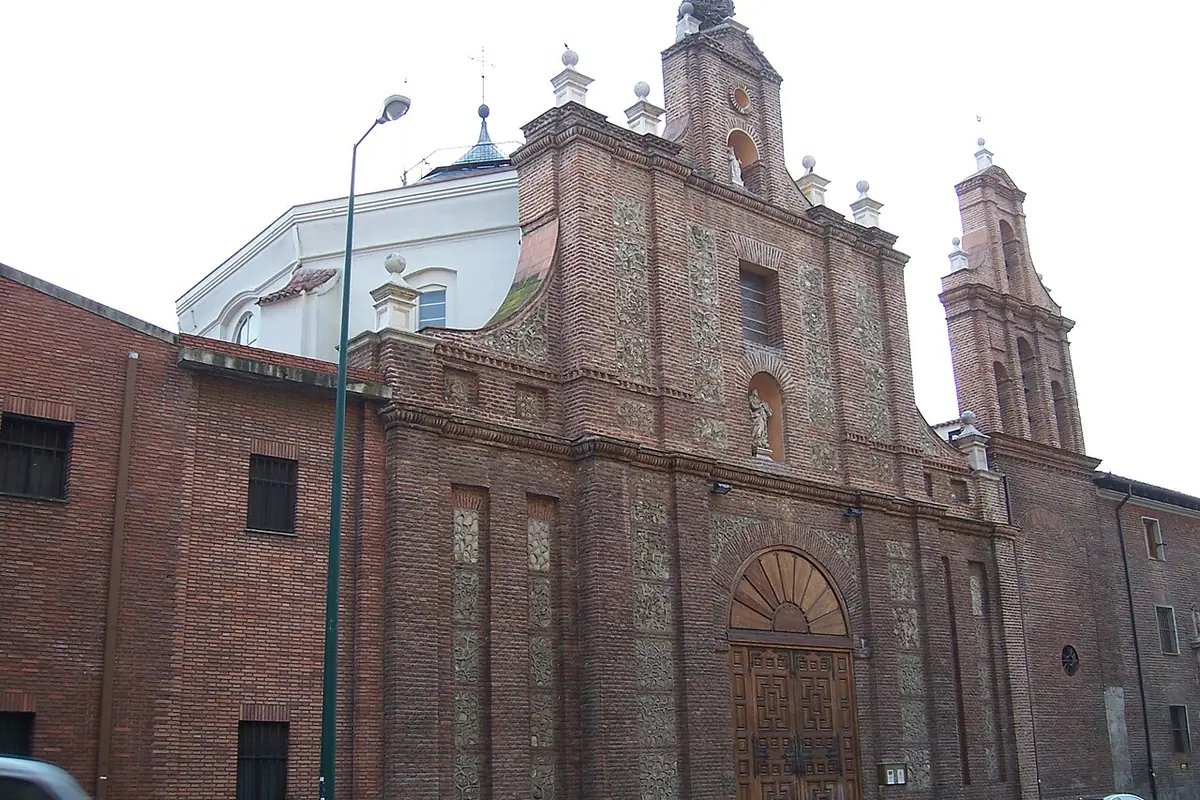
At twenty-four he crossed to the English College at St. Omer, then went on to the English College of St. Alban at Valladolid, where he was ordained priest. On August 9, 1618, he took the habit of St. Francis at Segovia, and he made his profession a year later.
Rebuilding the English Franciscans
Father John Gennings was then gathering English friars from all over Europe to restore the English Franciscan province, and he called Father Bell to the new English convent at Douai. There he finished his theology, served as confessor to the Poor Clares at Gravelines and to Franciscan sisters at Brussels, and taught Hebrew. He was elected guardian of the Douai convent and then sent as the first provincial of a restored Scottish province, a work the Catholic Encyclopedia says did not succeed.
On September 8, 1634, he landed in England for the mission. For nine years he moved quietly among Catholic households, saying Mass and bringing people back to the faith.
Arrested at Stevenage
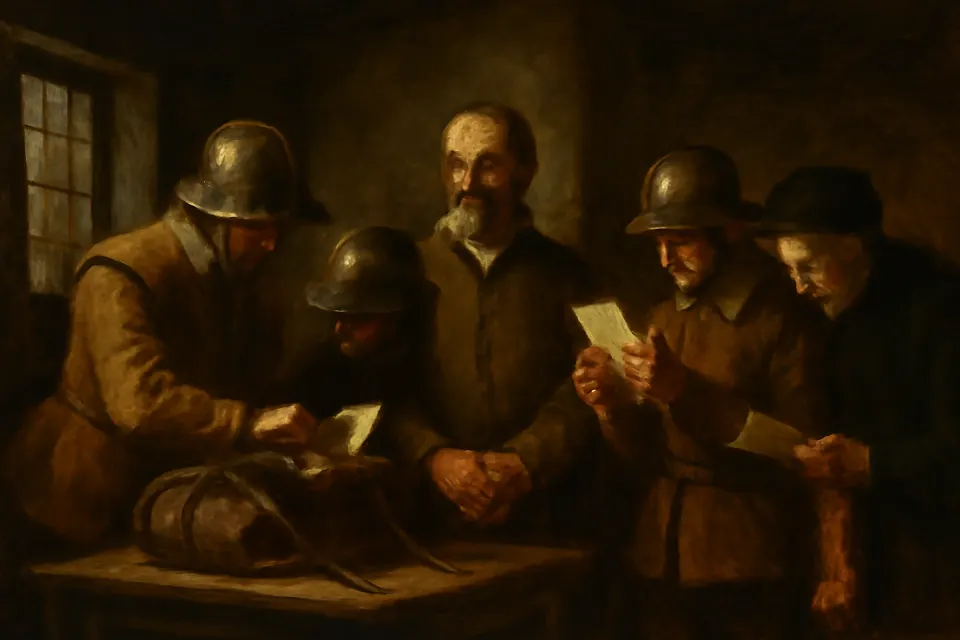
England was at civil war in 1643. On November 6, Parliamentary soldiers stopped Father Bell at Stevenage in Hertfordshire and held him as a spy. In his bags they found handwritten papers: the lessons for the Office of the Blessed Sacrament and a form for blessing the cord of the Confraternity of St. Francis. The town schoolmaster was called in to translate, and the soldiers decided the blessing was a spell. The next day they found a Spanish letter that named him a Franciscan.
When an officer asked his religion, he answered, as Challoner records: "I am a Catholic." Asked whether he meant a Roman Catholic, he said, "There is but one Catholic Church, and of that I am a member," and that he would own it "with the grace of God, to my last breath."
He was stripped of his clothes, given an old soldier's rags and led to London on horseback to be mocked in every village. Father Bell wrote that the procession was "too great a pomp" for a man who should take up his cross daily. When the city marshal kept his trunk, he said he would hear no more of his goods "till the day of judgment," and thanked God for the reminder of holy poverty.
Newgate and the trial
In Newgate he learned that his brethren had elected him guardian of Douai again. He wrote to his provincial that he had already taken possession of "Father Paul's place in Newgate," meaning the cell of Henry Heath, the Franciscan guardian martyred that April. "I have begged death for Christ," he wrote to the commissary general of his Order. "This will I continue to beg for."
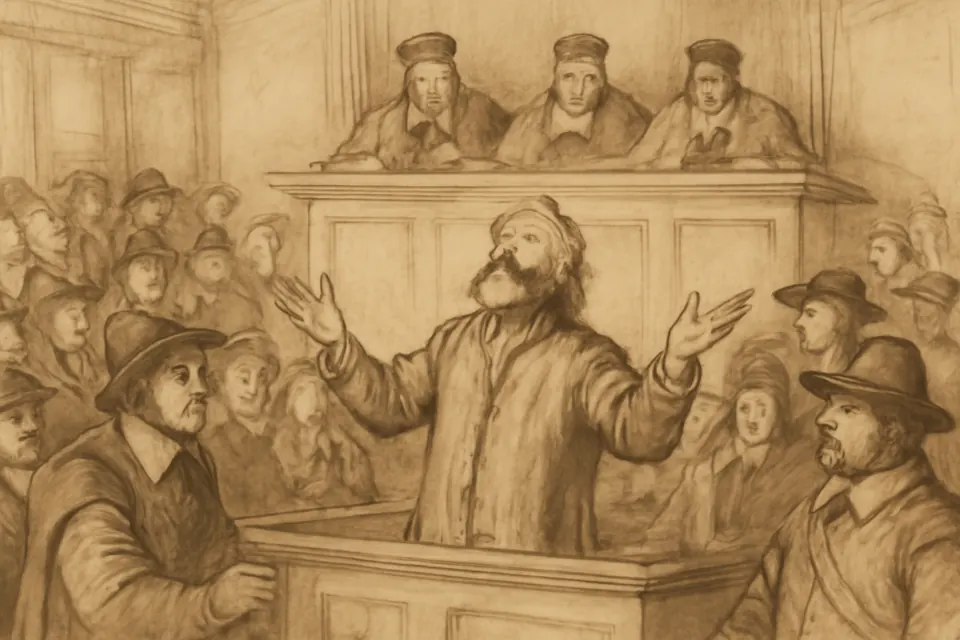
At his trial on December 7, three former Catholics swore that they had known him as a friar and a priest. The jury found him guilty, and he thanked them. When sentence was passed, Challoner says he "joyfully intoned the Te Deum."
His martyrdom at Tyburn
On December 11, 1643, he was drawn on a hurdle to Tyburn. He remembered that his fellow friar Thomas Bullaker, martyred in October 1642, had told him in prison, "God will have me to go first, but you shall soon follow me." From the cart he called the crowd to repentance and to the Church, comforted a condemned man beside him, and embraced the hangman. He was hanged, cut down and quartered. When they stripped him, the people found the Franciscan habit under his coat and cried out at it. Despite the guards, some Catholics dipped cloths in his blood to keep as relics. He was in his fifty-fourth year.
Symbols of Blessed Arthur Bell in art
Arthur Bell has no old tradition of images, so modern pictures follow the usual signs of the English martyrs:
- The brown Franciscan habit and knotted cord, which he wore secretly under his clothes to the end;
- The martyr's palm, for his death for the faith;
- The rope or the hurdle of Tyburn, the place of execution of so many priests.
Feast day and prayer
We keep the feast of Blessed Arthur Bell on December 11, and we remember him again on November 22 with the 85 martyrs beatified in 1987. See the feast day calendar.
There is no traditional prayer to Blessed Arthur Bell. His own words from Newgate can become ours: "With whom I am ready to go to the cross, and to death." Let us ask him to pray for priests who serve in hiding or under threat, for persecuted Christians, and for the Franciscans of England and Scotland whose provinces he helped to rebuild.
Frequently asked questions
Who was Blessed Arthur Bell?
An English Catholic priest and Franciscan friar, called Father Francis Bell, born near Worcester in 1590. He trained at the English colleges of St. Omer and Valladolid, became a Franciscan in Spain in 1618, taught Hebrew at Douai, and worked secretly as a priest in England from 1634 until his arrest in November 1643.
How did Blessed Arthur Bell die?
He was tried at the London sessions on December 7, 1643, on the evidence of three former Catholics who swore he was a friar and priest, and was condemned to death for his priesthood. He was hanged, drawn and quartered at Tyburn on December 11, 1643. When the executioner stripped him, the crowd saw the Franciscan habit he wore under his coat.
When was Arthur Bell beatified?
Pope John Paul II beatified him in Rome on November 22, 1987, together with 84 other martyrs of England, Scotland and Wales.
When is the feast of Blessed Arthur Bell?
December 11, the day he died. He is also remembered on November 22 with the 85 martyrs beatified in 1987.
Keep exploring
Sources
- Richard Challoner, Memoirs of Missionary Priests, new edition revised by John Hungerford Pollen (1924): Arthur Bell, Priest, O.S.F., pp. 448–455. The main source for his life, his arrest at Stevenage, his letters from Newgate, the trial and witnesses, the Te Deum, his words at Tyburn and the habit found under his coat; Challoner drew on the Franciscan Certamen Seraphicum and a manuscript from St. Omer
- Catholic Encyclopedia (1907): Ven. Arthur Bell. His Scottish mission, the opening of his cause in 1900, and his writings
- Pope John Paul II, homily for the beatification of 85 English martyrs, November 22, 1987. The beatification of the 85 martyrs of England, Scotland and Wales, among them Arthur Bell