St. Valerie of Limoges
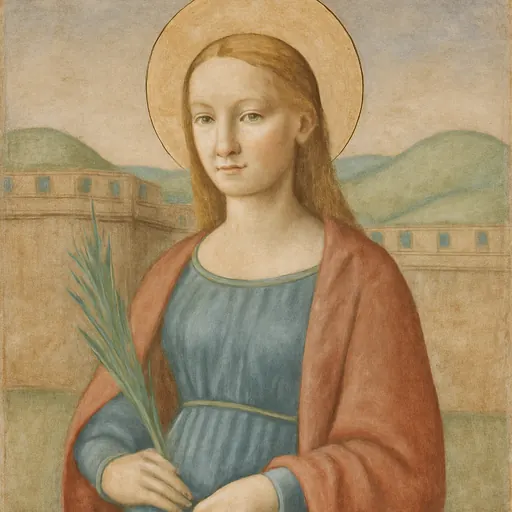
St. Valerie of Limoges is honored as the first martyr of Aquitaine. According to her legend she was a young noblewoman of Roman Limoges, converted by St. Martial, who refused to marry a pagan lord and was beheaded; then she carried her own head to Martial at the altar. Her feast is December 9, and she is a patron of Limoges.
Who was St. Valerie of Limoges?
St. Valerie of Limoges is the virgin martyr whom the Limousin calls its first martyr. According to her legend she was a young noblewoman of Roman Limoges who gave her life to Christ, refused to marry a pagan lord, and was beheaded; then she rose, took up her own head and carried it to St. Martial, the bishop who had baptized her. Her feast is December 9.
We should say plainly what history can and cannot tell us. No early record of Valerie survives. Her story comes to us through the Life of St. Martial written at the Abbey of Saint-Martial in Limoges, a text the Catholic Encyclopedia (1910) calls "apocryphal." Historians treat her as a figure of legend. Yet her cult is old and beloved, and her image is everywhere in the art of medieval Limoges.

The legend of St. Valerie
St. Martial is the historical founder of the Church of Limoges. Gregory of Tours, writing in the sixth century, names him as one of seven bishops sent from Rome to Gaul around 250. Centuries later, the Limoges Life made Martial a disciple of Christ sent by St. Peter, and it gave him a household of converts. Valerie was one of them.
The version told in the Golden Legend runs like this. Before her death, a holy woman named Susanna commended her daughter Valerie to Martial. Valerie had vowed her virginity to Christ. When she learned that a powerful lord named Stephen, ruler "of all the province from the river of Rhone unto the sea," was coming to Limoges, she feared for her vow and gave all her riches to the poor.
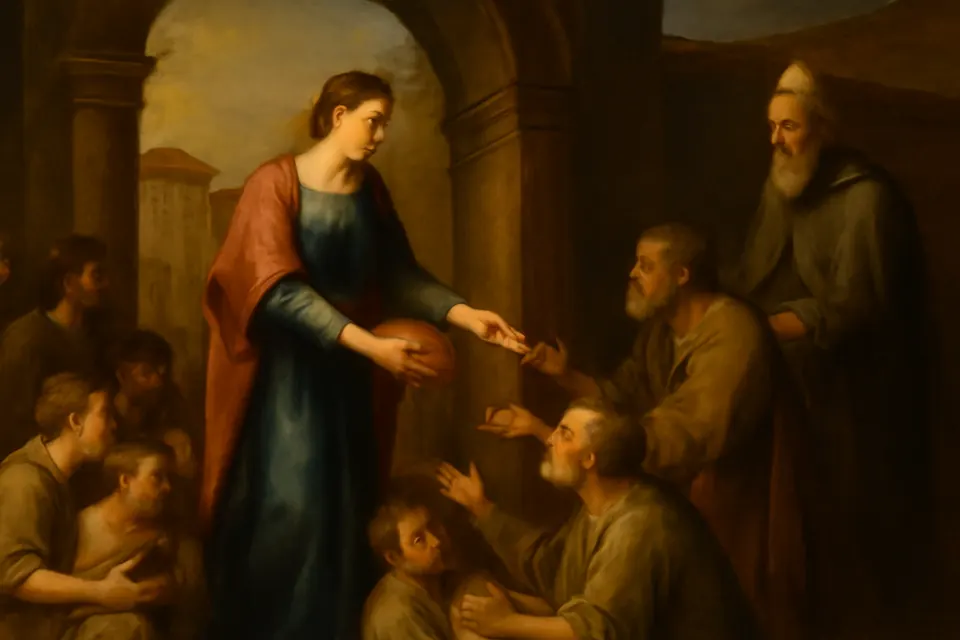
Stephen summoned her and wanted her for himself. When she refused, he had her beheaded at once. In the words of Caxton's English translation:
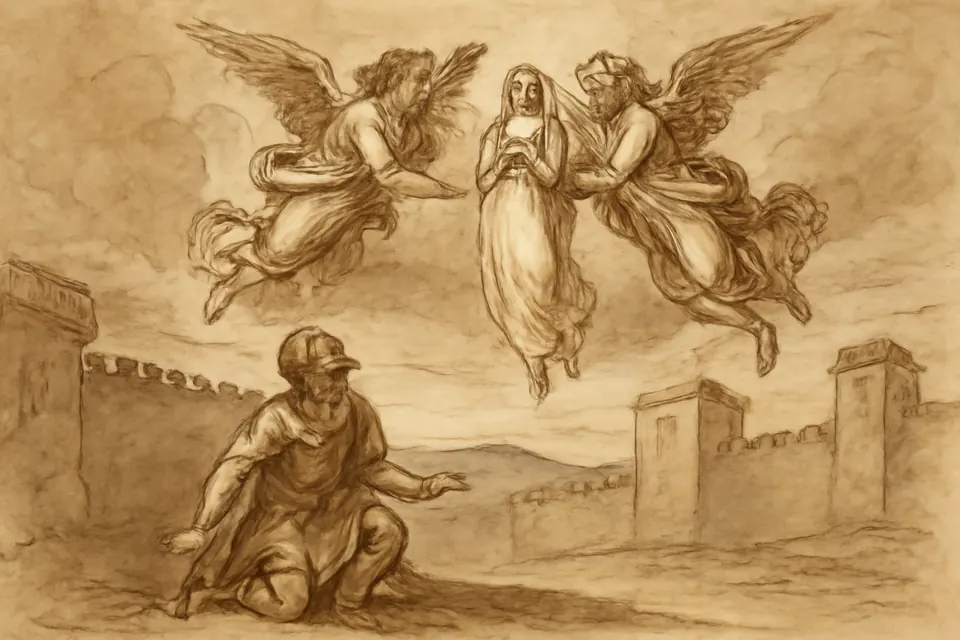
Then the squire that beheaded her heard the angels sing, [who bore] the soul of the holy virgin into heaven, with much great joy and solemnity, and anon he returned unto his master and told him all that he had seen and heard, and [then] fell down dead at his feet.
Stephen was struck with fear and repented. In the best-known form of the story, Valerie herself walks, an angel at her side, to the altar where Martial is saying Mass and lays her head before him. Later retellings name her persecutor as a Roman proconsul, Junius Silanus, and her executioner as Hortarius.
The miracles of St. Valerie
Everything in her story is traditional: the conversion by Martial, the martyrdom, the angels' song, and above all the miracle of carrying her head. Saints shown this way are called cephalophores, "head-carriers," and France has several, the most famous being St. Denis of Paris. Favors granted through her intercession at Limoges and Chambon over many centuries are reported, part of a living devotion, never examined in a formal process.

St. Valerie and the dukes of Aquitaine
In the twelfth century the legend grew. Valerie became the only daughter and heiress of a duke of Aquitaine, and Stephen, converted by Martial, became the model of a Christian prince. The Plantagenets loved the story. According to the regional heritage project Limousin Médiéval, when Richard the Lionheart was installed as duke of Aquitaine at Limoges in 1171, "the ring of St. Valerie" was placed on his finger, a detail recorded by Geoffrey of Vigeois, who wrote only a decade later.
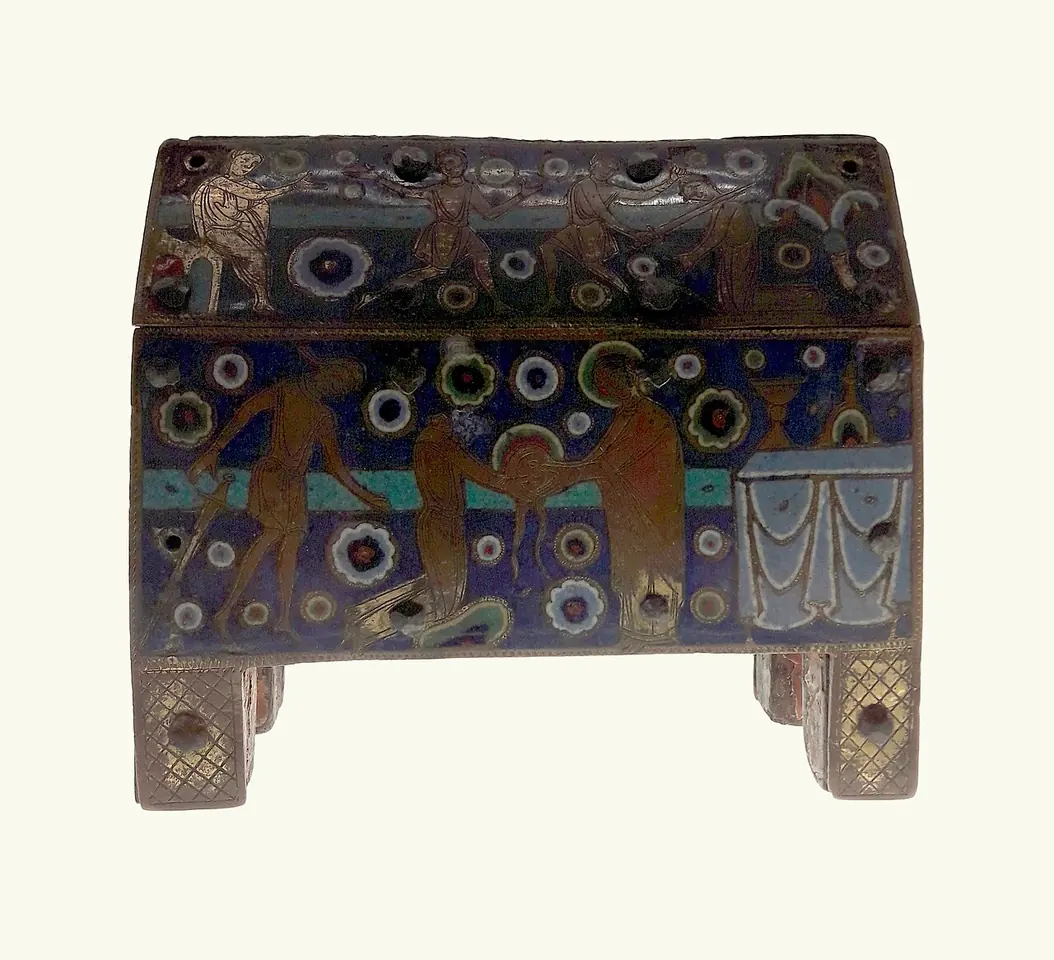
That royal favor helps explain why her martyrdom became one of the favorite subjects of the Limoges enamelers. More than twenty enameled chasses with her story survive from the thirteenth century, in the Louvre, the British Museum and churches across the Limousin.
Symbols of St. Valerie in art
- Carrying her own head: her unmistakable sign. She walks, often with an angel beside her, holding her crowned head in both hands.
- Kneeling before St. Martial: she offers her head to the bishop at the altar.
- The crown and the martyr's palm: marks of a noble virgin martyr.
- The executioner and the seated judge: on the enamels, her story runs like a comic strip, from the sentence to the beheading to the walk to the altar.
On the Limoges chasses, look at the front panel and the roof: the judgment and execution are below, and the procession to Martial's altar is above. If you see a woman with a crown carrying a head in a Limousin church, it is almost always Valerie. In Paris, a man doing the same will be St. Denis.
Her relics: Chambon-sur-Voueize and Limoges
Valerie's relics were kept by the monks of the abbey of Saint-Martial in Limoges. In 985 they carried her relics north to the banks of the Voueize, where a monastery grew up and gave birth to the town of Chambon-sur-Voueize. Her skull rests there in a silver reliquary bust made, according to a study of its enameled coats of arms, between 1368 and 1378; the shields include those of King Charles V of France and Queen Joan of Bourbon. The head and body of the bust are made as two pieces, a quiet reminder of her martyrdom.
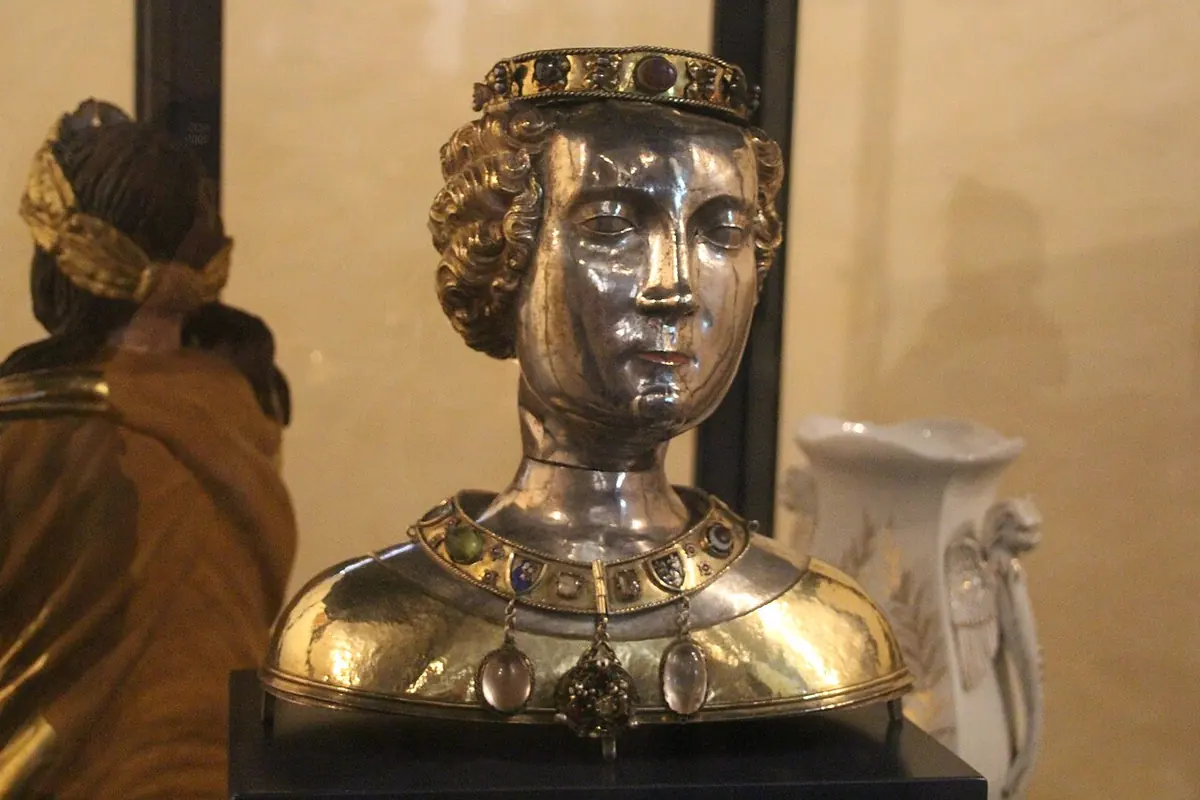
Other relics of Valerie are kept in the Basilica of Saint-Michel-des-Lions in Limoges, with those of St. Martial, and a replica of the Chambon bust was made for that church in 1911.

Where the relics of St. Valerie of Limoges are kept: see them on the relics map →
Feast day and prayer
We keep St. Valerie's feast on December 9. She is not on the General Roman Calendar; Limoges and the Limousin honor her, above all at Saint-Michel-des-Lions and Chambon-sur-Voueize. See other saints of December on our feast days page.
We have not found a traditional prayer to St. Valerie in English with a source we could verify, so we don't print one. The Golden Legend teaches us how to honor her: by keeping our promises to God when the world presses us to break them. Let us ask St. Valerie to pray for young people who are trying to stay faithful to Christ, and for the Church of Limoges that loves her.
Frequently asked questions
When is the feast day of St. Valerie of Limoges?
December 9. She is not on the General Roman Calendar; her feast is kept in Limoges and the Limousin, especially at Saint-Michel-des-Lions and at the abbey church of Chambon-sur-Voueize.
Why is St. Valerie shown carrying her head?
Her legend says that after she was beheaded for refusing a pagan suitor, she stood up, took her head in her hands and carried it to St. Martial, the bishop who had baptized her, as he celebrated Mass. Saints shown this way are called cephalophores. The story is traditional.
Was St. Valerie of Limoges a real person?
No early record of her survives. Her story is told in the eleventh-century Life of St. Martial, which the Catholic Encyclopedia calls apocryphal. Historians treat her as a figure of legend, though her cult in Limoges is very old.
Where are the relics of St. Valerie?
Her skull is kept in a silver reliquary bust of the late fourteenth century in the abbey church of Chambon-sur-Voueize, where monks brought her relics in 985. Other relics are in the Basilica of Saint-Michel-des-Lions in Limoges.
Keep exploring
Sources
- Limousin Médiéval (limousin-medieval.com): Sainte Valérie. The translation to Chambon in 985, the reliquary bust and its collar (1368–1378), Richard the Lionheart and the ring of St. Valerie, and the twenty enamel chasses
- Catholic Encyclopedia (1910): Limoges. Gregory of Tours on St. Martial, and the late, apocryphal Life of Martial
- Columbia University, Treasures of Heaven: Saint Valerie. Her legend as retold in the Golden Legend (Caxton)
- Columbia University, Treasures of Heaven: Reliquary Chasse with St. Valerie (British Museum). The scenes on the chasse and the Plantagenet devotion