St. Gatianus of Tours (St. Gatien): First Bishop of Tours

St. Gatianus of Tours (St. Gatien) was the first bishop of Tours. Gregory of Tours writes that he was sent from Rome to Gaul in the reign of the emperor Decius, about 250, and spent some fifty years there, celebrating the Lord's Day in caves and hiding places with a handful of converts. The cathedral of Tours bears his name. His feast is December 18.
Who was St. Gatianus of Tours?
St. Gatianus of Tours, called St. Gatien in French, was the missionary bishop who planted the Church in Tours, the city that St. Martin would later make famous. He came from Rome in the middle of the third century, found a city given over to the old gods, and spent about fifty years quietly gathering a Christian flock, often in hiding. We keep his feast on December 18.
Almost all we know of him comes from one of his successors, St. Gregory of Tours, who was bishop of Tours from 573 and wrote the history of his church. The Catholic Encyclopedia says plainly that "we are indebted" to Gregory "for the only details we possess concerning his holy predecessor."
Sent from Rome with six other bishops
Gregory tells the story in the first book of his History of the Franks. Under the emperor Decius, when persecution was raging, "seven men were ordained as bishops and sent into the Gauls to preach." He names them: "bishop Catianus to Tours; bishop Trophimus to Arles; bishop Paul to Narbonne; bishop Saturninus to Toulouse; bishop Dionisius to Paris; bishop Stremonius to Clermont, bishop Martial to Limoges."
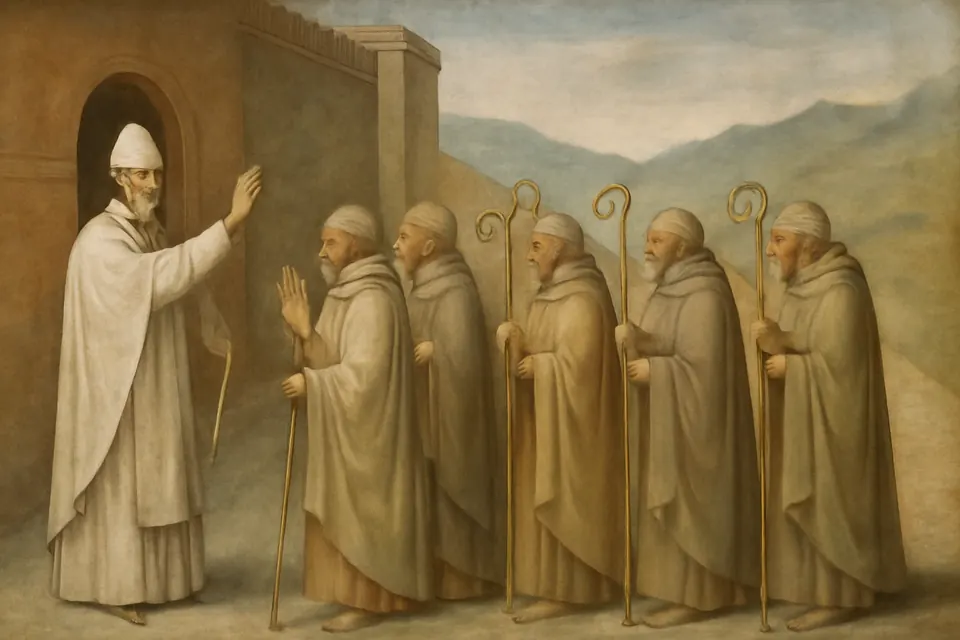
Two of the seven, St. Denis of Paris and St. Saturninus of Toulouse, died as martyrs. Of the others, Gatianus among them, Gregory writes that they "lived in the greatest sanctity, winning people to the church and spreading the faith of Christ among all, and died in peace, confessing the faith."
Gregory took his date, the consulship of Decius and Gratus (250), from the account of St. Saturninus's martyrdom. The Roman Martyrology adds that Gatianus was consecrated by Pope St. Fabian, who was himself martyred under Decius. The Catholic Encyclopedia notes that the historian Louis Duchesne considered the date doubtful and placed the founding of the Church of Tours in the time of Constantine. Gregory's account remains the tradition of Tours.
Fifty years in hiding
In his last book, where he lists the bishops of Tours one by one, Gregory gives Gatianus a short paragraph. In our own translation from his Latin:
Gatianus the bishop was sent by the pope of the Roman see in the first year of the reign of Decius. In that city lived a multitude of pagans given over to idolatry, some of whom he turned to the Lord by his preaching. But at times he hid himself because of the attacks of the powerful, who often heaped insults and abuse on him when they found him, and with a few Christians whom he had converted he celebrated the mystery of the Lord's Day in secret, in crypts and hiding places.
Gregory adds that Gatianus "was very devout and feared God," for otherwise he would never have left home, family and country for love of the Lord. He lived in Tours, "as they say, fifty years," died in peace, and was buried in the cemetery of the Christian quarter. After him, Gregory says, the see stood empty for thirty-seven years, because the Christians of Tours still had to worship "secretly and in hiding."
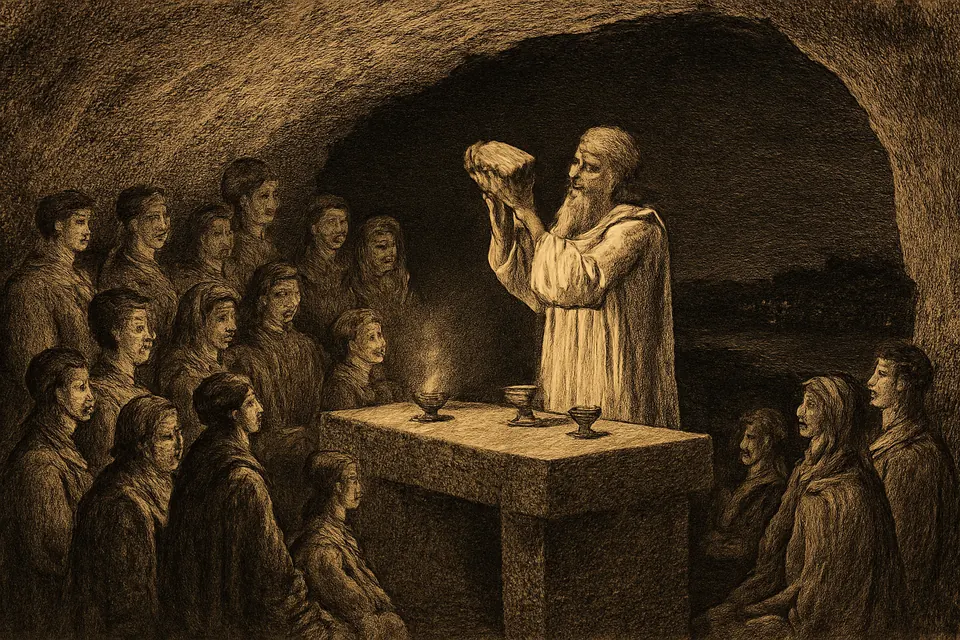
Tours remembered where he prayed. The Catholic Encyclopedia mentions two grottoes cut into the hillside above the Loire, opposite the city, "held to have been the first sanctuaries where St. Gatianus celebrated the Liturgy." That is a traditional identification, cherished in Tours but not proven.
The legend of the seventy-two disciples
In the Middle Ages a more glorious story grew up. Legends that the Catholic Encyclopedia says cannot be traced before the twelfth century made Gatianus one of the seventy-two disciples of Christ, sent to Gaul by St. Peter himself. Similar legends grew around St. Denis and St. Martial. The Catholic Encyclopedia judges this claim "untenable in the face of the testimony of Gregory of Tours," and we follow Gregory.
Miracles
Alban Butler says Gatianus "died in peace, and was honoured with miracles," and the Roman Martyrology calls him "celebrated for many miracles." These are traditional: no account of particular miracles survives from Gregory or any early source.
The Cathedral of Saint-Gatien
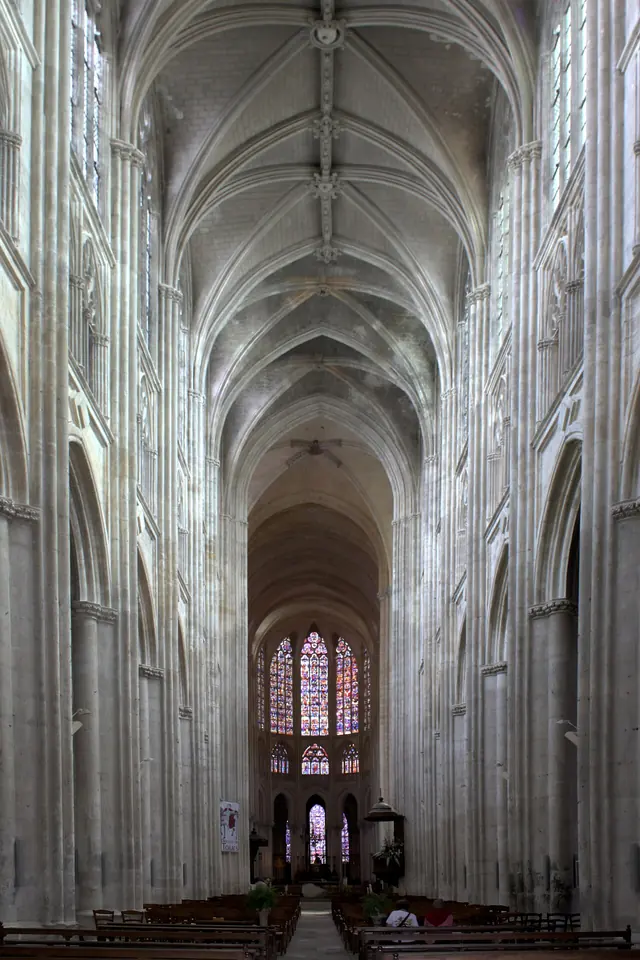
The cathedral of Tours carries his name. It was built over three centuries, from the thirteenth to the sixteenth, and its thirteenth-century windows are among the finest in France. The two towers of the west front are crowned with Renaissance lanterns.

Symbols of St. Gatianus in art
St. Gatianus is shown as a bishop with miter and crozier, sometimes with the Gospel book he carried to Gaul. A cave or grotto recalls the hidden worship of his fifty years in Tours.
Feast day and prayer
We keep his feast on December 18; see our feast day calendar. There is no traditional English prayer to him in common use. Let us pray for missionaries and for Christians who must worship in secret today: St. Gatianus, first shepherd of Tours, faithful through fifty hidden years, pray for all who carry the Gospel to places that do not yet welcome it, and for the persecuted Church.
Frequently asked questions
Who was St. Gatianus of Tours?
The founder and first bishop of the Church of Tours in Gaul. According to Gregory of Tours, he was one of seven bishops sent from Rome to Gaul about 250. He worked among a largely pagan population, often in hiding, for about fifty years and died in peace.
Why is Tours Cathedral called Saint-Gatien?
The cathedral of Tours, built between the thirteenth and sixteenth centuries, is dedicated to St. Gatianus (Gatien in French), the founder of the diocese.
Was St. Gatianus one of the seventy-two disciples of Jesus?
A medieval legend, not found before the twelfth century, made him one of the seventy-two disciples sent to Gaul by St. Peter. The Catholic Encyclopedia calls that claim untenable against the testimony of Gregory of Tours, who places him in the third century.
When is the feast of St. Gatianus of Tours?
December 18 in the Roman Martyrology.
Keep exploring
Sources
- Gregory of Tours, History of the Franks, tr. Ernest Brehaut (1916), Internet Medieval Sourcebook. Book I, chapter 30 (the seven bishops) and the vacancy of the see after Gatianus
- Gregory of Tours, Historiarum Libri Decem, Book X (Latin text, The Latin Library). Chapter 31, the list of the bishops of Tours, translated here by the editors
- Catholic Encyclopedia (1909): St. Gatianus. The legend of the seventy-two disciples and its refutation
- Catholic Encyclopedia (1912): Tours. The grottoes above the Loire, Duchesne's view of the date, and the cathedral dedicated to him
- Alban Butler, Lives of the Saints (1866), vol. XII: St. Gatian, First Bishop of Tours, Confessor (Bartleby, archived)
- The Roman Martyrology (English edition, 1916), Internet Archive. December 18