St. Vincent of Saragossa
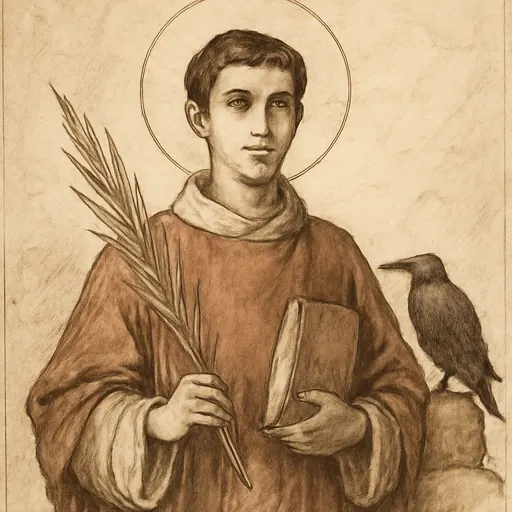
St. Vincent of Saragossa was a deacon of the Church of Saragossa, in Spain, who was tortured and died for Christ at Valencia in 304, during the persecution of Diocletian. He is the most famous martyr of Spain, the patron of winemakers and of Portugal, and his relics have been in Lisbon since 1173. His feast day is January 22 (January 23 in the United States).
Who was St. Vincent of Saragossa?
St. Vincent of Saragossa was a deacon of the Church in Saragossa (Zaragoza), in northeastern Spain, who died a martyr at Valencia in 304, in the last and worst of the Roman persecutions. The Catholic Encyclopedia calls him "this most renowned martyr of Spain." His name is in the Litany of the Saints, his feast was kept from Africa to Gaul within a century of his death, and his relics have rested in Lisbon since 1173.
He is easy to confuse with two later saints of the same name. St. Vincent Ferrer, the Dominican preacher of Valencia, lived a thousand years later, and St. Vincent de Paul was a French priest of the 1600s. This page is about the deacon and martyr.

Where his story comes from
Vincent's memory was honored very early. St. Augustine preached on his feast day in North Africa at the end of the fourth century, and in one sermon (Sermon 275) he tells his people that the Acts of Vincent's martyrdom were read aloud in church. Around the year 400 the Spanish poet Prudentius wrote a long hymn to him, the fifth poem of his Peristephanon ("On the Crowns of the Martyrs"). The Acts we have today are later, from the eighth or ninth century, but the Catholic Encyclopedia notes that they agree in substance with Prudentius. So the outline of the story is old and well attested, while some of the details grew in the telling.
The life and martyrdom of St. Vincent
Deacon to Bishop Valerius
Vincent was born in Saragossa; his mother, Enola, came from Huesca, which also claims him. He was trained by Valerius, the bishop of Saragossa, and ordained a deacon. Valerius had a speech impediment, so he gave Vincent the work of preaching for the diocese. The young deacon became, in effect, the bishop's voice.
Before the governor Dacian
In 303 the emperor Diocletian ordered the arrest of the clergy. Dacian, the governor in Spain, had Valerius and Vincent brought in chains from Saragossa to Valencia, where they were kept in prison and half starved. When they were finally brought before him, Dacian tried kindness first, promising favors if they would sacrifice to the gods. Because Valerius could not speak well, Vincent answered for both of them and refused. Valerius was sent into exile. Vincent was kept for torture.
The tortures
The Acts and Prudentius describe what he suffered: he was stretched on the rack and torn with iron hooks, then laid on a gridiron over a fire. Through it all, the old accounts say, he stayed calm and even seemed to smile. Then he was thrown into a dark cell whose floor was strewn with broken pottery, his feet locked in stocks.
There, the Acts say, God comforted him. Light filled the cell, his chains fell away, and the jailer heard him singing with angels; the jailer was converted. This part of the story is traditional.

Death on a soft bed
Dacian then changed his tactics and let the Christians tend the martyr's wounds. They laid him on a soft bed, and there Vincent died, on January 22, 304. Prudentius and the Acts both see this as God's last answer to the governor: the man who had survived every torment went to God in peace, surrounded by his friends.
The raven and the sea
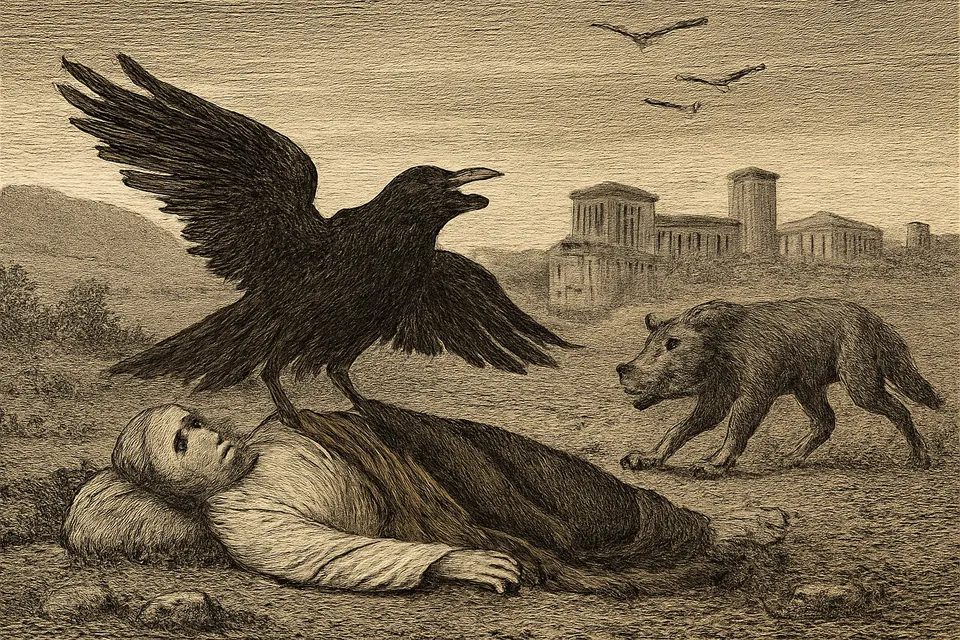
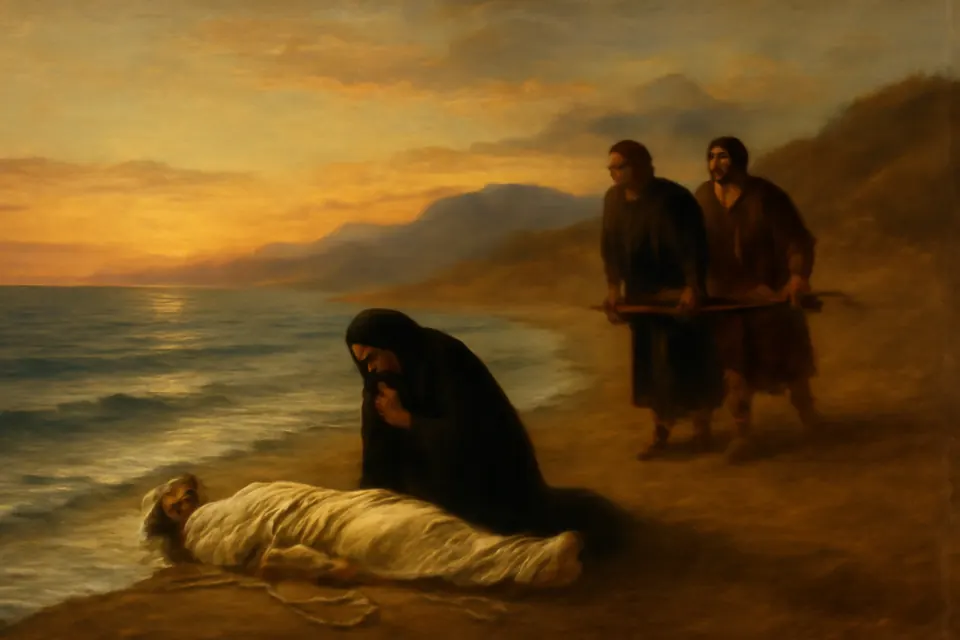
Dacian was not finished with him. He had the body thrown into an open field for the wild animals and birds to eat. The Acts say a raven guarded it and drove off the beasts. Then Dacian had the body sewn into a sack, weighted with a millstone, and dropped into the sea. It washed ashore, and a devout widow and other Christians buried it in secret near Valencia. When the persecution ended, a chapel was built over his grave outside the city walls. The raven, the millstone and the return from the sea are all traditional.
The miracles of St. Vincent
Vincent died long before the Church had a formal process for examining miracles, so none of his wonders is approved in the modern sense. Sorted by this encyclopedia's labels:
- His calm under torture and the light and angel song in his cell: traditional, from the Acts and Prudentius.
- The raven guarding his body: traditional.
- The body returning from the sea: traditional.
- The ravens that escorted his relics to Lisbon in 1173: traditional, a Lisbon civic legend told below.
Why St. Vincent is the patron of winemakers, Portugal and Lisbon
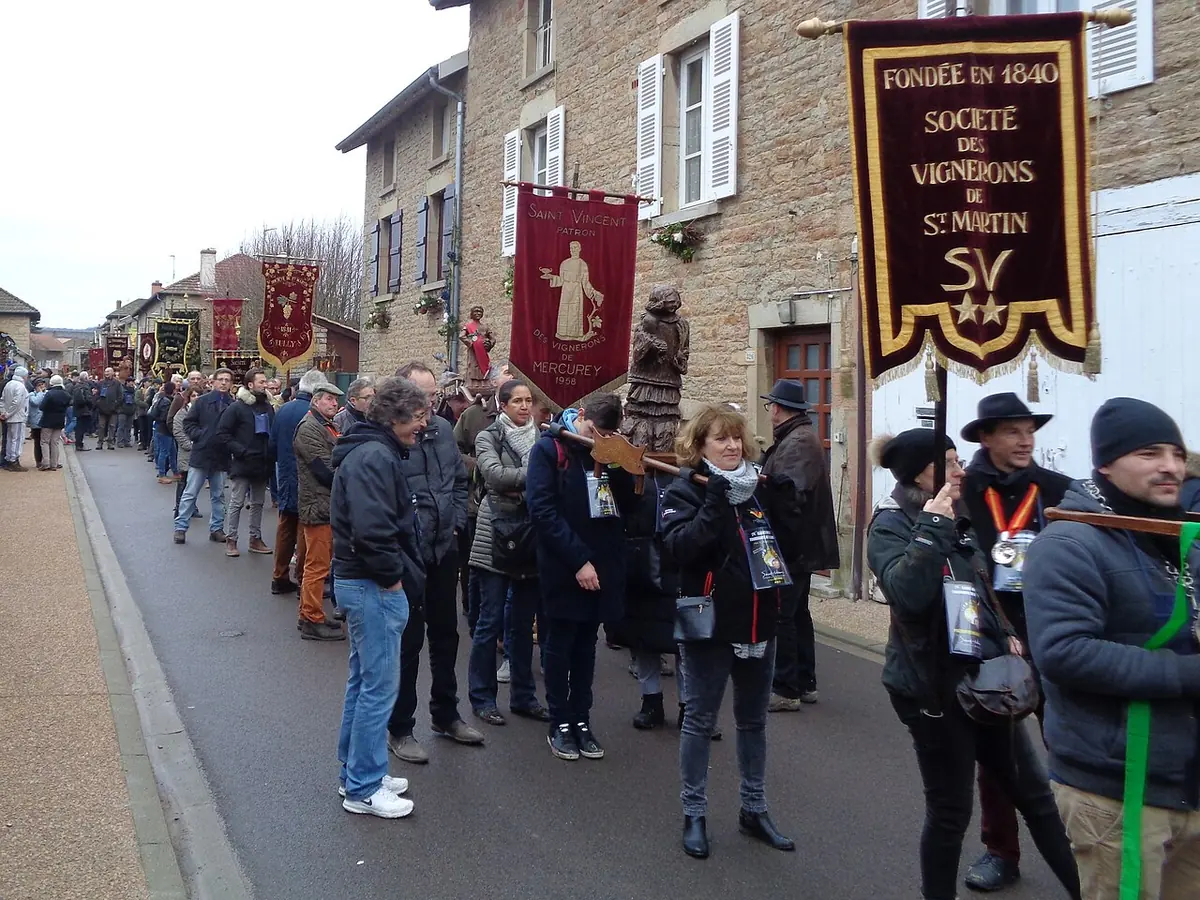
The Catholic Encyclopedia says he is "invoked by vintners, brickmakers, and sailors" and honored as patron in Valencia, Saragossa and Portugal. The sailors come from the sea story and the voyage of his relics. No early source explains the vintners. The devotion grew up among growers in France, Spain and Portugal in the Middle Ages, and popular explanations point to the "vin" in his name and to his feast falling in the dead of winter, when the vines are pruned and the growers have time to celebrate. In Burgundy, the winegrowers' societies still keep the Saint-Vincent Tournante every January, a festival that moves to a different village each year, with a procession of banners and statues of the saint. See more on our patron saints page.
Lisbon's devotion comes from his relics, told below. São Vicente was the patron of the city and of the kingdom of Portugal until he was replaced by St. Anthony of Padua, who was born in Lisbon: as patron of Portugal in 1930 and of the city in 1981.
Symbols of St. Vincent in art
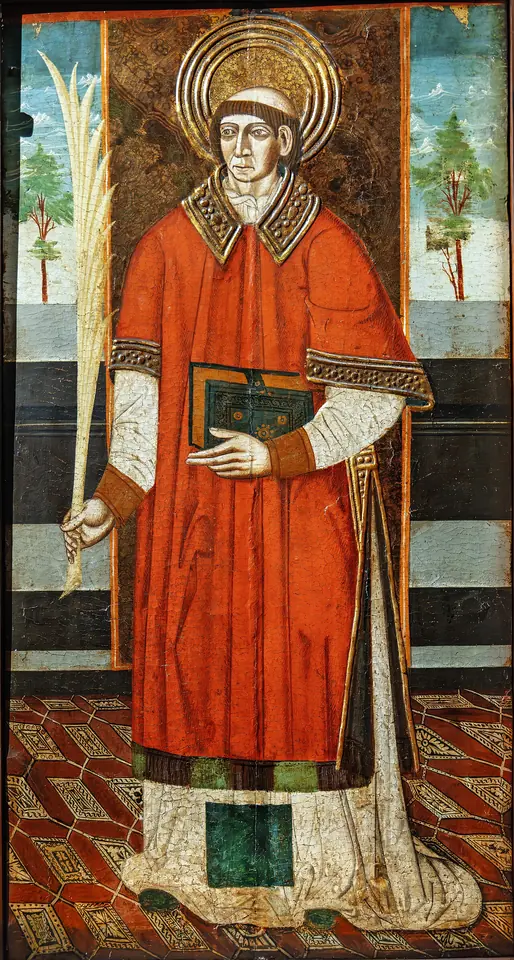
Vincent is almost always young and beardless, dressed as a deacon in a dalmatic, the wide-sleeved tunic deacons wear at Mass, often red for his martyrdom. Usually he carries a martyr's palm and a book, the Gospel he preached for his bishop. His other attributes tell his story:
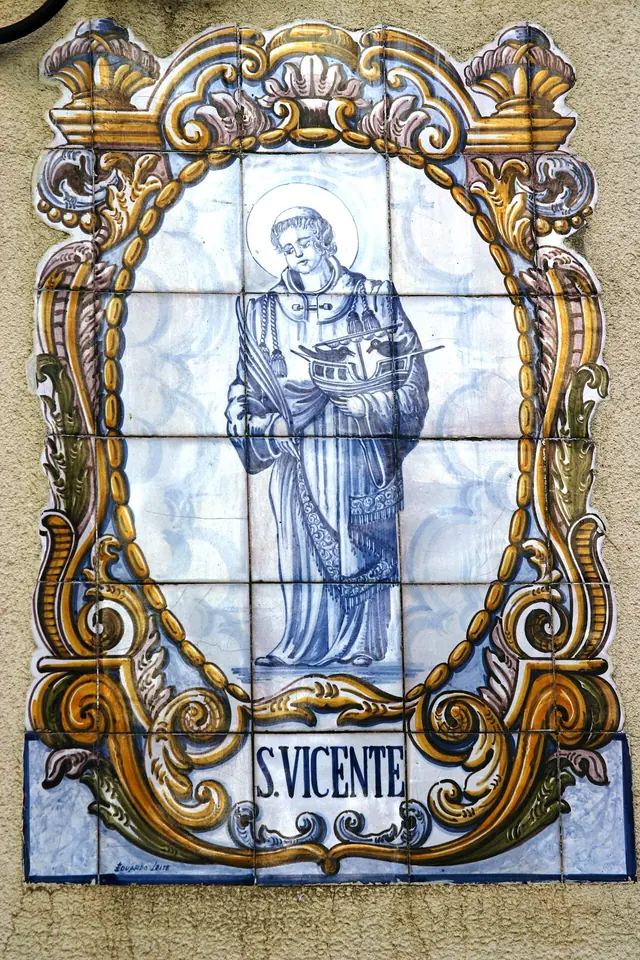
- A raven: the bird that guarded his body. In Portuguese art, a ship with two ravens stands for the voyage of his relics to Lisbon.
- A gridiron or a rack: his torture. The rack is sometimes painted as an X-shaped frame, as in the Martorell altarpiece.
- A millstone: the weight tied to his body when it was thrown into the sea.
- Iron hooks: the tools that tore his flesh.
The gridiron makes him easy to confuse with St. Lawrence, another young deacon martyr from Spain, who is also shown in a dalmatic with a gridiron. Look for the raven or the millstone: those belong to Vincent. Florentine painters often gave him a rich brocade dalmatic and no attribute at all, so the context (a chapel, a label, a companion saint) is your best guide.

His relics: Valencia, the Algarve and Lisbon
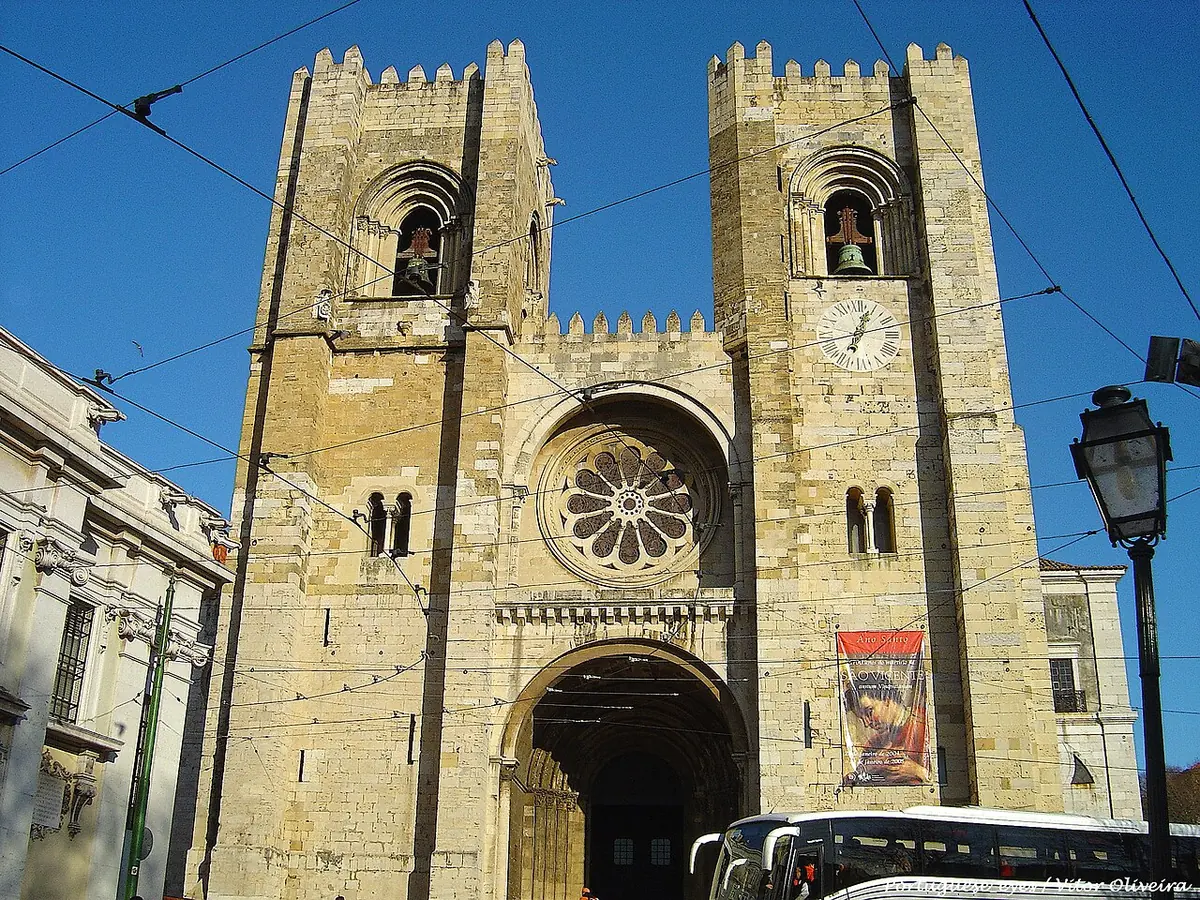
Vincent's grave outside Valencia drew pilgrims for centuries. Tradition holds that during the Muslim rule of Spain, Christians carried his relics west to the far southwestern tip of Portugal, the headland still called Cape St. Vincent. In 1173 the relics were brought by sea to Lisbon. They rested first in the church of Santa Justa, which was lost in the earthquake of 1755, and were later moved to the cathedral, where they are kept to this day. Lisbon tradition says two ravens kept watch on the boat the whole way, and the city still bears a ship with two ravens on its arms and flag.
Other churches have claimed relics too. The Catholic Encyclopedia mentions Castres in southern France, which says it received relics in 864, as well as Cremona and Bari, and records that a Frankish king brought Vincent's stole and dalmatic to Paris in 542 and built a church in his honor, later known as Saint-Germain-des-Prés.
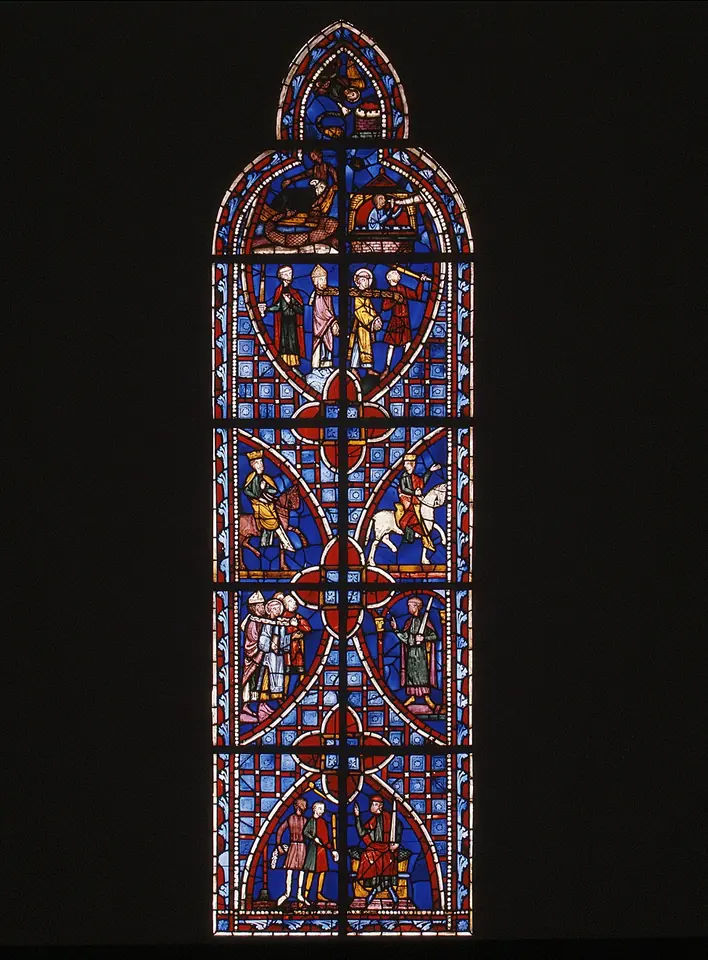
A thirteenth-century French window now in New York tells the whole story, from Vincent's tortures to the journeys of his relics, in small glowing scenes.
St. Vincent's feast day
We keep his feast on January 22, an optional memorial. In the dioceses of the United States it moves to January 23, because the 22nd is kept as the Day of Prayer for the Legal Protection of Unborn Children; St. Marianne Cope shares the 23rd with him. The Greek Church honors him on November 11. Find his neighbors on our feast days page.
Prayer to St. Vincent of Saragossa
The Church's prayer for his memorial is the collect of the day from the Roman Missal:
Almighty ever-living God, mercifully pour out your Spirit upon us, so that our hearts may possess the strong love by which the Martyr Saint Vincent triumphed over all bodily torments. Through our Lord Jesus Christ, your Son, who lives and reigns with you in the unity of the Holy Spirit, God, for ever and ever.
There is no older traditional prayer that we can trace with confidence. Many people simply ask his help in their own words: deacons for courage in preaching, winegrowers for their vines and harvest, and all of us for the strength to stay faithful under pressure. St. Vincent, deacon and martyr, pray for us.
Frequently asked questions
When is the feast of St. Vincent of Saragossa?
January 22 in the General Roman Calendar, an optional memorial. In the United States it is kept on January 23, because January 22 is the Day of Prayer for the Legal Protection of Unborn Children. The Greek Church remembers him on November 11.
Why is St. Vincent the patron saint of winemakers?
No old source explains it. The patronage grew up among the vine growers of France, Spain and Portugal in the Middle Ages. Popular explanations point to the "vin" at the start of his name and to his feast falling in late January, the quiet season when vines are pruned. In Burgundy the winegrowers' societies still honor him each January with the Saint-Vincent Tournante.
Why are there ravens on the flag of Lisbon?
Because of St. Vincent. His Acts say a raven guarded his body after his death, and Lisbon tradition says ravens escorted the boat that brought his relics to the city in 1173. The city's arms still show a ship with two ravens.
Is St. Vincent of Saragossa the same as St. Vincent de Paul or St. Vincent Ferrer?
No. Vincent of Saragossa was a deacon martyred in 304. St. Vincent Ferrer was a Dominican preacher from Valencia who died in 1419, and St. Vincent de Paul was a French priest of the 1600s who served the poor.
Keep exploring
- Patron saint pages
- Sailors
- Feast-day calendar
- Saints remembered in JanuarySaint of the day
- More
- Saints A to ZPatron saints A to ZExplore every section
Sources
- Catholic Encyclopedia (1912): St. Vincent
- Sabine Baring-Gould, The Lives of the Saints, vol. 1, January 22 (Project Gutenberg)
- Visit Lisboa: Uma barca e dois corvos, São Vicente, o antigo padroeiro de Lisboa
- USCCB: Proper Calendar for the Dioceses of the United States of America
- Catholic Culture: Optional Memorial of St. Vincent (collect of the day)
- Prudentius, Peristephanon V: Hymn in Honor of the Passion of the Most Blessed Martyr Vincent