St. Edmund the Martyr

St. Edmund the Martyr was the Christian king of East Anglia, in eastern England, killed by the Danish Great Heathen Army on November 20, 869. According to Abbo of Fleury's Passion of St. Edmund (about 985), he refused to give up his faith or rule as a pagan's under-king and was shot with arrows and beheaded. He was long honored as a patron saint of England, his shrine made Bury St Edmunds famous, and his feast day is November 20.
Who was St. Edmund?
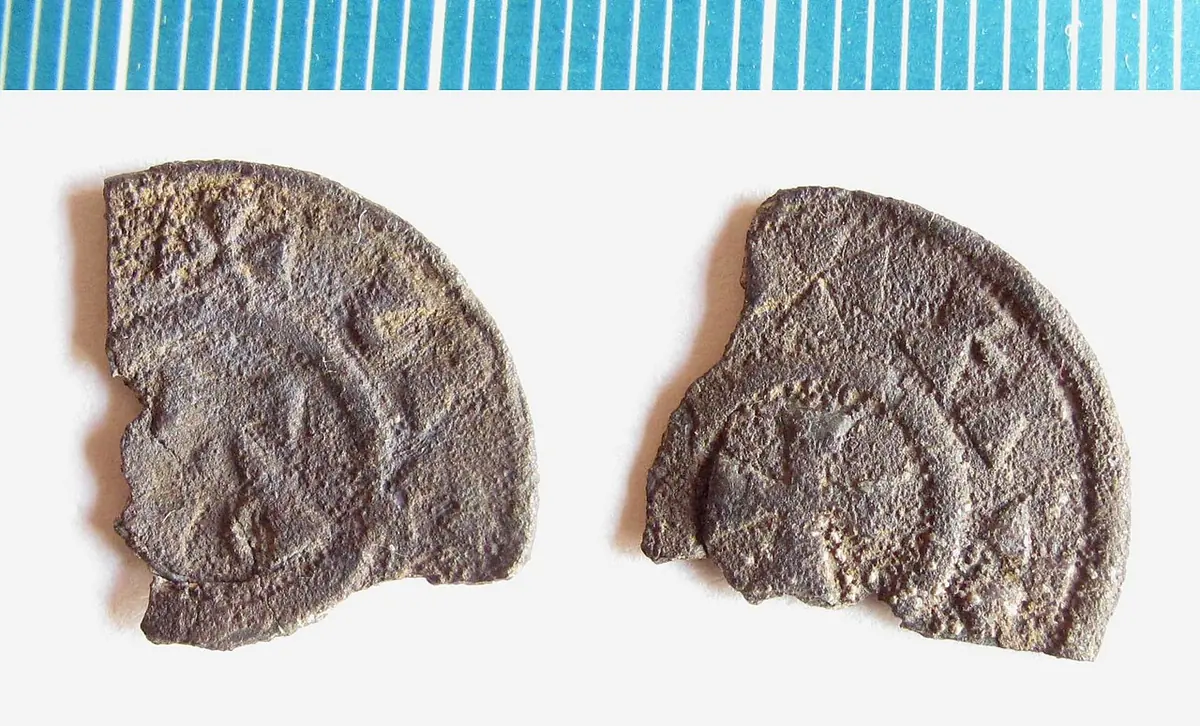
Edmund was the king of the East Angles, the people of what is now Norfolk and Suffolk, in the middle of the 9th century. Silver pennies struck in his name show he reigned from about 855. In the autumn of 869 the Great Heathen Army, the Danish force that had been ravaging England for four years, came into his kingdom, and on November 20 they killed him. Within a generation he was venerated as a martyr, and for centuries the English counted him among their national patrons.
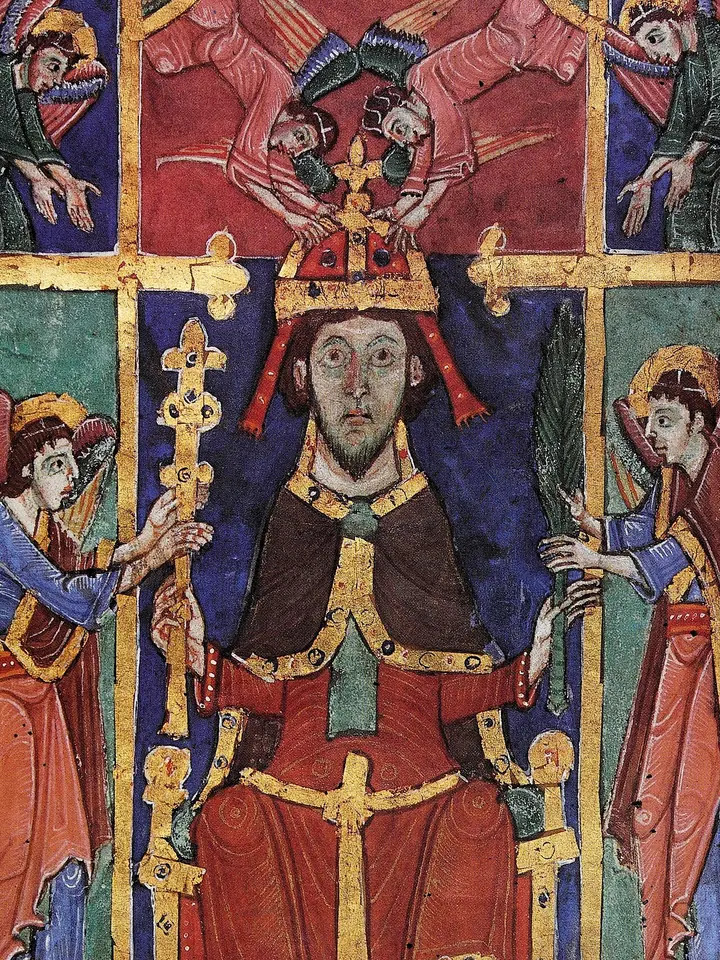
He should not be confused with two later English saints of the same name: St. Edmund of Abingdon, archbishop of Canterbury in the 13th century, and St. Edmund Campion, the Jesuit martyred in 1581.
What the sources say
The oldest record is one line in the Anglo-Saxon Chronicle, under the year 870: the army rode into East Anglia and wintered at Thetford, "and in the winter King Edmund fought with them; but the Danes gained the victory, and slew the king." The Chronicle's year began in the autumn, so historians date his death to November 20, 869. It names the Danish leaders as Hingwar and Hubba (Ivar and Ubba).
The full story of his martyrdom comes from Abbo, a monk of Fleury in France, who wrote the Passion of St. Edmund in Latin around 985, more than a century after the events. Ælfric, the English abbot who translated it into Old English a few years later, explains where Abbo got it: Archbishop Dunstan told him the story as Dunstan had heard it as a young man, from an old man who had been Edmund's sword-bearer. That is a short chain of witnesses for the early Middle Ages, but it is still an account written down 115 years later, shaped as a saint's life.

The two sources differ. The Chronicle says Edmund fought and lost. Abbo says he refused to fight, threw down his weapons and gave himself up. Both may hold part of the truth: a lost battle followed by capture.
The martyrdom of St. Edmund
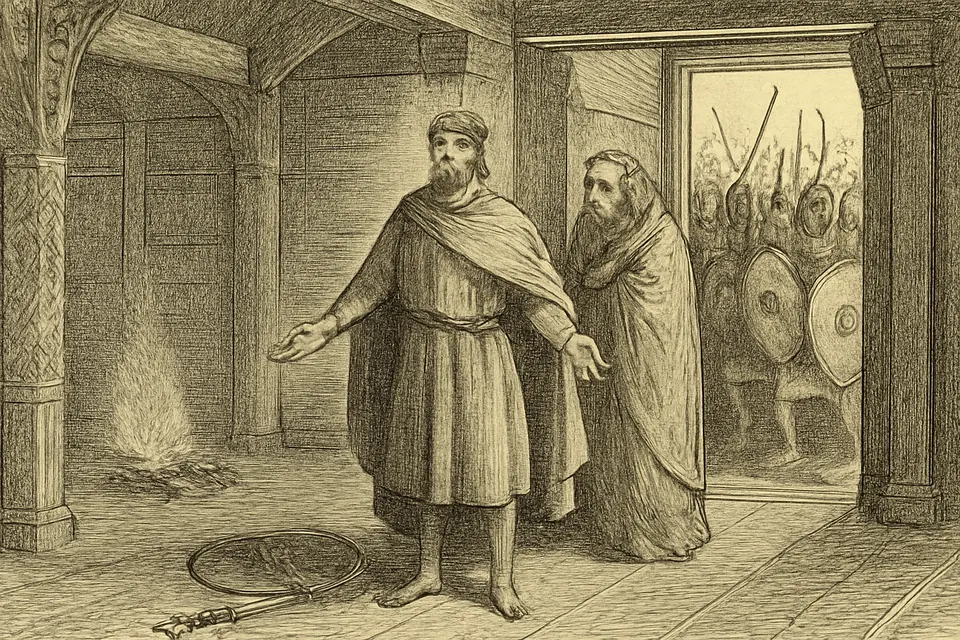
In Abbo's account, retold by Ælfric, Hingwar sent a messenger demanding that Edmund share his treasure and rule as his under-king. A bishop advised him to submit. Edmund refused. "It was never my custom to take to flight," Ælfric has him say, and he told the messenger that he would never bow to the heathen leader "unless he will first bow, in this land, to Jesus Christ with faith."
The Danes seized him in his hall, beat him, tied him to a tree and whipped him. He kept calling on Christ. Then they shot at him with javelins until he was covered with them "as with a porcupine's bristles, even as Sebastian was," and finally cut off his head. Later art turned the javelins into arrows, and the arrow became his emblem. The place, called Hægelisdun, has never been identified for certain; Hoxne in Suffolk is the traditional site, and Bradfield St. Clare and Hellesdon in Norfolk have also been proposed.
The miracles of St. Edmund
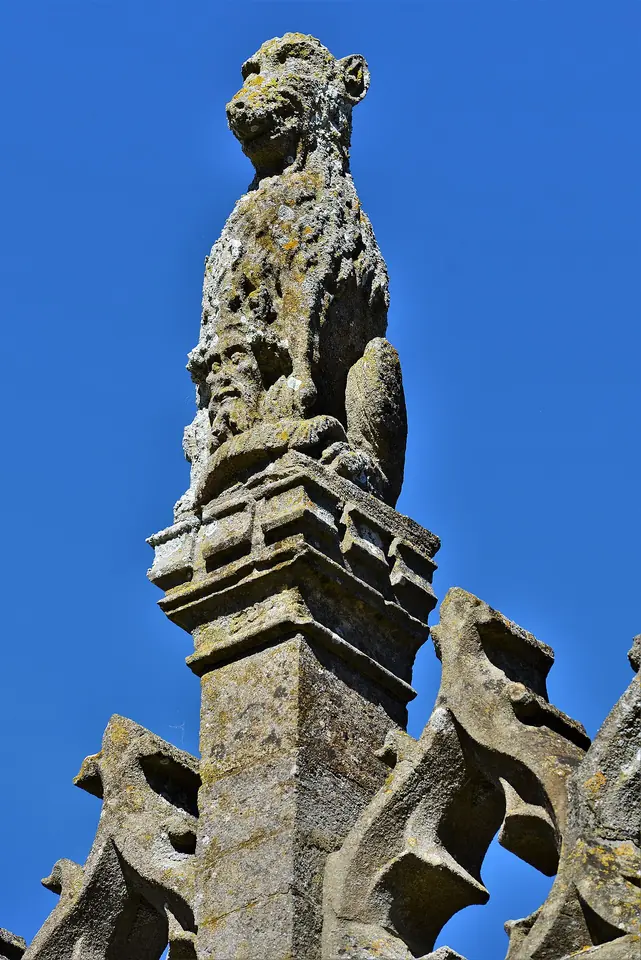
The wolf and the head (traditional). The Danes hid Edmund's head in thick brambles. When his people searched the wood, calling "Where art thou now, comrade?", the head answered, "Here, here, here." They found a gray wolf holding it between its forepaws, guarding it from other beasts without daring to eat it. The wolf followed them to the town "as if he were tame" and then went back to the wood.
The incorrupt body (traditional). When the body was later moved into a new church, Ælfric reports, it was found whole, with a thin red line like a silk thread around the healed neck.
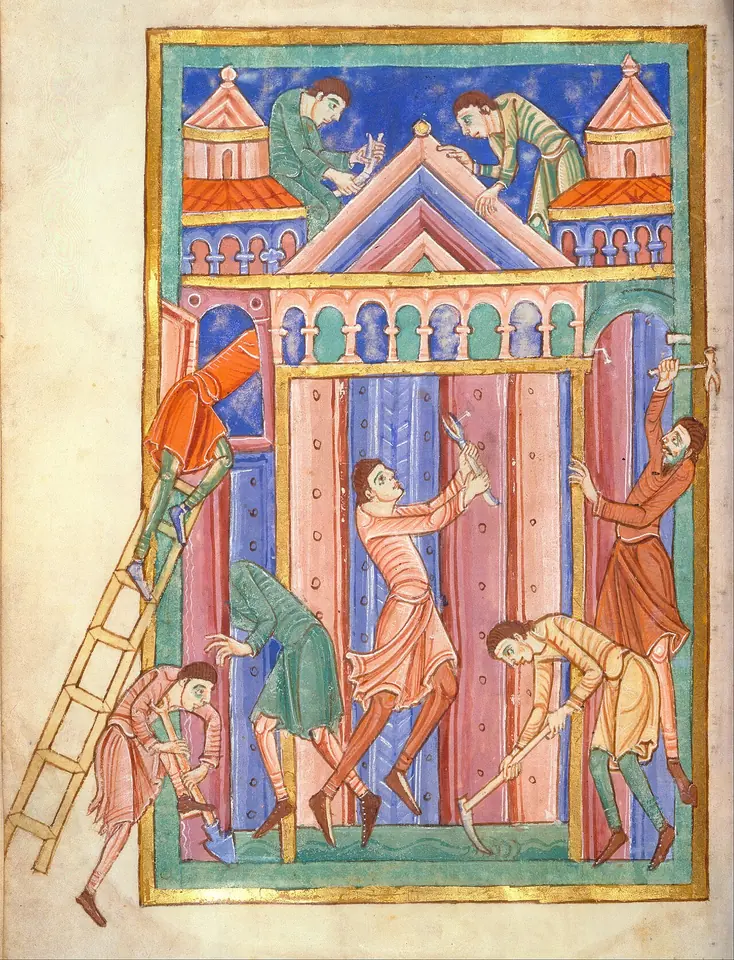
The thieves (traditional). Eight thieves who tried to break into his church one night were held fast where they stood, one on a ladder, one digging under the door, until morning.
Healings at his shrine (reported). Ælfric says miracles were frequently done at his burial place. Bury's monks recorded many more over the following centuries; none was investigated in the modern sense.
Why St. Edmund is a patron saint of England
Devotion began fast. Within about thirty years of his death, around 895 to 910, the Danish settlers who now ruled East Anglia were themselves minting silver pennies in honor of "St. Edmund," a sign of how quickly his killers' descendants accepted him.
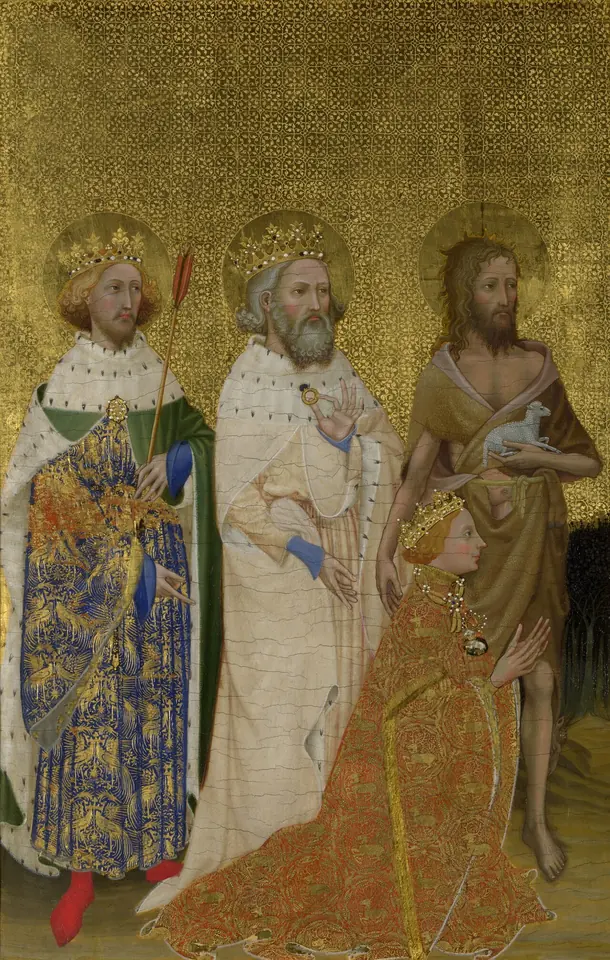
His body was moved in the 10th century to Beodricesworth, the town later called St. Edmundsbury and now Bury St Edmunds, where a great Benedictine abbey grew up around his shrine and drew pilgrims from all over Europe. English kings honored him. In the Wilton Diptych, painted for Richard II in the 1390s, Edmund holds his arrow beside Edward the Confessor; the National Gallery calls the two "England's patron saints." St. George gradually took the leading place in the later Middle Ages, but Edmund was never forgotten. He is also a natural patron of kings. See more on our patron saints page.
Symbols of St. Edmund in art
Look for a young crowned king, usually bearded, with:
- One or more arrows, his most common attribute, for his martyrdom.
- A crown, orb and scepter, for his kingship.
- A wolf with a crowned head between its paws, found on church carvings, bench ends and village signs across Norfolk and Suffolk.
- A sword, which the Catholic Encyclopedia lists with the arrow as an instrument of his death.
Feast day and where St. Edmund is honored
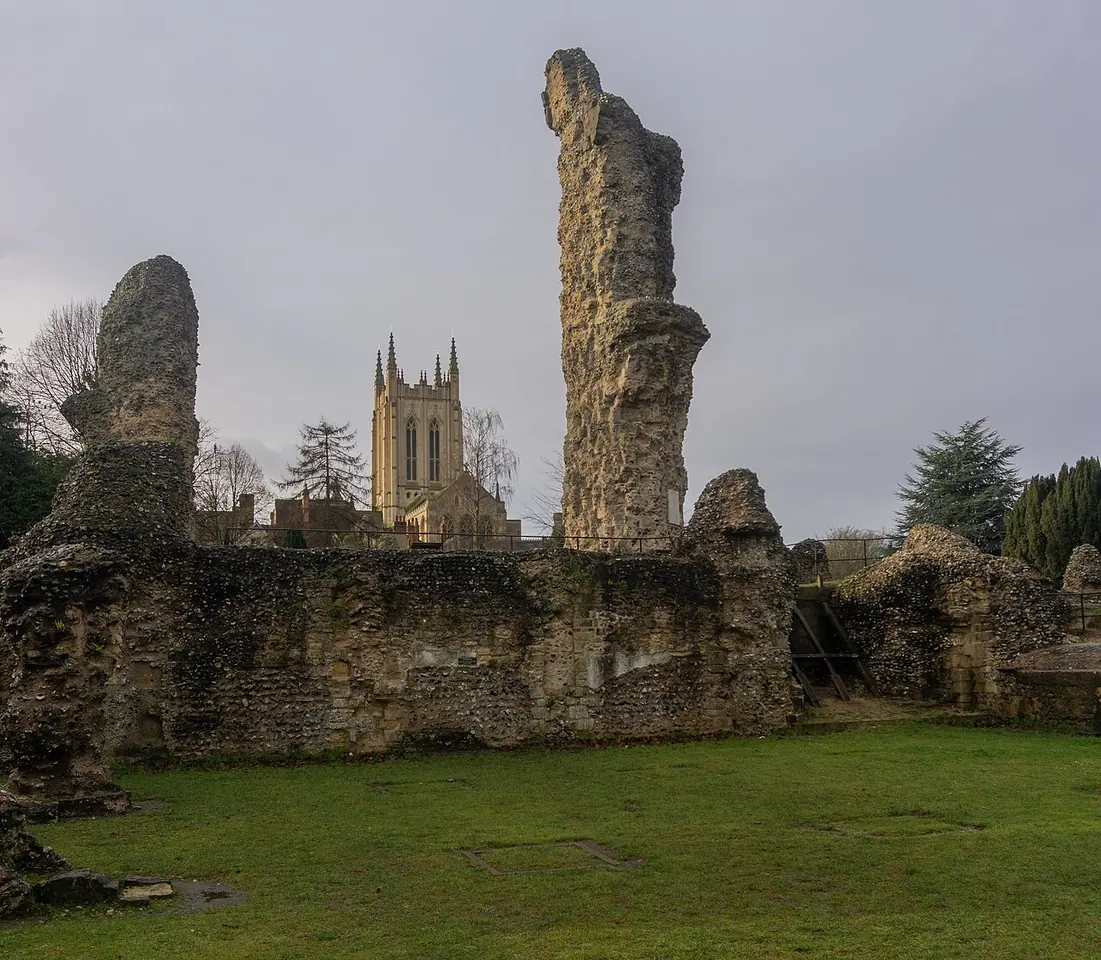
His feast is November 20 (see our feast days page). The abbey at Bury St Edmunds was dissolved in 1539 and its shrine destroyed; what happened to his body is unknown, and some local historians think it may still lie somewhere in the abbey grounds. Relics sent from Toulouse to England in 1901, claimed to be his, are judged not to be authentic by the historian Francis Young. The flint ruins stand today in the Abbey Gardens, beside St Edmundsbury Cathedral.
No traditional prayer to St. Edmund is in wide use today. Catholics and Anglicans in East Anglia keep his feast with Mass and with the collects of their own calendars, and ask his intercession in their own words.
Frequently asked questions
Who was St. Edmund the Martyr?
The last native king of East Anglia, who ruled from about 855 until the Danes killed him on November 20, 869. The Church honors him as a martyr because, in the earliest full account of his death, he died refusing to deny Christ.
What is the legend of St. Edmund and the wolf?
After the Danes beheaded Edmund, they hid his head in the woods. When his people searched for it, the head called out "Here, here, here," and they found a gray wolf holding it between its paws, guarding it from other animals without eating it. The wolf followed them to the town and went back to the forest. The story comes from Abbo of Fleury's Passion and Ælfric's English retelling and is traditional.
When is St. Edmund's feast day?
November 20, the anniversary of his death in 869. It is in the Roman Martyrology and the calendar of the Church of England.
Is St. Edmund the same as St. Edmund of Abingdon or St. Edmund Campion?
No. St. Edmund the Martyr was a 9th-century king. St. Edmund of Abingdon was a 13th-century archbishop of Canterbury (feast November 16), and St. Edmund Campion was a Jesuit priest executed in London in 1581 (feast December 1).
Sources
- Catholic Encyclopedia (1909): St. Edmund the Martyr
- Ælfric's Lives of Saints: Of Saint Edmund (Skeat translation), Wikisource
- The Anglo-Saxon Chronicle, entry for 870 (Ingram translation), Project Gutenberg
- National Gallery, London: The Wilton Diptych
- Catholic Diocese of East Anglia: Could prayers to St Edmund help end the pandemic? (John Saunders, 2020)
- Francis Young: A relic of St Edmund (2026)
- Abbo of Fleury, Passio Sancti Eadmundi (about 985)
- Roman Martyrology, November 20