St. Edward the Martyr
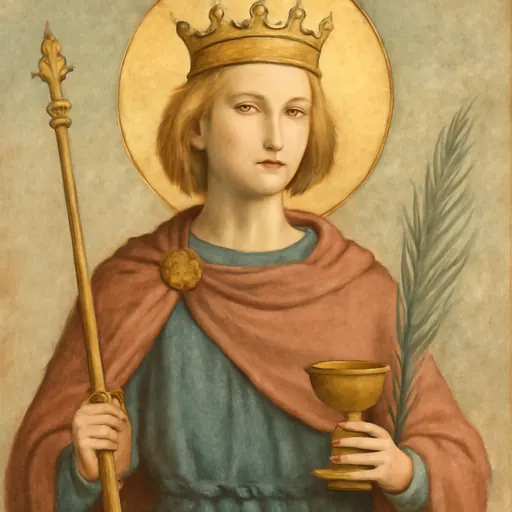
St. Edward the Martyr was King of England from 975 until he was murdered at Corfe in Dorset on March 18, 978, at about sixteen. He was killed by men loyal to his stepmother's son Ethelred and was soon honored as a saint and martyr at Shaftesbury Abbey. His feast day is March 18.
Who was St. Edward the Martyr?
St. Edward the Martyr was a King of England who was murdered at Corfe in Dorset on March 18, 978, when he was about sixteen years old. He was the eldest son of King Edgar the Peaceful, came to the throne in 975, and reigned less than three years. Within a few years of his death he was honored as a saint, and by the early 11th century his feast was kept across England. He is not to be confused with his half-nephew, St. Edward the Confessor, who reigned in the 1040s and 1050s.
The Church honors him as a martyr in a broad sense. He did not die for refusing to deny Christ. The Catholic Encyclopedia explains that the violence of his death, together with the fact that he had defended the Church against an irreligious party, won him the title, which he bears "in all the old English calendars on 18 March, also in the Roman Martyrology."

The life of St. Edward the Martyr
A disputed crown
When Edgar died in 975, the kingdom split over who should follow him. One party backed Edward. Another, led by his stepmother, Queen Elfrida (in Old English, Ælfthryth), backed her own son Ethelred, then about seven. Edward had the support of St. Dunstan, the Archbishop of Canterbury, and most of the nobles. The Catholic Encyclopedia says he was acknowledged by the Witan, the king's council, and crowned by Dunstan.
His short reign was troubled. Nobles who had resented the monasteries founded and enriched under Edgar now seized their lands, and the quarrel ran along the same lines as the quarrel over the throne. Edward stood with Dunstan and the monks.
The murder at Corfe
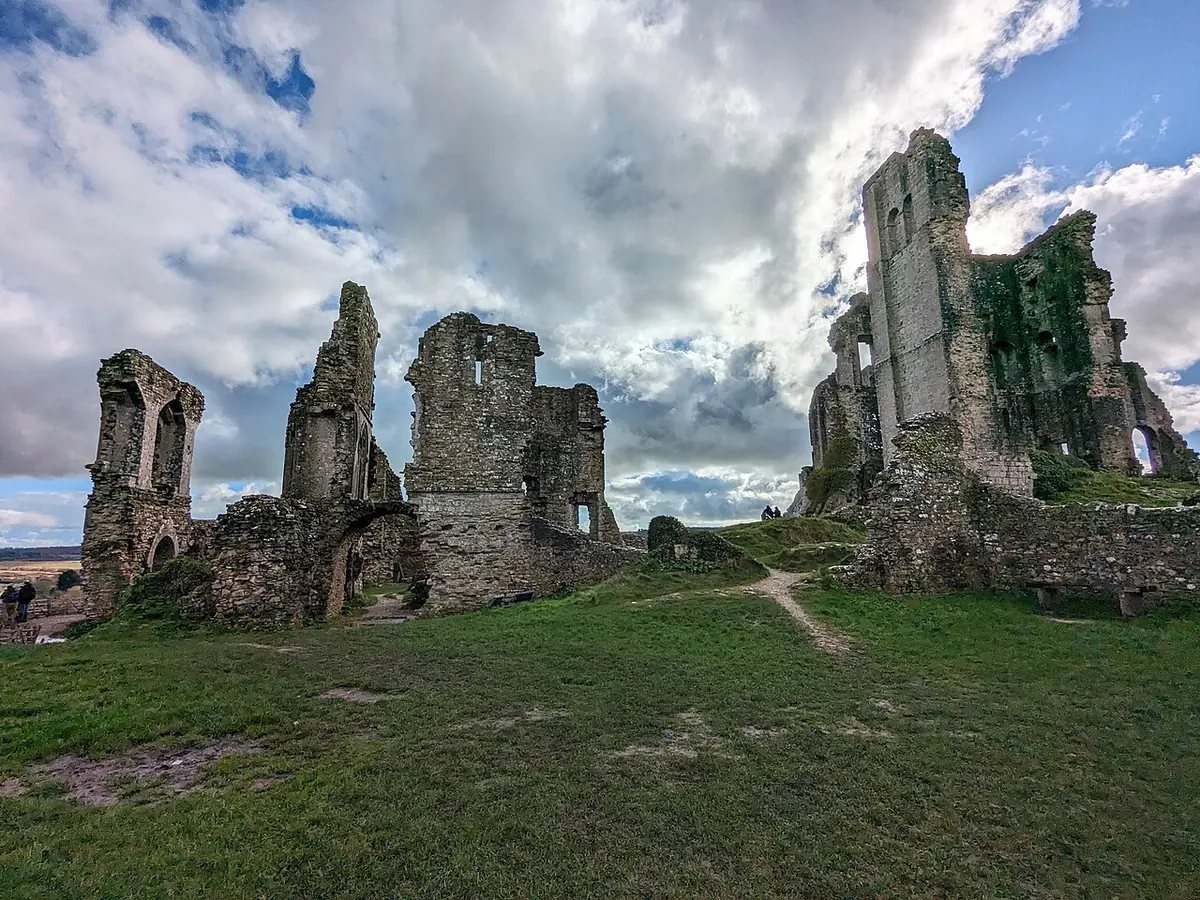
On March 18, 978, Edward rode to Corfe, where his stepmother and half-brother were staying. The Anglo-Saxon Chronicle says only that he "was slain, at eventide, at Corfe-gate." Later writers filled in the scene that became famous: the young king, still on horseback, takes a cup of mead offered at the gate, and while he drinks, an attendant stabs him. He spurs his horse away, falls, and is dragged by the stirrup.
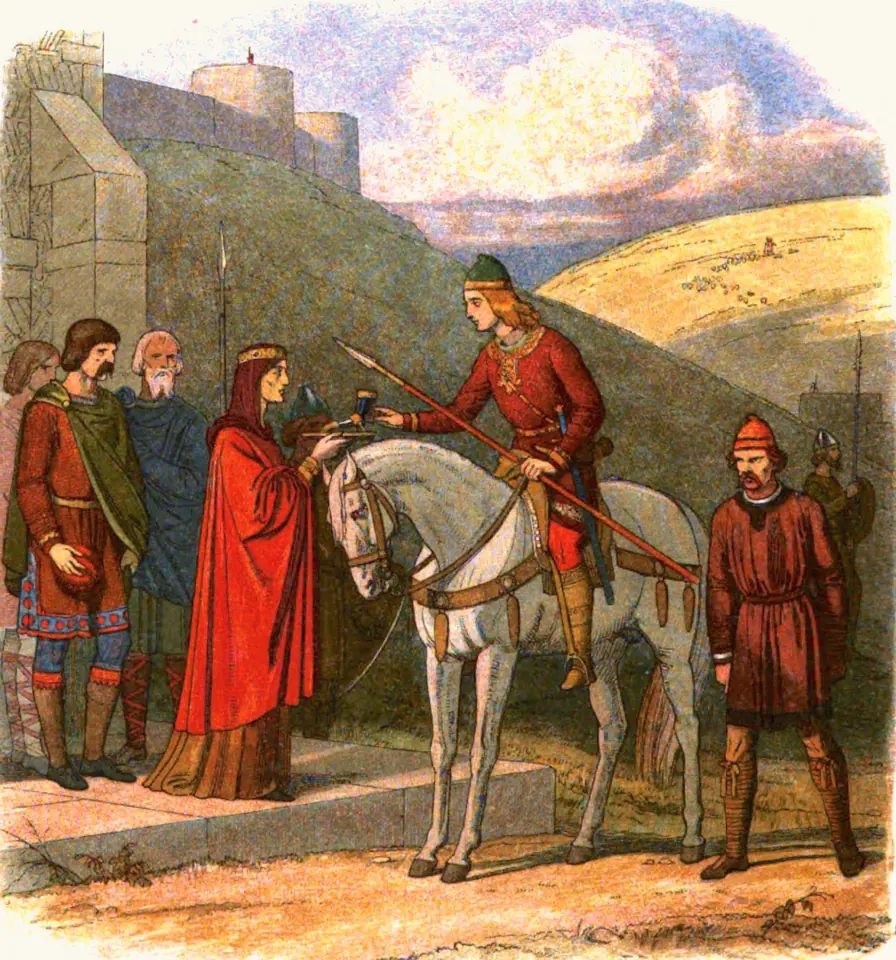
Those later accounts blamed Elfrida herself. The Chronicle names no one, and some historians think the killing was the work of Ethelred's household without his mother's command. What is certain is that Ethelred, still a child, became king, and that no one was punished for the crime.
The Chronicle entry for that year is one of the most striking passages in Old English:
No worse deed than this was ever done by the English nation since they first sought the land of Britain. Men murdered him but God has magnified him. He was in life an earthly king -- he is now after death a heavenly saint.
From Wareham to Shaftesbury
Edward was buried at Wareham "without any royal honour," the Chronicle says. In 980 Ealdorman Ælfhere of Mercia, who had been one of his chief opponents, "fetched the body of the holy King Edward at Wareham, and carried him with great solemnity to Shaftsbury," the abbey of nuns founded by King Alfred. Elfrida, according to the Catholic Encyclopedia, repented and founded the convents of Wherwell and Amesbury, ending her days in penance at Wherwell.
Miracles of St. Edward the Martyr
The miracles told of Edward are traditional. They come from the Chronicle's praise of God who "magnified him" and from later lives:
- The pillar of light: his body, thrown into a marsh, was found when a column of light shone over the spot.
- The incorrupt body: when it was moved from Wareham three years later, the body was said to be whole.
- Healings: "Many miracles are said to have been obtained through his intercession," the Catholic Encyclopedia reports, and his shrine at Shaftesbury drew pilgrims until the Reformation.

Symbols of St. Edward the Martyr in art
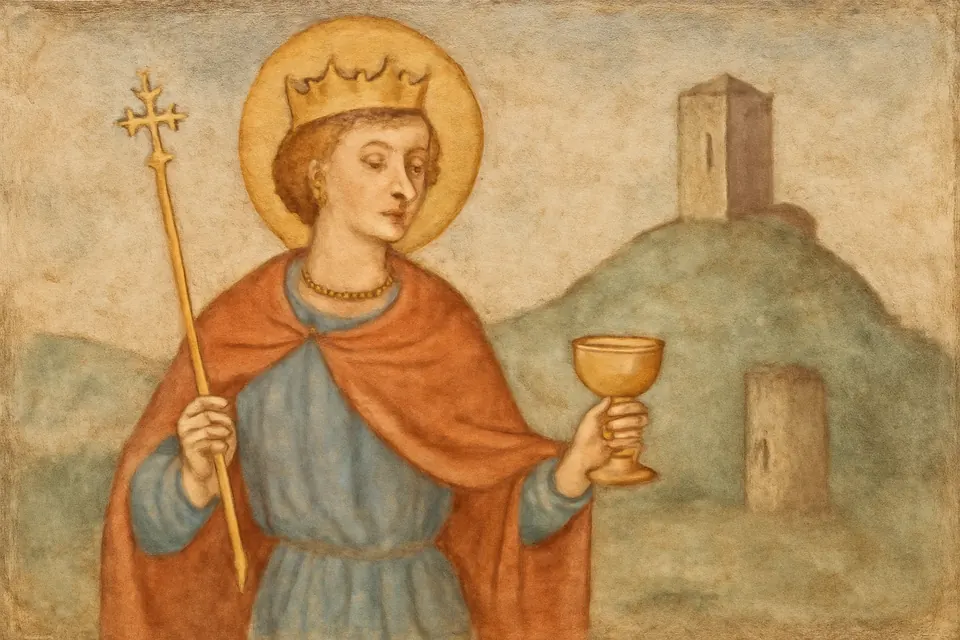
Medieval images of Edward are few; most are in genealogies of the kings. To recognize him:
- Crown and scepter or sword: he is shown as a beardless young king, enthroned or standing.
- A cup or drinking horn: the cup of mead he was handed at Corfe, the moment of his betrayal.
- A dagger: the weapon of his murder, sometimes held in his hand like the instruments of other martyrs.
- The palm: the sign of a martyr.
- Orthodox icons: since his relics came to the Orthodox Church in 1984, new icons show him crowned, with a cross and a sword, as in the carved relief at Brookwood.
Relics, feast day and prayer
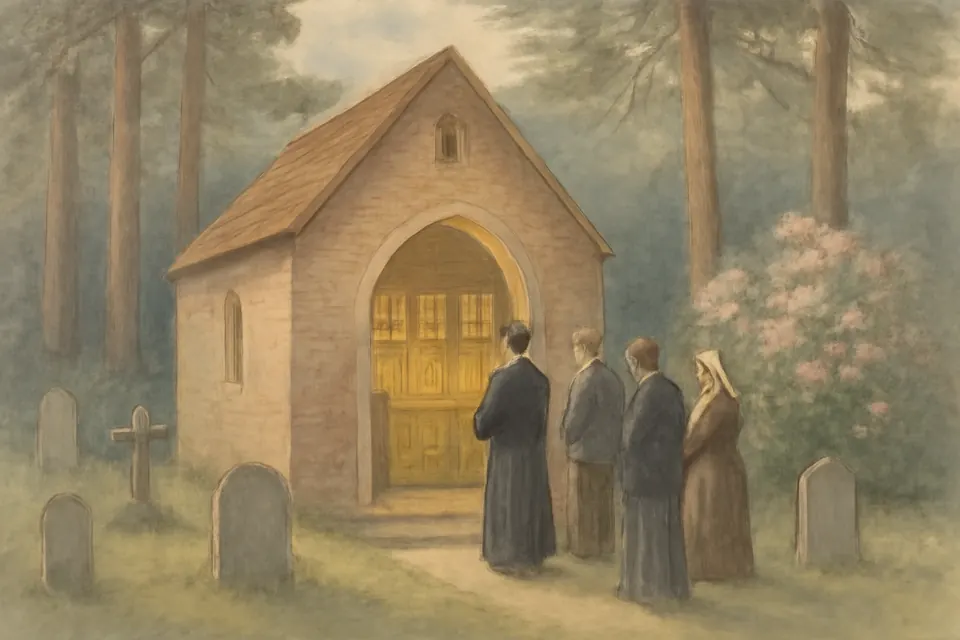
Shaftesbury Abbey was dissolved in 1539 and the shrine destroyed. In 1931 an excavation in the abbey ruins, led by John Wilson-Claridge, whose family then owned the site, unearthed a small casket of bones that he believed were Edward's. For decades he looked for a church that would receive them as a saint's relics, build a shrine and keep his feasts. The Russian Orthodox Church Outside Russia agreed, and on September 15–16, 1984, the relics were enshrined in the St. Edward the Martyr Orthodox Church in Brookwood Cemetery, Surrey, where a monastic brotherhood keeps them. Not everyone accepts that the bones are his.
We keep St. Edward's feast on March 18. See him on our feast days calendar with other saints of England.
There is no traditional prayer to St. Edward the Martyr in common Catholic use. Let us ask him, in our own words, to pray for young people given great responsibility too soon, for families torn by rivalry, and for the peace of England.
Where the relics of St. Edward the Martyr are kept: see them on the relics map →
Frequently asked questions
Who was St. Edward the Martyr?
The eldest son of King Edgar the Peaceful. He became King of England in 975 at about thirteen, backed by St. Dunstan against a party that wanted his younger half-brother Ethelred. In 978 he was stabbed to death at Corfe in Dorset. Miracles were soon reported at his grave, and he was venerated as a martyr.
When is St. Edward the Martyr's feast day?
March 18, the anniversary of his death, in the Roman Martyrology and in the Orthodox calendar.
Who killed Edward the Martyr?
The Anglo-Saxon Chronicle names no killer. Writers of the 11th and 12th centuries blamed his stepmother, Queen Elfrida (Aelfthryth), who wanted the throne for her own son Ethelred; some modern historians think the murder was the work of Ethelred's supporters without her. Ethelred, then about ten, was not held responsible.
Where are the relics of St. Edward the Martyr?
In 1931 an excavation at Shaftesbury Abbey found bones believed to be his. In 1984 they were enshrined at the St. Edward the Martyr Orthodox Church in Brookwood Cemetery, Surrey, where they remain. Whether they are truly his has been debated.