Pope St. Leo IV, Builder of the Leonine City
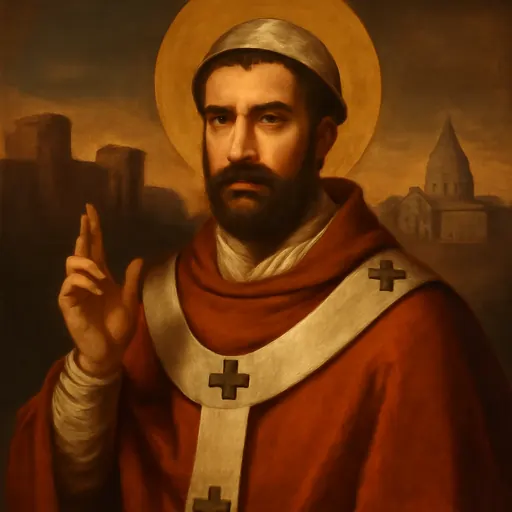
Pope St. Leo IV was pope from 847 to 855, just after Saracen raiders had damaged St. Peter's in 846. He rebuilt Rome's defenses and enclosed the Vatican hill with walls, the Leonine City, and tradition says he put out a great fire in the Borgo with his blessing. We keep his feast on July 17.
Who was Pope St. Leo IV?
Pope St. Leo IV was the bishop of Rome from 847 to 855, the pope who built the walls around St. Peter's after Muslim raiders from the sea had plundered it. He was a Roman, the son of Radoald, educated as a boy in the monastery of St. Martin beside St. Peter's. Pope Gregory IV made him a subdeacon, and Sergius II made him cardinal-priest of the church of the Four Crowned Martyrs. We keep his feast on July 17.
In 846 Saracen raiders reached Rome and badly damaged St. Peter's, which then stood outside the city walls. When Sergius II died the next year, the Romans chose Leo unanimously. Afraid of another attack, they had him consecrated on April 10, 847, without waiting for the emperor's consent. The Catholic Encyclopedia says he accepted "much against his will."

The fire in the Borgo
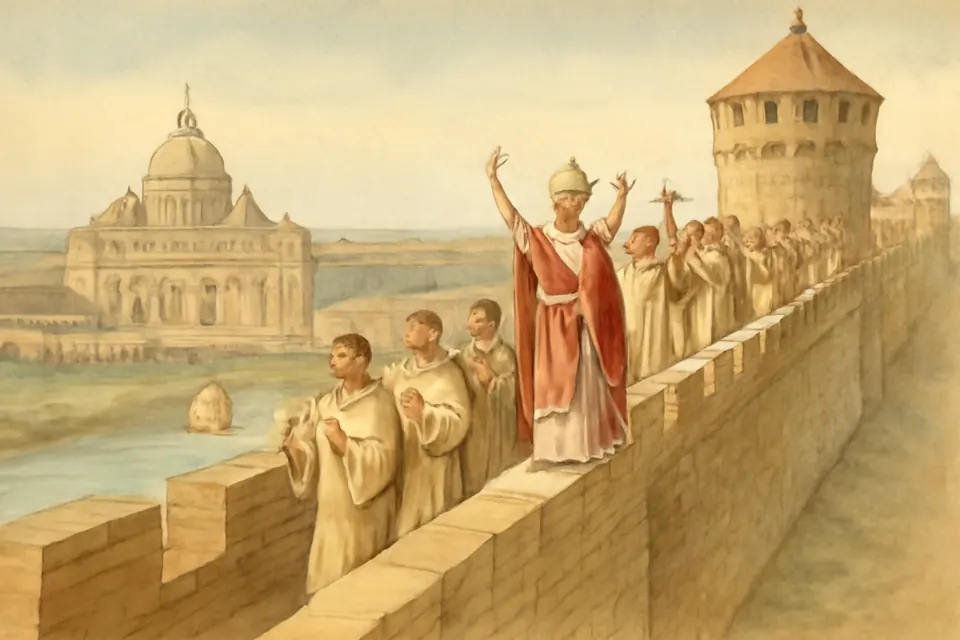
- Traditional: in 847, the first year of his reign, a fire broke out in the Borgo, the crowded quarter in front of St. Peter's where pilgrims from England and elsewhere lived. According to the Liber Pontificalis, Leo came to the loggia of the basilica and gave his blessing, and the fire died down, saving the church and the people.
Leo's own biographer and the Patriarch Photius of Constantinople both credited him with working miracles. None was ever formally examined, so we record them as tradition. Raphael's workshop painted the fire in 1514 for the room in the Vatican that still bears its name.

The Leonine City
Leo set to work at once. He repaired the walls of Rome and rebuilt fifteen of their great towers. Then he did something no pope had done: he enclosed the Vatican hill itself. The emperor sent money, and every town and farm estate of the Roman duchy sent workers. After four years the walls were finished, and in 852 Leo blessed them in a solemn procession. The new walled district was called the Leonine City after him, and parts of his walls still stand.
The victory at Ostia
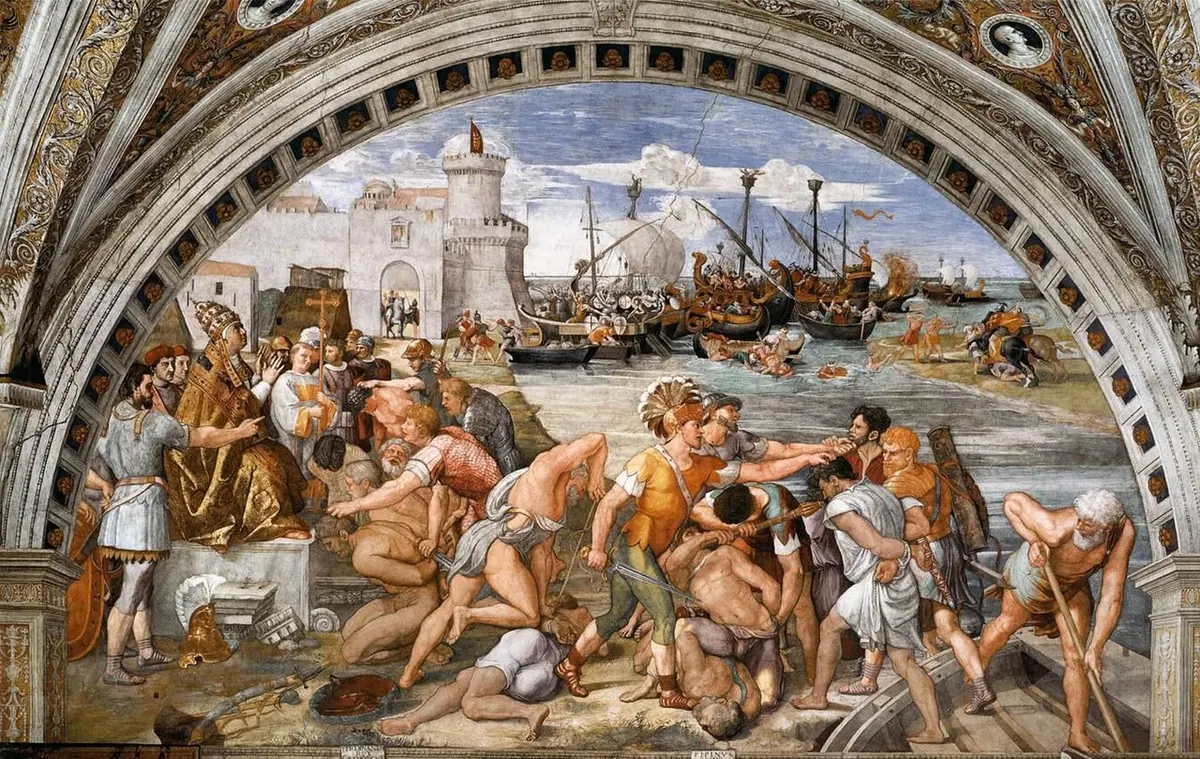
While the walls were going up, in 849, a great Saracen fleet sailed for Rome. It was destroyed off Ostia by the allied ships of Rome, Naples, Amalfi and Gaeta, and by a storm. The Vatican Museums call it the "miraculous victory" of Leo's forces. Leo then rebuilt the port town of Portus and gave it to Corsicans who had fled the raiders.
Builder, pastor and judge
Leo repaired the churches the raiders had damaged. He made parts of St. Peter's more beautiful than before and restored the Lateran palace, the Four Crowned Martyrs, St. Martin's, the English quarter in the Borgo and the monastery of Subiaco. He also built Santa Maria Nova to replace Santa Maria Antiqua, which the ruins of the imperial palace were threatening to bury.
In 853 a small English boy came to Rome. In the words of an old English historian quoted by the Catholic Encyclopedia, Leo "hallowed the child Alfred to king by anointing; and receiving him for his own child by adoption, gave him confirmation." The boy was Alfred the Great.
The same year he held a synod in Rome on Church discipline and learning. He stood firm with unruly churchmen. When St. Ignatius of Constantinople deposed a bishop and asked Rome to confirm it, Leo refused, because it had been done "in the absence of our legates or of letters from us." He died on July 17, 855, while trying to bring Archbishop Hincmar of Reims to obedience, and was buried in St. Peter's.
Symbols of St. Leo IV in art
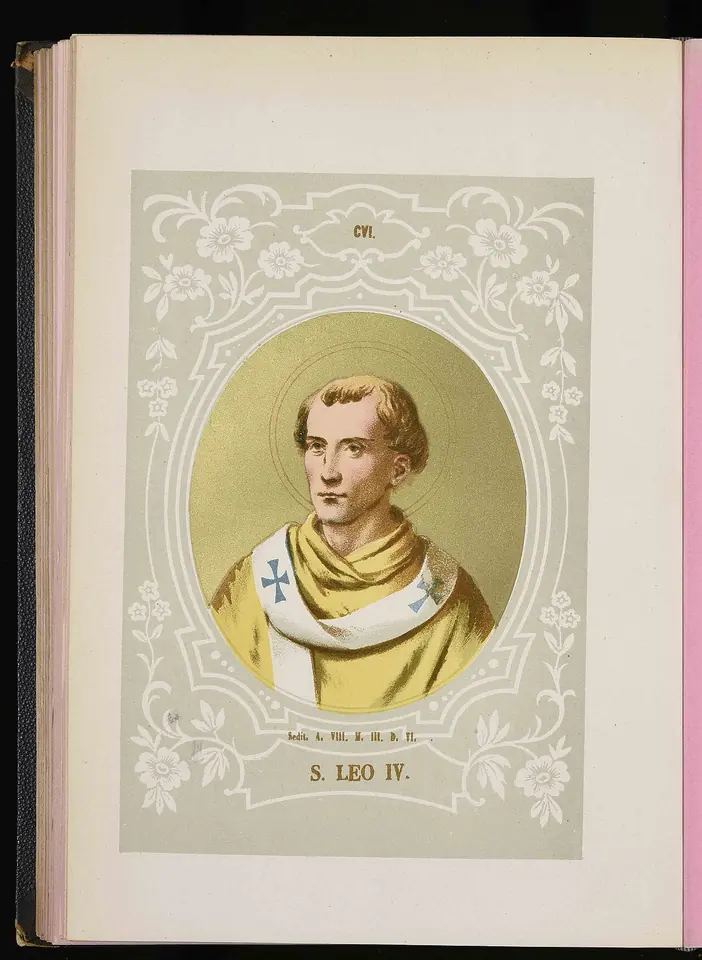
Leo IV is known best through Raphael. In the Room of the Fire in the Borgo he appears twice: as a small figure blessing from the loggia above the burning quarter, and seated on the shore at Ostia giving thanks for the victory. The room was painted for Pope Leo X, and the Vatican Museums note that the Ostia scene also recalls the crusade Leo X was urging in his own day. In the series of papal portraits he wears a cope and pallium, sometimes a tiara.
Feast day and prayer
We keep the memory of Pope St. Leo IV on July 17, the day of his death, as the Roman Martyrology gives it. According to the Catholic Encyclopedia, his relics rest in St. Peter's with those of St. Leo the Great, St. Leo II and St. Leo III. There is no traditional prayer to him in common use. Let us ask St. Leo IV, who protected St. Peter's and its pilgrims, to pray for the Church's shepherds and for every home threatened by fire or war. Pope St. Leo IV, pray for us.
Frequently asked questions
Who was Pope St. Leo IV?
A Roman, son of Radoald, educated at the monastery of St. Martin near St. Peter's and made cardinal-priest of the Four Crowned Martyrs. He was elected in 847 after the Saracen raid of 846 and died on July 17, 855.
What is the Leonine City?
The part of Rome around St. Peter's that Leo IV enclosed with walls between 848 and 852. It was named after him. Stretches of his walls still stand around the Vatican.
What was the fire in the Borgo?
According to the Liber Pontificalis, a fire broke out in 847 in the quarter in front of St. Peter's. Leo IV gave his blessing from the basilica's loggia and the fire went out. Raphael painted the scene in the Vatican.
Did Pope Leo IV meet Alfred the Great?
Yes. In 853 the boy Alfred was brought to Rome, and an old English chronicle says Leo "hallowed the child Alfred to king by anointing" and confirmed him.
Keep exploring
Sources
- Catholic Encyclopedia (1910): Pope St. Leo IV. His background, the walls and the Leonine City, Ostia, Alfred, the synod of 853, Gregory Asbestas, his death, and miracles reported by his biographer and Photius
- Vatican Museums: Fire in the Borgo. The fire of 847 and Leo's blessing from the loggia, after the Liber Pontificalis
- Vatican Museums: Battle of Ostia. Raphael's fresco of the victory of 849
- The Roman Martyrology (1916 English edition), July 17. His listing on July 17