St. Saturninus (St. Sernin), First Bishop of Toulouse
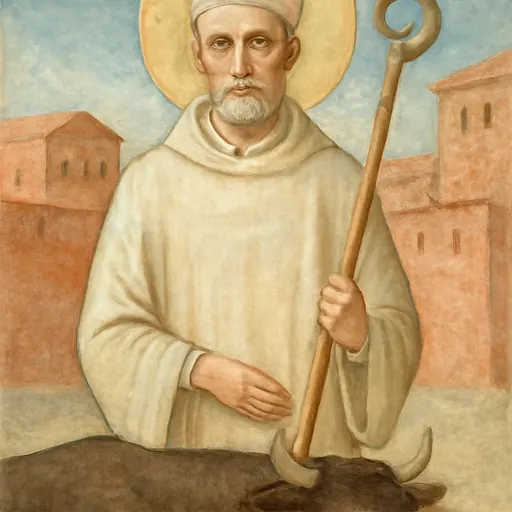
St. Saturninus of Toulouse, called St. Sernin in France, was the first bishop of Toulouse, sent from Rome about the year 250. When he refused to sacrifice to the gods, he was tied by the feet to a bull and dragged to his death. His relics rest in the Basilica of Saint-Sernin, and we keep his feast on November 29.
Who was St. Saturninus?
St. Saturninus of Toulouse, whom the French call St. Sernin, was the first bishop of Toulouse and one of its first martyrs. He came from Rome to southern Gaul in the middle of the 3rd century, gathered a small church, and was killed by a pagan crowd who tied him to a bull. His great brick basilica still stands over his bones in the middle of the city.
Many early martyrs bore the name Saturninus. This is the bishop of Toulouse, whose feast falls on November 29. He is not the Saturninus who died with Sts. Perpetua and Felicity at Carthage, nor the martyr of Cagliari in Sardinia.
What we know of him comes from his Acts, an account of his martyrdom so old that St. Gregory of Tours was already quoting it in the 6th century. Later centuries added colorful legends, and we will keep the two apart.
The life of St. Saturninus
One of seven bishops
Gregory of Tours writes that in the time of the emperor Decius "seven men were ordained as bishops and sent into the Gauls to preach, as the history of the martyrdom of the holy martyr Saturninus relates." He quotes the Acts directly: "In the consulship of Decius and Gratus, as faithful memory recalls, the city of Toulouse received the holy Saturninus as its first and greatest bishop." That consulship was the year 250. The other six went to Tours, Arles, Narbonne, Paris, Clermont and Limoges; the bishop of Paris was St. Denis.
At Toulouse, the Catholic Encyclopedia says, he soon had a little church. To reach it he had to pass the capitol, where a pagan temple stood, and the Acts say the temple priests blamed his comings and goings for the silence of their oracles.
Dragged by a bull
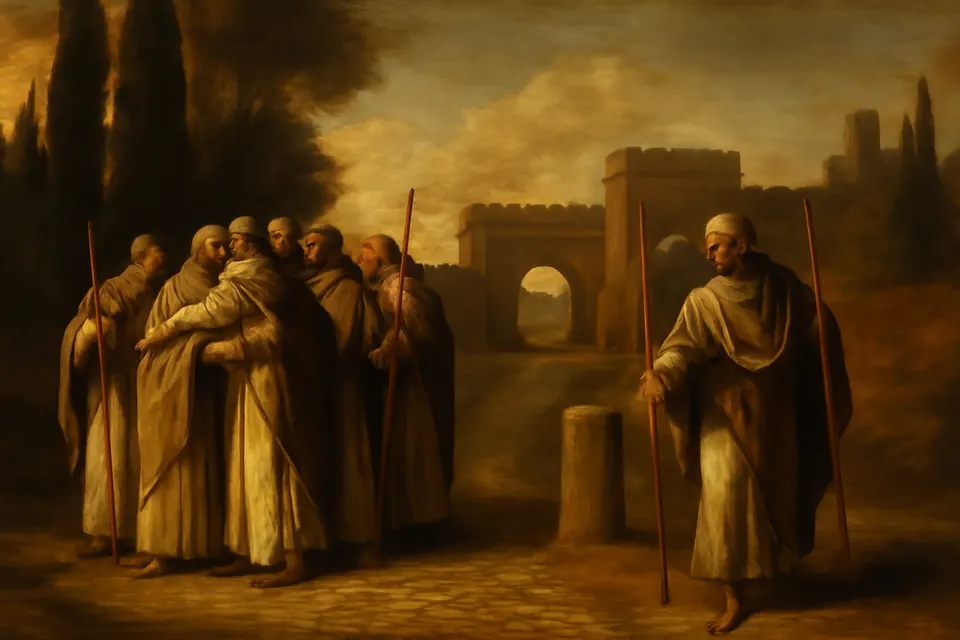
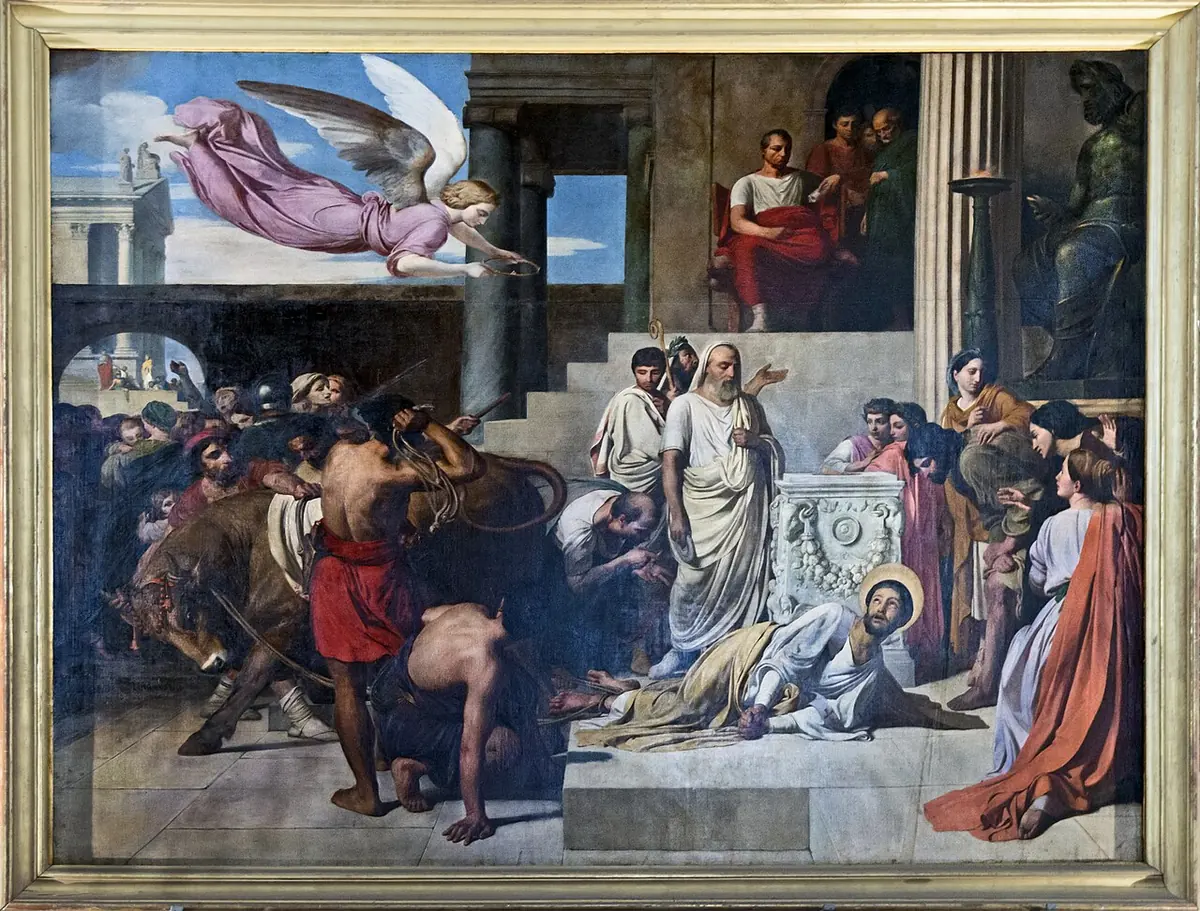
One day the priests seized him and ordered him to sacrifice. He refused. Gregory preserves a sad and very human detail. Saturninus, sure that he would die, said to his two priests: "Behold, I am now to be offered as a victim and the time of my death draws near. I ask you not to leave me at all before I come to the end." But when he was dragged to the capitol, they ran, and he went on alone.
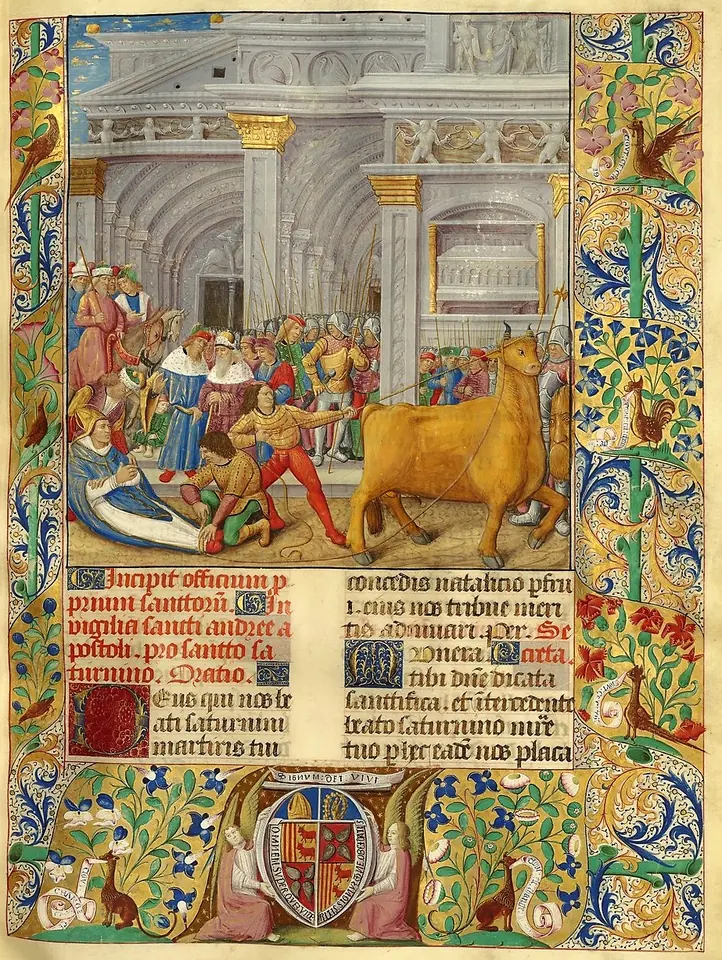
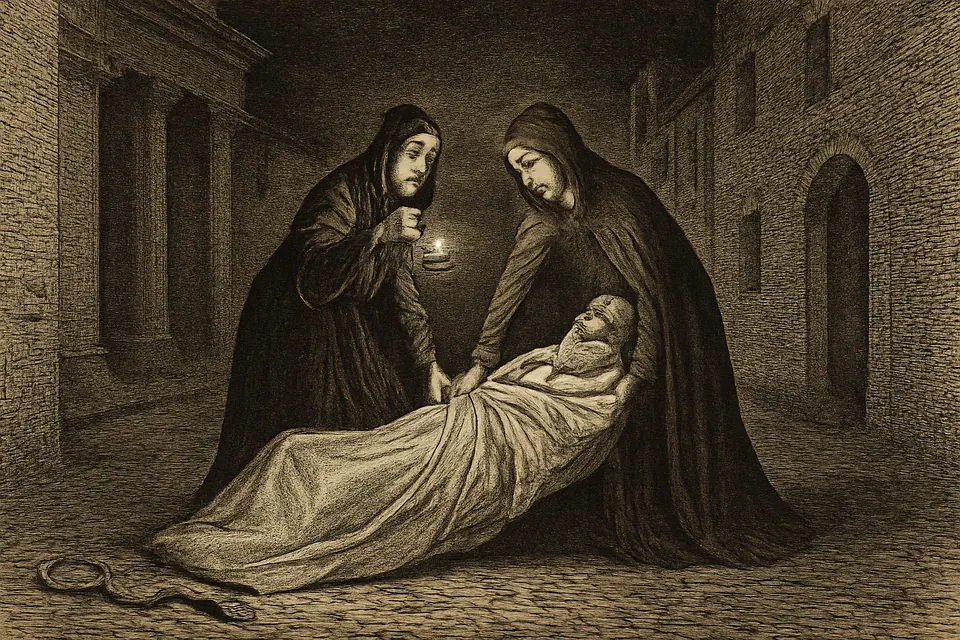
They tied him by the feet to a bull and drove it down the capitol steps. It dragged him through the town until the rope broke. Two Christian women, remembered in Toulouse as the Puelles, "the maidens," gathered up his body and buried it in a deep ditch so the pagans could not dishonor it.
From a ditch to a basilica
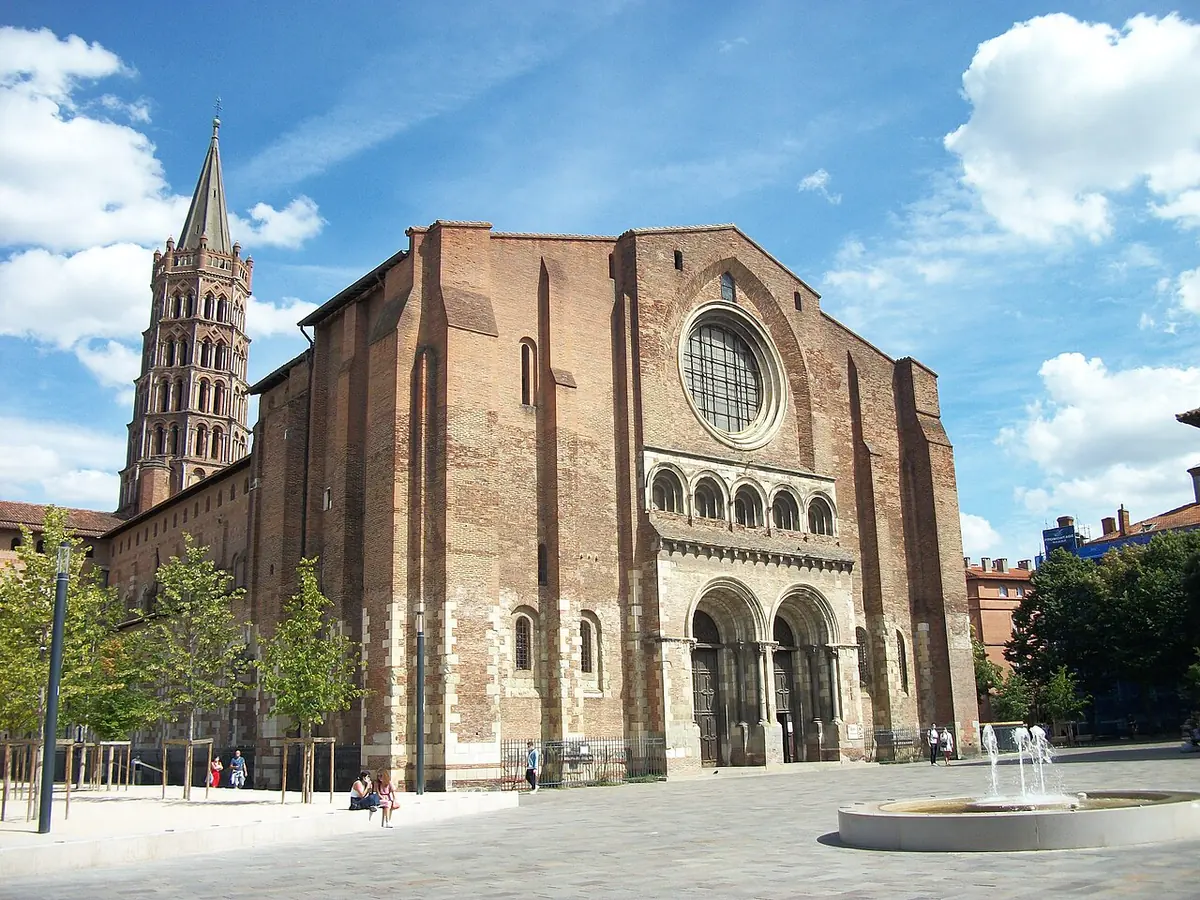
His successors, Sts. Hilary and Exuperius, gave him a more fitting tomb once Christians could worship openly. A church rose where, by tradition, the bull stopped. It is still there, on the rue du Taur, and is called Notre-Dame du Taur, "Our Lady of the Bull." His body was moved at an early date to a larger church that grew, by the 11th and 12th centuries, into the Basilica of Saint-Sernin.
The miracles and legends of St. Saturninus
- His martyrdom (historical, from his ancient Acts). This is the core of what we know, and Gregory of Tours read it in the 6th century.
- His prayer about the bishops of Toulouse (traditional). Gregory says that when his priests abandoned him, Saturninus prayed that the church of Toulouse would never receive a bishop from among its own citizens, "and we know that to the present it has been so in this city."
- Founding the churches of Pamplona, Auch, Eauze and Amiens (traditional). Later legends sent him across the Pyrenees to baptize in Pamplona and made him the teacher of St. Firmin. The Catholic Encyclopedia says these stories are "without historic foundations," though Pamplona still honors him as San Saturnino or San Cernin.
- The silence of the oracles (traditional). The Acts tell it as the pagans' complaint, a sign that the old gods fell silent before Christ.
Why St. Saturninus is the patron of Toulouse
He brought the faith to Toulouse and died for it there, and his tomb has been the city's spiritual center for sixteen centuries. The basilica named for him is one of the great pilgrimage churches on the road to Santiago de Compostela, so pilgrims to St. James have prayed at his tomb since the Middle Ages. More patronages are on our patron saints page.
Symbols of St. Saturninus in art
He is one of the easiest bishop saints to recognize. Look for:
- A bull: either dragging him, as in the manuscripts, or lying quietly at his feet in statues and windows.
- A rope around his feet or the bull's horns: the means of his death.
- A bishop's miter and crozier: the first bishop of Toulouse.
- Steps and a temple: the capitol of Roman Toulouse, where he refused to sacrifice.
- An angel with a crown: in later paintings, the martyr's reward.
St. Saturninus's feast day and shrines
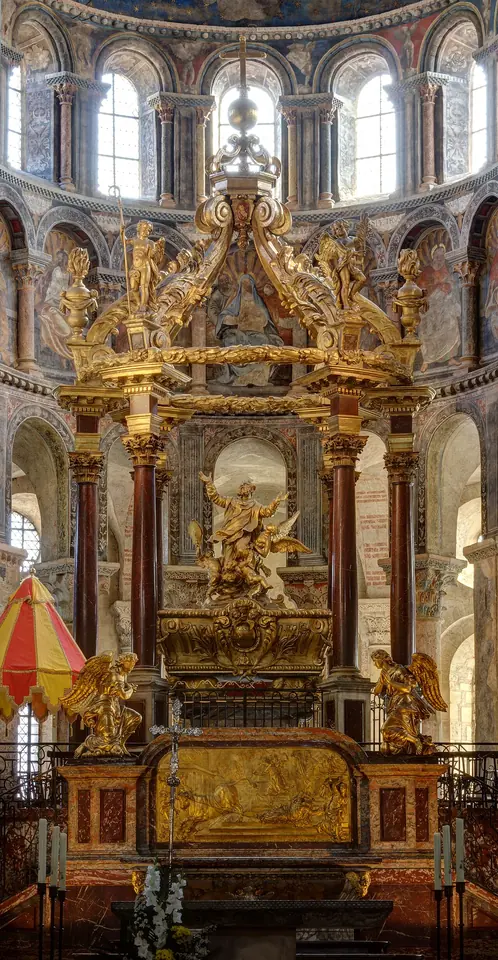
We keep his feast on November 29. The Catholic Encyclopedia notes that the date was already in the Hieronymian Martyrology, one of the oldest calendars of martyrs in the West, and from there his cult spread through France and Spain. Countless French villages are called Saint-Saturnin or Saint-Sernin, and in Catalonia he is Sant Sadurní. His relics rest in the apse of the Basilica of Saint-Sernin, beneath a gilded canopy over a tomb inscribed Ossa Sancti Saturnini, "the bones of St. Saturninus." See other November saints on our feast days page.
Prayer to St. Saturninus
We know of no traditional prayer to St. Saturninus in English; in Toulouse he is honored in the Mass and Office of his feast. We can pray simply: St. Saturninus, pray for us.
Let us ask him to pray for every bishop who stands alone, for priests and friends who are afraid, and for the courage to finish what we have begun for Christ.
Frequently asked questions
Who was St. Saturninus?
The first bishop of Toulouse in Roman Gaul, one of seven bishops sent from Rome to the Gauls around 250, according to St. Gregory of Tours. He was martyred at Toulouse, tied to a bull by the pagan crowd and dragged through the town. He is known in France as St. Sernin or St. Saturnin.
Why is St. Saturninus shown with a bull?
Because of his martyrdom. His ancient Acts say the priests of the temple on Toulouse's capitol tied him by the feet to a bull meant for sacrifice, which dragged him through the town until the rope broke.
Where are the relics of St. Saturninus?
In the Basilica of Saint-Sernin in Toulouse, one of the largest Romanesque churches in Europe. The church of Notre-Dame du Taur ("of the bull") stands on the street where, by tradition, the bull stopped and he was first buried.
When is the feast of St. Saturninus?
November 29.
Keep exploring
Sources
- Antoine Dégert, St. Saturninus (Catholic Encyclopedia, 1912). His very old Acts used by Gregory of Tours; the two women who buried him; the church of the Taur; his body at Saint-Sernin; the Hieronymian Martyrology; the legends of Eauze, Auch, Pamplona and Amiens without historic foundation
- St. Gregory of Tours, History of the Franks, Book I, chapter 30 (Brehaut translation, Internet Medieval Sourcebook). The seven bishops sent to Gaul; his words to his two priests, their desertion, and his prayer about the bishops of Toulouse