St. Herbert of Derwentwater
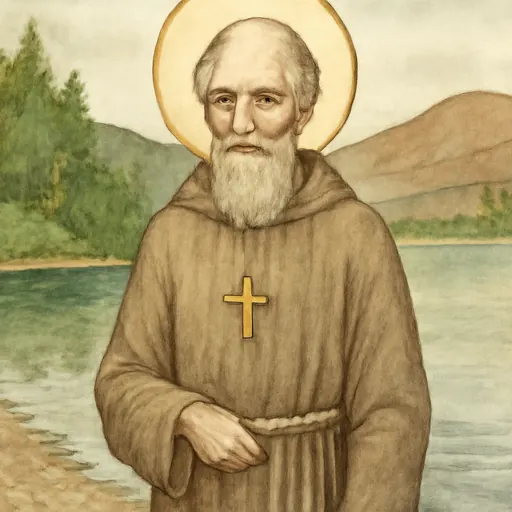
St. Herbert of Derwentwater (died 687) was a priest who lived as a hermit on an island in Derwentwater, in today's English Lake District. He was a close friend and disciple of St. Cuthbert, and Bede tells how Cuthbert prayed that they might die together. Both died on March 20, 687, and we keep his feast on that day.
Who was St. Herbert of Derwentwater?
St. Herbert of Derwentwater was a priest and hermit of seventh-century Northumbria who lived alone on a small island in Derwentwater, the lake beside Keswick in what is now the English Lake District. Everything we know of him comes from St. Bede, who wrote about him twice: in his prose Life of St. Cuthbert and in his Ecclesiastical History of the English People, finished in 731. Bede tells one story, and it is a story of friendship. Herbert was the disciple and dear friend of St. Cuthbert, and the two men died on the same day, March 20, 687. We keep his feast on that day.
He is not to be confused with later men of the same name, such as Herbert de Losinga, the first bishop of Norwich. The island in the lake still carries his name: St. Herbert's Island.
A hermit on the lake
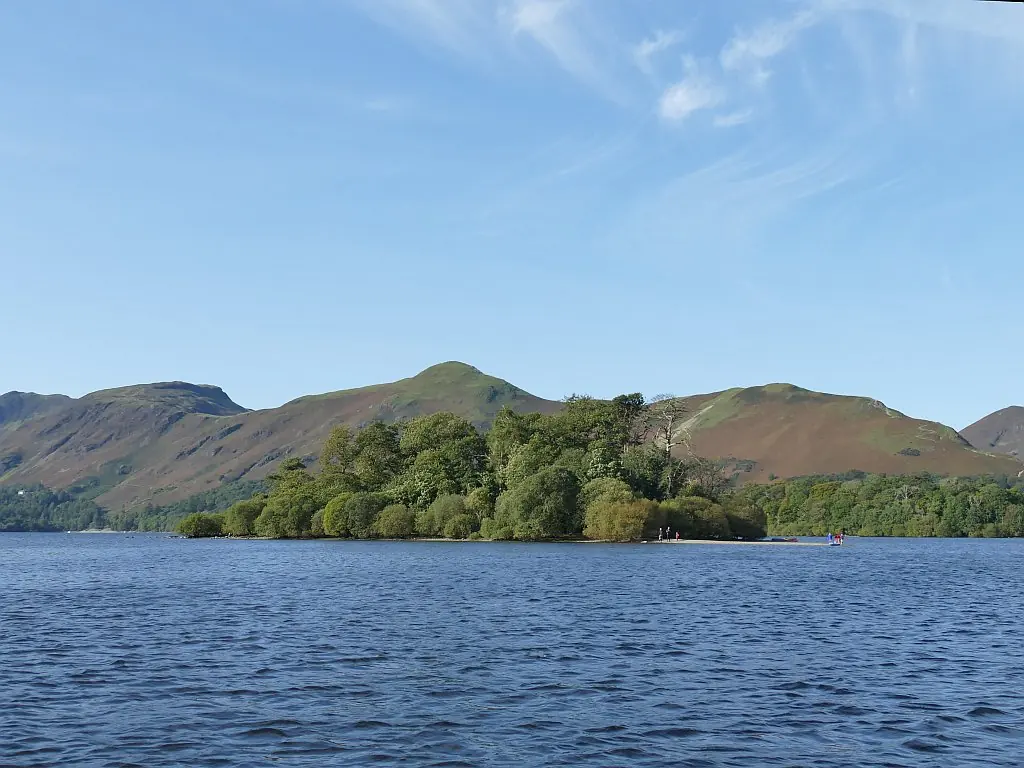
Bede calls Herbert "a certain priest, called Herebert, a man of holy life," and says he lived "a solitary life in the island of that great lake from which the river Derwent flows at its beginning." The lake is Derwentwater. Its largest wooded island sits out in the open water, with the fells of Borrowdale and Catbells rising around the lake.
We do not know when Herbert went there, how he lived or who rowed out to him. In the Northumbrian Church of his day, shaped by the monks of Lindisfarne and the example of St. Aidan, it was common for a priest or monk to withdraw to an island or a lonely place to pray. Cuthbert himself did the same on Inner Farne, off the coast. Herbert chose a lake island on the other side of England.
Once a year, Bede says, Herbert left his island to visit Cuthbert, "to receive from him the teaching of everlasting salvation."
The last meeting at Carlisle
During his short time as bishop of Lindisfarne, Cuthbert came to Carlisle, the old Roman town Bede calls Lugubalia. Herbert heard of it and went to him "according to his custom." The two of them talked of heavenly things, and then Cuthbert said something that broke Herbert's heart. In Sellar's translation of the Ecclesiastical History:
Brother Herebert, remember at this time to ask me and speak to me concerning all whereof you have need to ask and speak; for, when we part, we shall never again see one another with bodily eyesight in this world. For I know of a surety that the time of my departure is at hand, and that shortly I must put off this my tabernacle.
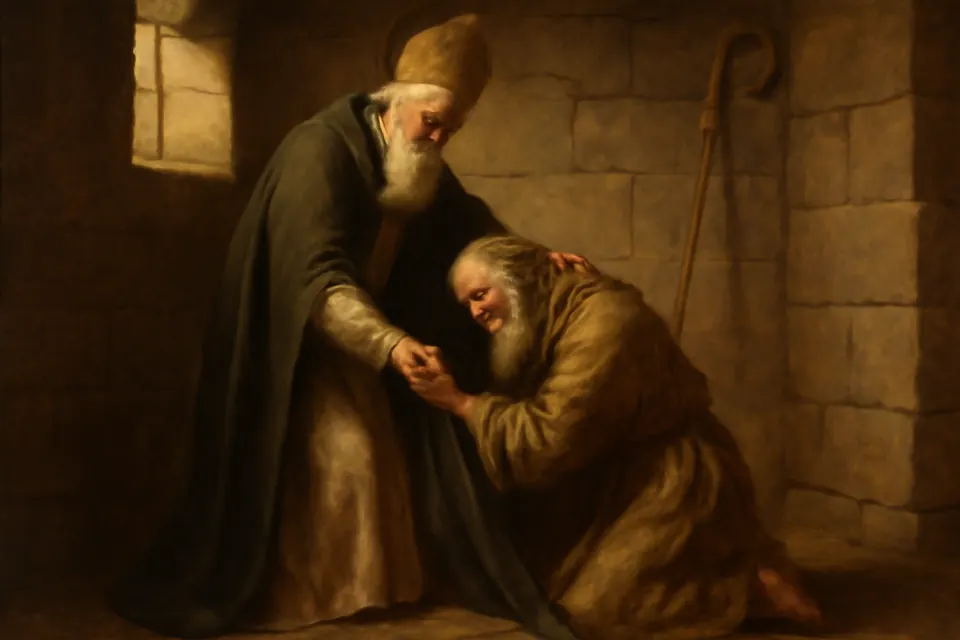
Herbert fell at his feet in tears. He begged Cuthbert to remember "your most faithful companion" and to ask God's mercy "that, as we have served Him together upon earth, so we may depart together to behold His grace in Heaven." Cuthbert prayed, and then told him: "Rise, brother, and do not weep, but rejoice greatly because the mercy of Heaven has granted what we desired."
Two deaths on one day
They never saw each other again. Cuthbert went back to his hermitage on Farne and died there. Herbert, Bede says, "was first wasted by a long-continued infirmity." Bede offers a tender reason for the long illness: that whatever Herbert lacked in merit beside Cuthbert might be made up "by the chastening pain of a long sickness," so that he could be received into the same joy.
Then, Bede writes, "their spirits quitting their bodies on one and the same day, to wit, the 20th of March, were immediately united in fellowship in the blessed vision, and together translated to the heavenly kingdom by the ministry of angels." The year was 687.
This answered prayer is a traditional miracle. It rests on Bede's account, written about forty years later from the memories of the Lindisfarne monks, and no formal inquiry ever examined it. Bede does not say where Herbert was buried, and no relics of him are known today.
Pilgrims to the island
Herbert was remembered in the north. A note in Sellar's edition of Bede records that in 1374 Thomas Appleby, bishop of Carlisle, granted an indulgence of forty days to pilgrims who visited the island. Seven hundred years after his death, the Church was still sending people to pray where Herbert had prayed.

Symbols of St. Herbert of Derwentwater in art
No medieval image of Herbert is known to survive, so there is no fixed way of showing him. Modern pictures usually draw on Bede's story:
- A hermit's plain robe: his solitary life of prayer.
- An island in a lake: Derwentwater, where he lived and died.
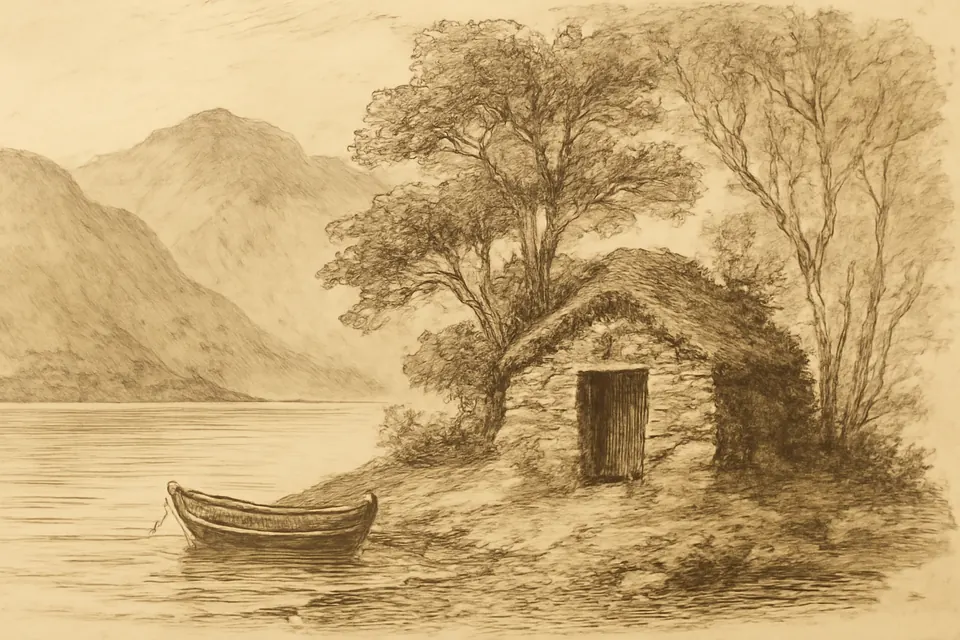
- A small cell or chapel: his hermitage, the place pilgrims came to visit.
- Kneeling at Cuthbert's feet: the farewell at Carlisle, the one scene from his life we know.
When you see two holy men together in a northern English window or painting, and one is a bishop and the other a hermit in tears, it is very likely Cuthbert and Herbert.
Feast day and prayer
We keep the feast of St. Herbert of Derwentwater on March 20, together with St. Cuthbert. See the feast day calendar for other saints of the day, and our page on St. Guthlac of Crowland, another hermit of Anglo-Saxon England.
We know of no traditional prayer to St. Herbert. His story invites a simple one of our own. Let us thank God for the friends who have led us closer to Him, ask that we may serve Him together on earth and see His face together in heaven, and pray for the sick whose suffering is long: St. Herbert of Derwentwater, pray for us.
Frequently asked questions
Who was St. Herbert of Derwentwater?
A seventh-century Northumbrian priest who lived alone on an island in Derwentwater, the lake by Keswick in Cumbria. Each year he visited St. Cuthbert for spiritual counsel. Bede tells his story in the Ecclesiastical History and the prose Life of Cuthbert.
Why did St. Herbert and St. Cuthbert die on the same day?
At their last meeting in Carlisle, Cuthbert told Herbert they would not meet again in this life. Herbert begged him to pray that they might go to heaven together, and Cuthbert answered that God had granted it. Bede says both died on March 20, 687.
Where is St. Herbert's Island?
It is the wooded island near the middle of Derwentwater, south of Keswick in Cumbria, England. The island has been known by his name for centuries.
When is the feast of St. Herbert of Derwentwater?
March 20, the same day as St. Cuthbert.
Keep exploring
Sources
- Bede, Ecclesiastical History of England, translated by A. M. Sellar (London, 1907; Project Gutenberg). Book IV, chapter 29 (quoted), with Sellar's note 757 on St. Herbert's Island and Bishop Thomas Appleby's indulgence of 1374
- Bede, Life of St. Cuthbert, chapter 28 (Medieval Sourcebook, Fordham University)
- S. Baring-Gould, The Lives of the Saints, vol. 3, March (London, 1872). March 20, with St. Cuthbert