Blessed John of Parma, Franciscan Minister General
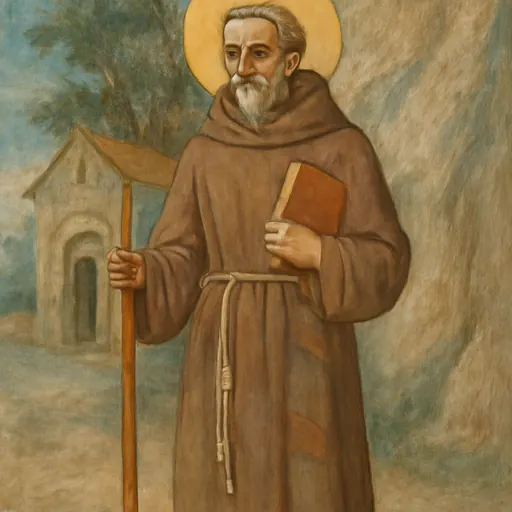
Blessed John of Parma (about 1209–1289) was minister general of the Franciscans from 1247 to 1257, and the Greeks called him an "angel of peace" when he went to them as papal envoy. After resigning and proposing St. Bonaventure as his successor, he lived some thirty years as a hermit at Greccio. His feast is March 20.
Who was Blessed John of Parma?
Blessed John of Parma was a Franciscan friar and scholar who led the Order of Friars Minor for ten years in the generation after St. Francis, and who spent his old age as a hermit in the place where Francis made the first Christmas crib. He traveled across Europe to visit his brothers, went to the Greek Church as an envoy of peace, handed the order to St. Bonaventure, and bore a long trial without bitterness. We keep his feast on March 20.
He is honored above all as a lover of the first Franciscan simplicity. When he was elected, the surviving early companions of St. Francis rejoiced.
The life of Blessed John of Parma
Scholar of Parma, Bologna and Paris
John was born at Parma about 1209; his family name was probably Buralli. An uncle, chaplain of the church of St. Lazarus in Parma, educated him, and he quickly became a teacher of logic. When he entered the Franciscans the old sources do not say; his eighteenth-century biographer Ireneo Affò suggested 1233, at Parma. As a priest he taught theology at Bologna and at Naples, and finally lectured on the Sentences of Peter Lombard at the University of Paris.
Minister general of the Franciscans
At the general chapter in Lyons in July 1247, John was elected minister general of the order. The old friar Brother Giles, one of Francis's first companions, greeted him with a sigh: "Welcome, Father, but you come late."
John set out at once to see the order for himself. He went first to England, where King Henry III received him and where he was well pleased with the friars. In France King St. Louis IX honored a provincial chapter he held at Sens. He then visited Burgundy and Provence and was on his way into Spain in 1248 when Pope Innocent IV called him back for a mission to the East. At a general chapter he refused to draw up new statutes, so as not to burden the friars with more rules.
"Angel of peace" to the Greeks
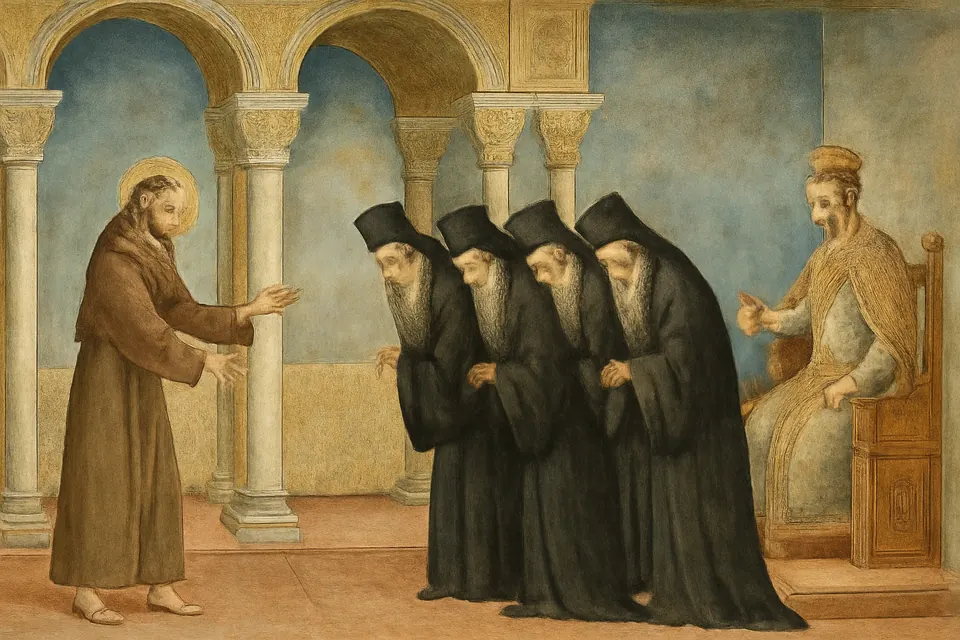
The Pope sent John to work for the reunion of the Greek Church with Rome. He met the Greek representatives at Nicaea, and they greeted him as an "angel of peace." The mission bore no immediate fruit, though the Catholic Encyclopedia suggests it may have prepared the way for the union declared at the Second Council of Lyons in 1274.
Back in the West he faced the bitter quarrel between the mendicant friars and the University of Paris. In 1255, at Milan, he and Humbert of Romans, master of the Dominicans, issued a joint letter urging peace and harmony between their two orders.
Resignation and trial
His friend Gerard of Borgo San Donnino wrote an Introduction to the Eternal Gospel (1254), built on the prophecies of Joachim of Fiore, which was condemned in 1256. John was compromised by the association. At a general chapter in Rome on February 2, 1257, he laid down his office. The sources disagree on whether Pope Alexander IV pressed him; the chronicler Salimbene insists he resigned freely. Asked whom he would choose, he named Bonaventure, who had succeeded him as a lecturer at Paris.
Later he was accused of Joachimism and tried at Città della Pieve in Umbria before a court presided over by Bonaventure and Cardinal Giovanni Gaetano Orsini. Angelus Clarenus wrote that the true motive was John's attachment to the literal observance of the Rule, and that he was saved by the intervention of Cardinal Ottobono Fieschi, later Pope Hadrian V. He was acquitted. The Catholic Encyclopedia judges that he "certainly did not profess the dogmatical errors of Joachimism, though he may have held some of its apocalyptic ideas."
The hermit of Greccio
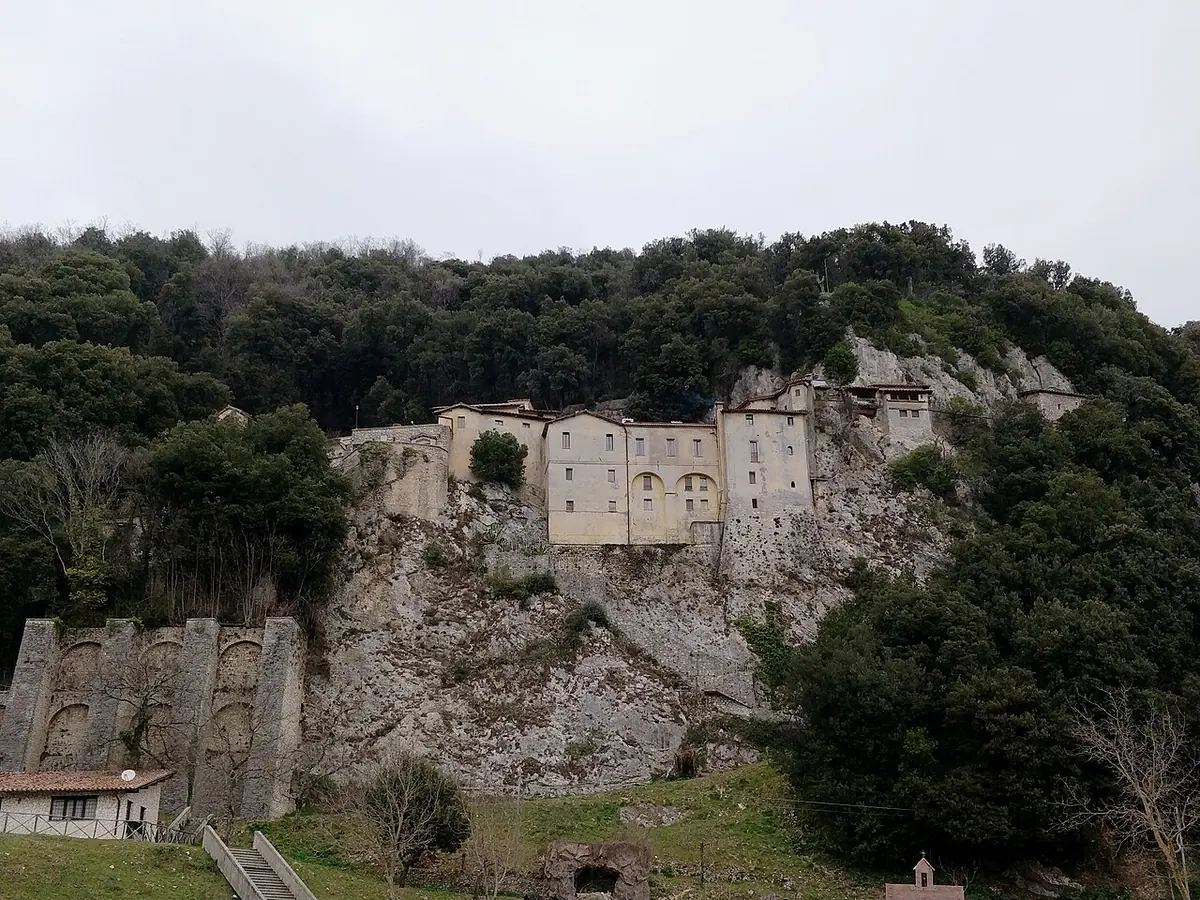
John withdrew to the hermitage of Greccio near Rieti, where St. Francis had kept Christmas with the living crib. There he lived for some thirty years in solitude, prayer and work; in 1910 his cell beside a rock was still shown to visitors. In 1285 the friar Ubertino of Casale climbed up to see him and left a moving account of the visit in his book Arbor Vitae.
When he heard that the Greeks were abandoning the union made at Lyons in 1274, the old man, now about eighty, asked Pope Nicholas IV for leave to go to Greece one last time. He got it, but traveled only as far as Camerino in the Marches, where he died in the friary on March 19, 1289.
Miracles and legends
- Traditional: Salimbene, who knew him, and other early Franciscan sources record that at Greccio an angel once served his Mass.
His veneration as a blessed was confirmed by the Holy See in 1777. We know of no miracle formally approved for his cause.

Writings
Apart from his letters, little can be safely attributed to him. A fourteenth-century chronicle of the ministers general credits him with the Sacrum Commercium, the lovely allegory of St. Francis's marriage to Lady Poverty, but its authorship is uncertain. He is certainly not the author of the Introduction to the Eternal Gospel.
Symbols of Blessed John of Parma in art
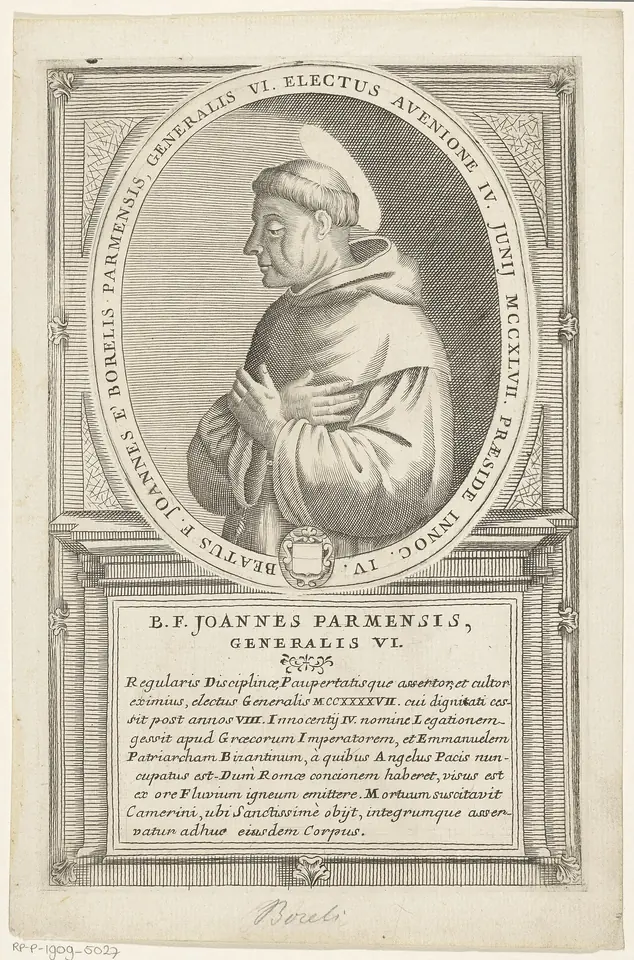
He is shown as a Franciscan in the brown habit and knotted cord, usually elderly and bearded, with a book for the master of Paris. A traveler's staff recalls his journeys and his embassy to the Greeks, and an angel serving at Mass recalls the tradition of Greccio. The engraved portrait on this page belongs to an eighteenth-century series of the order's ministers general.
Feast day and prayer
The Franciscan family keeps his feast on March 20. See the feast day calendar.
We know of no traditional prayer to him that we can quote. Let us ask him to pray for the unity of Christians of East and West, for religious superiors, and for all who must lay down an office and accept a hidden life with peace. Blessed John of Parma, pray for us.
Frequently asked questions
Who was Blessed John of Parma?
An Italian Franciscan friar and theologian, born at Parma about 1209, who taught at Bologna, Naples and Paris and led the Order of Friars Minor as minister general from 1247 to 1257. He spent his last decades as a hermit at Greccio and died at Camerino in 1289.
Why did John of Parma resign as minister general?
His friend Gerard of Borgo San Donnino published a book on the "Eternal Gospel" drawn from the ideas of Joachim of Fiore, which was condemned in 1256, and John was compromised by the association. He resigned at a chapter in Rome on February 2, 1257, and proposed St. Bonaventure in his place.
Was John of Parma condemned for heresy?
No. He was tried at Città della Pieve on a charge of Joachimism and acquitted. The Catholic Encyclopedia concludes that he "certainly did not profess the dogmatical errors of Joachimism."
When is the feast of Blessed John of Parma?
March 20, as kept by the Franciscans. He died on March 19, 1289.
Keep exploring
Sources
- Catholic Encyclopedia (1910): Blessed John of Parma. His teaching posts, the election of 1247, Brother Giles's greeting, the visits to England and Sens, the embassy to the Greeks, the letter with Humbert of Romans, the resignation, the trial, Ubertino of Casale's visit, the angel at Mass, his death, beatification in 1777 and feast on March 20
- Salimbene de Adam, Chronica, ed. O. Holder-Egger, Monumenta Germaniae Historica, Scriptores 32 (1905–1913). The oldest account of John, by a friar who knew him; cited through the Catholic Encyclopedia