St. Marie-Alphonsine Danil Ghattas
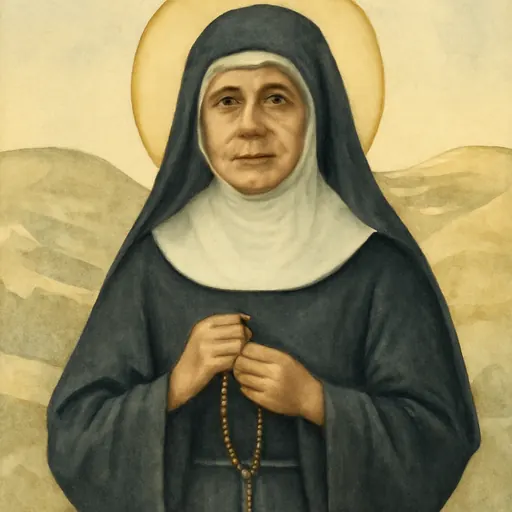
St. Marie-Alphonsine Danil Ghattas (1843–1927) was a Palestinian nun of Jerusalem who, after reporting visions of the Virgin Mary in Bethlehem, helped found the Sisters of the Most Holy Rosary of Jerusalem, the first congregation of local Arab women in the Holy Land. Pope Francis canonized her on May 17, 2015. Her feast is March 25, the day she died while praying the rosary.
Who was St. Marie-Alphonsine Danil Ghattas?
St. Marie-Alphonsine Danil Ghattas was a daughter of Jerusalem who gave the Holy Land its first congregation of local Arab sisters. For more than twenty years she was a teaching sister of St. Joseph of the Apparition. Then, in Bethlehem, she reported a series of visions of the Virgin Mary asking for a new religious family devoted to the rosary. That family is the Sisters of the Most Holy Rosary of Jerusalem, known simply as the Rosary Sisters. She died at Ein Karem on March 25, 1927, with the Hail Mary on her lips, and Pope Francis canonized her in 2015. We keep her feast on March 25.
A girl of Jerusalem
She was born in Jerusalem on October 4, 1843, to Danil and Caterina Ghattas, a Catholic Palestinian family. Her parents had nineteen children, and eleven of them died in infancy. At her baptism on November 19, 1843, she was named Soultaneh, which means "sovereign," and Maria.
She went to the school of the Sisters of St. Joseph of the Apparition in the city. Her father at first opposed her wish to join them, but in 1858 she became a postulant, and on June 30, 1860, she received the habit and the name Sister Marie-Alphonsine. After her profession she taught catechism in Arabic, which few teachers could do, and she gathered young women into a confraternity and mothers into a Christian mothers' association. Then she was sent to Bethlehem.
The visions in Bethlehem
On the Epiphany of 1874, while she meditated on the tenth mystery of the rosary at the parish school in Bethlehem, she saw the Virgin Mary. More apparitions followed that year, one of them in the Milk Grotto. On January 6, 1875, she reported that Our Lady appeared surrounded by "Virgins of the Rosary" and asked her to found a congregation of the rosary. These visions are reported: we know them from her own diary, and her canonization rests on her heroic virtues and two approved miracles, not on the apparitions.

She felt unworthy and held back. Her spiritual director, Fr. Joseph Tannous, asked her to write down everything she saw. She kept this diary out of obedience, and no one outside knew of it until after her death. Not everyone believed her. The parish priest of Bethlehem first judged the visions a temptation of the devil and restricted her, but he later relented.
Founding the Rosary Sisters
In 1880 seven young women began to live together in Jerusalem under Fr. Tannous's guidance. The Latin Patriarchate counts 1880 as the founding year of the Rosary Sisters. Marie-Alphonsine could not simply walk out of her old congregation; she needed a dispensation from Rome, and she joined the new community three years later. On March 7, 1885, she made her vows with eight companions before Patriarch Vincenzo Bracco.

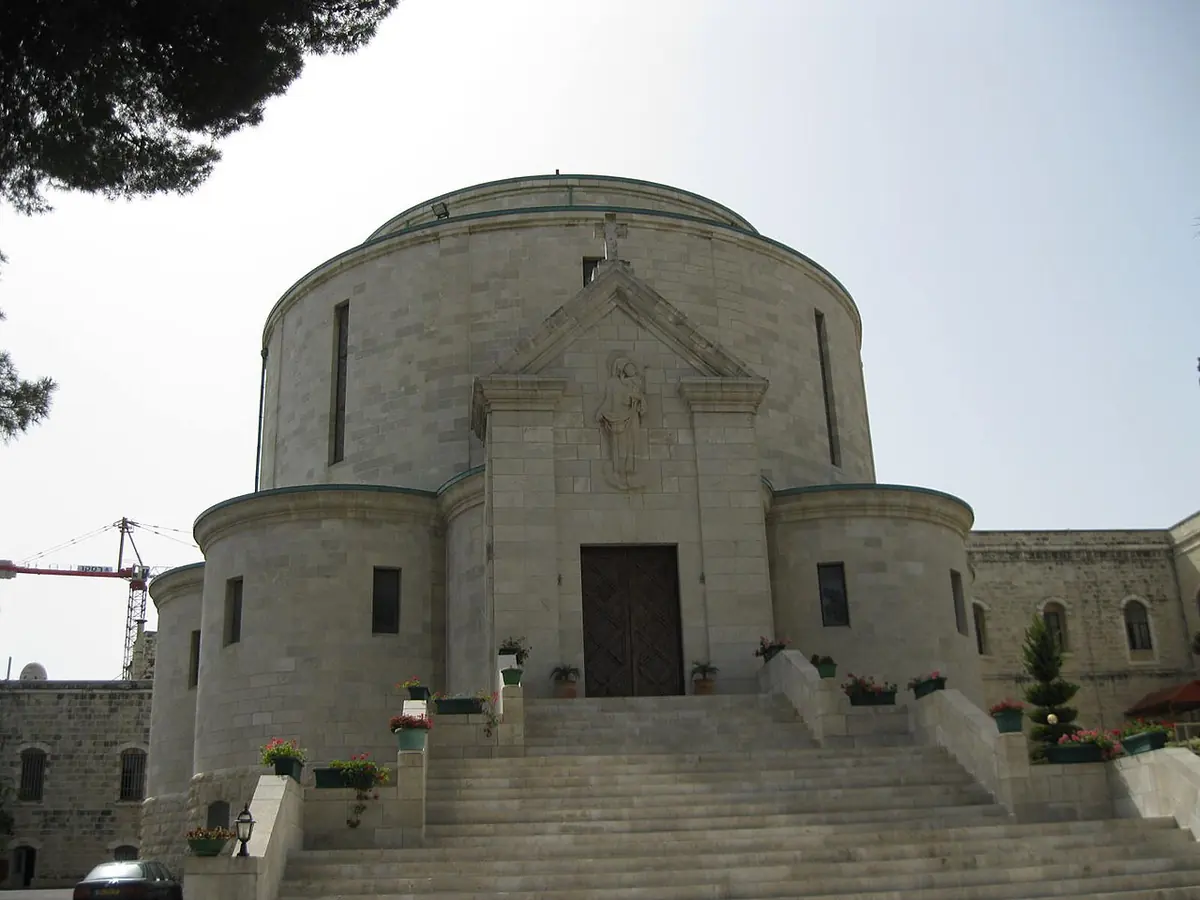
The new sisters went where the parishes needed teachers: Jaffa in 1885, Beit Sahour in 1886, Salt in Jordan in 1887, then Nablus and Zababdeh. From 1893 to 1908 she was superior in Bethlehem. In 1917, at seventy-four, she was asked to open an orphanage at Ein Karem, the village of the Visitation, in the house that had once belonged to her parents. She spent her last ten years there.
Death and canonization
She died at Ein Karem on March 25, 1927, aged eighty-three, while praying the rosary. It was the feast of the Annunciation. Pope John Paul II declared her heroic virtues in 1994. She was beatified on November 22, 2009, at the Basilica of the Annunciation in Nazareth, and Pope Francis canonized her in St. Peter's Square on May 17, 2015, together with St. Mariam Baouardy, the Carmelite of Bethlehem.
In his homily that day the Pope said that she "came to understand clearly what it means to radiate the love of God in the apostolate, and to be a witness to meekness and unity." Patriarch Fouad Twal called the canonization of the two Palestinian nuns "a spiritual event of prime importance." Among the pilgrims in Rome that day, Vatican Radio reported, was Emile Munir Elias, who was healed through her intercession, with his mother.
The miracles of St. Marie-Alphonsine
Both miracles in her cause are approved:
- The well. The diocesan inquiry, held at the Latin Patriarchate of Jerusalem in 2004 and 2005, examined how several young people who fell into a polluted well came out completely unharmed. Pope Benedict XVI approved it as a miracle on July 3, 2009.
- The power line. A man struck by a 24,000-volt power line recovered consciousness quickly and fully, with no neurological damage. Physicians found no scientific explanation in May 2014, and Pope Francis approved the miracle on December 6, 2014.

Symbols of St. Marie-Alphonsine in art
She lived in the age of photography, and the pictures of her in Rosary Sisters' schools and chapels are modern portraits built from her photographs. Look for:
- The rosary: the prayer at the center of her visions and of her congregation, and the prayer she died saying.
- The dark habit and white wimple of the Rosary Sisters.
- A crucifix on the rosary or at her breast.
She is often shown together with St. Mariam Baouardy as the two saints of modern Palestine.
Feast day and prayer
We keep her feast on March 25, the day of her death and of the Annunciation. Her remains rest in the convent of the Rosary Sisters in Jerusalem, and her sisters still run Rosary schools in Palestine, Jordan, Lebanon, the Gulf states and Rome. See the feast day calendar for the other saints of March.

We know of no traditional prayer to her that we can cite. The way to honor her is the one she lived: pray the rosary. Learn how to pray the rosary, and ask her to pray for the Christians of the Holy Land, for teachers, and for peace in Jerusalem: St. Marie-Alphonsine Danil Ghattas, pray for us.
Frequently asked questions
Who was St. Marie-Alphonsine Danil Ghattas?
She was a Catholic Palestinian nun, born in Jerusalem in 1843. A Sister of St. Joseph of the Apparition for over twenty years, she reported visions of Our Lady asking for a congregation of the Rosary, and with Fr. Joseph Tannous she founded the Rosary Sisters, who still run schools across the Middle East.
When is the feast of St. Marie-Alphonsine?
March 25, the day she died at Ein Karem in 1927. It is also the Solemnity of the Annunciation.
What miracles led to her canonization?
Two healings were approved. The first, for her beatification, concerned young people who fell into a polluted well and came out unharmed. The second, for her canonization, was the full recovery of a man struck by a 24,000-volt power line. Pope Francis approved it on December 6, 2014.
Who was canonized with St. Marie-Alphonsine?
On May 17, 2015, Pope Francis canonized her with Mariam Baouardy, also of the Holy Land, Jeanne Émilie de Villeneuve and Maria Cristina Brando.
Keep exploring
Sources
- Dicastery for the Causes of Saints: Marie Alphonsine Danil Ghattas (1843–1927). Her family, the dates of the visions, the founding, the places she served, her death and both approved miracles
- Pope Francis, Homily at the Canonization of Four Blesseds, May 17, 2015. The Pope's words about her quoted in the article
- Vatican Radio: HB Twal: Palestinian saints are universal models of holiness (May 15, 2015). Patriarch Twal's words and the work of the Rosary schools today
- Latin Patriarchate of Jerusalem: Religious Communities. The Rosary Sisters' founding in 1880 and their schools and parish work