St. Walter of Pontoise
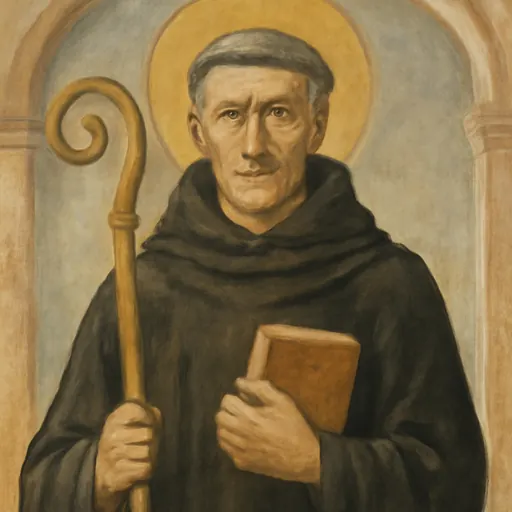
St. Walter of Pontoise (in French Gautier, about 1030–1099) was the first abbot of the Benedictine abbey of St. Martin at Pontoise. He tried to escape the office until Pope St. Gregory VII ordered him to stay, and was beaten and jailed for defending Church reform. His feast is March 23 in the Roman Martyrology (traditionally April 8).
Who was St. Walter of Pontoise?
St. Walter of Pontoise was a French Benedictine monk of the 11th century who became, much against his will, the first abbot of the abbey of St. Martin at Pontoise, a town on the Oise River northwest of Paris. The French call him Gautier or Gauthier; Latin records call him Galterius. He was born around 1030 in the village of Andainville in Picardy and died at his abbey on Good Friday, April 8, 1099.
Two lives of Walter were written in the Middle Ages, and the older one comes from a monk of Pontoise who was his disciple and saw much of what he describes. The Anglican hagiographer Sabine Baring-Gould retold them in his Lives of the Saints, and most of what follows comes from that tradition. It paints an unusual saint: a man so afraid of the burden of authority that he ran from it again and again, and yet so stubborn for the truth that he let himself be beaten and jailed rather than give ground.

We keep his memory on March 23, the date in the current Roman Martyrology, which praises him for setting aside his love of solitude to teach his monks the observance of the Rule by his own example and for fighting the simony then spreading among the clergy.
The life of St. Walter
Teacher, then monk
Walter was a teacher of rhetoric and philosophy before he left the schools for the cloister. He took the Benedictine habit at the abbey of Rebais, in the diocese of Meaux, east of Paris.
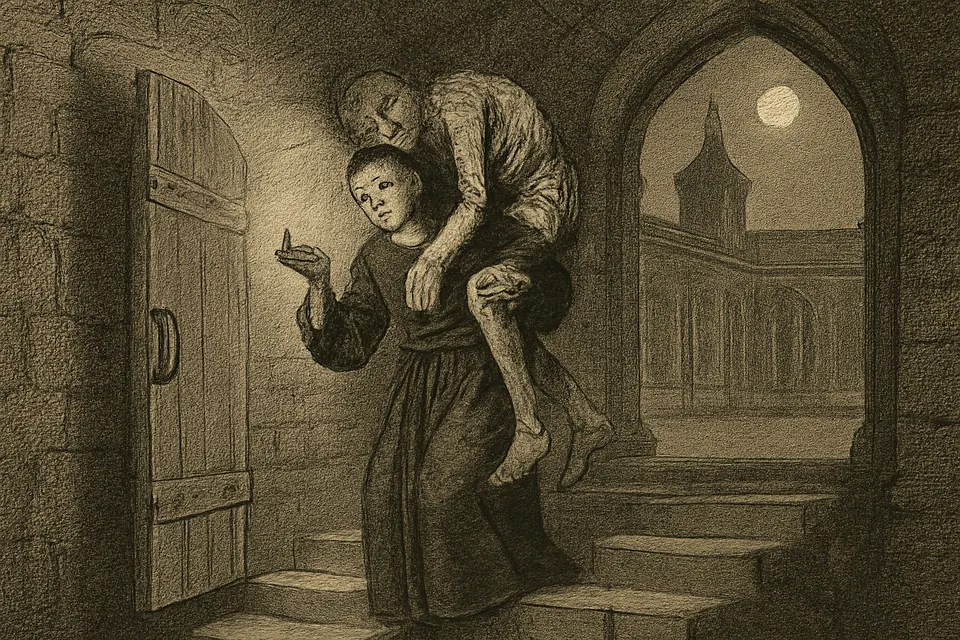
At Rebais the story is told that first showed what kind of man he was. A peasant who had damaged the monastery's property was locked in the abbey dungeon, and the abbot left him there to starve. Walter fed the man at night from his own portion. Then he opened the prison door, lifted the prisoner (who was too weak to walk) onto his shoulders, carried him out of the monastery and set him somewhere safe. In the morning, Baring-Gould writes, the abbot and brethren found their captive gone and "fell on Walter and beat him unmercifully."
"Not from thee, but from God"
A new community of monks was gathering near Pontoise under royal patronage, and its monks elected Walter as their first abbot. The house was dedicated at first to St. Germain of Paris and later to St. Martin of Tours. Walter received the abbot's blessing from a bishop, and the young King Philip I of France handed him the pastoral staff, holding it by the shaft below the crook. Walter put his own hand over the king's and said, in Baring-Gould's rendering, "It is not from thee, but from God, that I receive my spiritual authority."
This was the age of the investiture struggle, when popes and reformers fought to free bishops and abbots from appointment by kings and lords. Walter's small gesture at Pontoise says plainly where he stood.

The abbot who kept running away
Walter never felt equal to the office. He fled by night to Cluny, the great reforming abbey of Burgundy under St. Hugh, hoping to live there as a simple monk; his monks came and brought him back. He withdrew to a cave near the abbey to live as a hermit. He fled again, this time into Touraine, and hid on an island in the Loire. He was found at last in an oratory of Sts. Cosmas and Damian near Tours, where a pilgrim recognized him.
Finally he went to Rome and laid his written resignation before Pope St. Gregory VII, the great reforming pope. Gregory refused it. He sent Walter home with orders to take up his duties at Pontoise and never abandon them again, and the Santi e Beati account adds that the pope threatened him with excommunication if he did. From then on Walter stayed.
The Council of Paris, 1092
Walter's fear of authority never touched his courage. In 1092 a council of bishops and abbots met in Paris to consider letters from the pope on the celibacy of priests, which forbade the faithful to attend Masses said by priests living with wives. The bishops called these commands "intolerable, and altogether irrational." Walter stood up and defended them.
He paid for it. According to the old life, some of those present beat him, royal servants spat in his face, and he was dragged out of the council in front of the king. He answered, "I will die rather than yield," and he was thrown into prison. When he was freed he went back to preaching the same reform.

Old age at Pontoise
The disciple who wrote his life remembered small things. When monks in many houses had fallen into the habit of sitting through the psalms in choir, Walter stood for the whole of the Divine Office until extreme old age. He was known for his penances and his care for the poor.
In 1094 he helped found a monastery for women at Berteaucourt-les-Dames, near Amiens, with two devout women named Godelinde and Helvide. He died at Pontoise on Good Friday, April 8, 1099, and was buried in his abbey church.
The canonization of St. Walter in 1153
Walter's place in the history of canonization is unusual. In the first Christian millennium, saints were raised to the altars by their local bishops, with the consent of clergy and people, and later by synods and archbishops. In 1153, Hugh, Archbishop of Rouen, solemnly declared Walter a saint after an inquiry, and his body was raised and placed in a new tomb at St. Martin's.
A Dictionary of Christian Antiquities (1875) records this as "the last case of canonization by a metropolitan." A decree of Pope Alexander III around 1170 reserved canonization to the pope in the Western Church, and every Western saint since then has been canonized by Rome. That is why a little-known abbot of Pontoise appears in so many histories of how the Church names its saints. You can read how the process works today on our page about how someone becomes a saint.
Miracles and legends of St. Walter
The old lives are more interested in Walter's virtues than his wonders, and they make few miracle claims. Sorted by the labels this encyclopedia uses:
- The rescue of the prisoner at Rebais: traditional. It is told in the old life as an act of mercy, not a miracle, and it may well be history.
- His flights and his return by papal command: traditional, told by a disciple who lived with him, with nothing miraculous in them.
- Cures at his tomb: reported. Pilgrims came to his tomb at Pontoise for centuries, but no cure there has been formally investigated by the Church.
Symbols of St. Walter of Pontoise in art
Walter was never a popular subject for painters, and very few old images of him survive outside Pontoise. When he does appear, he is shown as:
- A Benedictine abbot in a black habit, the dress of his order.
- Holding an abbot's crozier, the staff he received from King Philip and tried so hard to give back. Santi e Beati lists the crozier as his emblem.
- A recumbent effigy on a tomb, as in Pontoise, which is the most important image of him that exists.
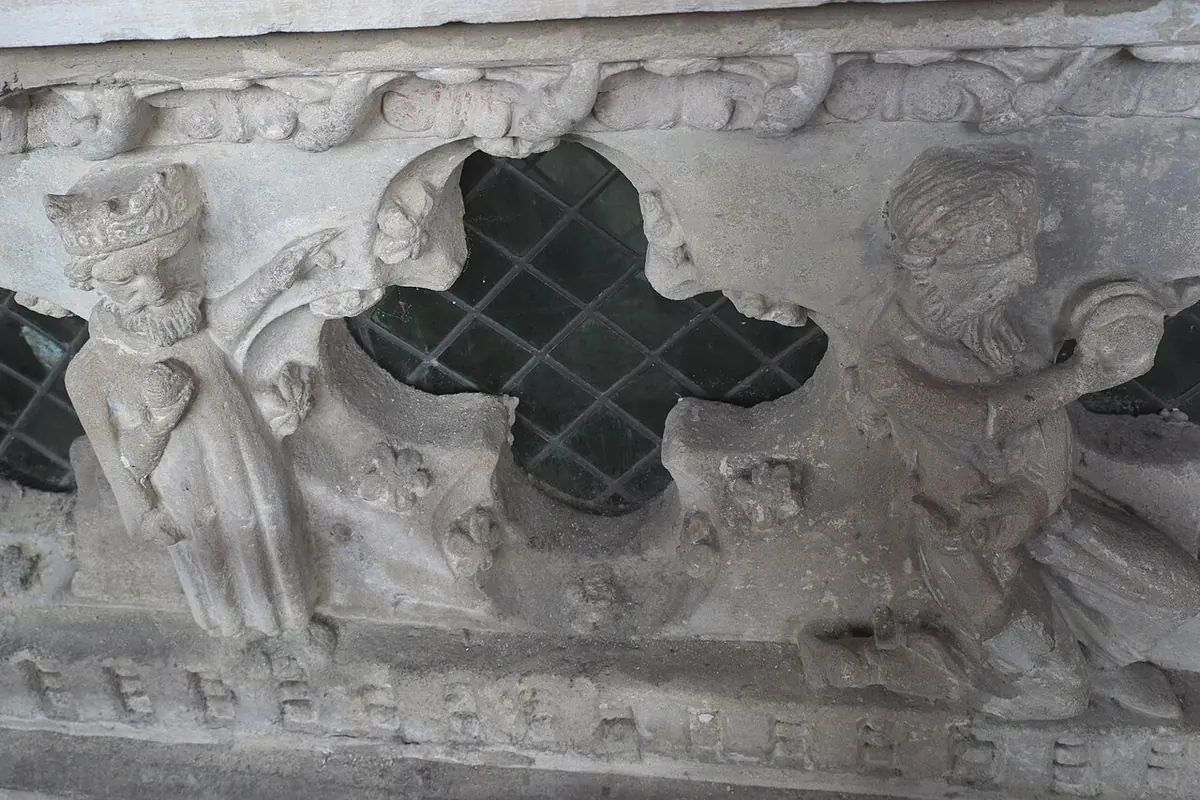
The tomb itself is the best place to see him. The sarcophagus dates from around 1230 to 1240, and the effigy and its angels from the later 13th century. Its sides are pierced with quatrefoil openings so pilgrims could look in at the relics; today they are filled with colored glass. Carved scenes show the Annunciation, the Adoration of the Magi and Walter's canonization, with the abbot of St. Martin and three bishops. A small beast crouches under the effigy's feet, a common sign on medieval tombs of evil overcome.

A boxwood crozier with an ivory crook, venerated at the abbey as "the crozier of St. Walter," is now in the Musée de Cluny in Paris. Close study has shown it is not his: it was made in the second quarter of the 13th century, likely for the same new shrine.
The tomb of St. Walter at Pontoise
Until the French Revolution, Walter's tomb stood on the right side of the abbey church of St. Martin, behind an iron grille. During the Revolution his relics were moved for safety to the town cemetery, and the exact place where they were laid was later lost. The empty tomb survived. In 1843 the parish priest of Notre-Dame, Father Cordier, brought it into his church, where it remains, listed by the French state as a historic monument.

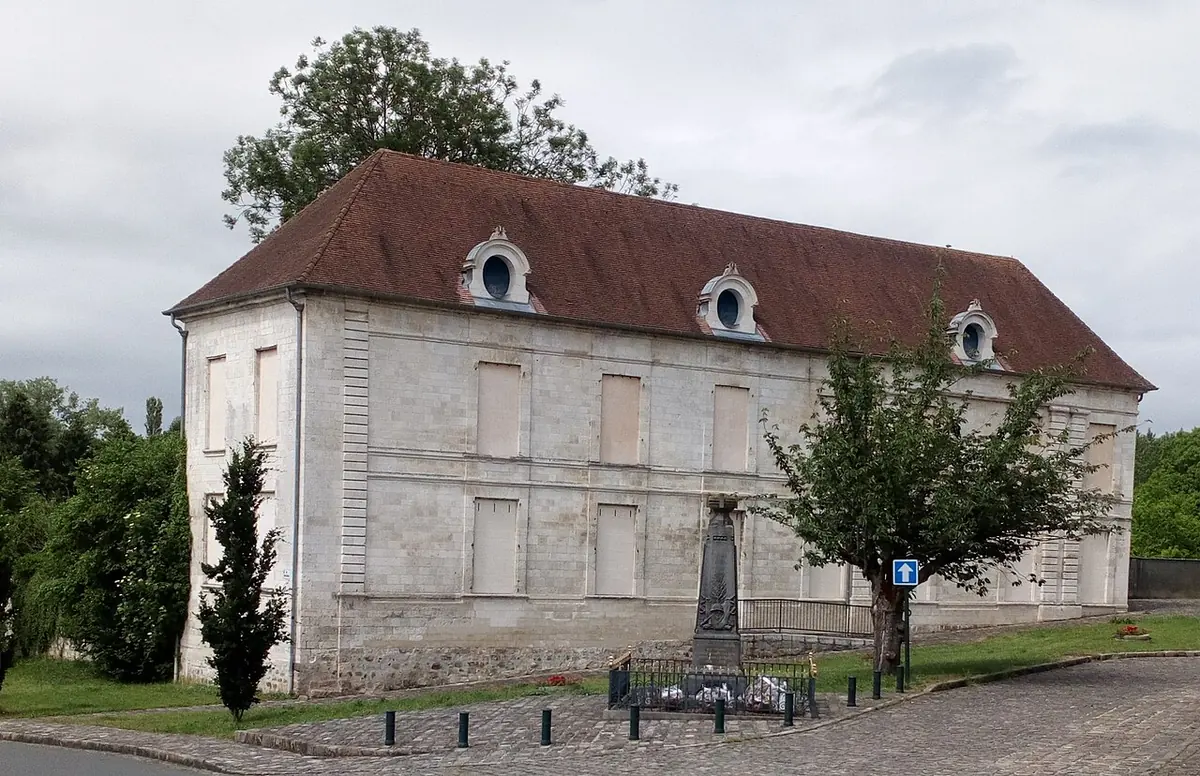
The abbey itself is gone, but its name lives on in the Collège Saint-Martin de France, a Catholic school in Pontoise that occupies part of the old abbey grounds. A small chapel near his native village of Andainville is also dedicated to him. You can find his neighbors on the calendar on our feast days page.

Prayer to St. Walter of Pontoise
No traditional prayer to St. Walter has come down to us in the standard prayer books. We ask his intercession in our own words, the way the people of Pontoise did at his tomb: for courage to speak the truth when it costs us, for those who carry heavy duties they never sought, and for prisoners and the forgotten, whom he once carried out of the dark on his own shoulders.
Let us ask St. Walter of Pontoise to pray for us, that when God gives us a burden, we may stop running and carry it faithfully to the end.
Frequently asked questions
When is the feast day of St. Walter of Pontoise?
The current Roman Martyrology lists him on March 23. He died on Good Friday, April 8, 1099, and older calendars, including the Gallican martyrology Baring-Gould used, keep him on April 8. Some French churches have also kept the translation of his relics in early May.
Why is St. Walter of Pontoise famous?
For two things. He was the abbot who kept running away from being abbot, to Cluny, to a cave, to an island in the Loire and to Rome, until the pope told him to stay. And his canonization by the Archbishop of Rouen in 1153 is usually cited as the last canonization in the Western Church made by an archbishop rather than the pope.
Where is St. Walter of Pontoise buried?
He was buried in his abbey of St. Martin at Pontoise. His carved 13th-century tomb survives in the Church of Notre-Dame in Pontoise, where it was brought in 1843, but his relics were moved to the town cemetery during the French Revolution and their place was later lost.
Is St. Walter of Pontoise the same as St. Gaucher of Aureil?
No. Several French saints of the 11th and 12th centuries carry the name Walter (Gautier, Gaucher). St. Gaucher of Aureil, for example, was a prior in the Limousin who died around 1130 and is kept on April 9, the day after the old feast of Walter of Pontoise. Walter of Pontoise is the abbot of St. Martin at Pontoise, born at Andainville in Picardy.
What is St. Walter of Pontoise the patron saint of?
The old lives and the Roman Martyrology don't give him a patronage. We honor him above all as a model for anyone who has been handed a responsibility they never wanted and must carry it faithfully.
Keep exploring
Sources
- Sabine Baring-Gould, The Lives of the Saints, vol. 4 (April), April 8: S. Walter, Ab. (archive.org). Retells the two old lives, one by a monk of Pontoise who was his disciple and an eyewitness
- Santi e Beati: San Walter (Gualtiero) di S. Martino di Pontoise, Abate. Gives the Roman Martyrology entry for March 23
- William Smith and Samuel Cheetham, A Dictionary of Christian Antiquities, vol. 1 (1875), article Canonization (archive.org). The 1153 canonization by the Archbishop of Rouen as the last by a metropolitan
- Plateforme ouverte du patrimoine (POP), Ministry of Culture: tombeau à gisant de saint Gautier, abbé de Saint-Martin de Pontoise
- Acta Sanctorum, April, vol. 1 (April 8): the Latin lives of St. Walter