St. Józef Bilczewski
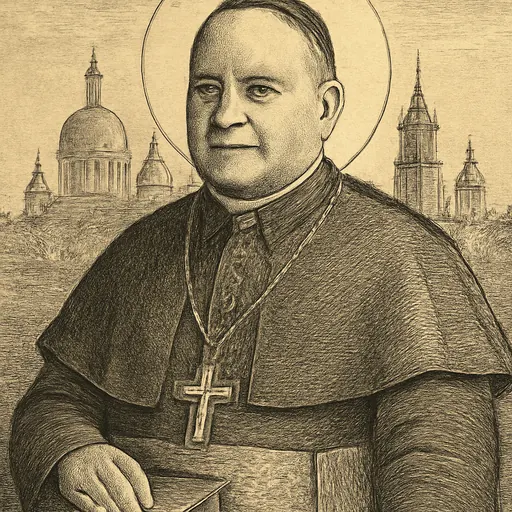
St. Józef Bilczewski (1860 to 1923) was a Polish theologian who became the Latin-rite archbishop of Lwów (Lviv) in 1900 and led it for twenty-three years, through the First World War, teaching love of the Eucharist and care for the poor. He asked to be buried in the city's cemetery of the poor. His feast is March 20; he was canonized in 2005.
Who was St. Józef Bilczewski?
St. Józef Bilczewski was a Polish priest and scholar who became the Latin-rite archbishop of Lwów, the city now called Lviv in Ukraine, and led it for twenty-three years. They were hard years: a world war, a war between Poles and Ukrainians fought in the city's own streets, and hunger. Through all of it he taught his people to love the Eucharist and to love one another. When he died in 1923, he asked to be buried not in a bishop's crypt but among the poor.
Pope Benedict XVI canonized him on October 23, 2005, in St. Peter's Square, together with St. Zygmunt Gorazdowski, another priest of Lviv, and St. Alberto Hurtado of Chile.

The life of St. Józef Bilczewski
From Wilamowice to the lecture hall
Józef Bilczewski was born on April 26, 1860, in Wilamowice, a small town near Kęty in southern Poland, then part of the Austrian Empire. He went to school in Wilamowice and Kęty and finished high school at Wadowice in 1880, the town where Karol Wojtyła would be born sixty years later. He entered the seminary in Kraków and was ordained a priest on July 6, 1884, by Cardinal Albin Dunajewski.
He took a doctorate in theology at the University of Vienna in 1886, studied further in Rome and Paris, and in 1890 qualified as a university lecturer at the Jagiellonian University in Kraków. The next year he became professor of dogmatic theology at the university in Lwów, where he later served as dean of theology and rector.
A theologian of the Eucharist
Bilczewski was one of the first theologians to treat the monuments of the early Church as a source for theology. In a book on the Eucharist in the light of ancient paintings and inscriptions, he set out to show that the Eucharist the Catholic Church celebrates today is the same one the Apostles lived and believed. The papal letter for his canonization singles out that work.

Archbishop of Lwów
Emperor Franz Joseph proposed him for the vacant see of Lwów, and Pope Leo XIII named him archbishop on December 17, 1900. He was only forty. He was consecrated on January 20, 1901. He summed up his program in one line: to "totally sacrifice oneself for the Holy Church."
He pressed for frequent Communion, devotion to the Sacred Heart and perpetual adoration, and he urged his priests to join associations of adoration. He worked for vocations, for catechesis and for the religious formation of children. He built churches and chapels, schools and day-care centers. His pastoral letters dealt with faith and morals but also with social questions, in the spirit of Leo XIII's Rerum Novarum.
Lwów was a city of several peoples and three Catholic rites, Latin, Greek and Armenian, alongside a large Jewish community. The Vatican's biography records that he worked for unity among them, and that his holiness won him respect from every confession, rite and nation in his archdiocese. During the First World War, when hatred ran high, he kept preaching God's love and the commandment of brotherly love, and he organized help for the hungry.
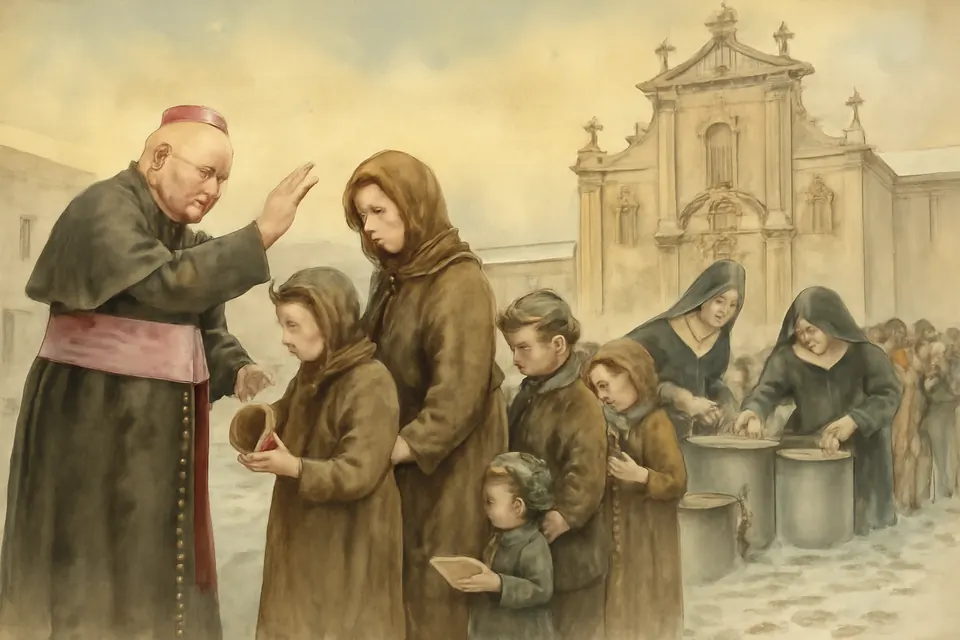
Burial among the poor
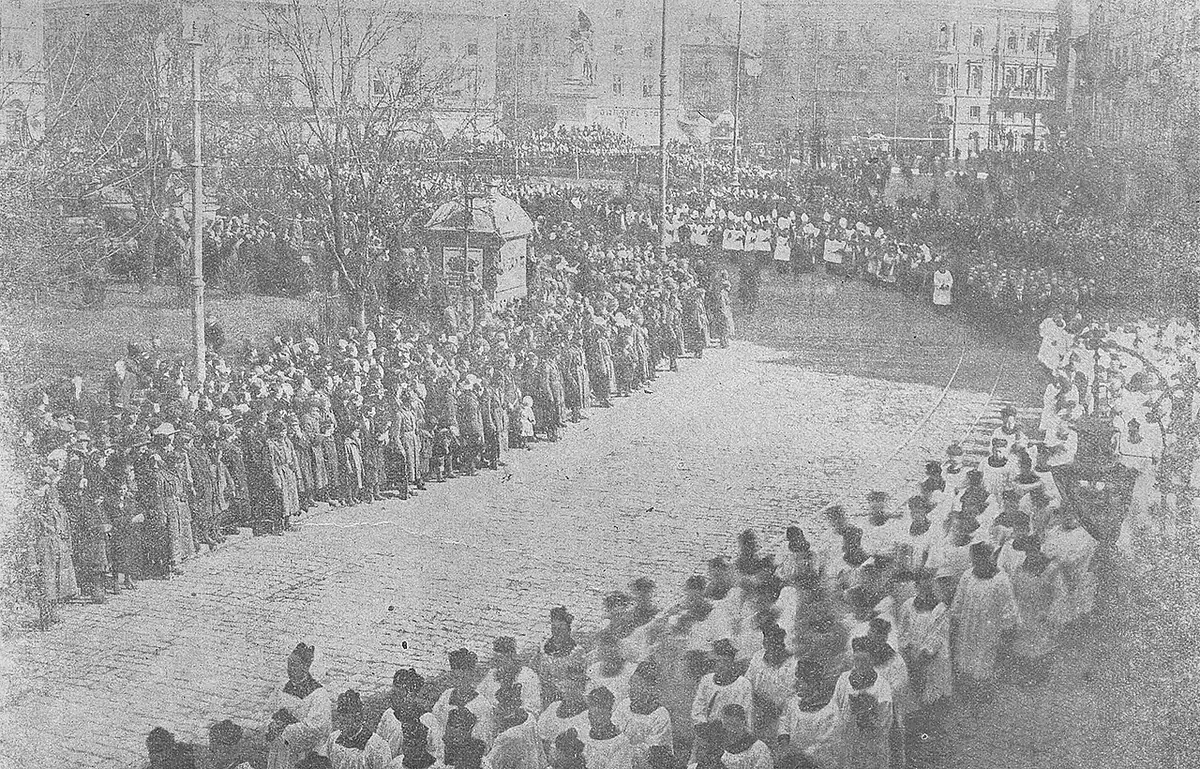
Bilczewski died on March 20, 1923, at sixty-two, accepting his death peacefully as God's will. At his own request he was buried in the Janowski cemetery, which the people of Lwów called the cemetery of the poor. Huge crowds filled the streets for his funeral.
The miracles of St. Józef Bilczewski
His cause was opened in the Archdiocese of Kraków in 1952. Pope John Paul II declared his heroic virtue on December 17, 1997.
- The healing of Marcin Gawlik (approved): a nine-year-old boy with third-degree burns was healed rapidly, completely and without medical explanation after prayers for the archbishop's intercession. The Congregation for the Causes of Saints recognized the miracle in 2001. John Paul II beatified Bilczewski in Lviv on June 26, 2001, during his visit to Ukraine.
- The canonization miracle (approved): a second miracle attributed to his intercession was approved by decree on December 20, 2004. The papal documents we consulted do not describe it.
Why St. Józef Bilczewski is a patron of Lviv and of the poor
He gave his whole life as a bishop to Lwów and asked to lie with its poorest people. That is why the city and his archdiocese take him as their patron, and why he is invoked for the poor and the homeless. As a professor and a lifelong teacher of the faith, he is also a natural patron for teachers. His hometown of Wilamowice honors him as its own.
Symbols of St. Józef Bilczewski in art
- Archbishop's vestments and miter: he is shown as the archbishop of Lwów, as in his photographs.
- The pectoral cross: the cross of a bishop, worn in his portraits.
- A book: the theologian and professor, author of pastoral letters.
- A monstrance: his devotion to the Eucharist and to adoration.
Because he lived in the age of photography, the truest images of him are photographs like the ones on this page.
Feast day, relics and prayer
We keep the feast of St. Józef Bilczewski on March 20, the day he died. His relics are honored in a reliquary in the Latin Cathedral of the Assumption in Lviv.
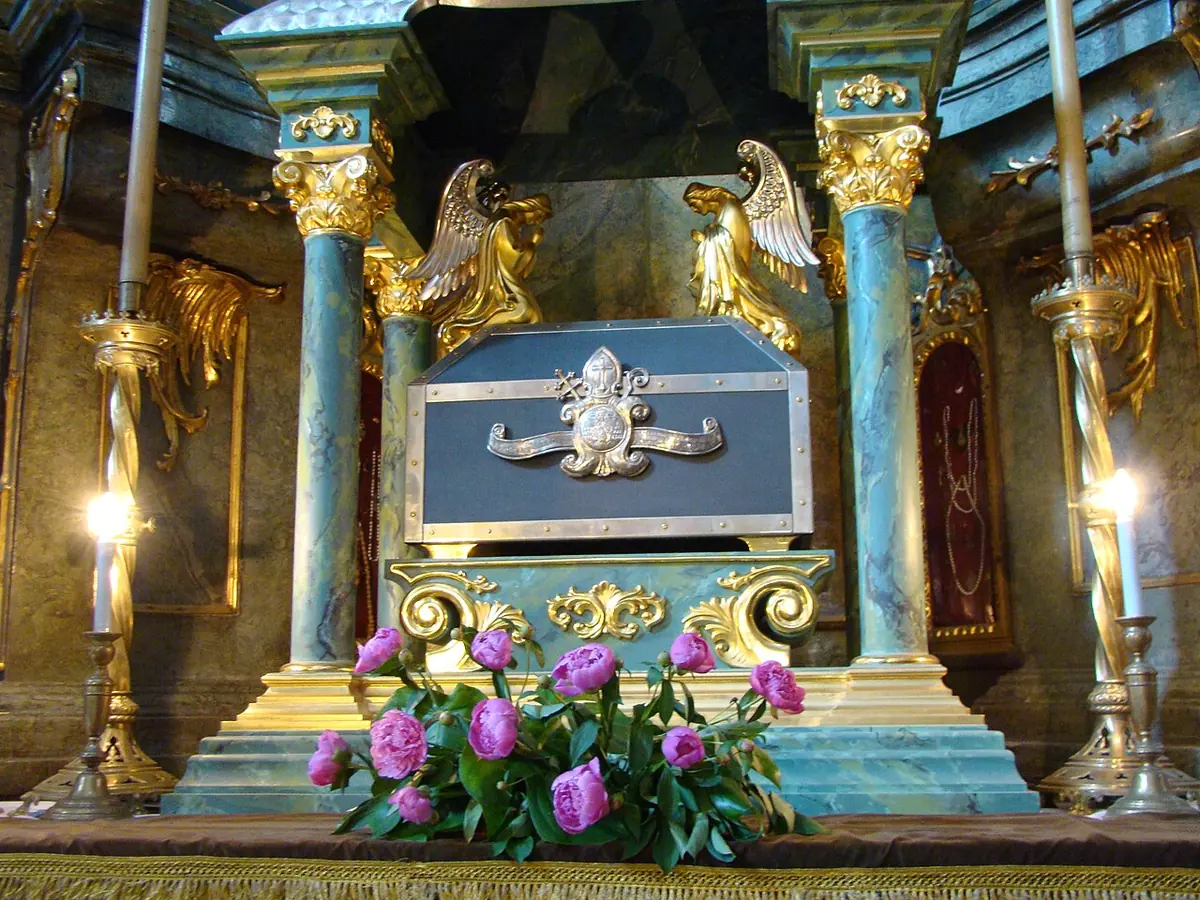
There is no widely used traditional prayer to him in English. Let us ask him, in our own words, to pray for Lviv and Ukraine, for the poor and the homeless, and for a deeper love of Christ in the Eucharist.
St. Józef Bilczewski, pray for us.
Frequently asked questions
Who was St. Józef Bilczewski?
A priest from Wilamowice in southern Poland who became a professor of dogmatic theology and rector of the university in Lwów, then Latin-rite archbishop of Lwów from 1900 to his death in 1923. He was known for his Eucharistic devotion, his pastoral letters, his work for the poor and his peacemaking among the city's peoples and rites.
What miracle made Józef Bilczewski a saint?
For his beatification, the Church approved in 2001 the rapid, lasting and unexplained healing of Marcin Gawlik, a nine-year-old boy with third-degree burns, after prayers for the archbishop's intercession. A second healing was approved by decree on December 20, 2004, opening the way to his canonization.
When is the feast of St. Józef Bilczewski?
March 20, the day he died in 1923.
Where is St. Józef Bilczewski buried?
At his own wish he was buried in the Janowski cemetery in Lviv, known as the cemetery of the poor. Today his relics are shown in a reliquary in the Latin Cathedral of Lviv.
Keep exploring
- Patron saint pages
- Teachers
- Feast-day calendar
- Saints remembered in MarchSaint of the day
- More
- Saints A to ZPatron saints A to ZExplore every section
Sources
- Holy See, Blessed Archbishop Joseph Bilczewski (1860-1923), biography for the canonization of October 23, 2005, vatican.va. Dates of his life, his pastoral program, his burial, the 1997 decree of heroic virtue, the healing of Marcin Gawlik and the 2001 beatification
- Benedict XVI, Litterae decretales for the canonization of Józef Bilczewski, October 23, 2005 (Latin), vatican.va. His episcopal consecration on January 20, 1901, his book on the Eucharist in ancient art and inscriptions, and the miracle decree of December 20, 2004