St. Diadochos of Photiki, Bishop and Teacher of Prayer

St. Diadochos of Photiki was a fifth-century bishop of Photike in Epirus, in northwestern Greece, and the author of the One Hundred Chapters on spiritual perfection, one of the opening works of the Philokalia. He taught monks how to tell true grace from illusion and how to keep the mind on the Lord Jesus in prayer. His memory is kept on March 29.
Who was St. Diadochos of Photiki?
St. Diadochos of Photiki was a bishop of the fifth century and one of the great teachers of prayer in the Eastern Church. He led the church of Photike, a town in Epirus, in the rugged northwest of Greece, and he wrote a hundred short chapters on the spiritual life that monks have read ever since. When St. Nikodemos of the Holy Mountain and St. Makarios of Corinth gathered the Philokalia in the eighteenth century, they placed Diadochos near the front.
We know far less about his life than about his teaching. The Catholic Encyclopedia gives the essentials in a sentence: he was "Bishop of Photike in Epirus in the fifth century," the author of a "Sermon on the Ascension" and of a hundred "Chapters on Spiritual Perfection," and Victor of Vita praised him in the prologue of his history of the Vandal persecution. His memory is kept on March 29.
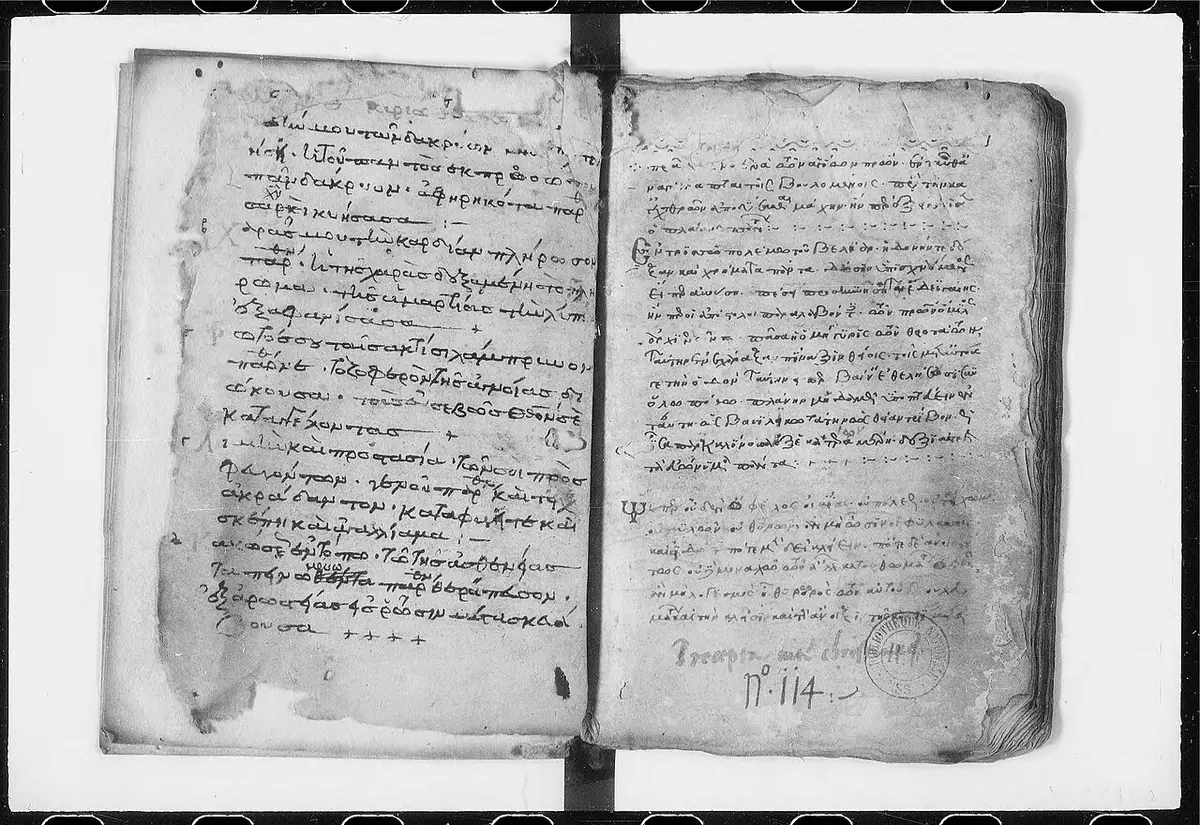
What we know of his life
Bishop in Epirus
Diadochos was probably born around the year 400. He was a bishop by the middle of the fifth century, a time when the Church was torn over how to speak of Christ's divine and human natures. He stood with the faith of the Council of Chalcedon (451), which confessed one Christ in two natures.
He seems to have written his chapters for monks under his care. In his day a movement called Messalianism was spreading through the monasteries of the East. Its followers taught that prayer alone saves, that the sacraments matter little, and that a person can feel grace in the body and know for certain that he is holy. Friedrich Dörr's study of 1937, Diadochus von Photike und die Messalianer, reads the hundred chapters as a careful answer to that movement: Diadochos keeps what is true in the longing for felt grace and corrects what is false.
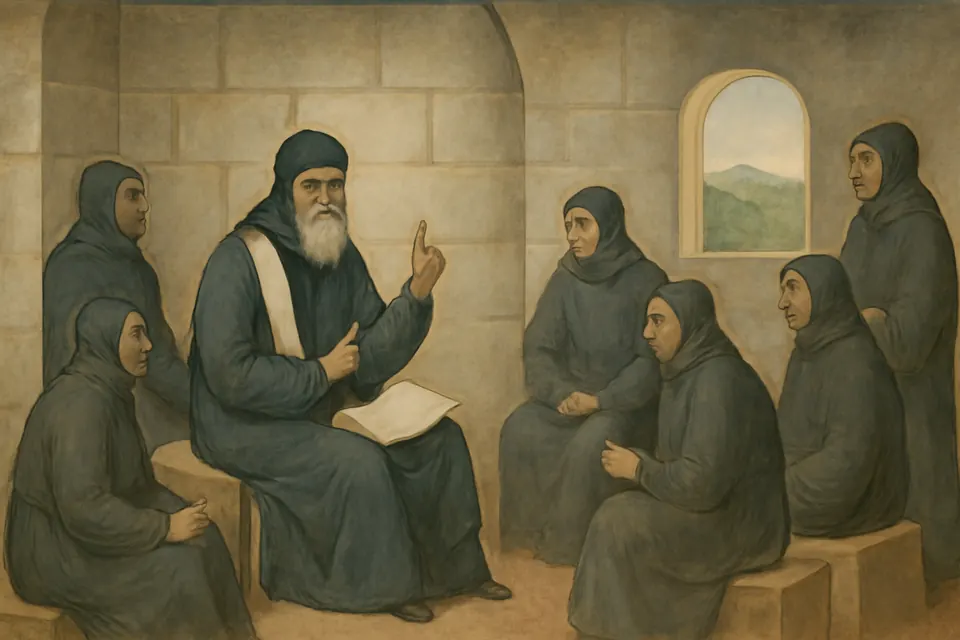
Carried off to Africa
Victor of Vita, a priest of North Africa who wrote about the Vandal kingdom in the 480s, praised Diadochos and his teaching. From Victor's words, modern writers usually reconstruct the end of his life this way: Vandal raiders from Carthage struck the coast of Epirus in the 460s or 470s, Diadochos was among the leading men carried off, and he died in Africa, probably before 486. That reconstruction is likely, but it can't be proven, and we don't know the date or place of his death.

The teaching of St. Diadochos
The hundred chapters are short, a paragraph or two each, and they read like a wise elder's advice. A few threads run through them.
- Discernment. Not every sweet feeling in prayer comes from God. Diadochos teaches his monks to test what they feel, to stay humble, and to distrust visions and lights that puff them up.
- Grace given in baptism. Grace dwells in the depth of the soul from baptism, even when a person can't feel it, and it grows as we keep the commandments.
- The remembrance of the Lord Jesus. He urges the monk to keep the mind on the Lord by calling on his name, quietly and often. This is one of the early roots of the Jesus Prayer, later loved by St. John Climacus, St. Symeon the New Theologian and St. Gregory Palamas.
- Love as the goal. The whole ascetic struggle is for the sake of love of God, which casts out fear.
His teaching links the Desert Fathers of Egypt, including St. Macarius, with the later hesychast tradition of Mount Athos.
Miracles
No miracles are recorded of St. Diadochos, and we have no early life of him. His holiness comes down to us in his writings and in the Church's long use of them.
Symbols of St. Diadochos in art
Old images of him are rare. Modern Orthodox icons show him in a fairly standard way:
- Bishop's omophorion: the white stole with crosses that marks him as a bishop.
- Book or scroll: his hundred chapters, the work for which he is remembered.
- Prayer rope: sometimes added to point to his teaching on calling on the name of Jesus.
- Gray beard and ascetic face: the usual way icons show a monk-bishop of the early Church.
Without an inscription he can be hard to tell from other bishops, so look for his name in Greek, "Ο ΑΓΙΟΣ ΔΙΑΔΟΧΟΣ."
Feast day
His memory is kept on March 29. He is honored above all by those who read the Philokalia, in monasteries East and West. See the other saints of March on our feast days page.
Praying with St. Diadochos
We know of no traditional prayer addressed to him in English. The best way to honor him is to do what he taught: to set aside a few quiet minutes, to call on the name of the Lord Jesus slowly and with attention, and to ask for the grace to love God more than any feeling in prayer. The Jesus Prayer is the simplest way to begin.
St. Diadochos of Photiki, pray for us, and for all who are learning to pray.
Frequently asked questions
Who was St. Diadochos of Photiki?
A Greek bishop of the fifth century who led the church of Photike in Epirus. He wrote a hundred short chapters on the spiritual life, a sermon on the Ascension, and other works, and the Vandal-era historian Victor of Vita praised him. Little else about his life is certain.
What did St. Diadochos write?
His main work is the One Hundred Chapters (in Latin, De perfectione spirituali capita centum), sometimes called On Spiritual Knowledge and Discrimination. He also wrote a sermon on the Ascension. The Catholic Encyclopedia lists both.
When is the feast of St. Diadochos of Photiki?
March 29, in the Orthodox calendars that list him. He is honored mainly in the Eastern Church.
Is Diadochos of Photiki the same as Marcus Diadochus?
No. The Catholic Encyclopedia warns that the two are often confused, even in Migne's Greek Fathers. Marcus Diadochus was an obscure fourth-century author of a sermon against the Arians; Diadochos of Photiki was a fifth-century bishop in Epirus.
Keep exploring
Sources
- Marcus Diadochus, Catholic Encyclopedia (1910), New Advent. Bishop of Photike in Epirus in the fifth century; the Sermon on the Ascension and the hundred Chapters; praised by Victor of Vita; often confused with Marcus Diadochus
- Sancti Diadochi episcopi Photicensis De perfectione spirituali capita centum, ed. J. E. Weis-Liebersdorf (Leipzig, 1912), archive.org. Critical edition of the Greek text of the hundred chapters
- Friedrich Dörr, Diadochus von Photike und die Messalianer (1937), archive.org. Study of his chapters as a response to the Messalian movement
- Life and Works of Saint Diadochos of Photiki, Mystagogy Resource Center. Secondary summary; the usual reconstruction of his capture by the Vandals and his commemoration on March 29