St. Serapion of Thmuis, Bishop and Friend of St. Anthony
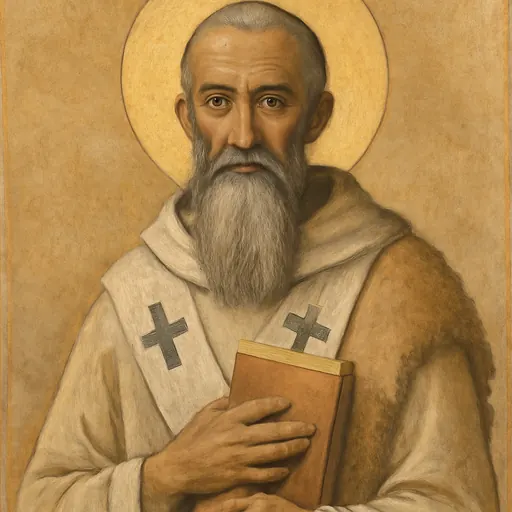
St. Serapion of Thmuis was a 4th-century Egyptian monk, a disciple of St. Anthony of the Desert, who became bishop of Thmuis in the Nile Delta. Called "the Scholastic," he stood with St. Athanasius against the Arians, received Athanasius's famous letters on the Holy Spirit, and died in exile. His feast is March 21.
Who was St. Serapion of Thmuis?
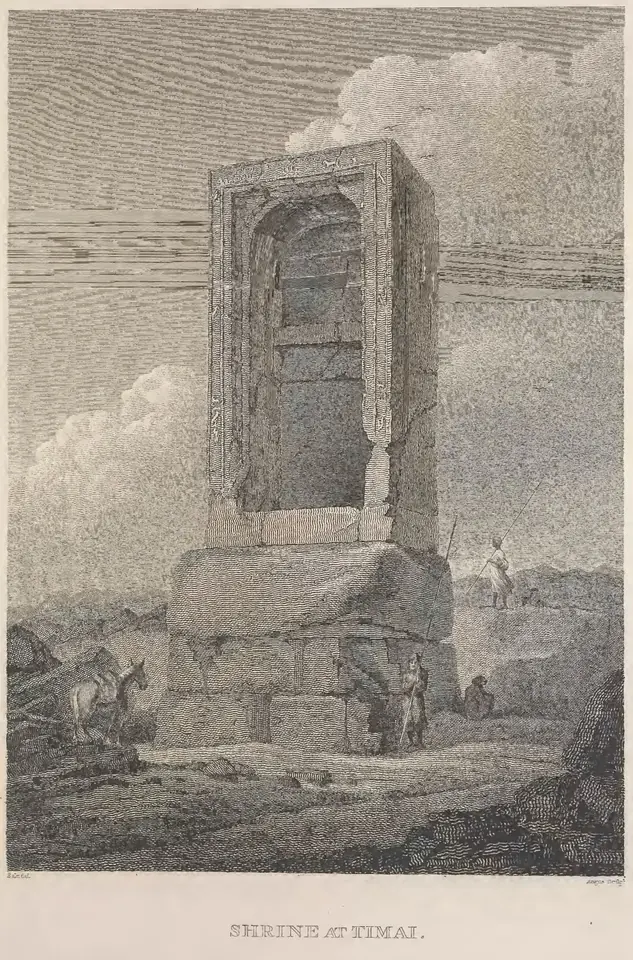
St. Serapion of Thmuis was a monk of the Egyptian desert who became a bishop and one of the faithful friends of St. Athanasius in the years when Arianism, the heresy that denied the full divinity of Christ, held power in the empire. Thmuis was a city of the eastern Nile Delta; its ruins, Tell Timai, lie by the village of Tmai el-Amdid. Butler's Lives explains that the city's Egyptian name meant "goat," an animal once worshiped there, which tells us what kind of town he was sent to shepherd.
St. Jerome, writing around 392, calls him Serapion "Scholasticus," the learned one, "the intimate friend of Anthony the monk," and says he was "renowned as a confessor" under Emperor Constantius. He is easy to confuse with other men named Serapion, above all St. Serapion the Sindonite, the wandering monk who sold himself as a slave. This page is about the bishop.
His life
Disciple of St. Anthony
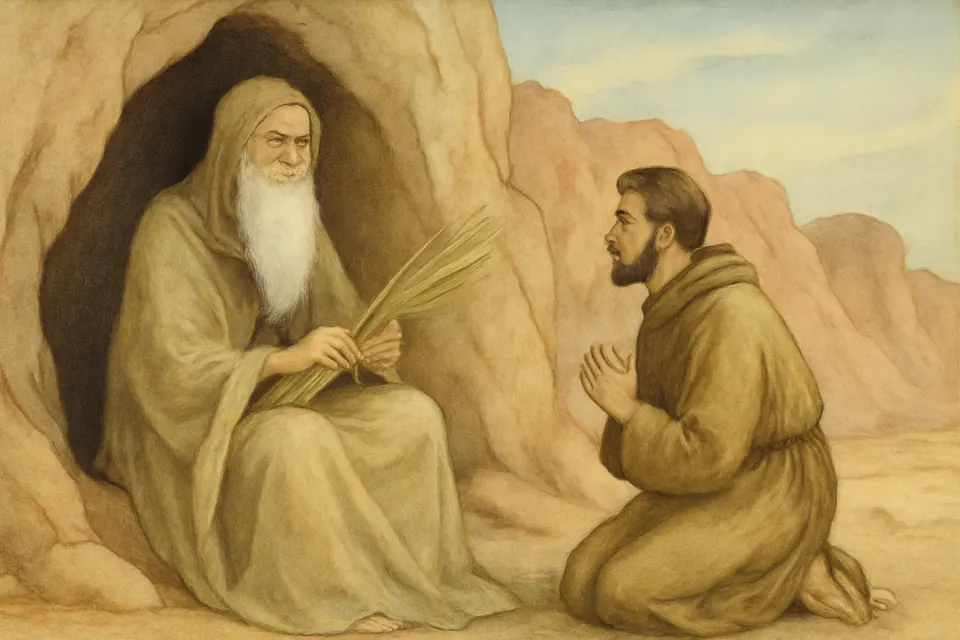
Butler says Serapion first taught in Alexandria and then left for the desert. He became a disciple of St. Anthony the Great. In the Life of Antony, Athanasius tells how Anthony, sitting on his mountain, often saw things happening far away in Egypt "and told it to Serapion the bishop, who was indoors with him." Once Serapion watched Anthony fall into a trance, groan and weep: he had seen mules kicking over the Lord's altar, a vision the monks later understood as the Arian seizure of the churches.
When Anthony was dying in 356, he gave his last wishes to his two companions: "To Athanasius the bishop give one sheepskin... To Serapion the bishop give the other sheepskin." Athanasius adds that whoever received Anthony's garments kept them "as a precious treasure."
Bishop and friend of Athanasius
Serapion was drawn out of the desert to be bishop of Thmuis. He worked side by side with Athanasius, who trusted him like a brother. Athanasius wrote him a letter describing the death of Arius, and asked him to correct or add to what he had written: "if anything is wanting in what I have written, add it." When Serapion warned him that some Christians who accepted the divinity of the Son denied the divinity of the Holy Spirit, Athanasius answered with his Letters to Serapion, which Butler calls the first written refutation of that error.
Serapion wrote too. Jerome mentions a book Against the Manichaeans, a work On the Titles of the Psalms and many letters. Butler sums up the anti-Manichaean book: our bodies can serve good, our souls can be spoiled by sin, and there is no creature of which a good use may not be made.
Exile
Like Athanasius, he paid for his faith. Butler writes that Emperor Constantius banished him and that he died in exile; the older Roman Martyrology says he was "forced into exile by the enraged Arians" and "went to heaven." The year of his death is not known.
The prayers of Serapion
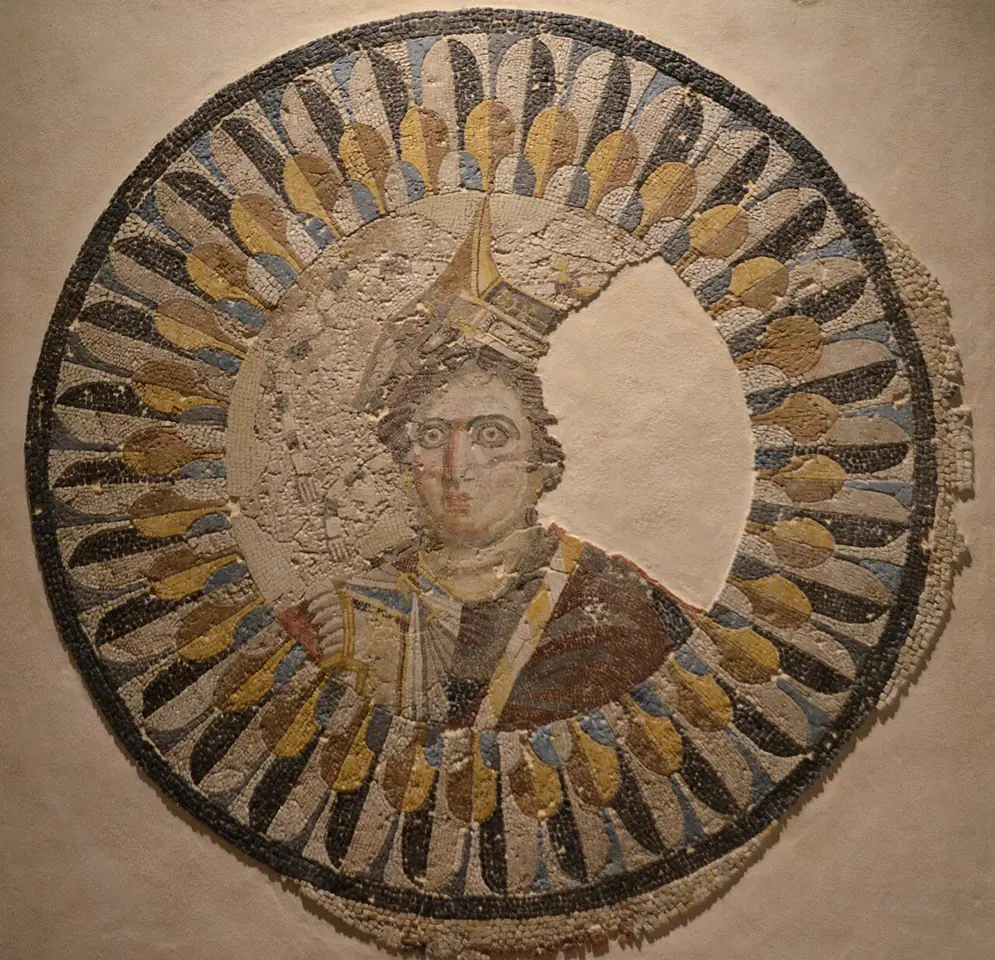
A manuscript of the Great Lavra monastery on Mount Athos, copied around the 11th century, contains thirty prayers from 4th-century Egypt. Bishop John Wordsworth published them in English in 1899 as Bishop Sarapion's Prayer-Book. Two of them, the first and the fifteenth, carry the name "Bishop Sarapion" or "Sarapion, Bishop of Thmuis," and the whole collection probably reflects worship at Thmuis in his day, though scholars still discuss how much of it he wrote himself.

The prayers have a fresh, early voice. In the great Eucharistic prayer we hear: "We beseech thee make us living men."
Miracles and legends
No miracles are told of Serapion himself in the early sources. The marvels in his story belong to his teacher: Anthony's traditional visions of distant events, which Serapion witnessed and which Athanasius recorded.
Symbols of St. Serapion of Thmuis in art
Serapion is rarely painted on his own in Western art. In Eastern and Coptic icons look for:
- A bishop's vestments and omophorion, the woolen band of an Eastern bishop.
- A book, for his writings and the prayers that carry his name.
- A sheepskin, the cloak St. Anthony left him.
- St. Anthony or St. Athanasius beside him, in images of the desert fathers.
Coptic church paintings sometimes include a monk named Sarapion among the desert saints, but the artist does not always say which Serapion is meant.
Prayer of St. Serapion for the sick
No traditional prayer to St. Serapion is known. We can do better: we can pray with him, using a prayer from the book that bears his name. This is the "Prayer for those who are sick," in Wordsworth's 1899 translation:
We beseech thee the overlooker and Lord and fashioner of the body and maker of the soul, thee who didst fit together man, thee who art the steward and governor of the whole race of men, thee who art reconciled and made gentle because of thine own love of men: be propitious Master: assist and heal all that are sick. Rebuke the sicknesses: raise up those that are lying down: give glory to thy holy name and to that of thy only-begotten Jesus Christ, through whom to thee (is) the glory and the strength in holy Spirit, both now and to all the ages of the ages. Amen.
St. Serapion, friend of Anthony and Athanasius, pray for us.
Frequently asked questions
Who was St. Serapion of Thmuis?
A desert monk and disciple of St. Anthony the Great who became bishop of Thmuis in Lower Egypt in the 4th century. St. Jerome calls him Scholasticus for his learning, and he was one of the closest friends and allies of St. Athanasius in the struggle against Arianism.
What is the Prayer Book of Serapion?
A collection of thirty prayers for the Eucharist, baptism, ordinations, the blessing of oils and the burial of the dead, preserved in an 11th-century manuscript at the Great Lavra on Mount Athos and published in English by Bishop John Wordsworth in 1899. Two of the prayers carry Serapion's name; scholars still debate how much of the book he wrote, but it is one of our oldest windows into Egyptian worship.
What did St. Anthony leave to Serapion?
A sheepskin. In his Life of Antony, St. Athanasius records the dying hermit's wish that one of his two sheepskins go to Bishop Athanasius and the other to "Serapion the bishop."
When is the feast of St. Serapion of Thmuis?
March 21, both in the older Roman Martyrology and in the Orthodox calendar.
Keep exploring
Sources
- Alban Butler, Lives of the Fathers, Martyrs, and Other Principal Saints, vol. 3, March 21: St. Serapion, Bishop of Thmuis
- St. Jerome, De Viris Illustribus 99: Serapion of Thmuis
- St. Athanasius, Life of Antony (chapters 82 and 91)
- St. Athanasius, Letter 54: To Serapion, concerning the death of Arius
- John Wordsworth, Bishop Sarapion's Prayer-Book (1899). The text of the Prayer for those who are sick
- The Roman Martyrology (1916 English edition), March 21
- Orthodox Church in America: Saint Serapion, Bishop of Thmuis in Lower Egypt (March 21)