Blessed Ambrose of Siena (Ambrogio Sansedoni), Dominican Preacher and Peacemaker
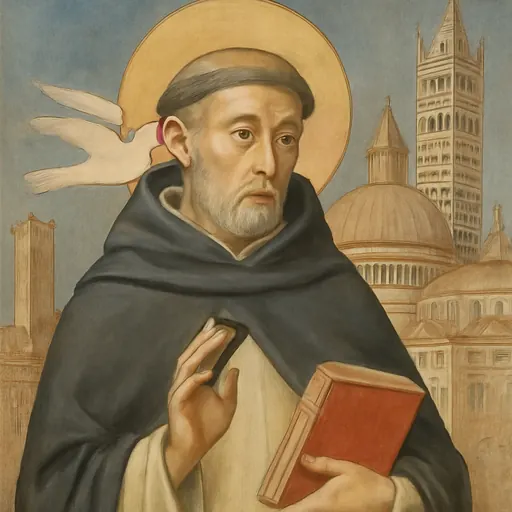
Blessed Ambrose of Siena (Ambrogio Sansedoni, 1220–1287) was a Dominican friar who studied under St. Albert the Great alongside St. Thomas Aquinas, preached across Germany and Italy, and twice won pardon for his native Siena from the pope. His feast is March 20, the day he died, and Siena has honored him as one of its blessed protectors ever since.
Who was Blessed Ambrose of Siena?
Blessed Ambrose of Siena, born Ambrogio Sansedoni, was a Dominican friar of the 13th century: a student of St. Albert the Great, a classmate of St. Thomas Aquinas, a preacher, a teacher for more than thirty years, and the man Siena sent to the pope when it needed forgiveness. He died in his native city in 1287, and the people of Siena have honored him ever since.

His life
A Sienese childhood
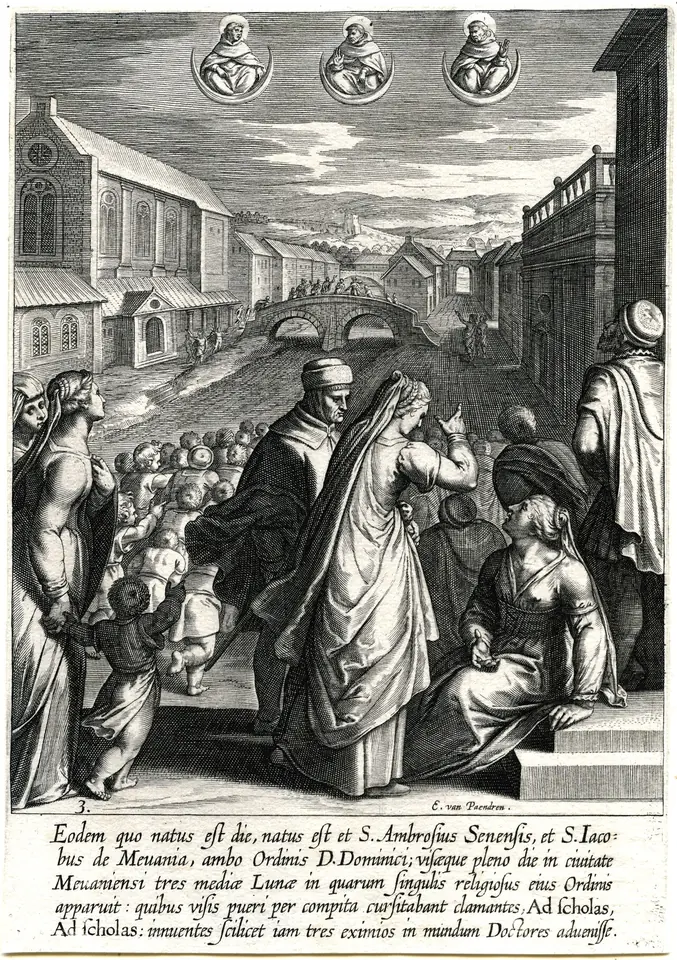
Ambrogio was born in Siena around 1220; his biographers give April 16. His father, Buonatacca, was an active supporter of the Emperor Frederick II. His grandmother Imiglia ran the hospital of the Maddalena, which in 1221 gave a home to the first Dominican friars in Siena.
The early Life of Ambrose says he was born with a deformity and was healed as a small child in the Dominican church of St. Mary Magdalene. This is a traditional account from his hagiographers, and the Dizionario Biografico degli Italiani treats it as such. As a boy he was known for his charity to pilgrims, the sick and prisoners.
Paris, Albert and Thomas
He entered the Order of Preachers in 1237, at about seventeen. After his first studies in Italy he was sent in 1245 to the Dominican house of studies in Paris, where Albert the Great taught and Thomas Aquinas was a fellow student. Older accounts say he followed Albert to Cologne in 1248 and taught there; the modern Italian scholar Michele Pellegrini notes that this chronology was modeled on Thomas's own and lacks firm evidence. Out of humility, his biographers say, he never took the bachelor's degree.
Preaching across Europe
Ambrose preached in German cities, in German and Latin, working to calm quarrels between towns and princes. By about 1260 he was back in central Italy. In 1264, while prior of Orvieto, he was sent by Pope Urban IV to Genoa, then under interdict, to negotiate peace terms with Venice.
Peacemaker for Siena
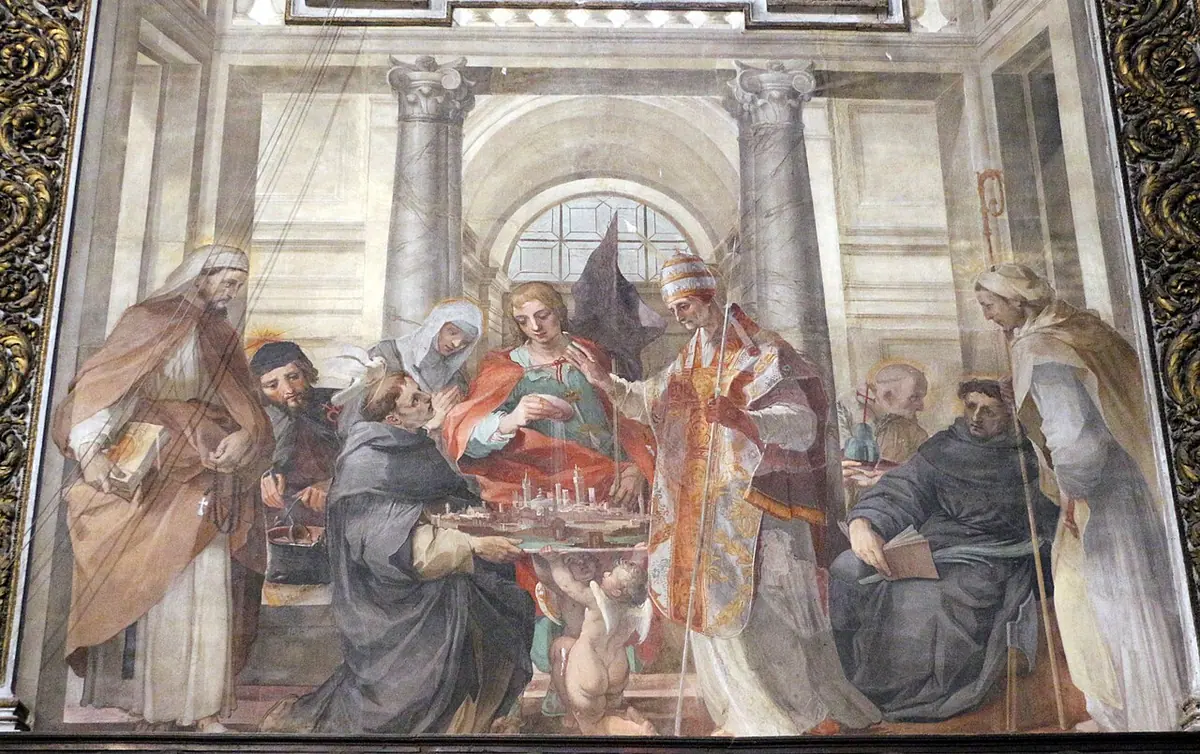
Siena had backed the emperor against the popes and lay under a church interdict, which meant no public Masses and no sacraments for the city. On April 16, 1266, Ambrose and the bishop urged the city council to seek reconciliation, and weeks later he read out Pope Clement IV's conditions. In May 1273 he and a fellow friar were named the city's envoys to the pope, and on July 13 of that year the interdict was lifted. Siena never forgot it. His Life also credits him with making peace between Pisa and Florence in 1276. He refused when he was elected bishop of Siena.
In 1279 he was prior of the Dominican convent of Camporegio in Siena. A volume of his Sunday sermons, written between 1273 and 1287, survives in Siena's city library.
His death
Ambrose died in Siena on March 20, 1287. According to the account Pellegrini summarizes, a vein burst while he was preaching against usurers. He was buried the next day, and the city paid for a monumental tomb and for an illuminated copy of his Life.

The miracles of Blessed Ambrose
Within weeks of his death the friars began recording miracles before a notary. Thirty acts were drawn up between April 13 and July 9, 1287, twenty-eight from Siena and two from Bolsena. These are reported miracles: carefully documented at the time, but never judged in a canonization trial. Pope Honorius IV, who had ordered the process, died two weeks after Ambrose, and the cause stalled. The healing of his infancy is traditional.
His name was entered in the Roman Martyrology in 1577, and Pope Gregory XV confirmed his cult in October 1622.
Why Blessed Ambrose is honored in Siena
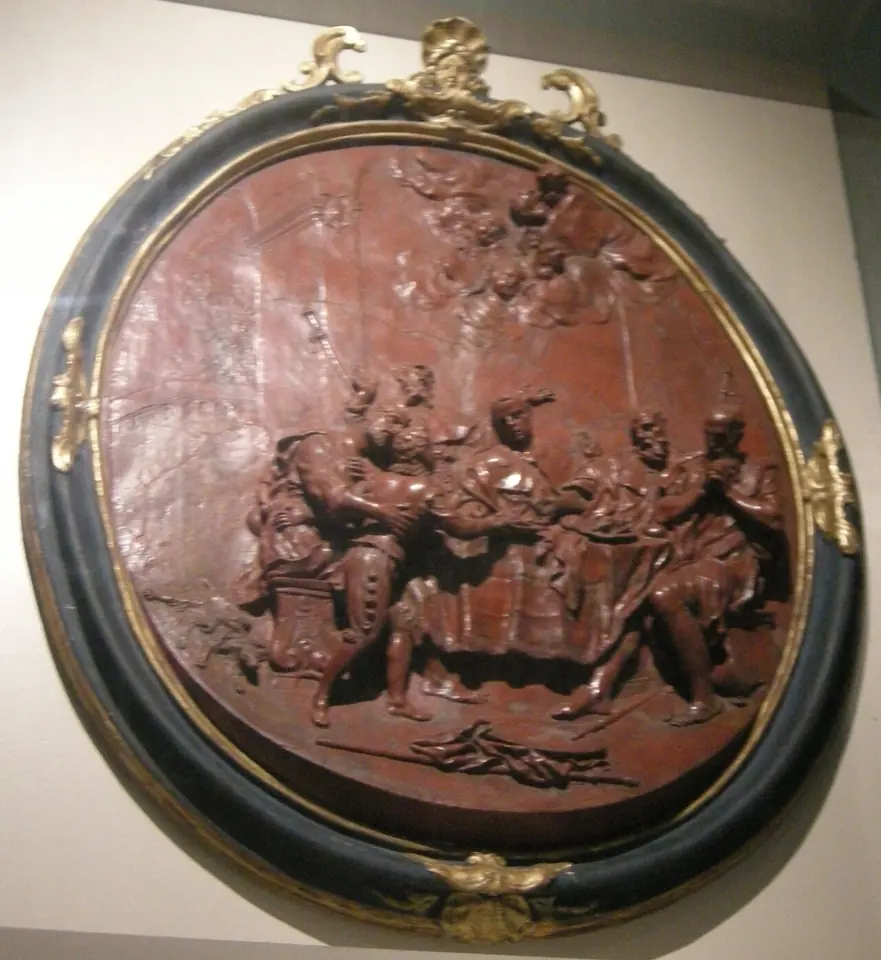
Siena honors him because he made peace for the city. Through the 14th century the commune itself kept his cult, and on his feast it ran a palio in his honor. Later Sienese tradition went so far as to link the origin of the city's famous horse race to the lifting of the interdict in 1273, a connection the historians treat as legend.
Symbols of Blessed Ambrose in art
- Dominican habit: the white tunic and black cloak of the Order of Preachers.
- Dove at his ear: the Holy Spirit giving him the words to preach; see Giovanni di Paolo's panel.
- Book: his teaching and his sermons.
- Model of the city of Siena: the city he reconciled with the Church, held out to the pope in Salimbeni's fresco.
In Siena he is painted among the city's other blessed; a century after him came Siena's great Dominican saint, St. Catherine of Siena.
Feast day and where he is honored
We keep his memory on March 20, the day he died. He is honored above all in Siena, in the Dominican church of Camporegio (San Domenico) where the friars buried him, and in Siena Cathedral's choir. See more feast days.
Prayer to Blessed Ambrose of Siena
We know of no traditional prayer to Blessed Ambrose in common use, and we won't invent one. Let us ask him, in our own words, to pray for preachers, for those who work to reconcile cities and nations, and for every family torn by quarrels. Blessed Ambrose of Siena, pray for us.
Frequently asked questions
Who was Blessed Ambrose of Siena?
Ambrogio Sansedoni, a Dominican friar born in Siena in 1220. He studied in Paris under Albert the Great with Thomas Aquinas, preached and taught for decades, and worked as a peacemaker between his city and the popes.
When is the feast of Blessed Ambrose of Siena?
March 20, the day of his death in 1287. Some Dominican calendars have listed him on October 8.
Why is Blessed Ambrose shown with a dove?
In art the dove at his ear stands for the Holy Spirit inspiring his preaching, as in Giovanni di Paolo's 15th-century panel in the Metropolitan Museum.
Keep exploring
Sources
- Michele Pellegrini, "Sansedoni, Ambrogio, beato," Dizionario Biografico degli Italiani (2017), Treccani. His family, studies, the Genoa mission of 1264, the Siena interdict and its lifting in 1273, his sermons, death on March 20, 1287, the miracle records of 1287, and Gregory XV's recognition of his cult in 1622
- Edward Fitzgerald, "Bl. Ambrose of Sienna," Catholic Encyclopedia (1907). The healing at the church of St. Mary Magdalene, the refused bishopric, and his entry in the Roman Martyrology in 1577