St. Augusta of Treviso
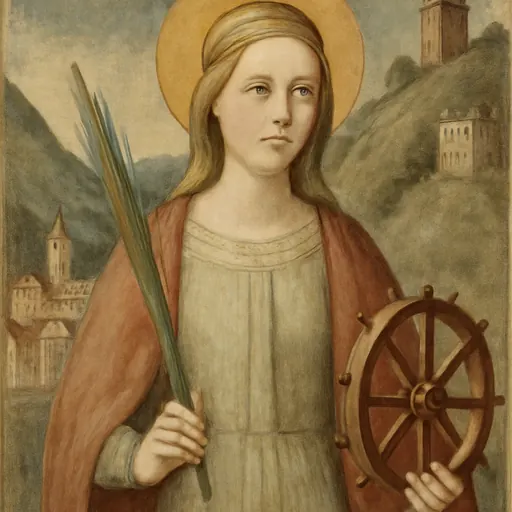
St. Augusta of Treviso, also called Augusta of Serravalle, is a virgin martyr honored at Serravalle, today part of Vittorio Veneto. Her legend says she was the daughter of a pagan chieftain named Matrucus, became a Christian in secret, and was tortured and beheaded at her own father's order. We keep her feast on March 27.
Who was St. Augusta of Treviso?
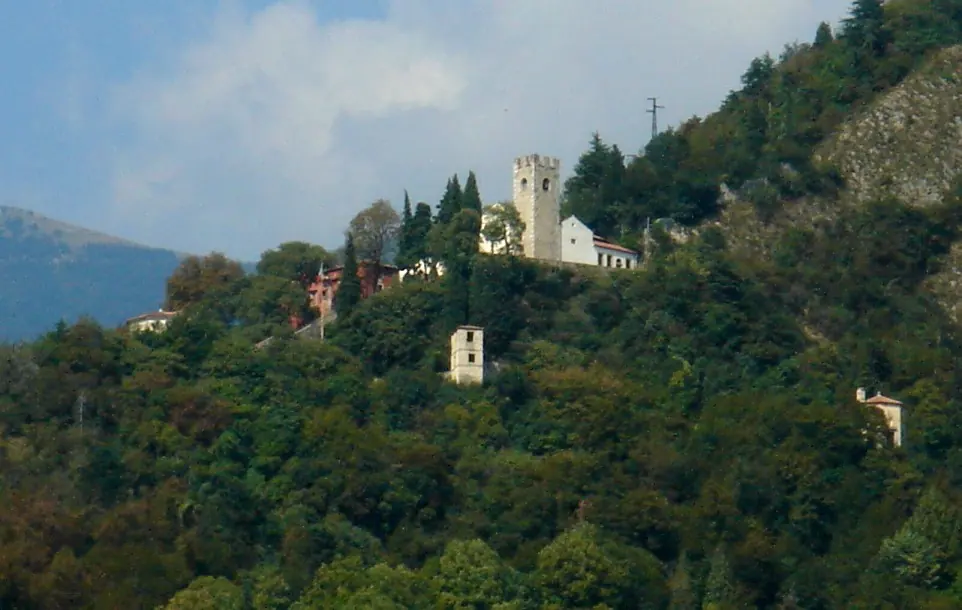
St. Augusta of Treviso, known in Italy as Sant'Augusta di Serravalle, is a virgin martyr honored above all in Serravalle, the old town at the head of the valley that is now part of Vittorio Veneto, in the province of Treviso. Her sanctuary stands halfway up Monte Marcantone, the steep hill the people of Serravalle prefer to call the mountain of Sant'Augusta, and they have invoked her for centuries as their special patroness in good times and bad.
Her story, as tradition tells it, is short and terrible. She was the daughter of a pagan chieftain, became a Christian in secret, and was put to death by her own father. We should say plainly at the start what kind of story this is.
History and legend
Everything we know of her life comes from her Acts, which were written down only at the end of the 16th century by Minuccio de' Minucci, a native of Serravalle who was protonotary apostolic and secretary to Pope Clement VIII (1592–1605). He sent them to the editors of the great Carthusian collection of saints' lives begun by Laurentius Surius, and they were printed at Cologne in its seventh volume.
The Italian reference Santi e Beati says frankly that these details are "certainly legendary," as happened with many early martyrs whose lives were written long after their relics were found. The two main versions do not even agree on the century. One places her martyrdom around the year 100 and makes her father a chief of the Alemanni who had conquered Friuli. The local version told at Serravalle sets the story in the early 400s, after Alaric's Visigoths invaded the Veneto, and makes her father one of Alaric's captains.
What is solid is the devotion. Tradition holds that her body was found a few years after her death, buried on the hill above Serravalle, and that a church was built over it as early as the 5th century. She does not appear in the Roman Martyrology; her cult belongs to her own town and diocese.
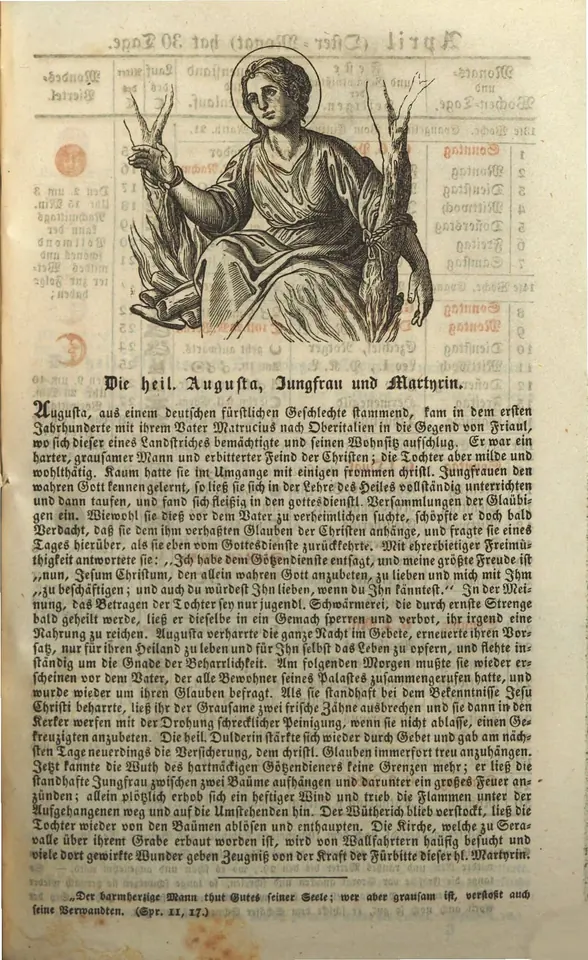
The legend of St. Augusta
A daughter raised in secret faith
The Serravalle version tells it this way. Matrucus, a rough pagan warrior, held a fortress on a spur of Monte Marcantone, where he ruled the valley and persecuted the Christians. His young wife died giving birth to their daughter, whom he named Augusta, and the child was raised by a kind nurse named Cita. Cita was a Christian. She took the girl in secret to an old hermit who lived in a cave behind the mountain, and he taught Augusta the faith and baptized her.
Bread that became flowers
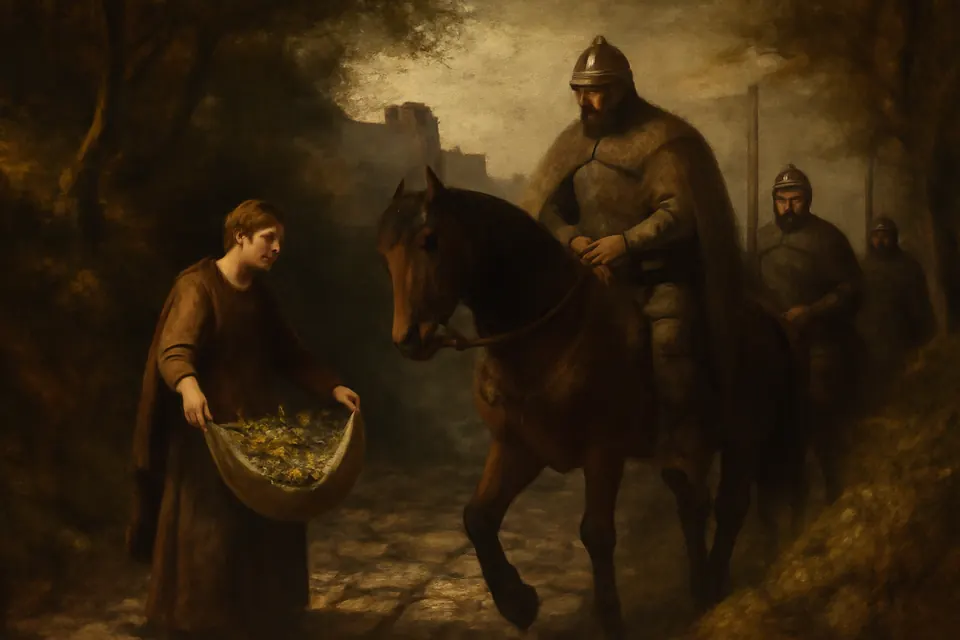
As a young woman, Augusta used to gather the bread left over from her father's banquets and carry it down to the poor. One day, on the steep path, she met her father riding up to the castle. He asked what she was hiding in her apron. "Wild flowers for the poor, my lord," she answered, and when he pulled the apron open, it was full of field flowers.
To this day, halfway up the climb to the sanctuary, a large polished stone set in the cobbles marks the place. Pilgrims stop, touch it and make the sign of the cross, and a small shrine beside the path has a fresco of the meeting.
The martyrdom
Matrucus grew suspicious of his daughter's quiet ways and her refusal of rich marriages, and he set a servant to follow her. The servant saw her kneel at a secret gathering of Christians in the town below. Brought before her father, Augusta declared herself a Christian and said she would rather die than deny the faith.
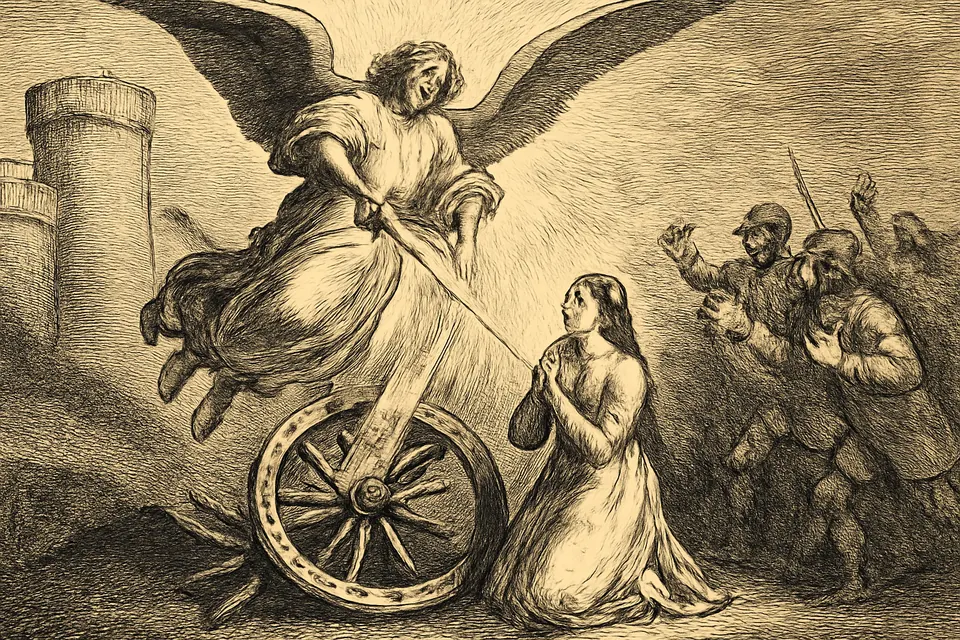
The legend gives her trials one after another. Her father had two of her teeth torn out. He had her bound on a pyre, but the fire did not harm her. He had her tied to a wheel set with iron spikes, and an angel came down shining with a sword and broke the machine with one blow. At last he ordered her beheaded. The Serravalle version adds that Matrucus fell into bitter remorse, built her a fine tomb, and left the valley for his homeland. Cita was buried beside her and shares her altar.
All of these marvels are traditional: they belong to the legend, and no investigation by the Church has ever examined them.
The sanctuary on Monte Marcantone
The Sanctuary of Sant'Augusta still stands on its ledge above Serravalle, with a square bell tower that can be seen from the town below. Pilgrims climb to it by a long stairway and the old path, especially for her feast. Nearby, people still point out the ruins of what they call Matrucus's castle.
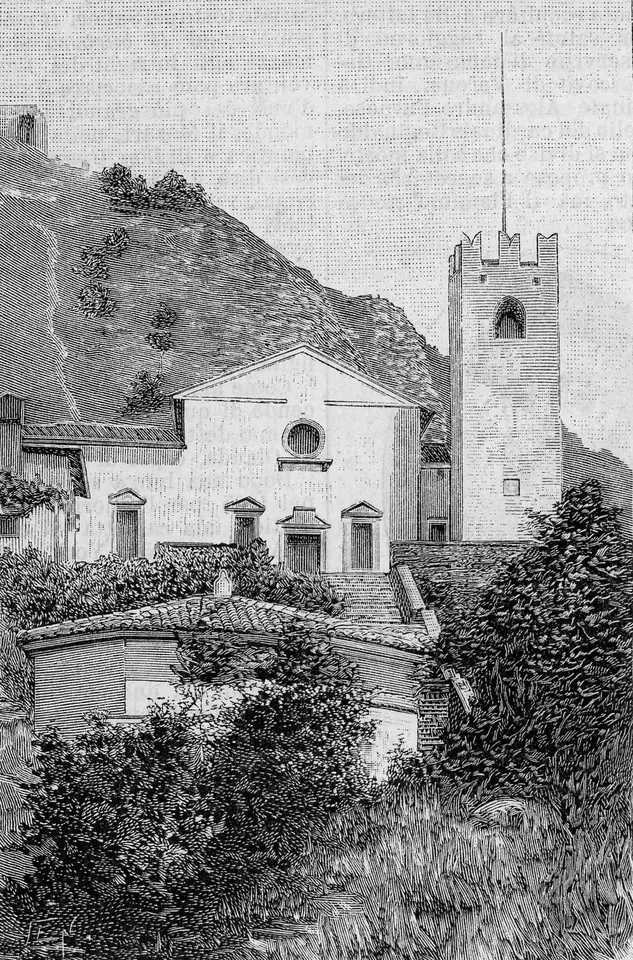
Her devotion traveled with emigrants from the Veneto. Santi e Beati reports two sanctuaries built in her honor at the end of the 19th century by Venetian emigrants: one at Braço do Norte, in the Brazilian state of Santa Catarina, and one in Entre Ríos province in Argentina.
Symbols of St. Augusta of Treviso in art
- A toothed or spiked wheel: the wheel the angel broke.
- Teeth: for the teeth torn from her mouth.
- A martyr's palm.
- Flowers in her apron or lap: for the bread that turned to flowers.
The wheel and the palm can make her look like St. Catherine of Alexandria, and the teeth like St. Apollonia. In and around Vittorio Veneto, a young martyr with these attributes is almost certainly Augusta.
Feast day
We keep her feast on March 27. Serravalle also honors her with a festival at the sanctuary on August 22. See our feast days page for other saints of March.
Prayer to St. Augusta
No widely known traditional prayer to St. Augusta has come down to us outside her own town. Let us ask her, as the people of Serravalle have done for centuries, to watch over families, especially where faith divides parents and children, and to pray for all young people who must hold to Christ when those they love do not.
Frequently asked questions
When is the feast day of St. Augusta of Treviso?
March 27. Serravalle also holds an annual festival at her hillside sanctuary on August 22.
Who was St. Augusta's father?
Her legend names him Matrucus (Matrucco), a pagan chieftain who ruled from a fortress above Serravalle. One version makes him a leader of the Alemanni around the year 100; another makes him a captain of Alaric's Visigoths in the early 400s.
Is the story of St. Augusta historical?
Her Acts were written down only at the end of the 16th century, by Minuccio de' Minucci of Serravalle, secretary to Pope Clement VIII. The Italian reference Santi e Beati calls the details "certainly legendary." What is old and certain is the devotion of Serravalle to a martyr buried on its hill.
What are the symbols of St. Augusta?
A toothed wheel, the teeth that were torn from her mouth, and the martyr's palm.
Keep exploring
Sources
- Santi e Beati: Sant'Augusta di Serravalle, vergine e martire (biographies by Antonio Borrelli and Rino Bechevolo). The 16th-century Acts by Minuccio de' Minucci and their printing in Surius; both datings; the full local legend, the sanctuary, her symbols, the August 22 festival and the churches built by Venetian emigrants in Brazil and Argentina
- Kalender für katholische Christen auf das Jahr 1855, Bavarian State Library digital collections. A 19th-century German calendar page devoted to her
- Roman Martyrology (1916 English edition), on archive.org. She does not appear in it