St. John the Hermit (John the Anchorite), Who Lived Ten Years in a Well

St. John the Hermit, called by the Orthodox Church Venerable John the Anchorite, was a fourth-century monk raised in Armenia who went into the desert and lived for ten years in an abandoned dry well, fasting and praying. His spiritual father Pharmutius passed him bread that an angel brought, and the elder Chrysikhios buried him. His feast is March 29.
Who was St. John the Hermit?
St. John the Hermit, whom the Orthodox Church calls Venerable John the Anchorite, was a monk of the fourth century who lived for ten years at the bottom of an abandoned well in the desert. He is remembered on March 29 in the Byzantine calendar. His life is short and comes to us through the Church's books of saints' lives, the synaxaria, which the Orthodox Church in America tells in English.
Search for "St. John the Hermit" and you will find several holy men by that name. This page is about the anchorite raised in Armenia. The famous walled-in seer of Lycopolis, St. John of Egypt, is a different saint, kept two days earlier on March 27.
The life of St. John the Hermit
A childhood in hiding
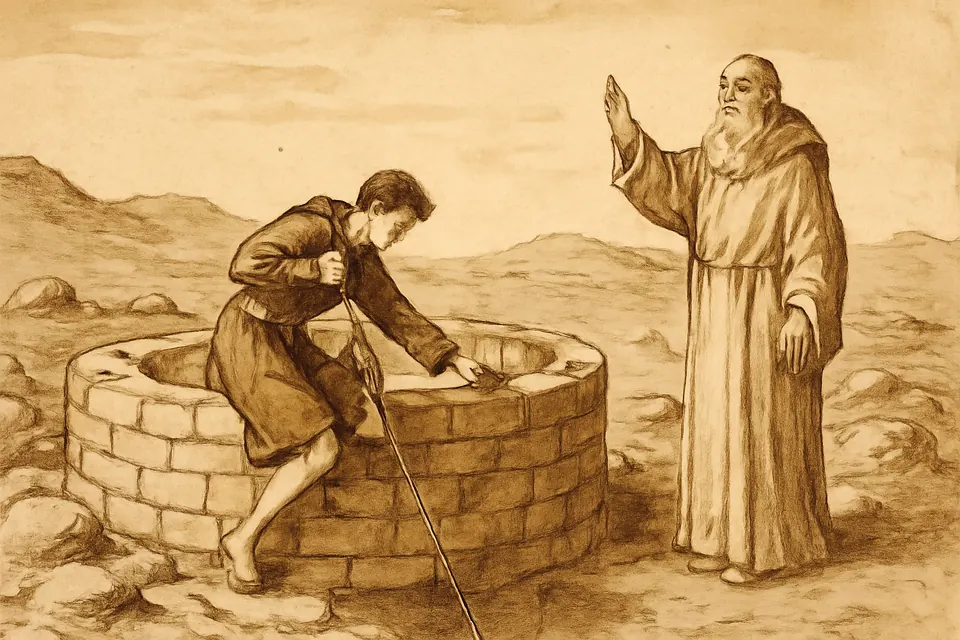
John grew up in Armenia during a time of persecution. His mother, Juliania, was a devout widow who hid with her two small children, John and his sister Themistea, and taught them to pray and to read the Scriptures. Even as a boy John would slip away to a nearby monastery, though it put him in danger. An old monk there advised him to look for a more hidden place to pray.
John told his mother he was going to visit the elder. She let him go, expecting him back soon. He did not come back.
Ten years in a well
He went to a desert dweller named Pharmutius and asked his blessing to live alone in the wilderness. With that blessing he found an old dry well, full of snakes and scorpions, lowered himself into it, and stayed there for ten years in fasting, vigils and prayer.
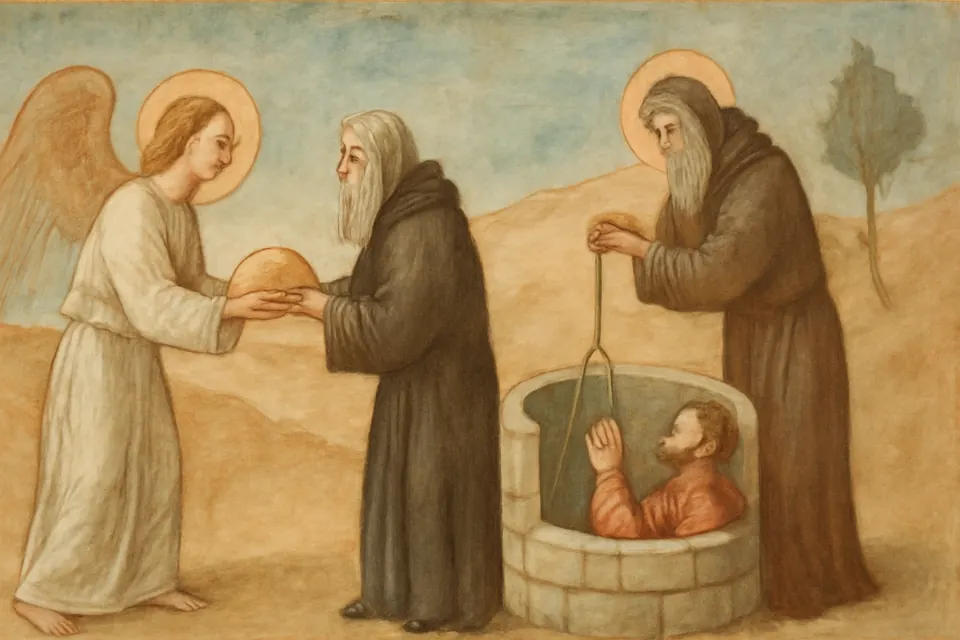
His food came in a striking way. The Orthodox life says that an angel brought bread to Pharmutius, including bread meant for John, but did not carry it to John himself, so that he would not become proud. The bread came to the young hermit through the hands of his spiritual father. Obedience and humility were fed along with his body.
Temptations
The demons tried to drive him out by love of family. They took the shapes of his mother, his sister, his relatives and old friends, and came one after another to the edge of the well, weeping and begging him to come home. John kept praying, then told them to go, and they vanished.
His death
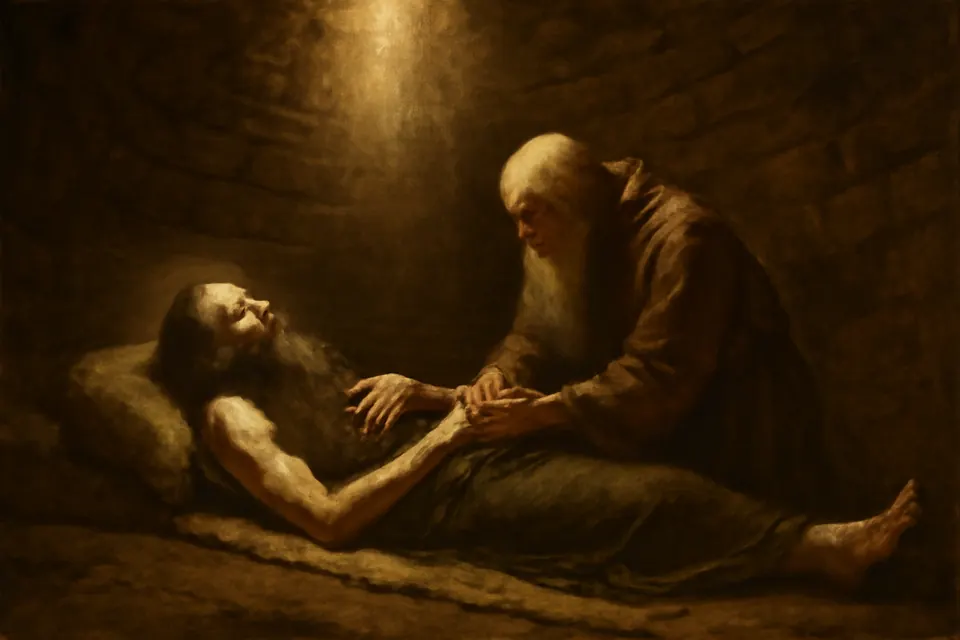
John stayed in the well until he died. By God's providence an experienced desert monk named Chrysikhios, who had spent thirty years in the desert, came to him at the end. On the eve of his death John told Chrysikhios the story of his life and his struggles, which is how we know it. Chrysikhios buried him, and many miracles were reported at the place where he had lived.
The miracles of St. John the Hermit
His story is traditional, handed down in the Eastern Church's lives of the saints:
- Bread from an angel, brought to his elder Pharmutius for him.
- Victory over the demons who came in the form of his family.
- Healings and wonders reported at the site of his asceticism after his death. No details or dates survive.
No historical documents beyond the saint's life are known to us, and we cannot date him more closely than the fourth century.
Symbols of St. John the Hermit in art
No well-known icon type of this John is easy to find, and images of him are rare. If he is shown, expect the common marks of a desert father:
- Monastic habit and a long beard: the anchorite.
- The well: his ten years of hidden prayer.
- Bread or an angel: the food sent from heaven through his elder.
- Prayer rope or scroll: a life given to prayer.
Be careful with icons labeled "St. John the Hermit" in Greek churches. Many show a different saint, John the Hermit of Crete, who according to his story came to the island with ninety-eight companions and was killed by a hunter's arrow near his cave.
Feast day and where he is honored
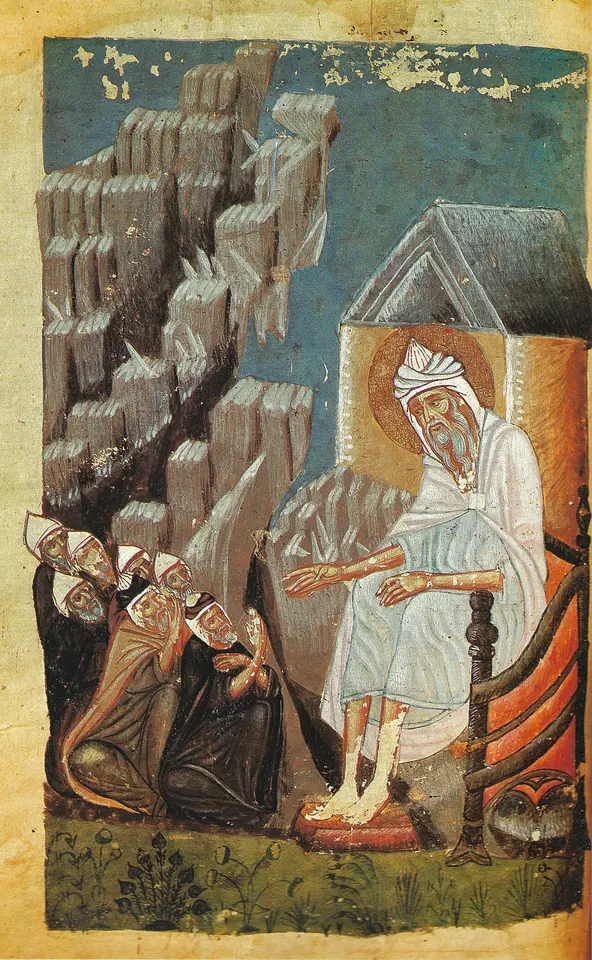
His feast is March 29 in the Orthodox Church and the Byzantine-rite Eastern Catholic Churches. He is not in the Roman Martyrology. Read more about the Desert Fathers, and see the other saints of March on our feast days page.
Praying with St. John the Hermit
The Orthodox Church honors him with the troparion sung for holy monastic fathers (Tone 8), which praises the monk's tears and longing for God and the miracles that lit up the whole world, and asks him to pray for our souls. The OCA prints the full text on its website.
Let us ask St. John the Hermit to pray for us when we need silence, for young people who feel called to give themselves wholly to God, and for the mothers who let them go.
Frequently asked questions
Who was St. John the Hermit?
A fourth-century anchorite raised in Armenia by his widowed mother, Juliania, who left home to pray in solitude, lived ten years in an empty well in the desert, and died there. The Orthodox Church calls him Venerable John the Anchorite.
When is the feast of St. John the Hermit?
March 29 in the Orthodox Church and the Byzantine-rite Eastern Catholic Churches.
Is St. John the Hermit the same as St. John of Egypt?
No. St. John of Egypt, also called John of Lycopolis or John the Hermit, lived walled up in a cell near Lycopolis, foretold the victories of Emperor Theodosius and is remembered on March 27. John the Anchorite, remembered on March 29, is a different and much more obscure monk.
Keep exploring
Sources
- Venerable John the Anchorite of Egypt, Orthodox Church in America. His mother Juliania and sister Themistea, the monastery, Pharmutios, ten years in the well, the angel's bread, the demons in the form of his family, Chrysikhios, miracles at the place
- Venerable John the Anchorite of Egypt, Troparion and Kontakion, Orthodox Church in America. The troparion quoted on this page