St. Abraham Kidunaia, Hermit of Edessa
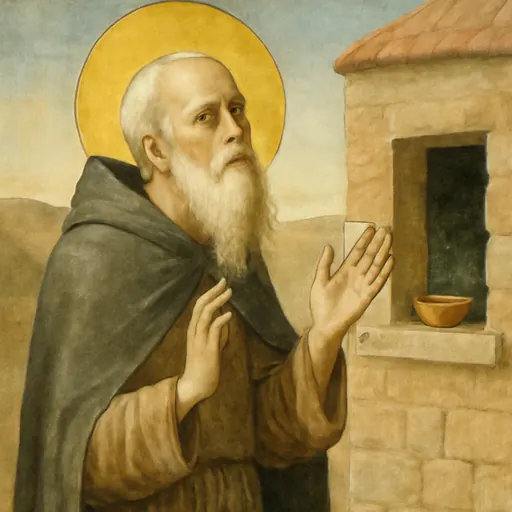
St. Abraham Kidunaia was a fourth-century hermit from Chidana, near Edessa in Mesopotamia, who walled himself into a cell for fifty years, was ordained a priest to win a stubborn pagan town for Christ, and went in disguise to bring his niece St. Mary home from a life of sin. His friend St. Ephrem is traditionally credited with his Life. His feast is March 16.
Who was St. Abraham Kidunaia?
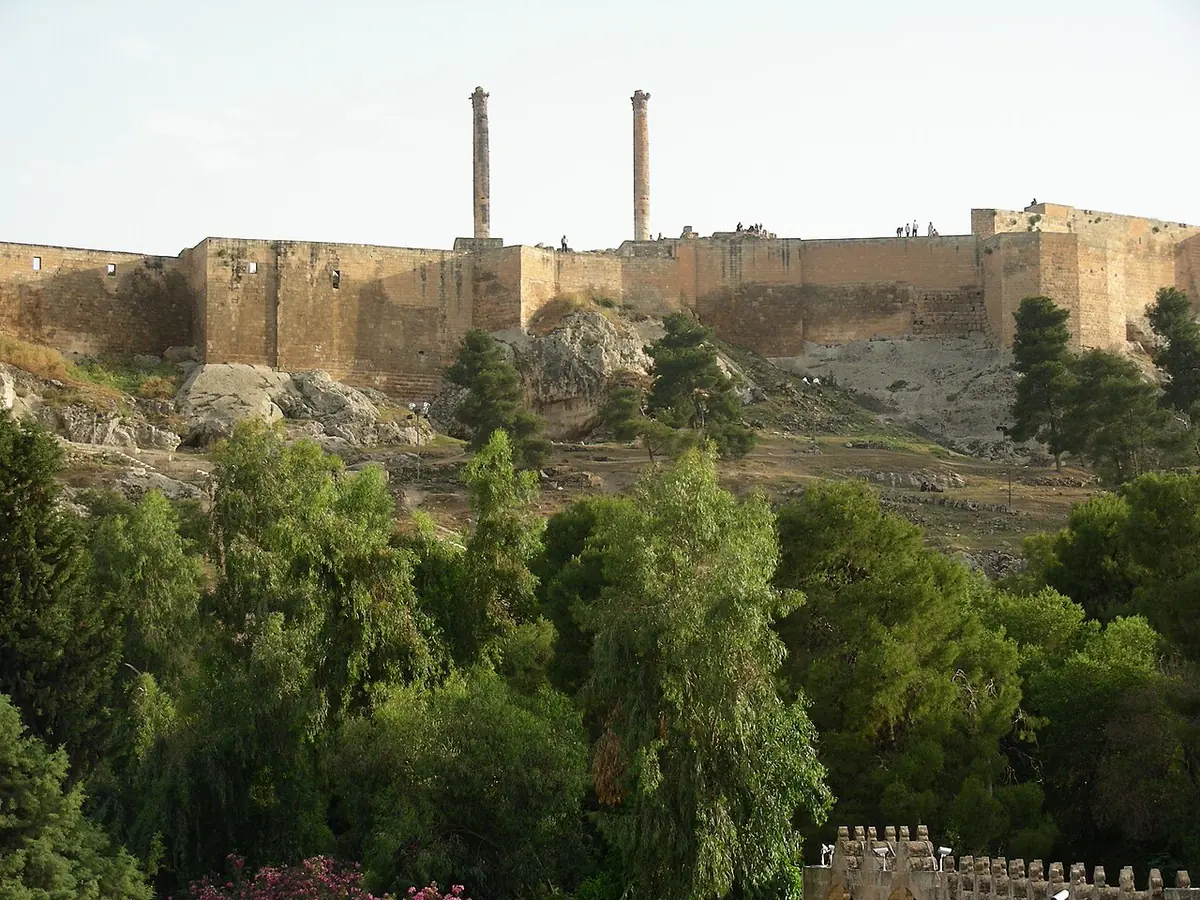
St. Abraham Kidunaia was a hermit of the fourth century who lived near Edessa, the great Christian city of Mesopotamia, in what is now southeastern Turkey. He is remembered for three things: he left the world on his wedding day, he won a hostile pagan town to Christ by patience and tears, and he went in disguise into a house of sin to bring home his niece Mary. The Roman Martyrology honors him on March 16, "St. Abraham, hermit, whose life has been written by the blessed deacon Ephrem."
The surname Kidunaia comes from his village, Chidana. Butler's Lives of the Saints, citing the Chronicle of Edessa, places him there and says he was still living in the year 356. His Life is traditionally credited to his friend and neighbor, St. Ephrem the Syrian. We read it as a fourth-century story told by those who loved him, and we keep its wonders in that light.
The life of St. Abraham Kidunaia
The bridegroom who fled
Abraham was born to wealthy and noble parents who gave him a good Christian upbringing and wanted him married. He obeyed and took a pious young wife. But, Butler writes, "as soon as the marriage ceremony and feast were over," he told his bride of his wish to live for God alone and slipped away to a cell two miles from Edessa. His family searched for seventeen days before they found him at prayer.
He won their consent. Then he walled up the door of his cell, leaving only a little window through which he received what he needed. He owned a cloak, a piece of sackcloth and one small vessel for both food and drink, and he lived that way, the old Life says, for fifty years. When his parents died ten years later and left him their estates, he asked a trusted friend to give the income to the poor.
The priest of a pagan town
Near Edessa lay a large country town that had driven out every monk who tried to preach there. The bishop chose Abraham, ordained him a priest against his will and sent him to it. Butler records the prayer he repeated, weeping, all the way: "Most merciful God, look down on my weakness: assist me with thy grace, that thy name may be glorified. Despise not the works of thine own hands."
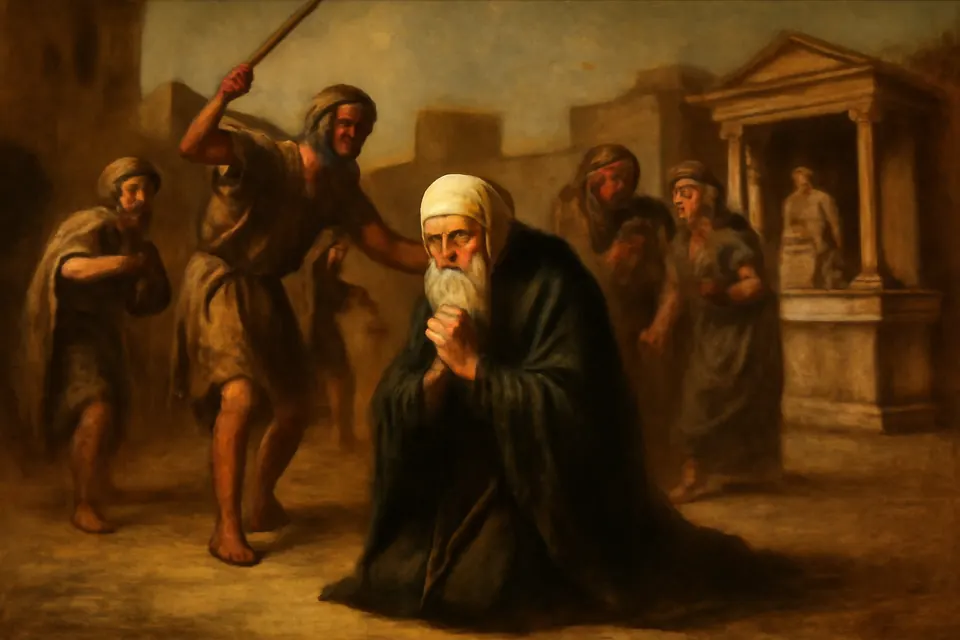
The townspeople would not listen. They beat him and three times drove him out, and each time he came back. After three years, Butler says, they were "overcome by his meekness and patience" and all asked for baptism. He stayed one more year to teach them, saw them supplied with clergy and went back to his cell.
The Orthodox life adds that the devil tried to trap him with pride, once in a blaze of light and a voice praising him, once in the form of a youth singing a psalm. Each time Abraham refused to listen and sent the tempter away in the name of Christ.
St. Mary, the niece he brought home
When Abraham's brother died, he left an only daughter named Mary. Abraham took her in and placed her in a cell near his own, where she grew in prayer under his guidance. After twenty years, Butler writes, she was seduced by a false monk who visited under pretense of seeking her uncle's advice. In despair she fled to a distant town and gave herself to a life of sin.
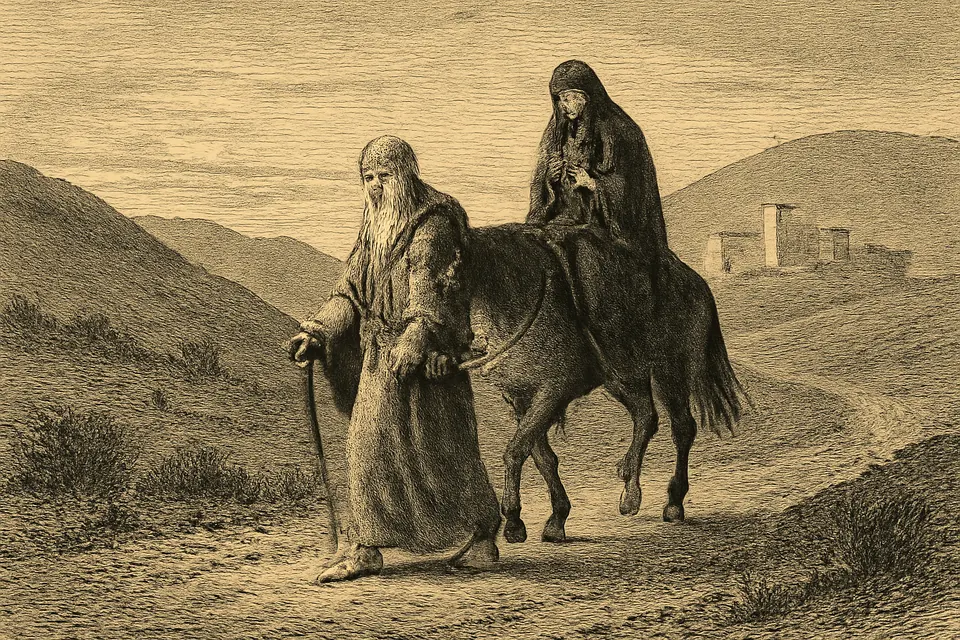
For two years Abraham wept and prayed for her. When he learned where she was, the old man put on the clothes of a townsman, rode to the inn where she lived and asked for her company at supper. When they were alone he took off his cap and said, in Butler's translation, "Daughter Mary, dont you know me?" He told her he would take her sins upon himself if she would follow his advice. She returned with him, and he set her on his horse and led it himself on foot all the way home.
Mary spent the rest of her life in penance in a cell behind his own. Abraham died five years before her.
The miracles of St. Abraham Kidunaia
- Traditional: the Life says that when Abraham lay dying, almost the whole city and country came for his blessing, and after his death people tore off pieces of his clothing. Butler reports that St. Ephrem, "an eye-witness," relates that many sick were cured by touching them.
- Traditional: within three years of her return, the Life says, God gave Mary the gift of working miracles by her prayers. At her death, it says in Ephrem's words, "her countenance appeared to us so shining, that we understood that choirs of angels had attended at her passage."
Symbols of St. Abraham Kidunaia in art
In Byzantine art, as in the Menologion of Basil II, Abraham is an old monk with a white beard and a dark hermit's cloak, standing in prayer in the wilderness beside a small cell. The best-loved moment of his story, the old man leading a horse by the bridle with his repentant niece riding, is the natural way to picture him with St. Mary. A cell with a small window recalls his fifty years walled in.
Feast day and prayer
The Roman Martyrology keeps his feast on March 16. Butler's Lives places him on March 15 with St. Mary, and the Orthodox Church remembers them together on October 29. Butler notes that Abraham is named in the Latin, Greek and Coptic calendars. See the feast day calendar.
We know of no traditional prayer to him that we can quote. His story belongs to everyone who is waiting for someone they love to come home. Let us ask St. Abraham to pray for parents and relatives of those who have strayed, for priests sent to hard places, and for every sinner who thinks it is too late. St. Abraham Kidunaia and St. Mary, pray for us.
Frequently asked questions
Who was St. Abraham Kidunaia?
A hermit of the fourth century from Chidana (Kidunaia), near Edessa. He left the world on his wedding day, lived about fifty years in a walled-up cell, converted a pagan town as a priest and rescued his niece Mary from a brothel. He is honored in the Latin, Greek and Syriac churches.
When is the feast of St. Abraham Kidunaia?
March 16 in the Roman Martyrology. Butler's Lives lists him on March 15, and the Orthodox Church keeps October 29, with his niece St. Mary.
Who was St. Mary, the niece of St. Abraham?
The daughter of his brother, raised by Abraham in a cell beside his own. After twenty years she fell into sin, fled to a distant town and lived there as a prostitute. Abraham found her, disguised himself, won her back to repentance and brought her home. She spent the rest of her life in penance and is honored as a saint.
Who wrote the life of St. Abraham Kidunaia?
Tradition attributes it to his friend St. Ephrem the Syrian, who died in 373. Butler, following the old sources, says Ephrem was an eyewitness of Abraham's death.
Keep exploring
Sources
- Alban Butler, The Lives of the Fathers, Martyrs, and Other Principal Saints, vol. 3, March 15: St. Abraham, Hermit, and His Niece St. Mary (1842 ed., Internet Archive). His flight on his wedding day, the walled-up cell, the pagan town, his prayer, Mary's fall and return, the cures at his death, the Chronicle of Edessa
- Orthodox Church in America: Venerable Abramius the Recluse, and his niece, Blessed Mary, of Mesopotamia. The October 29 commemoration and his temptations
- The Roman Martyrology (1916 English edition), March 16