St. Matilda of Ringelheim, Queen of Germany
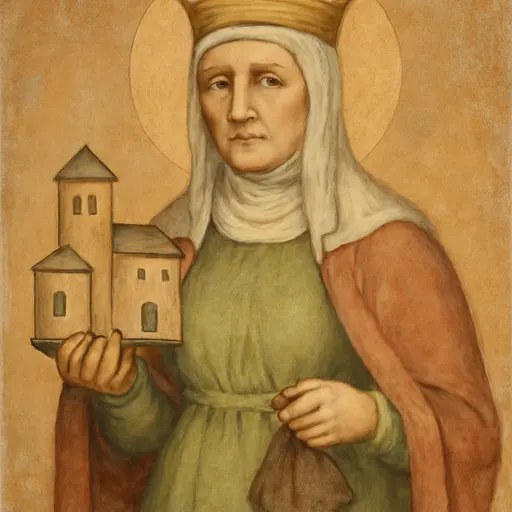
St. Matilda of Ringelheim (about 895–968) was the wife of King Henry I of Germany and the mother of Emperor Otto the Great, Duke Henry of Bavaria and St. Bruno of Cologne. Known for her alms to the poor, she was driven from court by her own sons, then reconciled with them, and spent her widowhood founding monasteries such as Quedlinburg. Her feast is March 14, and she is a patron of queens, widows and parents of large families.
Who was St. Matilda of Ringelheim?
St. Matilda of Ringelheim was a queen of Germany in the tenth century, the wife of King Henry I, called the Fowler, and the mother of the Emperor Otto the Great. Her own sons once accused her of draining the treasury with her alms. She gave up her property rather than quarrel, lived to see them ask her pardon, and spent her long widowhood founding monasteries and caring for the poor. She died at her abbey of Quedlinburg on March 14, 968.
She is sometimes called St. Maud, the old English form of her name, and she should not be confused with the mystic St. Mechtilde of Hackeborn, who lived three centuries later.

The life of St. Matilda
A girl raised in a convent
Matilda was the daughter of Count Dietrich, a Saxon noble descended from the old Saxon leader Widukind, and his wife Reinhild. She was born about 895. Her parents sent her as a child to the convent where her grandmother, also named Matilda, had become abbess after being widowed. The house was Herford in Westphalia, which Butler spells "Erford." There she learned to read and to pray the psalms, and to work with her hands.
Queen of Germany
In 909 she married Henry, the young Duke of Saxony, whose first marriage had been declared invalid. Henry was chosen king of Germany in 919. They had five children: Otto, later emperor; Henry, Duke of Bavaria; Bruno, Archbishop of Cologne and himself venerated as a saint; Gerberga, who married King Louis IV of France; and Hedwig, mother of Hugh Capet.
The two old lives of Matilda, written within about fifty years of her death, remember her as humble, prayerful and quick to help prisoners and the poor. Butler, following them, says she visited the sick and the afflicted and won the release of prisoners where justice allowed.
Widow and mother of quarreling sons
Henry died in 936. Butler writes that when she heard of his death she had Mass offered for his soul at once and gave the priest the jewels she was wearing, as a pledge that she was done with worldly pomp. She buried him at Quedlinburg and founded a community of women there the same year.
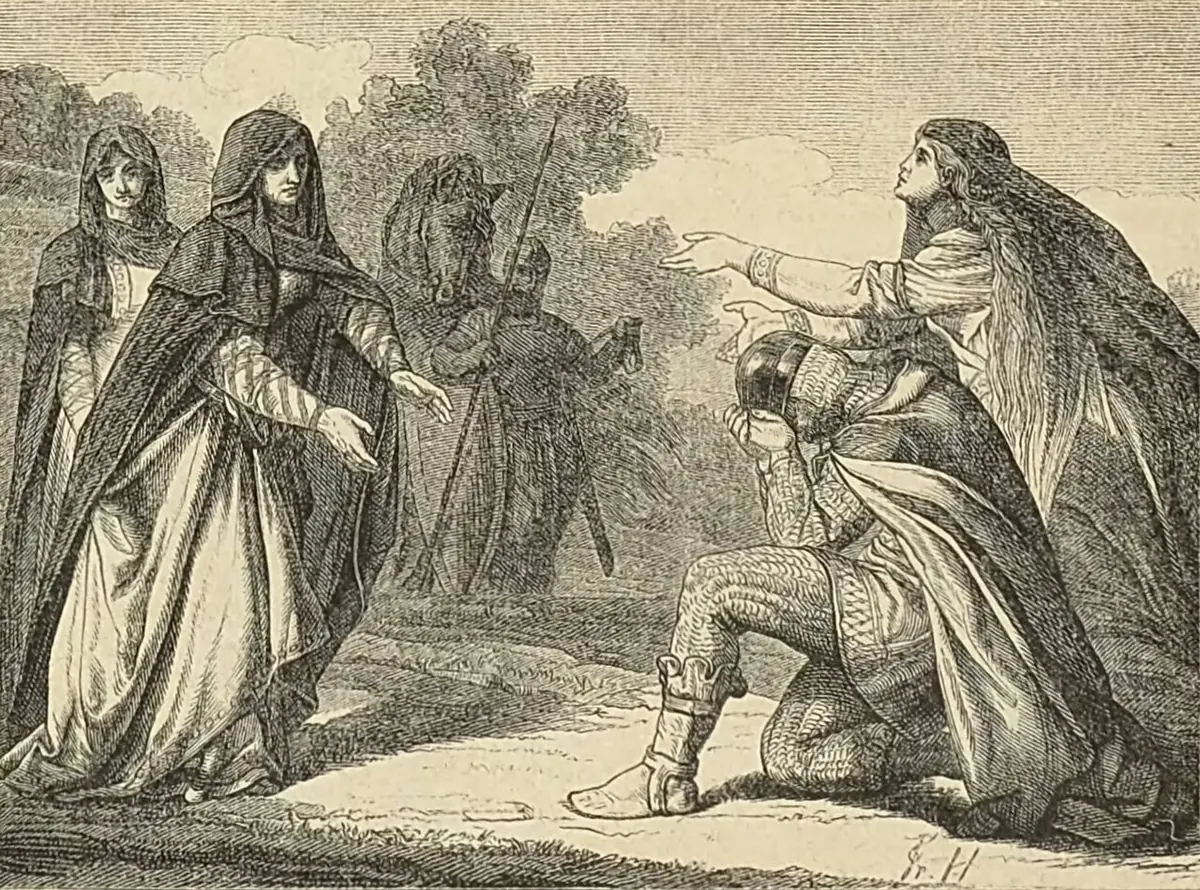
Then came the hard years. Matilda had favored her younger son Henry for the throne, but the nobles chose Otto. In time both brothers turned against her, accusing her of impoverishing the crown with her almsgiving. To satisfy them she gave up the lands Henry had left her and withdrew to Enger in Westphalia. When misfortune later fell on her sons, they called her back to court and begged her forgiveness.
Foundations and a holy death
With her lands restored, Matilda built churches and founded or supported monasteries at Quedlinburg, Nordhausen, Enger and Pöhlde. She loved Nordhausen especially. She spent her last years at Quedlinburg and in 966 handed its leadership to her granddaughter, also named Matilda, the abbey's first abbess.
In her final illness, Butler writes, she confessed to her grandson William, Archbishop of Mainz, who died twelve days before her. She received the last sacraments again, lay on sackcloth with ashes on her head, and died on March 14, 968. She was buried at Quedlinburg beside her husband and was honored as a saint almost at once.

Miracles and legends
The medieval lives of Matilda are mostly about her charity and her penance, not about wonders. Any marvels in them are traditional: they come from the two lives written for the Ottonian court. No miracle of hers was ever formally examined. As the Catholic Encyclopedia puts it, she "was venerated as a saint immediately after her death," long before the modern canonization process.
Why St. Matilda is the patron of queens, widows and parents
She was a queen who used her place to serve the poor, a widow for more than thirty years, and the mother of five children whose rivalries broke her heart. Parents grieved by children who have turned against them find a friend in her. Her name is also given to churches and hospitals in Germany, among them St. Mathilde at Quedlinburg. See more on our patron saints page.
Symbols of St. Matilda in art
- Crown: she was a queen.
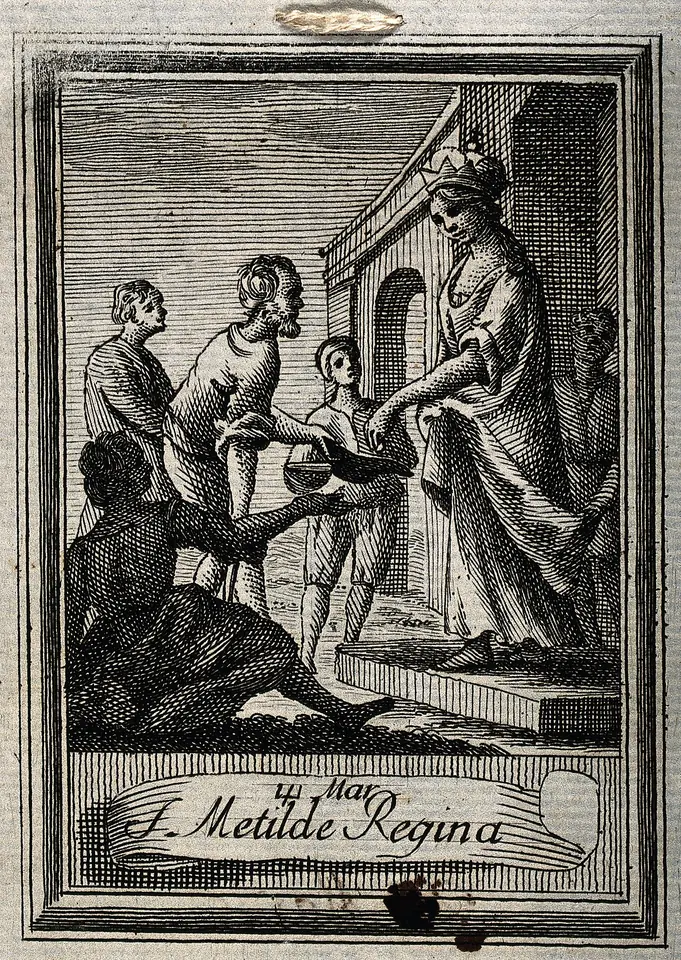
- Purse or alms: her generosity, the very thing her sons held against her.
- Model of a church: her foundations, above all Quedlinburg.
- Widow's veil: her long widowhood given to prayer.
Medieval chronicles show her beside King Henry, both crowned. Later prints show her handing alms to the poor, as in the etching below, which carries her feast day, March 14.
Feast day and where she is honored
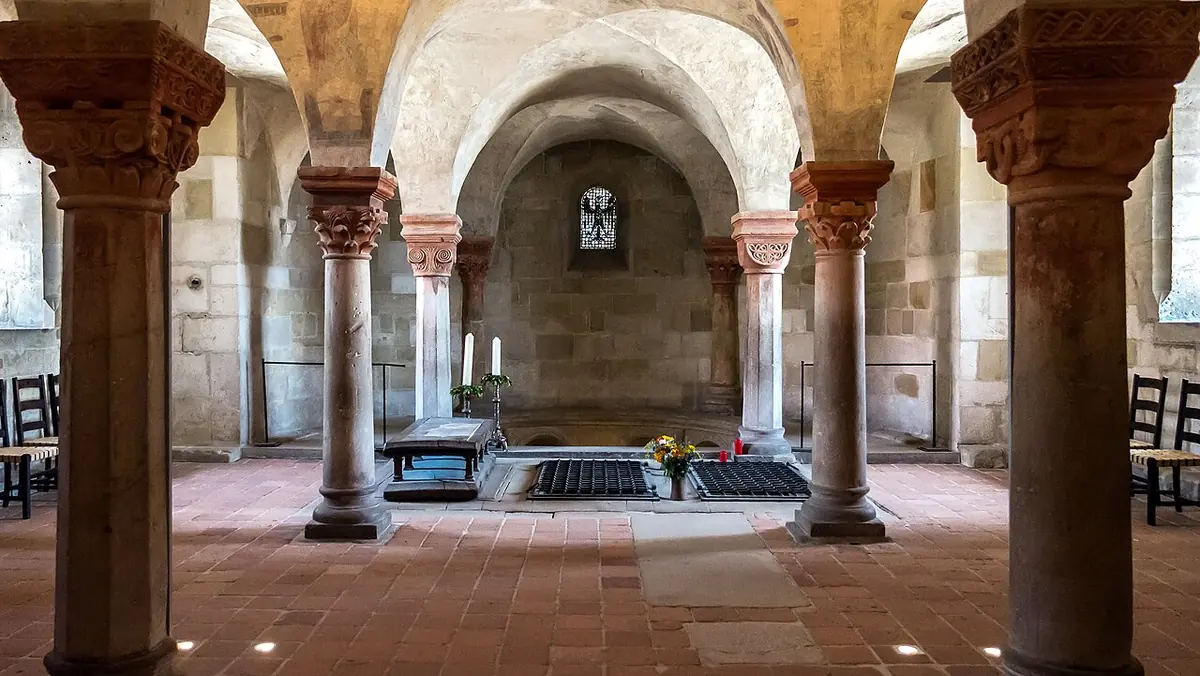
We keep her memory on March 14. Her tomb is in the crypt of the Collegiate Church of St. Servatius at Quedlinburg, the abbey church on the castle hill, now a UNESCO World Heritage town. See other saints of March on our feast days page.
Praying with St. Matilda
We have not found a traditional prayer to St. Matilda in the standard prayer books. We can ask her intercession in our own words.
Let us ask St. Matilda to pray for mothers and fathers whose children are at odds with one another or with them, for widows, and for all who hold power, that they may use it for the poor.
Frequently asked questions
Who was St. Matilda of Ringelheim?
A Saxon noblewoman, raised by her grandmother at a convent, who married Henry, Duke of Saxony, in 909. Henry became king of Germany in 919. As queen and then as a widow she gave lavishly to the poor and founded monasteries at Quedlinburg, Nordhausen, Enger and Pöhlde.
When is the feast of St. Matilda?
March 14, the day she died at Quedlinburg in 968.
What is St. Matilda the patron saint of?
She is invoked as a patron of queens, widows and parents of large families. She raised five children, and two of her sons once turned on her before asking her pardon.
Is St. Matilda of Ringelheim the same as St. Mechtilde of Hackeborn?
No. Mechtilde of Hackeborn was a Benedictine mystic at Helfta who died in 1298. Matilda of Ringelheim was a queen of the tenth century. Their names are the same in Latin, which causes confusion.
Keep exploring
- Patron saint pages
- Families
- Appears in
- Saint names for girls
- Feast-day calendar
- Saints remembered in MarchSaint of the dayWhat saint is my birthday?
- Relics
- Where the relics are kept (map)
- More
- Saints A to ZPatron saints A to ZExplore every section
Sources
- St. Matilda, The Catholic Encyclopedia (1911). Her marriage at Walhausen in 909, the dowry lands, her sons' accusation that her almsgiving impoverished the crown, her foundations, and the two medieval lives
- Alban Butler, The Lives of the Fathers, Martyrs, and Other Principal Saints, vol. 3 (March), 1842: St. Maud, or Mathildis, Queen of Germany. Her renunciation of her jewels when Henry died, her confession to her grandson William of Mainz, and her death on sackcloth and ashes