St. Nicholas of Flüe (Brother Klaus)

St. Nicholas of Flüe (1417–1487), known as Brother Klaus, was a Swiss farmer and father of ten who left home, with his wife's consent, to live as a hermit. His counsel kept the Swiss Confederation from civil war at Stans in 1481. He is the patron saint of Switzerland. His feast is March 21, kept in Switzerland on September 25.
Who was St. Nicholas of Flüe?
St. Nicholas of Flüe, whom the Swiss simply call Brother Klaus, was a farmer from the mountains of central Switzerland who became a hermit, a mystic and the peacemaker of his country. He was born in 1417 on the Flüeli, a high meadow above the village of Sachseln on Lake Sarnen, and he died there in a ravine called the Ranft on March 21, 1487. The Catholic Encyclopedia gives March 21 as his birthday too, so he died, by that account, on his seventieth birthday.
He is not to be confused with St. Nicholas of Myra, the fourth-century bishop behind Santa Claus. Our Nicholas was a layman, a husband and a father of ten, and for most of his life nothing set him apart but his honesty and his prayer.
The life of Brother Klaus
Farmer, soldier, judge
His parents were devout, comfortable peasants, and he worked the family land. At twenty-one he went to war with the Obwalden men and fought in the battle of Ragaz in 1446. In the Thurgau war of 1460, the Catholic Encyclopedia records, it was his influence that kept the Swiss from destroying the Dominican convent of St. Katharinental, where Austrians had taken refuge. Pius XII, at his canonization, listed the ranks he held: ensign, captain, councilor, judge and envoy to the Swiss diet. Only his own refusal kept him from becoming the chief magistrate of the canton.
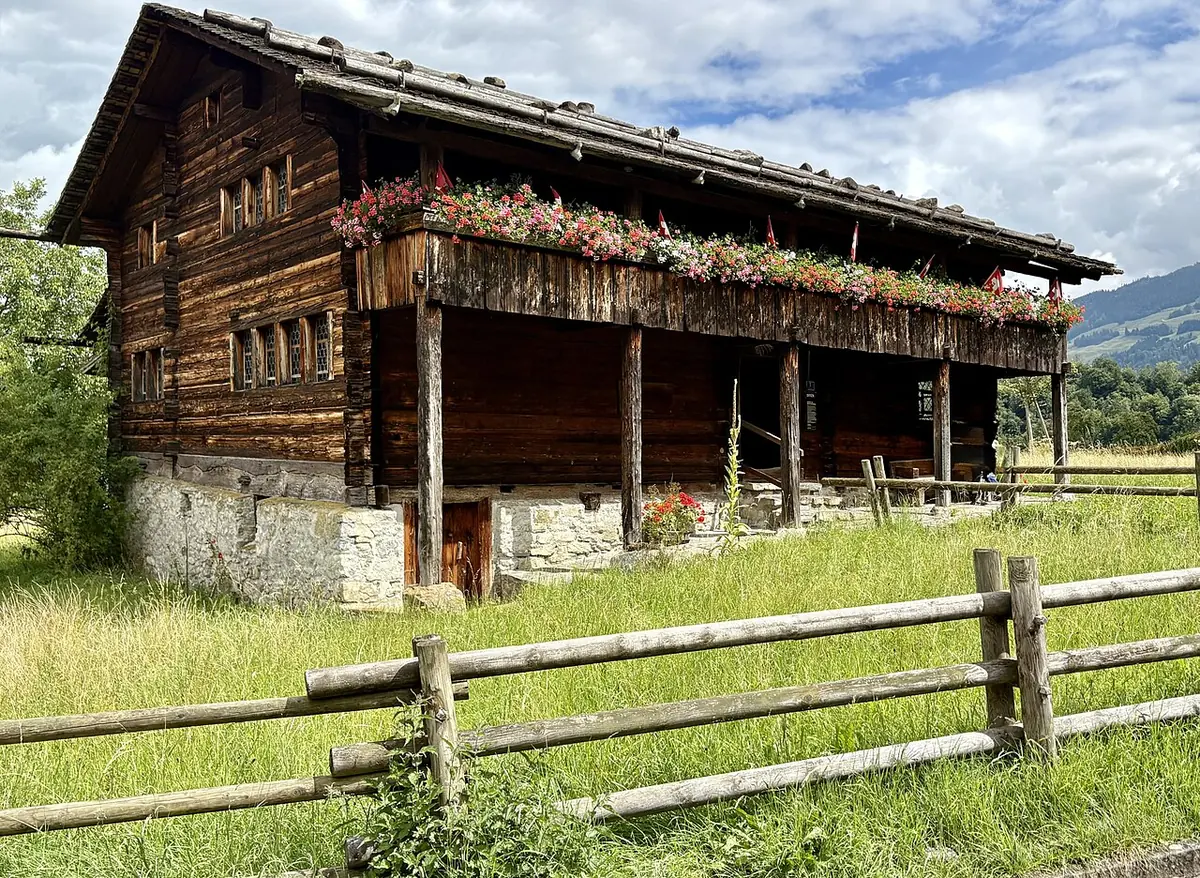
Around 1447 he married Dorothy Wyss, a councilor's daughter from Sarnen. They farmed on the Flüeli and had five sons and five daughters. Their youngest son, Nicholas, became a priest and doctor of theology.
The call to the Ranft
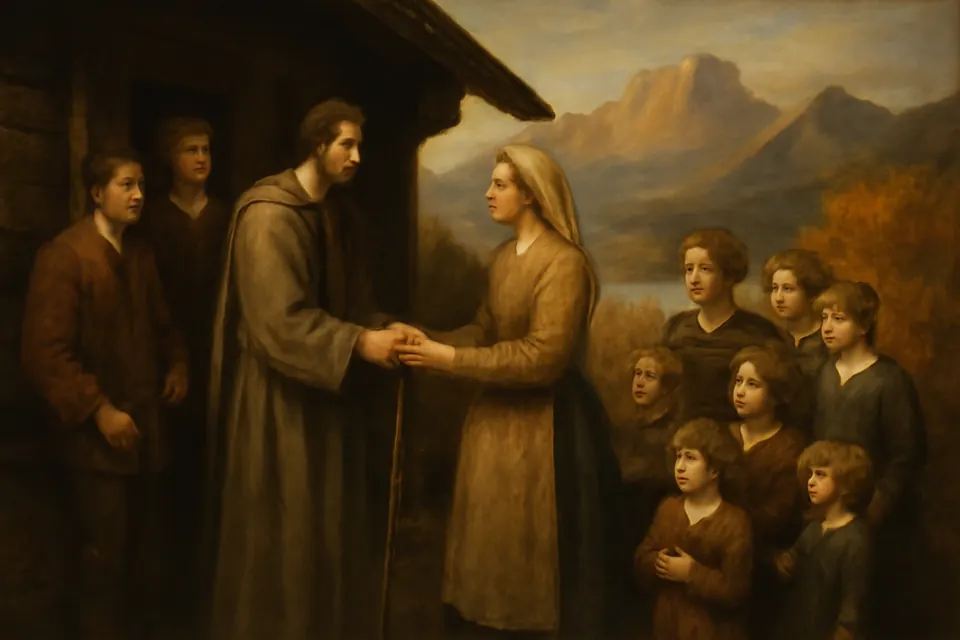
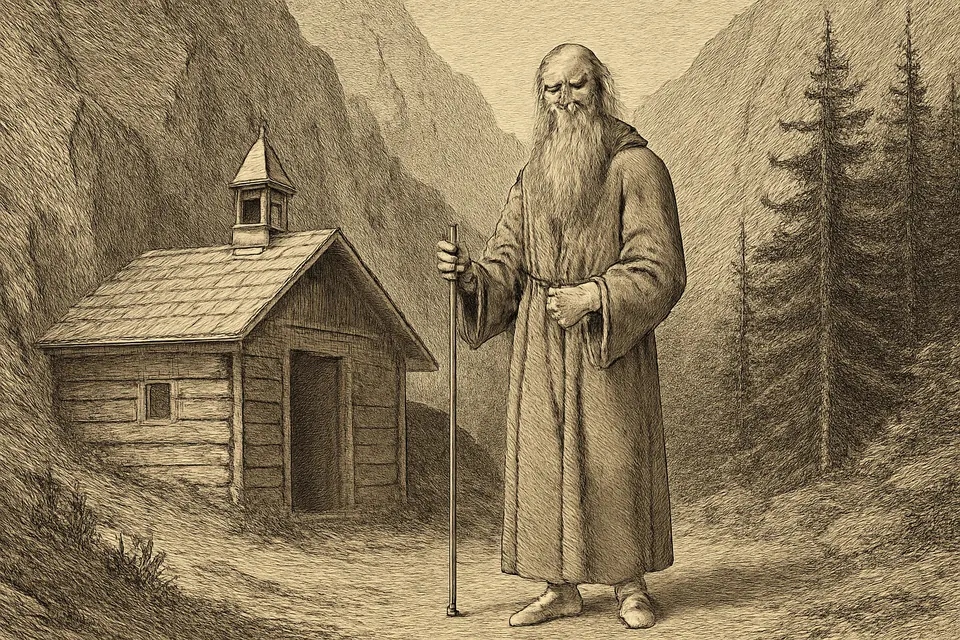
For years he felt drawn toward a life of prayer alone with God. On October 16, 1467, when he was fifty, he left his farm and family with Dorothy's consent. Pius XII honored her by name in 1947: her sacrifice, he said, "was not easy for her." Nicholas set out as a pilgrim, meaning to go abroad, but near Liestal, outside Basel, he turned back. He settled in the Ranft, a gorge of the Melchaa river on his own land, about an hour's walk from Sachseln.
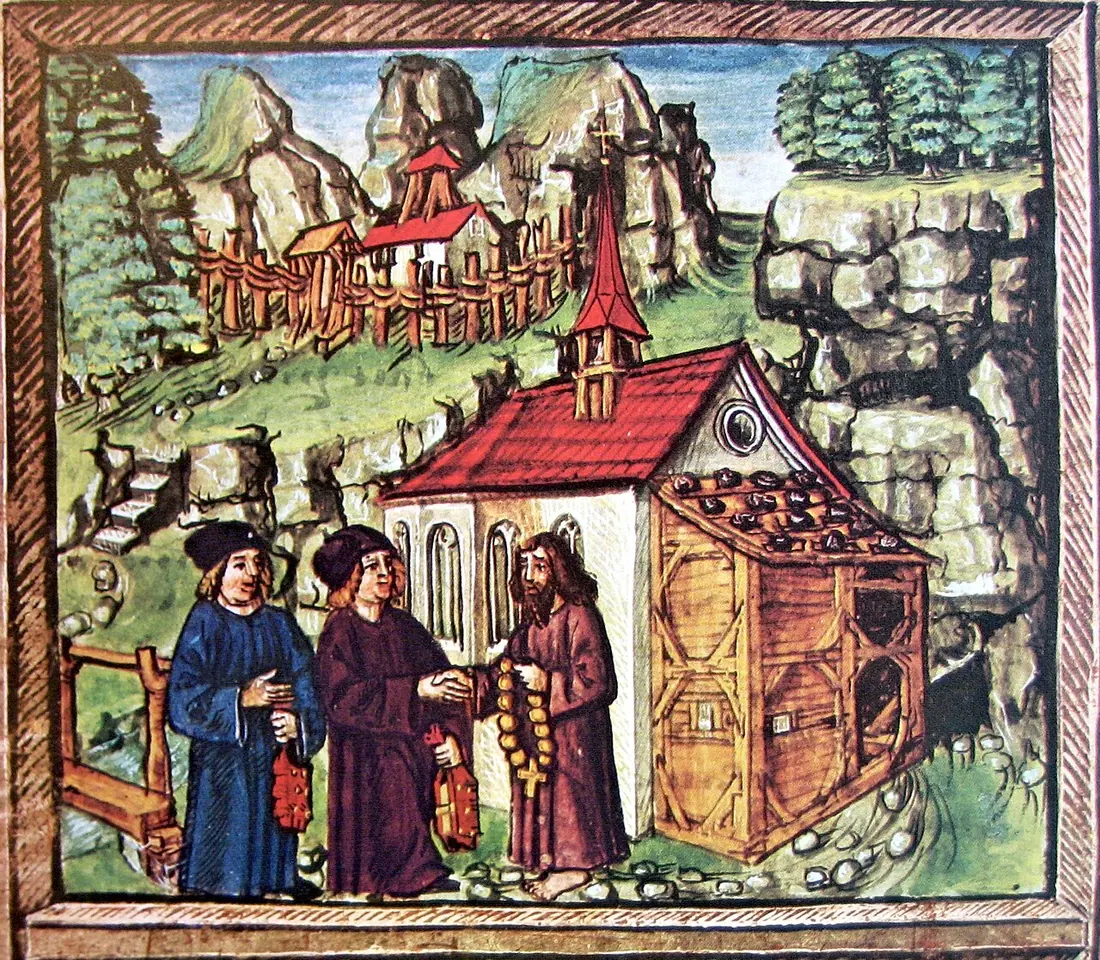
At first he lived in a hut of branches. In 1469 the people of Obwalden built him a cell and a chapel, consecrated that April by Thomas, auxiliary bishop of Constance. He went barefoot and bareheaded in every season, dressed in one rough habit. Bishops, counts and envoys of foreign cities came to the window of his cell for advice.
Peace at Stans
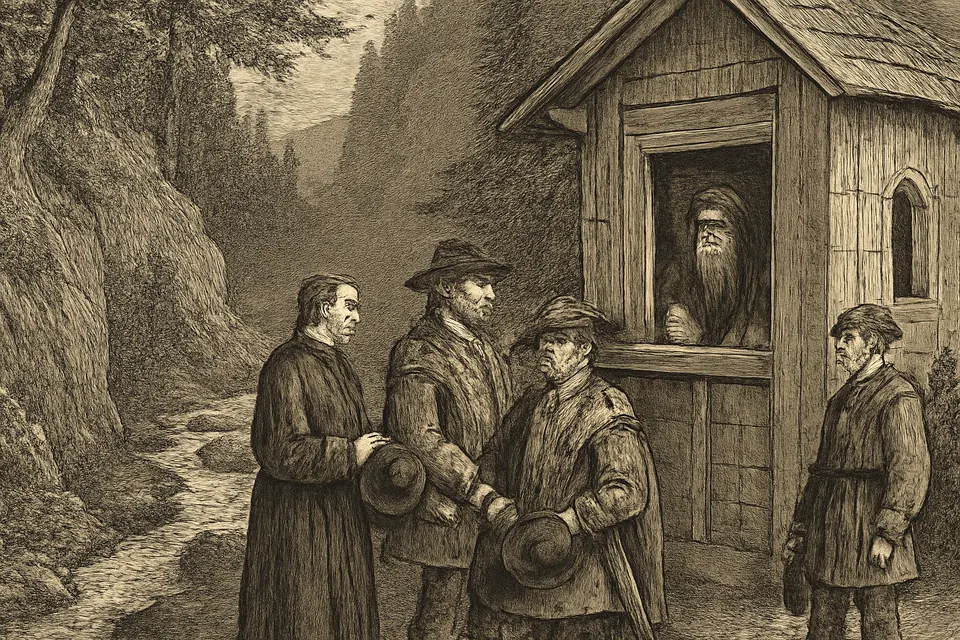
In 1481 the Swiss cantons met at Stans, and the old country cantons and the city cantons were close to civil war over new members and the spoils of the Burgundian wars. The pastor of Stans, Heini Amgrund (Henry Imgrund), hurried through the night to the Ranft. He came back with the hermit's counsel, and the delegates reached the agreement known as the Covenant of Stans. John Paul II, preaching on the Flüeli in 1984, said this peace "opened a new chapter" of Swiss history. Brother Klaus put his method plainly in a letter to the city of Constance in 1482: settle quarrels in kindness if you can, and if not, "let justice be the best."
Brother Klaus died in his cell on March 21, 1487, and was buried in the parish church of Sachseln.
Miracles and wonders of St. Nicholas of Flüe
- Living without food: reported. For the twenty years of his hermit life he is said to have eaten and drunk nothing but the Eucharist. The Catholic Encyclopedia says this was established "through a careful investigation, made by the civil as well as the ecclesiastical authorities of his times."
- The fire at Sarnen: traditional. In 1468, tradition holds, he saved the town of Sarnen from a fire by his prayer and the sign of the cross.
- Visions and prophecy: traditional. His early biographers record many visions, and he was known for reading hearts.
Why St. Nicholas of Flüe is the patron of Switzerland and of peace
The Swiss call him their "Landesvater," the father of the country, because his counsel at Stans held the Confederation together. Pius XII said no son of the Swiss people deserved the name of a true Swiss more than Nicholas of Flüe. Tradition also credits him with the advice "do not make the fence too wide" and "do not meddle in foreign quarrels," which John Paul II linked to Swiss neutrality. For both reasons he is honored as a patron of peace and peacemakers. See our patron saints page for others.
Symbols of St. Nicholas of Flüe in art
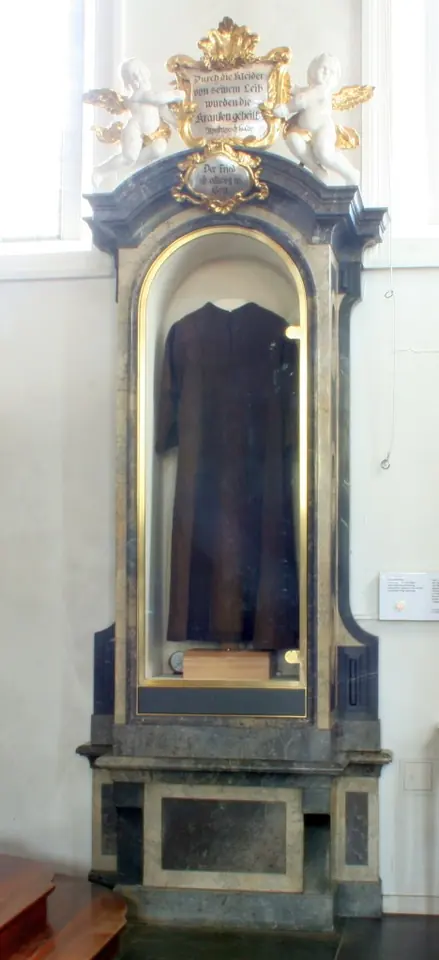
He is easy to know. Artists show a tall, gaunt old man with long hair and a full beard, barefoot, in a plain brown or gray hermit's habit, usually holding a rosary and a pilgrim's staff. Older pictures, like the 1591 woodcut on this page, often show only his worn face. The thinness is meant: it points to his long fast.
His own special sign is the wheel image, a painting given to him in the Ranft around 1475–1480. It shows the face of God at the center, with six rays and six scenes from the life of Christ around it. He called it "my book, in which I learn." A copy hangs in the church at Sachseln.
Feast day and pilgrimage
The Roman Martyrology keeps his feast on March 21, the day he died. In Switzerland it is a solemnity on September 25. Pope Clement IX allowed public veneration in 1669, and Pius XII canonized him in 1947. Find other March saints on our feast days page.
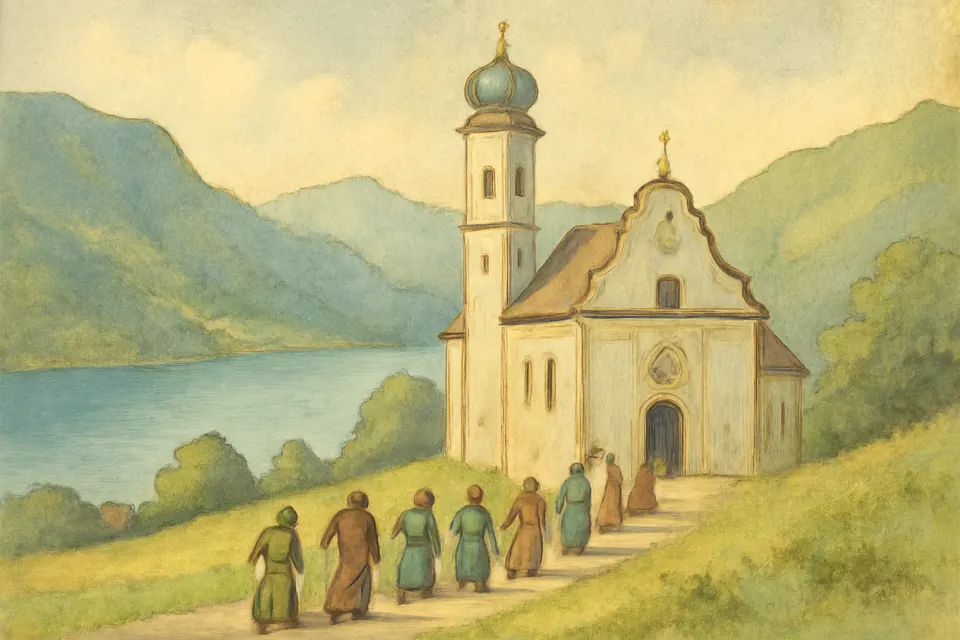
His bones rest in the parish and pilgrimage church of St. Theodul at Sachseln, where they were moved in 1679. Since 1934 they have been enclosed in a silver figure by Meinrad Burch, set into the main altar in 1976. Pilgrims walk on to his house on the Flüeli and down to the chapels of the Ranft. John Paul II prayed at the tomb on June 14, 1984.
The prayer of St. Nicholas of Flüe
His short prayer is one of the best known in the German-speaking world. The Catechism of the Catholic Church (no. 226) quotes it in English:
My Lord and my God, take from me everything that distances me from you.
My Lord and my God, give me everything that brings me closer to you
My Lord and my God, detach me from myself to give my all to you.
Let us pray it with Brother Klaus, and ask him to obtain peace for our families and our nations.
Frequently asked questions
What is St. Nicholas of Flue the patron saint of?
Switzerland, where he is honored as the national saint and "father of the country," and of peace and peacemakers, because his counsel ended the quarrel among the Swiss cantons at Stans in 1481. Hermits and married people who face hard choices about their vocation also ask his prayers.
When is the feast day of St. Nicholas of Flue?
March 21, the day he died in 1487, in the Roman Martyrology. In Switzerland his feast is a solemnity kept on September 25.
Did St. Nicholas of Flue really live without food?
That is the claim of his contemporaries. For about twenty years in the Ranft he is said to have lived on the Eucharist alone, and the Catholic Encyclopedia notes that civil and church authorities of his time investigated it. It is a reported wonder, not one formally approved.
What is the prayer of St. Nicholas of Flue?
His short prayer, "My Lord and my God, take from me everything that distances me from you," is quoted in the Catechism of the Catholic Church (no. 226). John Paul II prayed it in German at his tomb in 1984 and called it the saint's favorite prayer.
Keep exploring
Sources
- Catholic Encyclopedia (1911): Blessed Nicholas of Flue
- Pius XII, address to the Swiss pilgrims at the canonization of St. Nicholas of Flüe, May 16, 1947 (vatican.va)
- John Paul II, homily at Flüeli, June 14, 1984 (vatican.va, German)
- John Paul II, prayer at the tomb of St. Brother Klaus, Sachseln, June 14, 1984 (vatican.va, German)
- Catechism of the Catholic Church, no. 226 (vatican.va)
- Bruder Klaus pilgrimage, Sachseln: Wallfahrtskirche (relics, habit and meditation image)
- Bruder Klaus pilgrimage, Sachseln: Kurzbiografien (feast on September 25)