St. Eulogius of Córdoba, Priest, Writer and Martyr
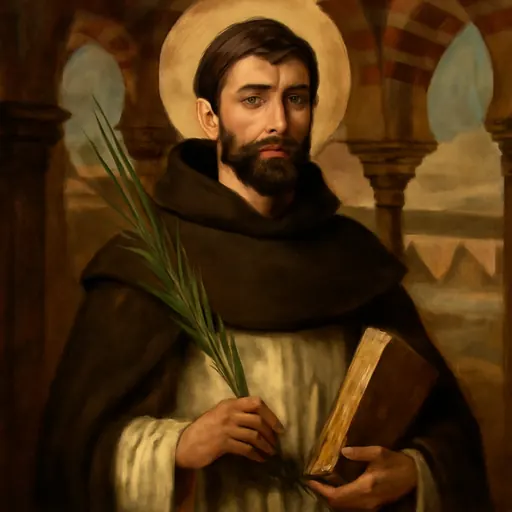
St. Eulogius of Córdoba was a priest and scholar of Córdoba in Muslim-ruled Spain who recorded the lives of the Christians executed there in the 850s and defended them as true martyrs. Elected archbishop of Toledo, he was arrested for sheltering a young convert and beheaded on March 11, 859. His feast is March 11.
Who was St. Eulogius of Córdoba?
St. Eulogius of Córdoba was a priest, scholar and martyr of the ninth century, when Córdoba was the capital of a Muslim emirate and its Christians lived as a tolerated but burdened minority. When dozens of Christians were executed there in the 850s, Eulogius wrote their stories down, defended them as true martyrs, and in the end shared their death. He was beheaded on March 11, 859, shortly after being elected archbishop of Toledo. We keep his feast on March 11.
The life of St. Eulogius
A Christian family of Córdoba
Eulogius came from a Christian family of the old nobility of Córdoba, which, the Catholic Encyclopedia notes, had held land there since Roman times. His mother, Isabel, raised six sons and two daughters. One brother, Joseph, held a high post in the palace of the emir Abd al-Rahman II; two others traded as far as Central Europe; one sister became a nun. Eulogius studied at the monastery of St. Zoilus under the abbot Speraindeo and formed a lifelong friendship with a fellow student, the writer Paul Alvarus, who later wrote his life. Alvarus remembered him like this:
Devoted ... from his infancy to the Scriptures, and growing daily in the practice of virtue, he quickly reached perfection, surpassed in knowledge all his contemporaries, and became the teacher even of his masters.
He was ordained a priest by Bishop Recared of Córdoba. By 848 he was known and respected among the Christians of Catalonia and Navarre. On a journey north he visited the monastery of Leyre in Navarre, and he wrote an account of the martyrdom of the young sisters Nunilo and Alodia. As a young man he had longed to walk to Rome to pray at the tomb of St. Peter, but he gave up the plan on the advice of friends.

The martyrs of Córdoba
Beginning in 851, a series of Christians in Córdoba were put to death, many after speaking publicly against Islam before the judges, which carried the death penalty. The first was the priest Perfectus, then the monk Isaac, then the young women Flora and Maria. In the next years nearly fifty more followed, among them St. Columba, a nun of Tábanos, in 853.
Not every Christian of Córdoba approved. Some feared the martyrs were provoking the authorities and putting the whole community at risk, and some refused to count them as martyrs at all. Eulogius took their side. He was jailed for a time himself. In his Memoriale Sanctorum he recorded their lives and deaths and answered their critics, writing that he would not be a mute watchdog who cannot bark (the image is from Isaiah 56:10) while the witness of the saints was belittled. His books are the main source we have for these martyrs.
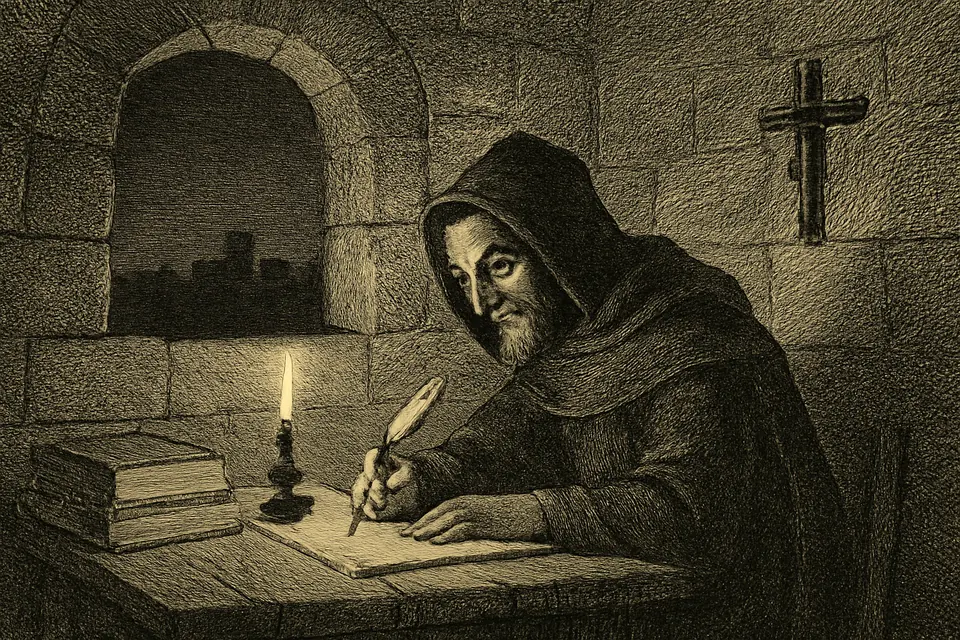
For a time he even stopped celebrating Mass. The Catholic Encyclopedia says that in 850, after reading a passage of St. Epiphanius, he held back so as to defend the martyrs more freely; Butler says it was to avoid communion with Reccafred, the bishop who had turned against them. Either way, when his own bishop, Saul of Córdoba, asked him to return to the altar, he obeyed.
Archbishop-elect and martyr
In 858 the clergy of Toledo, the old capital of Christian Spain, elected Eulogius their archbishop, but the emir Muhammad I refused to confirm the choice. Soon afterward a young woman named Leocritia came to him. Butler tells her story from Alvarus: she was the daughter of a noble Muslim family, had been taught the faith secretly by a relative and baptized, and was beaten by her parents to make her give it up. Eulogius and his sister Anulona helped her escape and hid her among Christian friends. When she was found, they were all brought before the judge. A member of the emir's council took Eulogius aside and begged him to say one word to save himself and practice his faith later in private. Eulogius smiled and answered:
Ah! if you could but conceive the reward which waits for those who persevere in the faith to the end, you would renounce your temporal dignity in exchange for it.
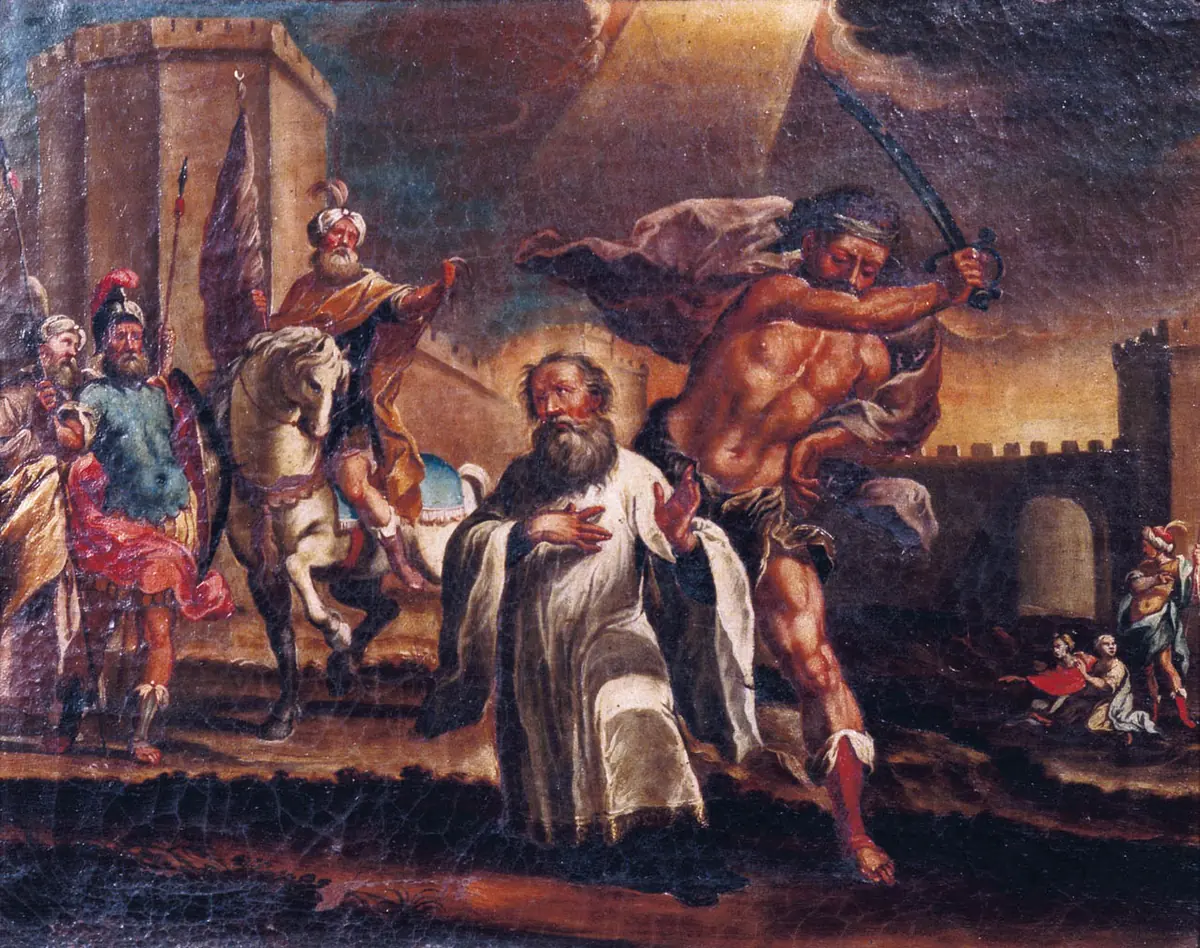
He was condemned at once. On the way to execution a palace servant struck him on the face, and he turned the other cheek. He was beheaded outside the city gates on March 11, 859. Leocritia was beheaded four days later and her body thrown into the Guadalquivir, from which Christians recovered it.
Miracles and witness
We know of no approved miracle of St. Eulogius, and his early cult does not rest on wonders. He is honored for his witness: a scholar who loved books, a priest who defended persecuted brothers and sisters, and a martyr who died for giving shelter to a convert. His own writings and Alvarus's life make him one of the best-documented saints of early medieval Spain.
Symbols of St. Eulogius in art
- Priest's vestments: the priest of Córdoba and archbishop-elect of Toledo.
- Book and pen: the historian of the martyrs.
- Sword and palm: his beheading and martyrdom.
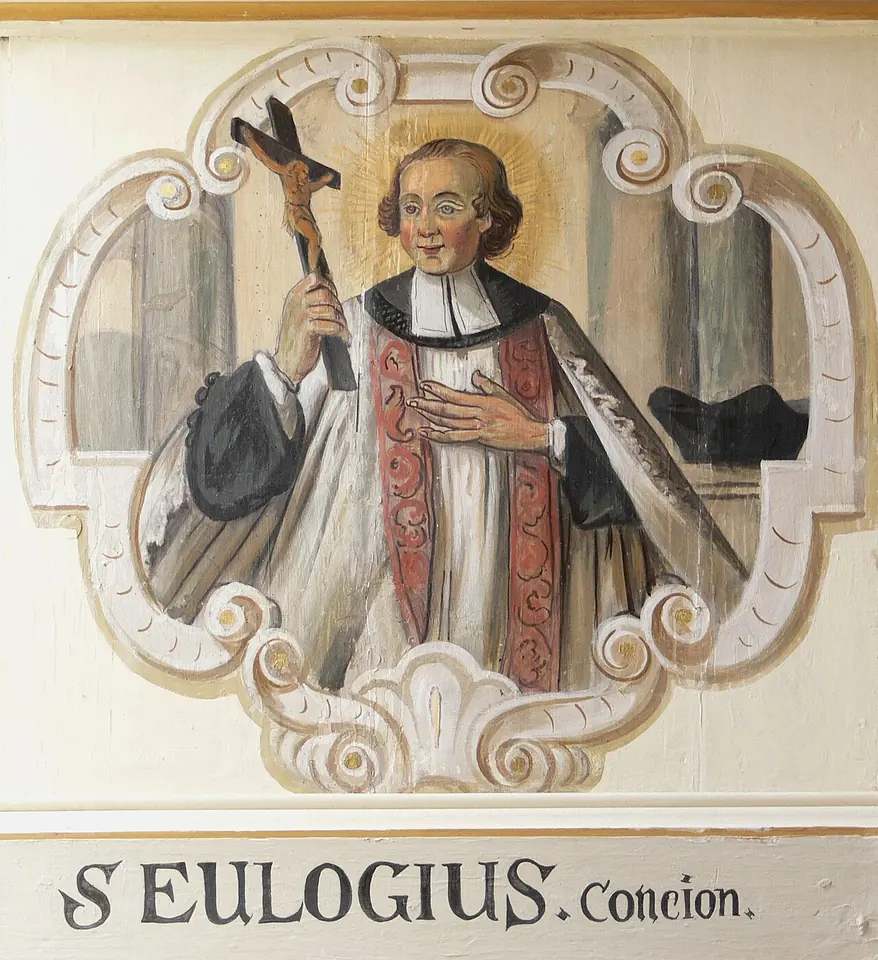
- Crucifix: his preaching of Christ.
Spanish paintings show him at his writing table or kneeling at his execution, often with Moorish horsemen and the walls of Córdoba behind him. Outside Spain he turns up in unexpected places: on the organ gallery of the collegiate church at Horb am Neckar, in Germany, he is painted in the dress of the church's own preachers.
Feast day and relics
We keep his feast on March 11, an obligatory memorial in the Diocese of Córdoba and the Archdiocese of Toledo. The Mozarabic rite, the ancient liturgy of Christian Spain, still celebrates him too. His body was later carried north to the Christian kingdom of Asturias, and the Catholic Encyclopedia records that he is buried in the cathedral of Oviedo. His relics rest with those of St. Leocritia in a silver chest in the cathedral's Cámara Santa, the treasury chapel that also keeps the Sudarium of Oviedo.
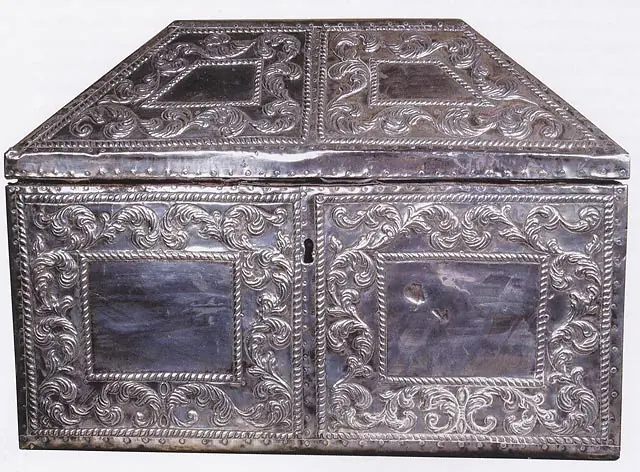
If you go to Oviedo to venerate the Sudarium, look for the chest of these two martyrs of Córdoba and stop to pray there as well.
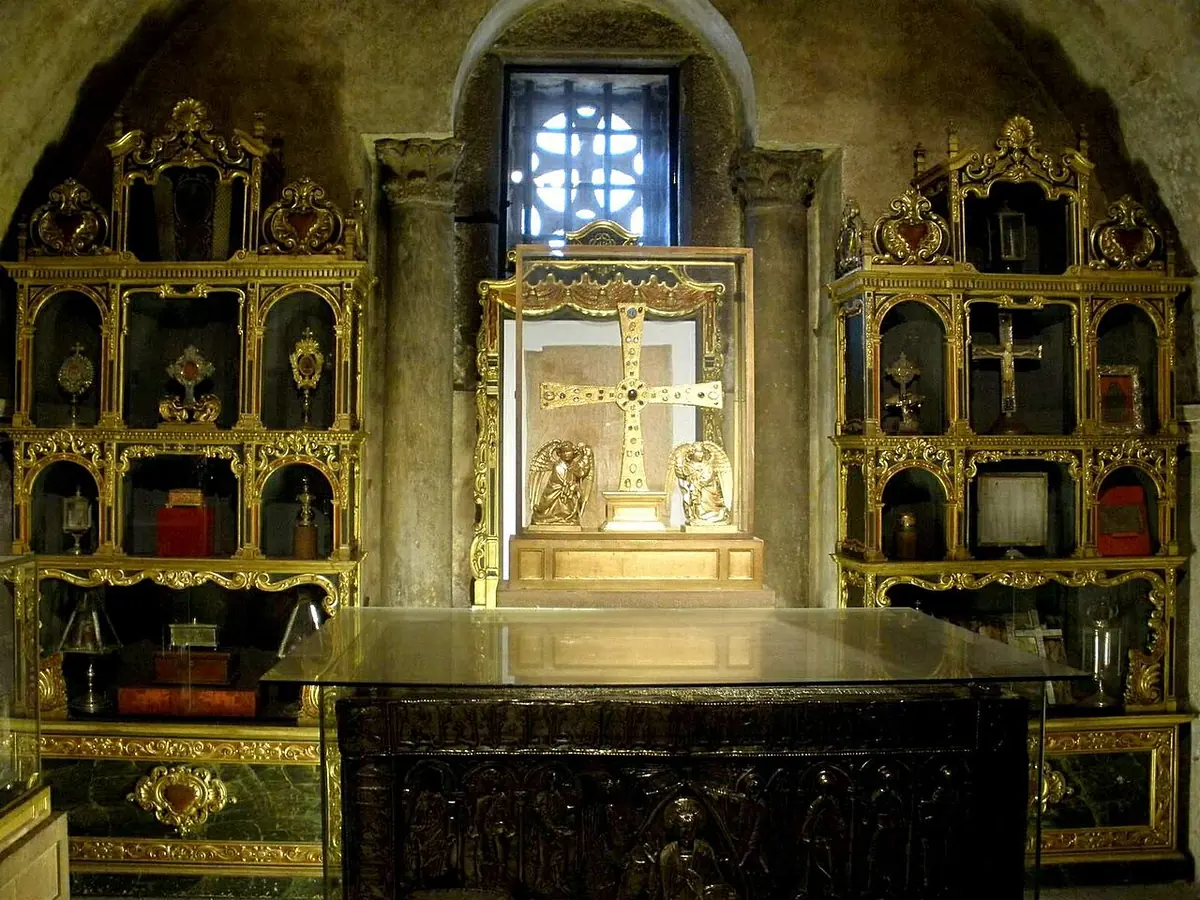
Where the relics of St. Eulogius of Córdoba are kept: see them on the relics map →
Praying with St. Eulogius
We have not found a traditional English prayer to St. Eulogius with a source we can cite, so we ask his intercession simply: "St. Eulogius of Córdoba, pray for us."
Let us ask him to pray for Christians who live as a persecuted minority, for converts who risk their families and their lives to follow Christ, and for writers and historians, that they may tell the truth about the witnesses of the faith.
Frequently asked questions
Who was St. Eulogius of Córdoba?
A ninth-century Spanish priest from a noble Christian family of Córdoba, under the rule of the Umayyad emirs. He studied at the monastery of St. Zoilus, wrote the main record of the martyrs of Córdoba, was elected archbishop of Toledo, and was himself martyred in 859.
Why was St. Eulogius martyred?
He was arrested for hiding Leocritia, a young woman from a Muslim family who had become a Christian, and was condemned and beheaded on March 11, 859.
Where are the relics of St. Eulogius?
In Oviedo Cathedral in northern Spain, where the Catholic Encyclopedia says he is buried. His relics are kept with those of St. Leocritia in a silver chest in the cathedral's Cámara Santa.
When is the feast of St. Eulogius of Córdoba?
March 11, the anniversary of his martyrdom.
Keep exploring
Sources
- St. Eulogius of Cordova, Catholic Encyclopedia (1909), New Advent. His family, his studies under Speraindeo, the portrait by Alvarus quoted here, the abandoned pilgrimage to Rome, his scruple of 850, his election to Toledo, his death on March 11, 859, and his burial in Oviedo
- Alban Butler, The Lives of the Fathers, Martyrs and Other Principal Saints, vol. 3 (March), St. Eulogius of Cordova, Internet Archive. From Alvarus's life: the story of Leocritia, his words to the emir's councilor quoted here, the blow on the cheek, and Leocritia's death four days after his
- Eulogius von Córdoba, Ökumenisches Heiligenlexikon. The persecution under Abd al-Rahman II and Muhammad I, his imprisonment, his visit to Leyre, the emir's refusal to confirm his election, his arrest for sheltering a convert, his feast days and his Memoriale Sanctorum (in German)